


Pierced Carved Folding Table
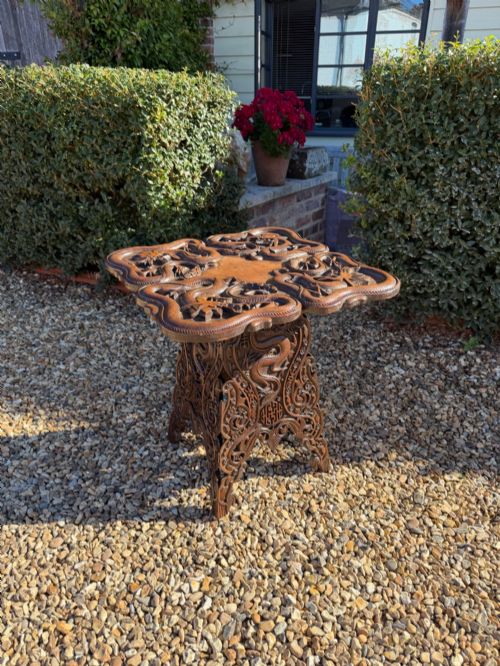
These pierced carved folding tables bring intricate colonial craftsmanship and rich timber into the home.

Pierced Carved Folding Table
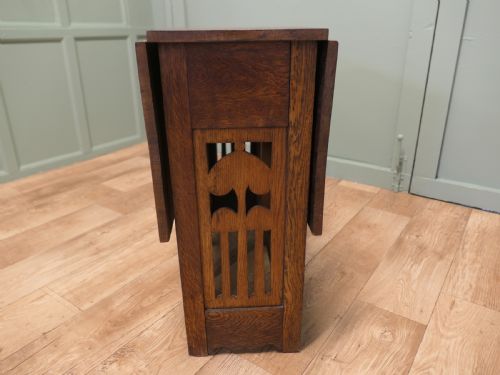
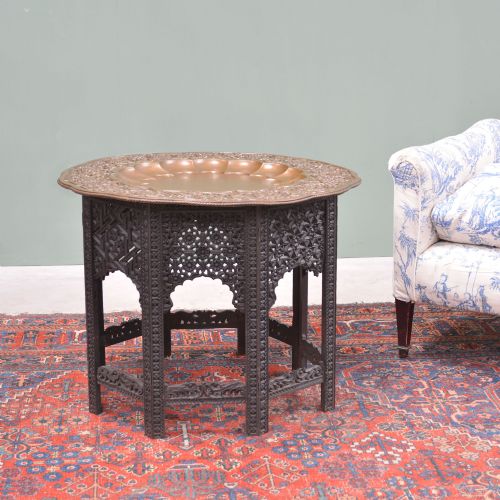
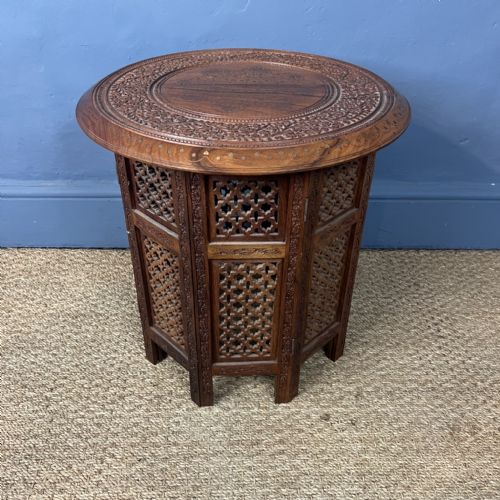
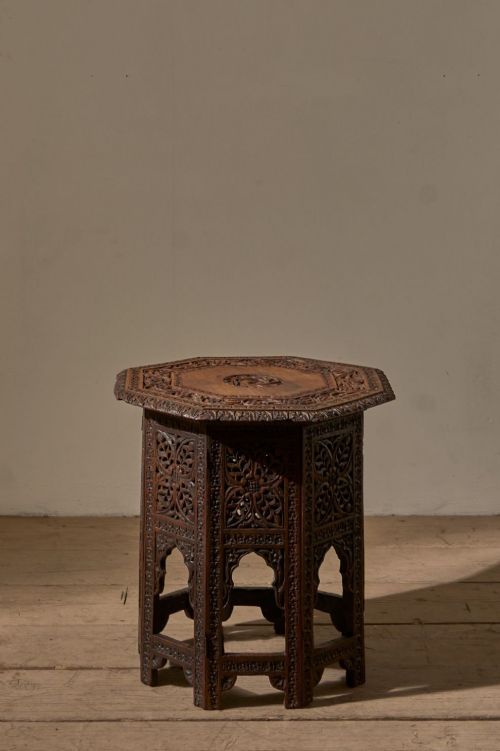
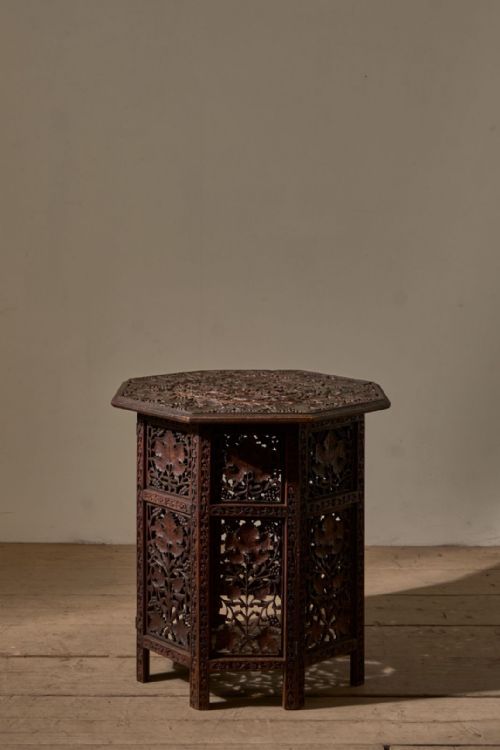
A pierced carved folding table is a versatile surface designed for easy storage, featuring intricate openwork patterns across its timber framework. These pieces range from compact occasional stands to larger tray top designs well suited for daily use.
Most examples found here hail from the Anglo-Indian and colonial traditions, alongside Victorian interpretations. The inventory spans from the late nineteenth century through to the nineteen thirties, encompassing octagonal and circular side tables.
Alongside standard side and lamp tables, related items such as folding campaign tea tables and occasional pieces appear frequently. The defining characteristic across the selection remains the combination of articulated folding bases and dense surface carving.
Materials and construction
Timbers such as teak, padauk, and oak form the structural core of these items, providing a sturdy foundation for detailed hand work. Hardwoods are selected for their density, which allows artisans to achieve deep, crisp relief without splintering.
Surface embellishment often incorporates contrasting materials including brass, copper, and bone inlay set directly into the wood. Pierced fretwork is achieved through meticulous hand-sawing, creating lattice designs that lighten the visual weight of the folding frames.
Listings feature teak, padauk, and oak as the primary timbers, complemented by brass, copper, and bone inlay.
What separates the best from the rest
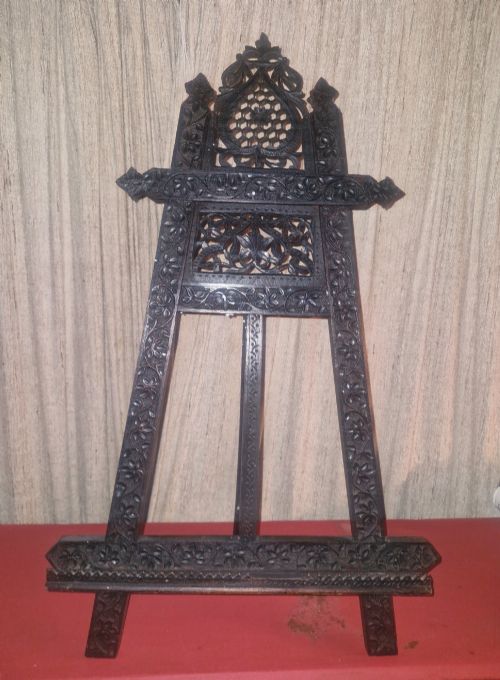
Quality rests upon the depth and precision of the carving, where sharper undercutting and crisper foliage details mark out superior craftsmanship. Simpler pieces rely on shallow incised patterns, whereas the finest examples feature fully pierced fretwork with intricate, multi-layered depth.
The choice of secondary materials further distinguishes the range, particularly the density of metal inlay and the selection of dense timbers like padauk or well-figured teak. Construction integrity in the folding mechanism also plays a role, with tighter joints and smoother articulation indicating superior workshop practices.
The Pierced Carved Folding Table Glossary
- Pierced work
- Wood or metal pierced right through with a saw or chisel to form an openwork pattern. This technique creates delicate latticework screens and decorative borders.
- Fretwork
- Ornamental design created by cutting patterns with a fretsaw. It adds intricate geometric or floral detail to panels and aprons.
- Tray top
- A removable surface with a raised rim designed to sit upon a folding stand. This form allows the top to double as a serving tray.
- Campaign furniture
- Portable pieces designed for easy dismantling or folding for travel. They prioritize practical mobility alongside fine appearance.
- Inlay
- Material embedded into the surface of a different primary material to form decorative motifs. Brass and bone are common additions in these pieces.
Pierced Carved Folding Table: Frequently Asked Questions
How do I fold these tables?
The folding mechanism typically relies on an interlocking or hinged wooden base that collapses flat when the top is lifted off or tilted.
Ensure you support the frame evenly as you release the catch or lift the surface to avoid stressing the carved joints.
Where should I place a folding table?
These pieces function well as occasional surfaces in a living room, hallway, or bedroom where extra table space is occasionally required.
Keep them away from direct heat sources and strong sunlight to protect the dry timber and delicate inlay work from warping.
How do I clean carved wooden tables?
Dust the intricate pierced sections regularly using a soft-bristled brush to prevent grime from settling into the carved recesses.
Avoid liquid polishes that can build up within the openwork pattern, opting instead for a dry, soft cloth.
Are these tables sturdy enough for daily use?
Most occasional and side tables are built to hold lamps, books, or tea services securely during normal domestic activities.
Because the bases fold, checking the stability of the joints periodically ensures the table remains safe for everyday placement.