



Scalloped Edge Lamp Table
A scalloped edge lamp table brings subtle movement and warmth to a corner, combining practical surface space with refined timber work.
Scalloped Edge Lamp Table
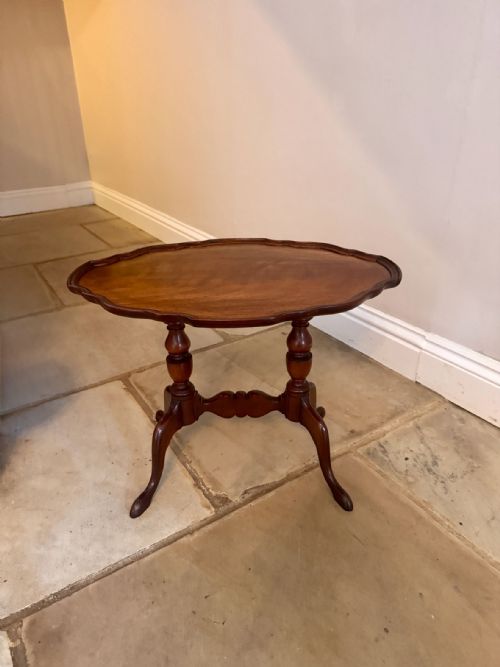
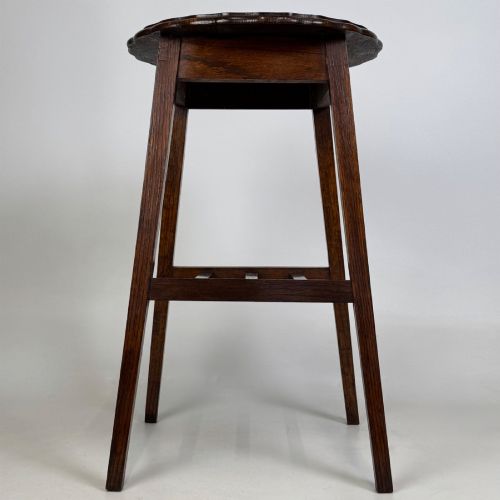
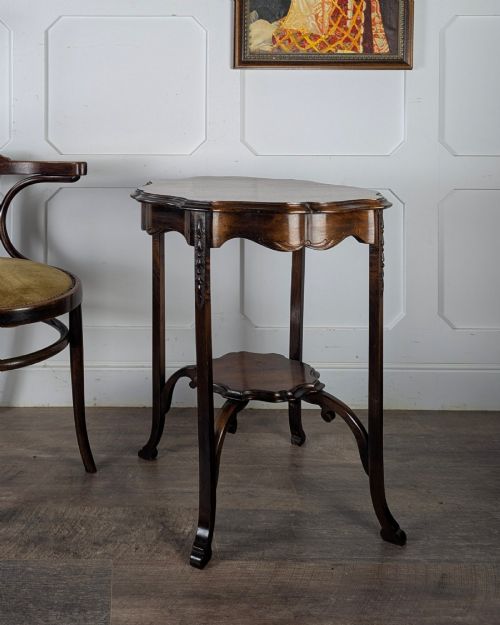
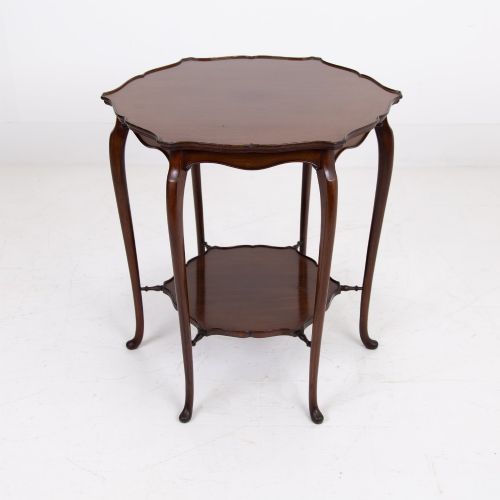
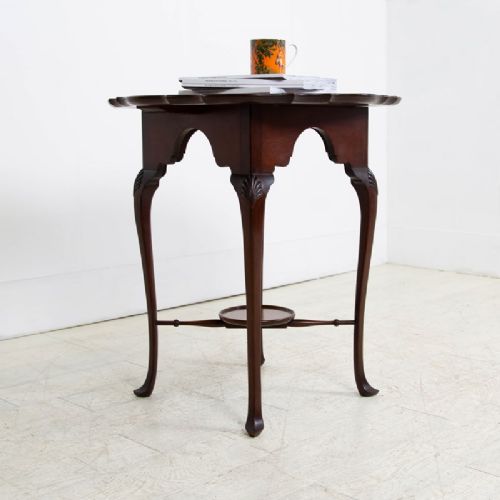
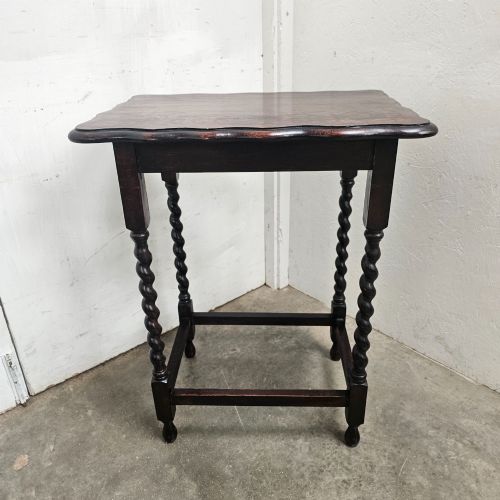
When you search for a scalloped edge lamp table, you find small functional surfaces designed for illumination and display, spanning the Victorian and Edwardian eras. These pieces appear frequently in walnut and mahogany, often taking the form of occasional and side tables with shaped tops.
The selection here draws heavily from the late nineteenth and early twentieth centuries, capturing periods of revivalism from Georgian to Jacobean styles. Most examples serve as versatile furniture for sitting rooms, functioning reliably beside armchairs or sofas.
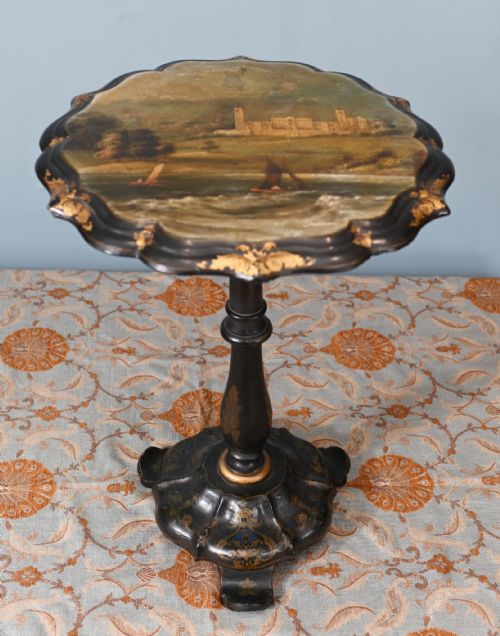
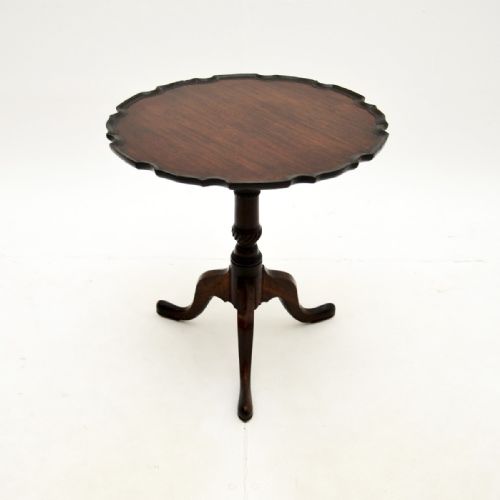
Makers shaped these tables to catch the light, utilising circular or multi-sided outlines with indented rims. The core purpose remains holding a lamp or small ornaments while adding period character to a room.
Materials and Construction
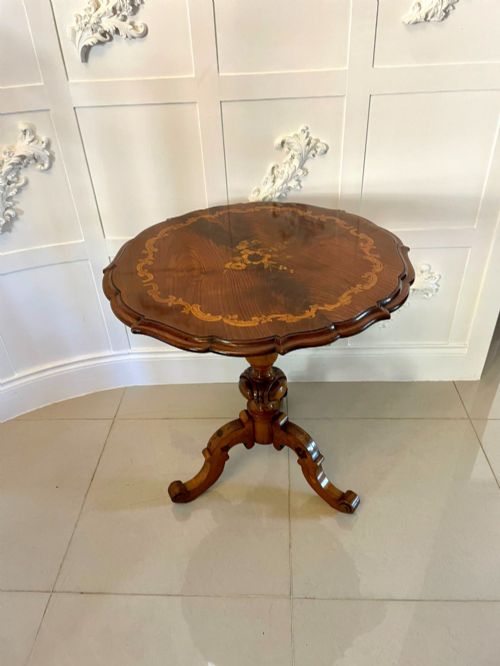
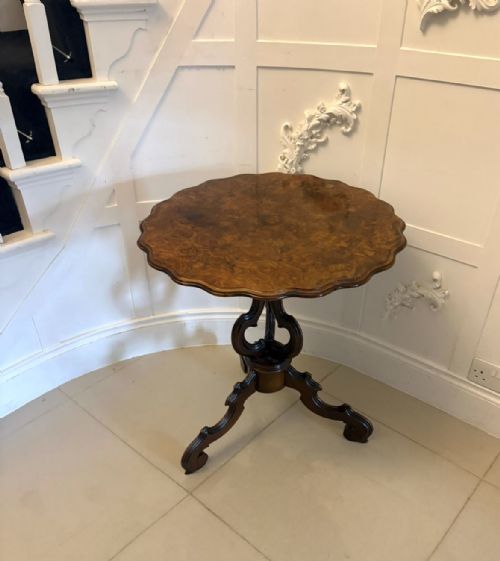
Cabinet makers built these tables primarily using solid timbers like mahogany, oak, and walnut, frequently applying figured veneers or burr walnut to the main surface to create dramatic grain patterns. Marquetry inlay and wood inlay appear across several pieces, introducing delicate botanical or geometric decoration into the timber top.
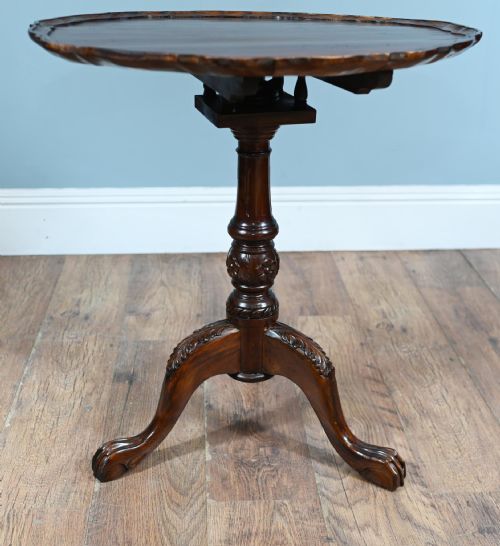
Structural integrity relied on traditional joinery, with turned pedestals, tripod legs, or four-legged frames supporting the shaped tops. Some versions incorporated tilt mechanisms, bird cage supports, or multi-tier designs for added utility.
Scalloped Edge Lamp Table Retail Price Guide 2026
Typical asking prices for scalloped edge lamp table among the pieces listed under this phrase on Sellingantiques today, from the lower quarter to the upper quarter. They describe what is for sale here now, not the wider market.
Revival styles feature strongly, with Georgian Revival and Jacobean Revival pieces sitting alongside original nineteenth-century examples.
Markers of Quality
Quality rests in the depth of the timber figuring and the precision of the shaped rim, where a crisp, clean profile distinguishes finer items from simpler production pieces. Tables featuring detailed marquetry inlay or matched burr walnut veneers demonstrate superior craftsmanship from their respective periods.
The stability of the frame and the elegance of the leg turnings dictate the overall success of the piece. Superior examples balance decorative inlay with robust construction, ensuring the table remains useful and structurally sound over generations.
Shapland and Petter
The Scalloped Edge Lamp Table Glossary
- Scalloped edge
- A tabletop profile featuring a series of continuous curves or indentations rather than a straight line. This decorative shaping softens the silhouette of the piece.
- Marquetry veneer
- Thin pieces of decorative wood arranged in precise patterns and glued to a solid wood carcase. This technique creates intricate pictorial or geometric designs.
- Tilt top
- A hinged tabletop mechanism that allows the surface to pivot into a vertical position when not in use. This clever design saved space in period interiors.
- Burr walnut
- Timber taken from a growth on a walnut tree, yielding a swirling, highly figured grain pattern. Cabinet makers prized this material for high-status tabletops.
- Bird cage
- A rotating wooden block assembly beneath a tabletop that permits both pivoting and spinning movements. This sophisticated mechanism is typically found on tripod occasional tables.
Scalloped Edge Lamp Table: Frequently Asked Questions
What is a scalloped edge lamp table used for?
These tables provide a stable surface for holding lamps, books, and small decorative items beside seating furniture.
Their compact footprints allow them to fit into corners or beside armchairs without crowding the room.
How do I date a Victorian lamp table?
Dating relies on identifying timber choices like figured mahogany or burr walnut alongside characteristic stylistic revivals of the nineteenth century.
Examine the construction methods underneath the top and the style of the legs to confirm the period.
Are tilt top tables stable?
Tilt top tables utilise a pivoting mechanism supported by a tripod or pillar base designed for everyday use.
While the moving joint introduces some flexibility, well-adjusted hinges keep the surface steady when horizontal.
What is the difference between an occasional table and a lamp table?
An occasional table is a general term for any small, movable table used intermittently around the home.
A lamp table specifically describes a small surface sized to support adequate lighting equipment in a living space.