
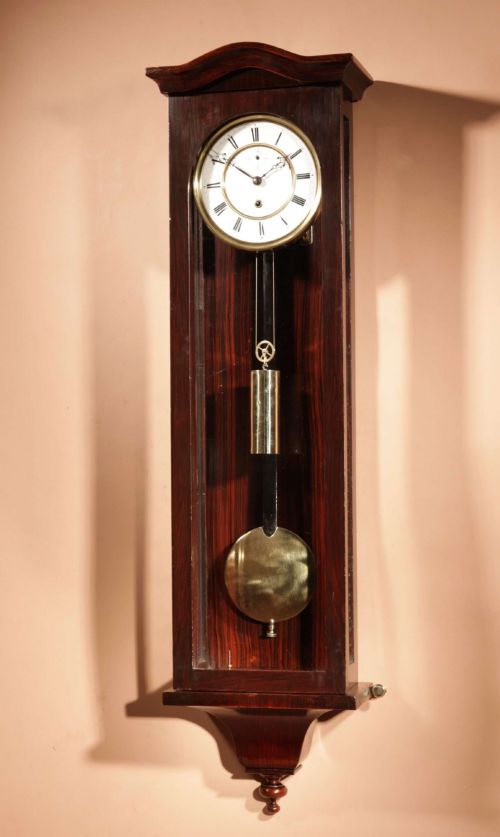
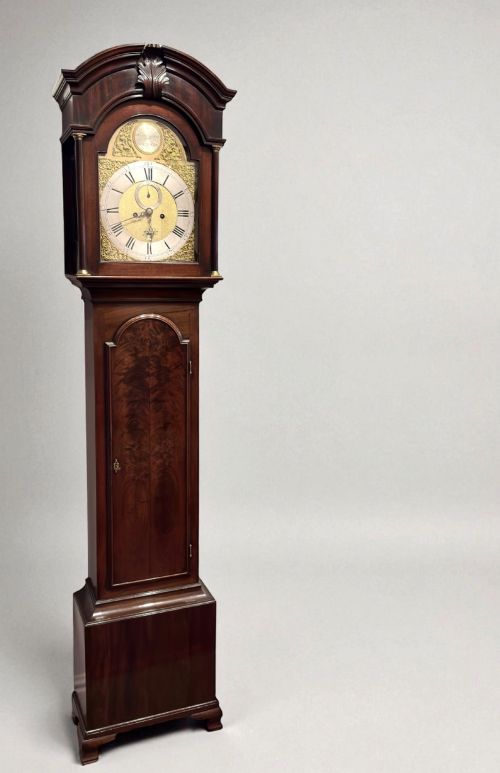
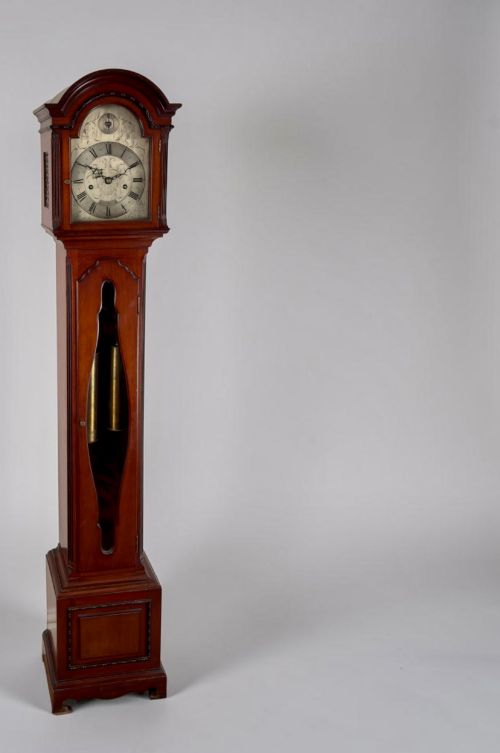
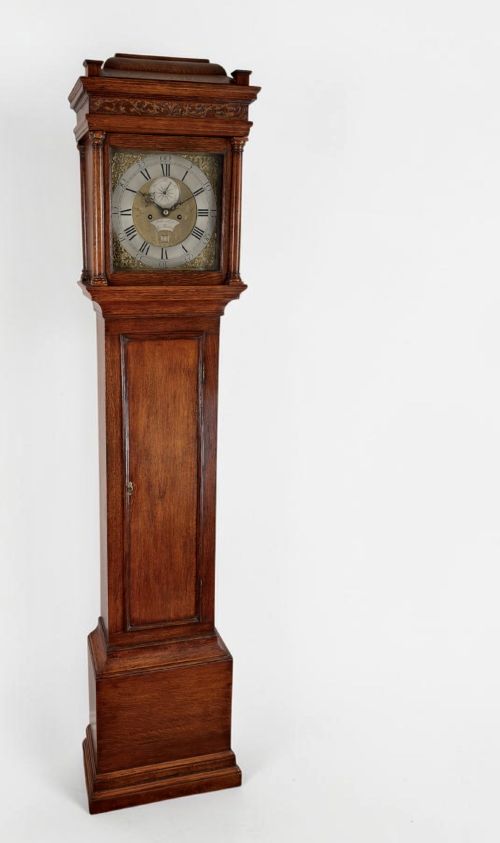
Vintage Dial Clock
A vintage dial clock brings functional British history into a room with its bold face and sturdy timber frame.
What a vintage dial clock is
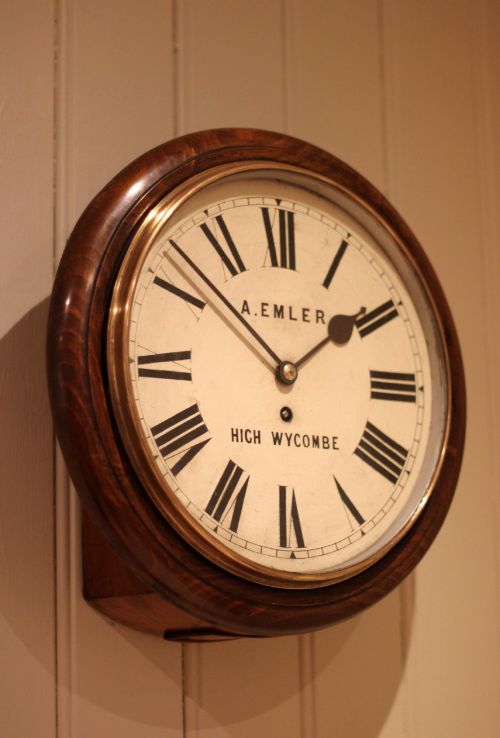
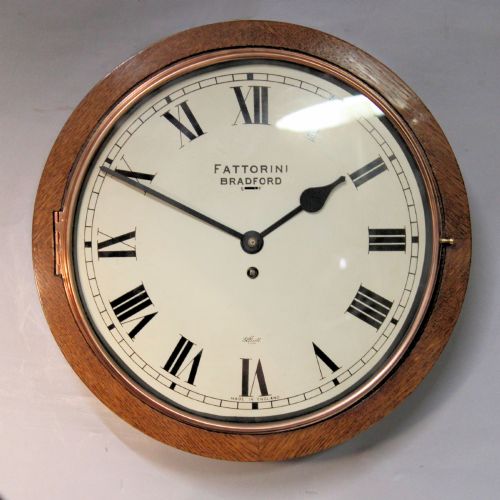
A vintage dial clock is a wall-mounted timepiece designed for clarity and reliability, usually featuring a circular face protected by glass. These clocks served stations, offices, and military spaces before finding their way into domestic interiors.
The versions most commonly met span from the Victorian period through to the mid-twentieth century, encompassing both restrained domestic pieces and utilitarian service models. Wall clocks dominate this selection, ranging from simple circular timber surrounds to drop-dial variants with extended lower cases.
Makers such as Balbiani Brookley and Haley & Milner of London represent the commercial and domestic clockmaking tradition. Meanwhile, military and transport examples, including Royal Air Force and British Railways pieces, reflect institutional timekeeping.
How they were made
Makers used substantial timbers for the frames, selecting mahogany, beech, and rosewood to house the movement securely. Some examples incorporate decorative details such as mother-of-pearl inlay or carved mahogany surrounds.
Movements relied on fusee mechanisms to maintain even tension as the mainspring unwound, ensuring accurate timekeeping. Brass bezels held the protective glass tightly over the dial, protecting the painted or printed numbers from dust and damage.
Retail Price Guide 2026
Typical UK retail prices for vintage dial clock, calculated from the Sellingantiques database of over a million retail prices indexed since 2003. This retail price guide relies exclusively on Sellingantiques data; no external sources or auction records are used, so the figures do not describe the wider market.
Railway timekeeping was so strict that dial clocks had to survive both soot-filled platforms and enthusiastic stationmasters slamming office doors.
What varies in quality
Quality rests in the precision of the fusee movement and the crispness of the dial lettering, which distinguishes utilitarian production from finer workshop output. Heavier timber frames and select veneers like rosewood signal a more ambitious commission.
The integration of secondary materials, such as finely turned bezels and mother-of-pearl details, separates standard commercial items from those built for significant public or institutional spaces.
Balbiani Brookley·Haley Milner London
The Vintage Dial Clock Glossary
- Fusee
- A conical pulley used with a cord or chain to equalize the torque of the mainspring as it runs down. This mechanism is central to the accuracy of nineteenth-century timepieces.
- Drop dial
- A wall clock design where the circular dial sits atop an extended wooden case that houses the pendulum. This form became popular in railway stations and public offices.
- Bezel
- The metal ring, often brass, that holds the glass cover in place over the clock face. It usually hinges open to allow hand-setting.
- Timepiece
- A clock that measures and indicates time without including a striking mechanism to chime the hours. Many wall dials operate purely as timepieces.
Frequently Asked Questions
Where were these clocks originally used?
These clocks hung in railway stations, military headquarters, and public offices where reliable timekeeping was essential for daily operations. Their clear dials ensured staff could read the time at a glance from across a busy room.
Over time, many retired service and station clocks entered the domestic market, bringing industrial and institutional character into residential hallways and kitchens.
How do fusee movements work?
A fusee movement uses a conical pulley connected to the mainspring by a fine chain, compensating for the drop in power as the spring unwinds. This clever piece of engineering maintains consistent force on the gear train.
Because of this mechanism, a well-maintained fusee wall clock keeps a remarkably steady rhythm compared to simpler spring-driven alternatives.
How do I identify a Victorian dial clock?
Victorian examples often feature deep mahogany or rosewood frames, sometimes enhanced with carved details or inlaid mother-of-pearl. The proportions tend to be heavy and solid, reflecting the period's preference for robust construction.
Examining the timber, the style of the numerals, and the construction of the rear box often reveals the approximate decade of manufacture.
Can I hang a heavy wall clock safely?
Hanging a substantial timber wall clock requires fixing directly into wall studs or using heavy-duty wall anchors rated for the weight of the piece. The bracket or secure hanging point on the back of the case must bear the full load.
Because these clocks rely on a level plumb to keep accurate time, securing them firmly to a stable wall prevents the pendulum from binding.