
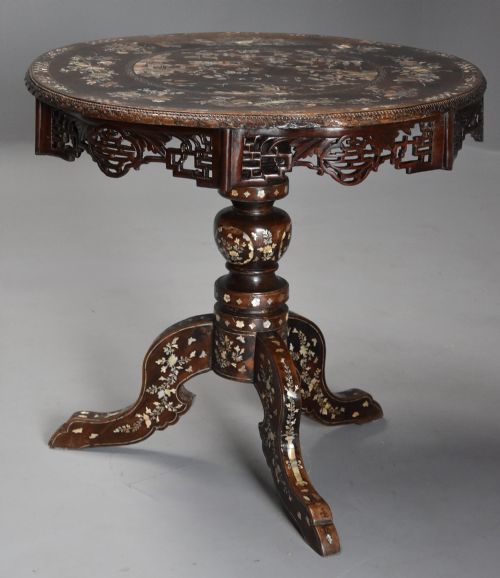


Vintage Carved Hardwood Table
A vintage carved hardwood table brings dense grain and deep relief carving into a room, offering a sturdy surface for lamps or plants.
Vintage Carved Hardwood Table
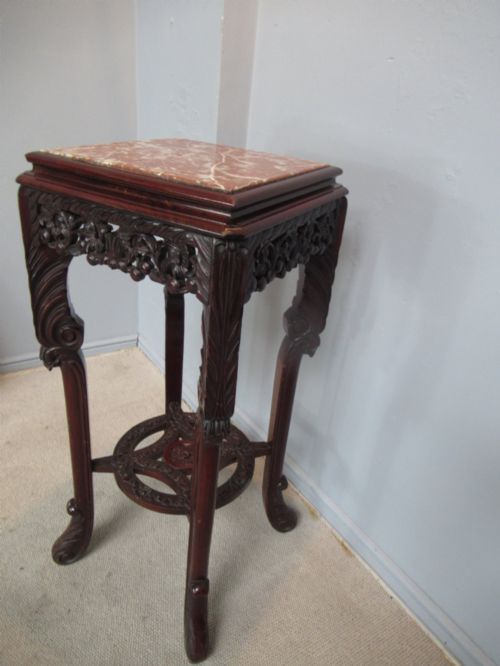
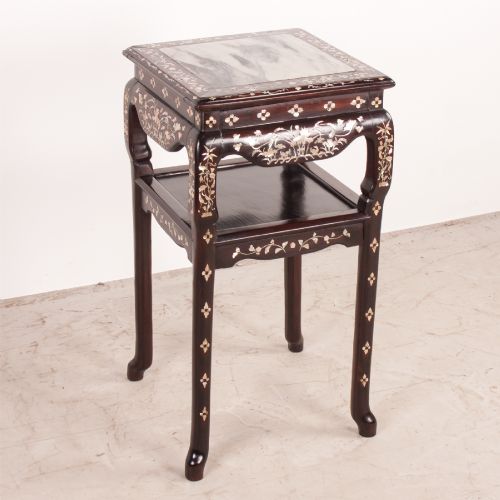
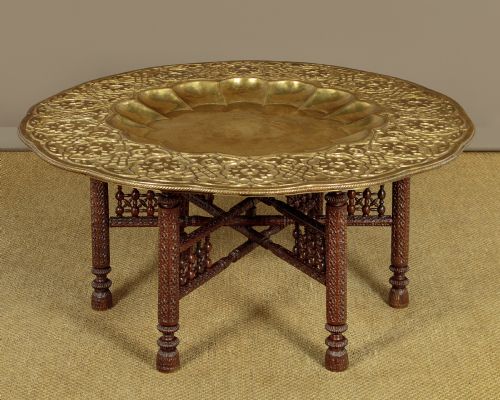
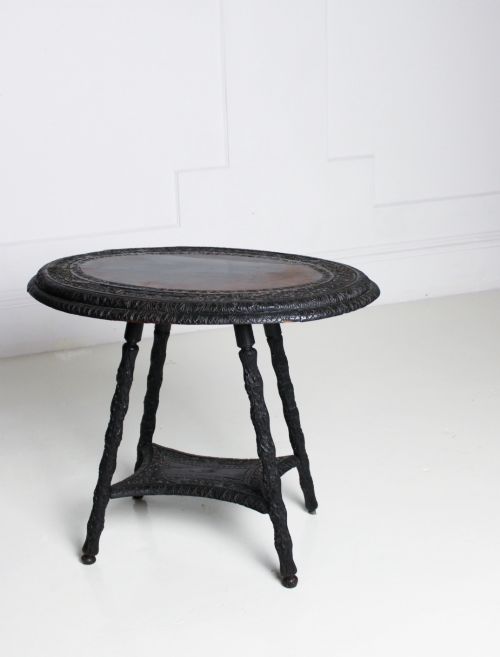
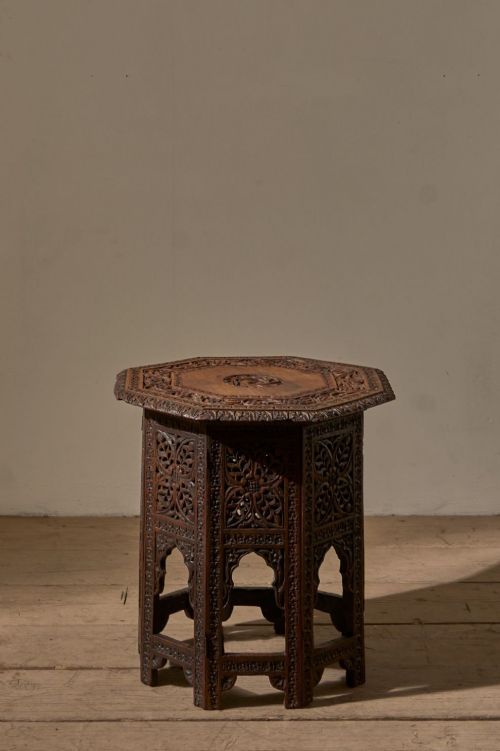
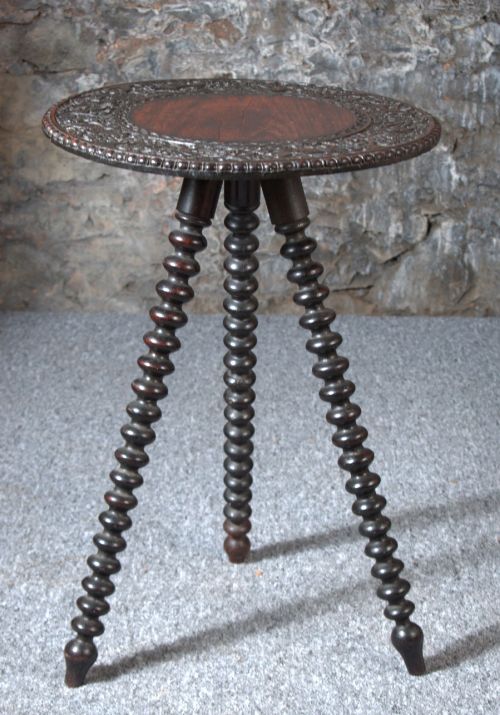
A vintage carved hardwood table encompasses a diverse group of functional furniture originating primarily from nineteenth and early twentieth-century workshops in China, India, Burma, and Vietnam. Buyers searching for a vintage carved hardwood table will encounter forms ranging from low opium tables and plant stands to larger side tables and partners desks. Many pieces display distinct regional styles, including Anglo-Indian colonial designs, traditional Chinese carving, and mother-of-pearl inlay.
What varies in quality
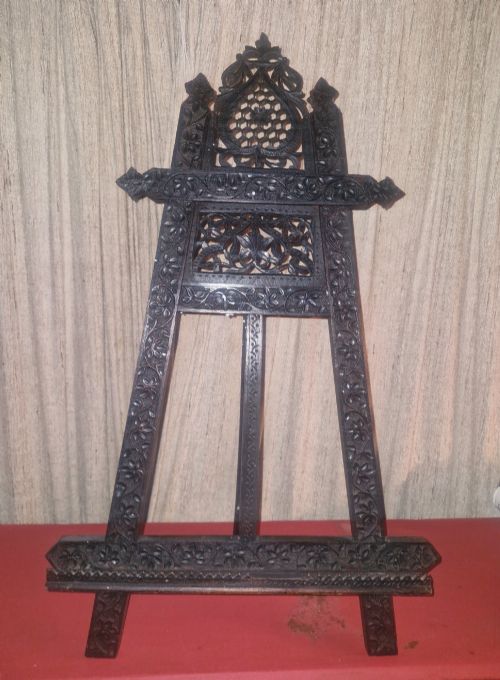
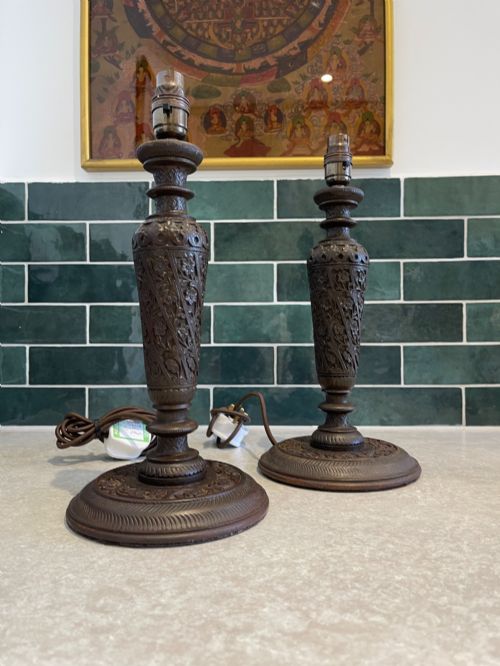
The depth and crispness of the hand carving separate standard export items from exceptional works of regional craft. Superior examples exhibit undercut relief work where foliage and figures stand clear of the background timber, whereas lesser pieces rely on shallow surface incisions. The choice of primary timber also dictates quality, with heavy rosewood and padauk commanding greater presence than lighter utility woods.
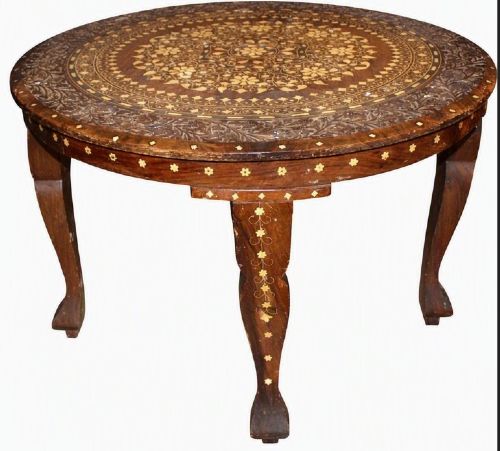
Integrity of inlay work significantly influences the standing of a piece, particularly in mother-of-pearl or bone decorated surfaces. Finely executed tables retain every individual tessera flush with the surrounding wood, whilst lesser versions show irregular gaps and careless adhesive use. Structural stability under heavy loads remains paramount, distinguishing tightly joined frames from loose assemblies.
Several tables feature carved elephants with real inlaid bone tusks peering out from beneath the rims.
Liberty & Co
The Vintage Carved Hardwood Table Glossary
- Anglo-Indian
- Furniture made in India by local craftsmen for British colonial residents or for export to Britain. These pieces often combine traditional Indian carving motifs with European furniture forms.
- Jardiniere stand
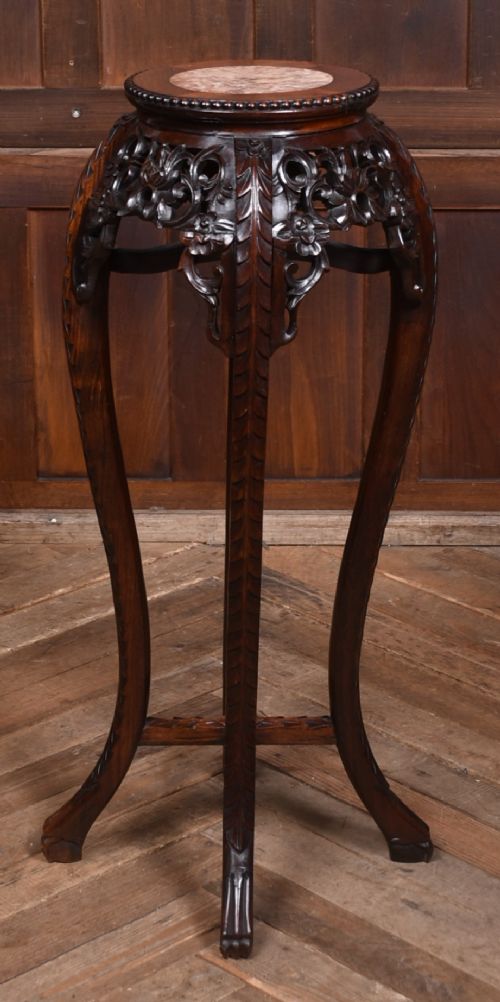
- A tall, slender table designed specifically to elevate a plant pot or vase. They feature sturdy tops supported by carved columns or cabriole legs.
- Padauk
- A heavy, durable tropical hardwood with a reddish hue used extensively in nineteenth-century Burmese and Indian furniture making. It finishes to a smooth lustre and resists warping.
- Opium table
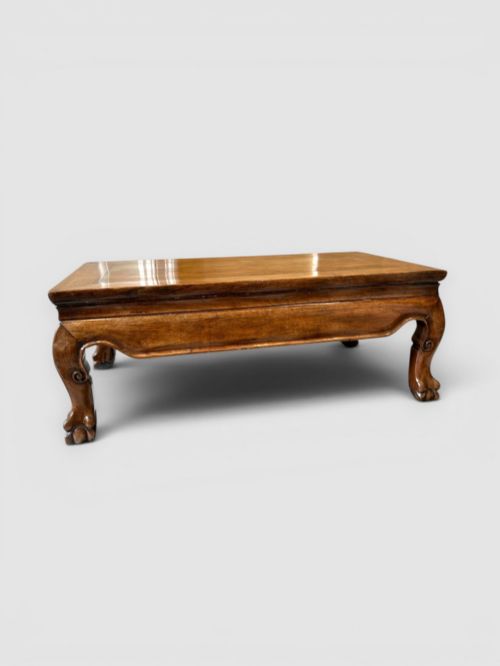
- A low, rectangular or square table originating in China, traditionally used for resting smoking paraphernalia or serving tea at floor level. They feature short legs, sometimes ending in horsehoof feet.
- Fretwork
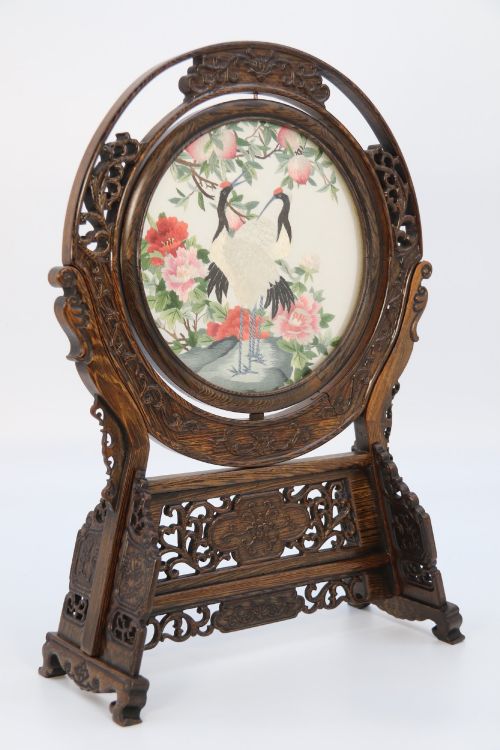
- An ornamental design created by piercing wood with a fretsaw to produce geometric or organic patterns. This technique appears frequently on aprons and brackets of export tables.
Vintage Carved Hardwood Table: Frequently Asked Questions
How do I clean a carved hardwood table?
Dust the intricate carvings regularly using a soft-bristled brush to prevent dirt accumulation in the recesses. Apply a neutral beeswax periodically to nourish the dense timber without building up heavy residues.
Avoid placing these tables near direct heat sources or strong sunlight, which can dry out exotic hardwoods and cause splitting. Use coasters under glasses to protect the polished surface from moisture rings.
Were these tables made for export?
Many nineteenth-century pieces were manufactured specifically for international markets in Britain and Europe, blending local craftsmanship with European room layouts. Chinese export workshops and Anglo-Indian makers produced items tailored to Western domestic tastes.
At the same time, many forms such as low tables and plant stands retained traditional indigenous functions before finding new roles in colonial homes. This cross-cultural exchange explains the wide variety of forms seen today.
How can I tell different Asian hardwoods apart?
Rosewood typically displays a deep red or brown colour with distinct dark grain streaks and a heavy feel. Padauk shares a similar reddish tone but often oxidises to a darker brown with age.
Teak contains natural oils that give it a slightly waxy touch and a golden-brown hue, whilst elm offers a lighter, pronounced grain structure. Close inspection of weight and grain pattern helps distinguish these primary timbers.
Can I use an antique plant stand as a side table?
Jardiniere stands and plant pedestals provide stable platforms for drinks, books, or lamps despite their narrow proportions. Their sturdy hardwood construction allows them to function effectively as occasional tables in compact spaces.
Ensure the floor surface is even, as taller stands have a higher centre of gravity than standard coffee tables. Placing them in low-traffic corners minimises the risk of accidental knocks.