
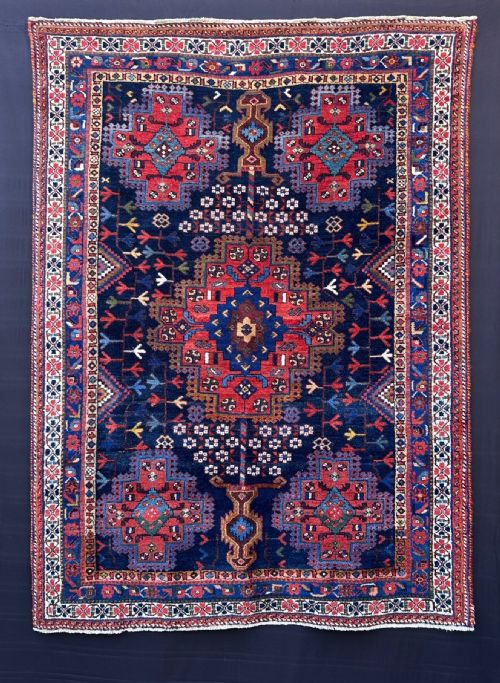
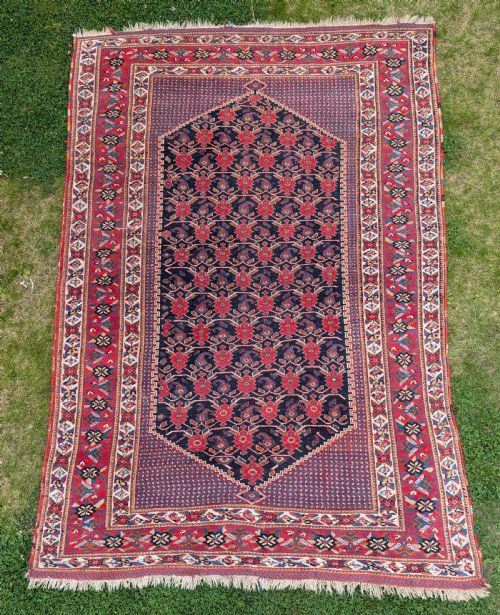
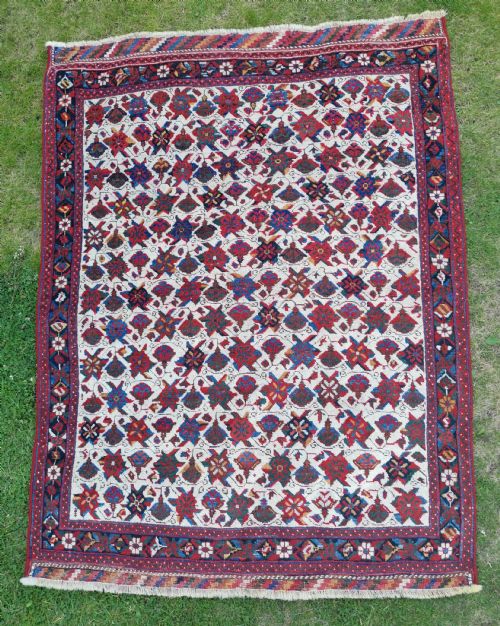
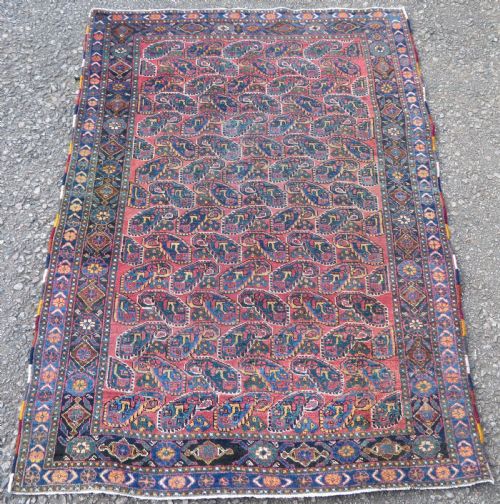
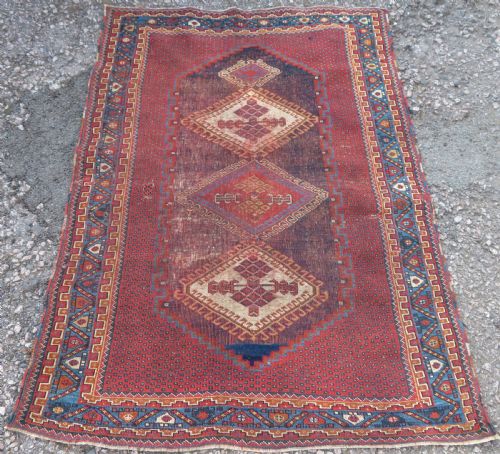
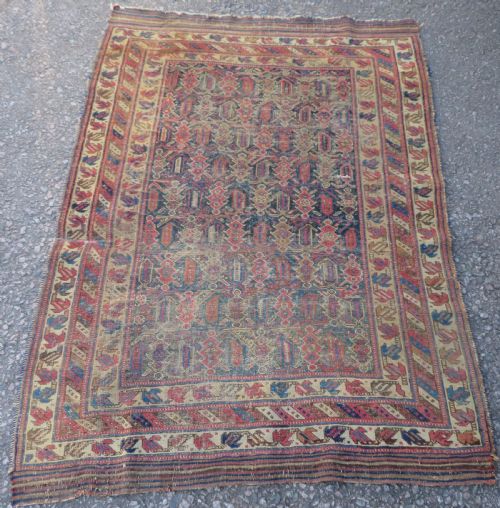
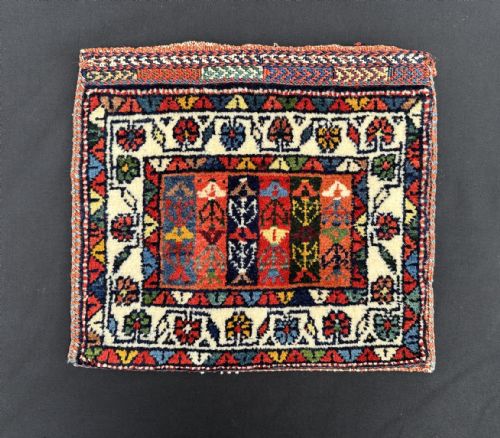
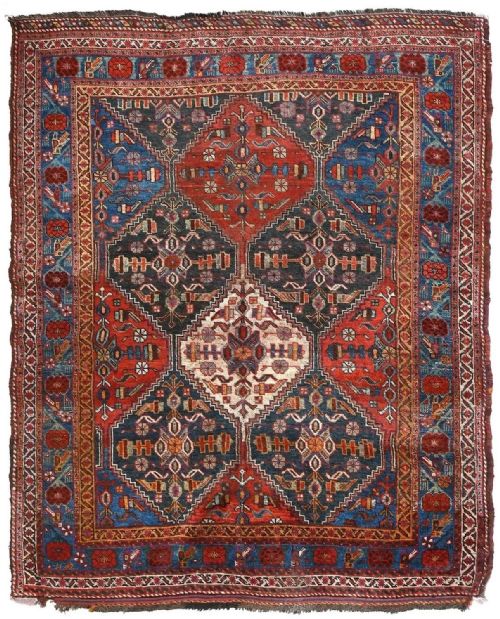
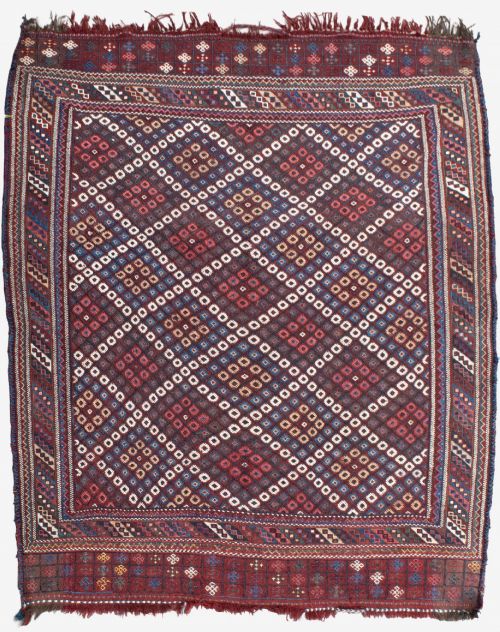
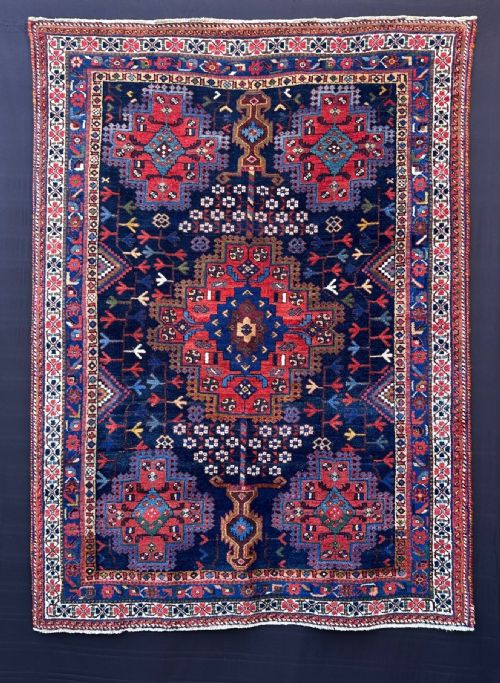
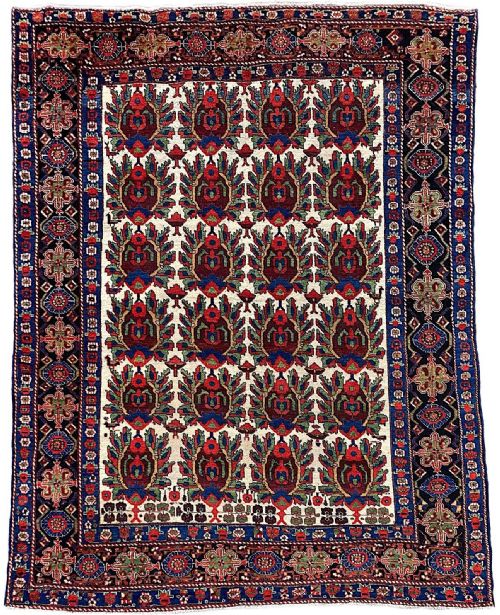

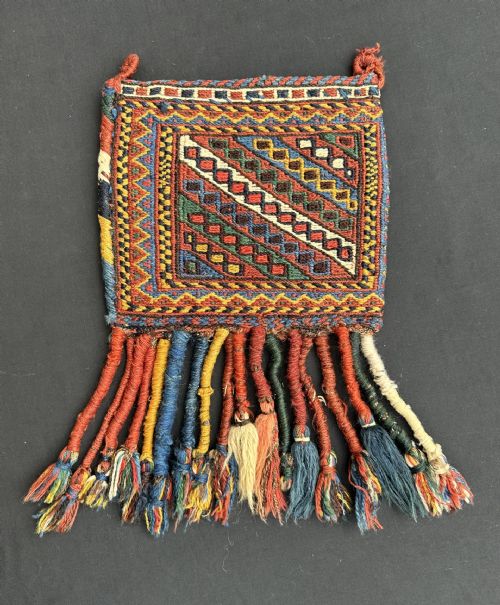
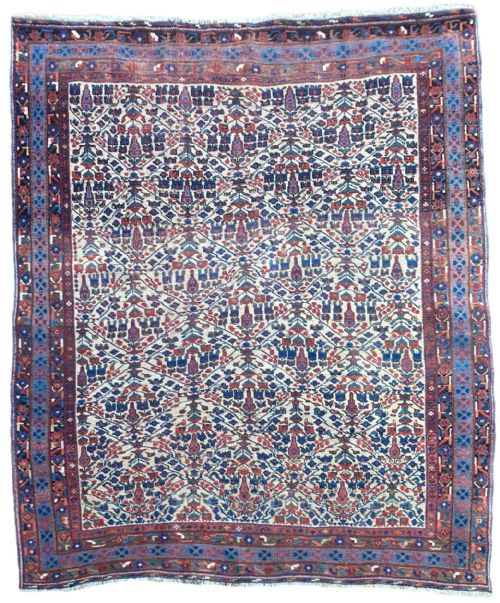


Vintage Afshar Rug
These woven pieces known as a vintage afshar rug bring South Persian tribal artistry into a room through geometric motifs and rich wool.

Vintage Afshar Rug
When searching for a vintage afshar rug, buyers encounter traditional tribal weavings originating from the Kerman province in South Persia. The selection spans the nineteenth and twentieth centuries, capturing the distinct culture of the Afshar nomads.
Beyond standard floor coverings, the category includes various functional forms such as saddle bags, vanity bags, tobacco and pipe bags, bread sofreh cloths, and flatweave runner formats. These diverse tribal textiles share a common heritage of village and nomadic production.
The most common formats met on this page are floor rugs and carpets, alongside smaller storage pouches and eating cloths. Pieces from the Neiriz region and Qorab'i tribe frequently appear within the listings.
How they were made
The construction relies on hand-spun wool combined with cotton foundations, providing a durable structure suited to nomadic life. Artisans utilise natural dyes to achieve deep colour palettes across the woven surface.
Weaving techniques range from standard pile rugs to Soumak flatweaves and specialised sofreh cloths. The utilisation of lustrous wool enhances the tactile quality of the finished textile.
Vintage Afshar Rug Retail Price Guide 2026
Typical asking prices for vintage afshar rug among the pieces listed under this phrase on Sellingantiques today, from the lower quarter to the upper quarter. They describe what is for sale here now, not the wider market.
What varies in quality
The refinement of the weave and the clarity of the tribal designs distinguish finer examples from standard production. Superior pieces exhibit exceptional handling of natural dyes and luminous wool that catches the light.
Condition plays a role in the character of each piece, with some examples showing heavy distress through age and use. The precision of geometric patterns and the complexity of motifs such as boteh or dragon and phoenix designs elevate the status of individual items.
The Vintage Afshar Rug Glossary
- Sofreh
- A spread or cloth used for eating or bread making by nomadic tribes. These flatwoven or pile textiles often feature striking geometric field designs.
- Boteh
- A stylised almond or paisley motif representing a bush or floral spray. It appears frequently in South Persian tribal weavings.
- Soumak
- A flatweave technique involving wrapping weft threads over warp threads to create a durable, textured surface. This method produces crisp geometric patterns without a pile.
- Chanteh
- A small personal bag or vanity bag woven by nomads for carrying small possessions. These miniature textiles display the same design complexity as full-sized carpets.
- Neiriz
- A specific region within the Kerman province known for distinctive tribal rug production. Pieces attributed to this area often feature deep indigo and madder tones.
Vintage Afshar Rug: Frequently Asked Questions
What is an Afshar rug?
An Afshar rug is a tribal textile woven by nomadic and village groups originally hailing from the Kerman province in South Persia. These pieces are recognised for their geometric patterns, rich wool, and deep cultural roots.
They reflect the traditional lifestyle and artistic expression of the Afshar people, spanning formats from small personal bags to large floor carpets.
How were tribal bags used?
Tribal bags served practical storage and transport functions during nomadic migrations. Items like saddle bag faces and vanity bags held personal possessions, provisions, or equipment.
Today, these smaller textile pieces are appreciated as wall hangings or collector items that showcase concentrated tribal artistry.
Where are Afshar textiles from?
These weavings originate from South Persia, specifically associated with the Kerman province and surrounding areas such as Neiriz. The makers lived a nomadic or semi-nomadic existence in the region.
Local access to specific wool types and natural dye materials influenced the distinct visual character of weavings from these specific tribal quarters.
How do I care for a vintage rug?
Living with these antique textiles requires gentle maintenance such as regular light vacuuming without a beater bar. Keeping them out of direct sunlight helps protect the natural dyes.
Professional cleaning suited for antique wool is recommended to preserve the integrity of the hand-spun fibres and historic structure.