







Handmade Oriental Rug
A handmade oriental rug brings deep tribal geometry and rich regional hues directly onto your floor or wall.
Handmade Oriental Rug
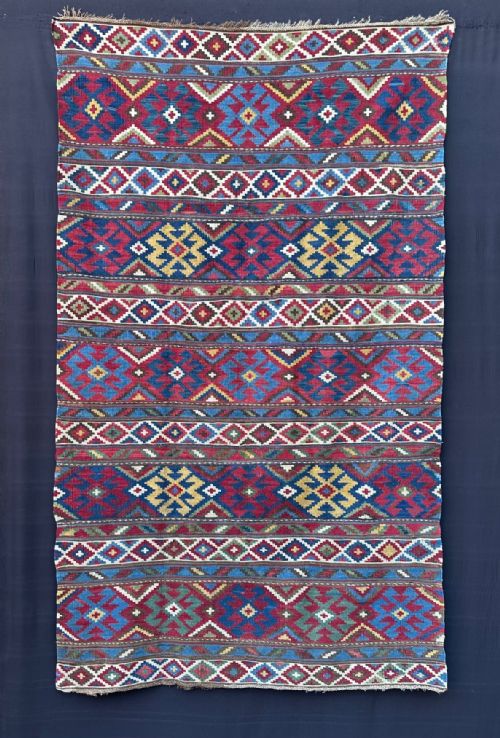
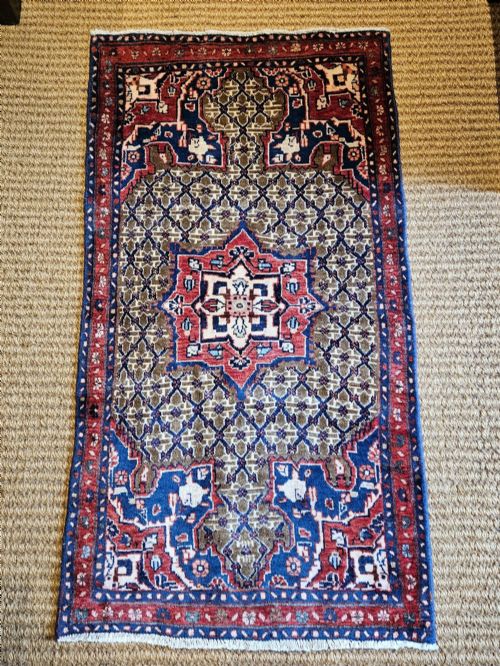
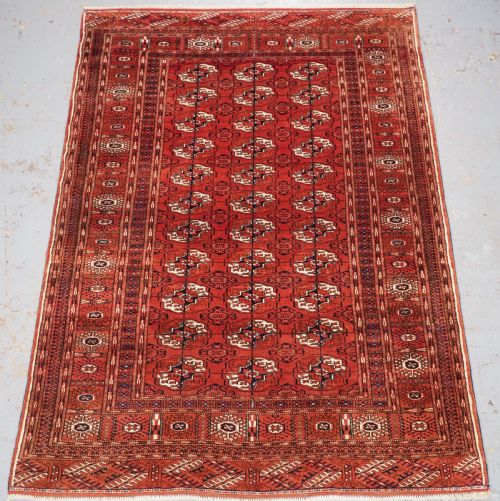
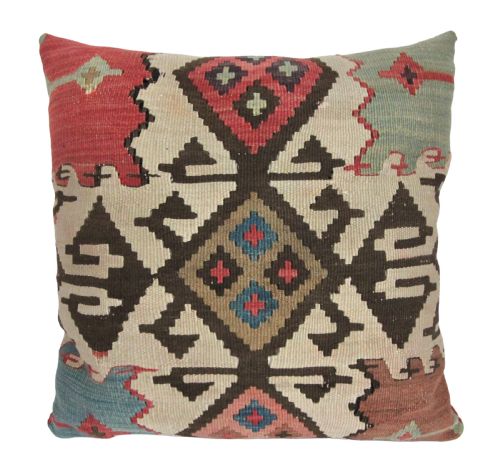
When you search for a handmade oriental rug, you are looking at woven textiles originating from Persia, the Caucasus, Anatolia, and Central Asia. These pieces include village rugs, tribal weavings, prayer rugs, torba faces, and decorative cushions produced across the nineteenth and early twentieth centuries. On this page, you will most frequently meet tribal and village examples bearing traditional motifs specific to groups such as the Tekke Turkmen, Baluch, Qashqai, and Heriz.
The regional variety spans from small hearth-sized rugs and Baluch sofreh to larger Heriz carpets and Shirvan kilims. Each piece carries the distinct design language of its maker, ranging from geometric guls to Mina Khani patterns and central medallions. Dating spans from the mid nineteenth century up to the nineteen-twenties, reflecting generations of nomadic and village weaving traditions.
Materials and Construction
These textiles rely principally on wool and hand-spun wool for the pile, paired with a sturdy cotton warp to maintain structural integrity. The use of hand-spun wool gives the pile a varied uptake of dye, creating the subtle abrash tones characteristic of older village work.
Weaving techniques vary by origin, encompassing flatwoven kilims, pile knots, and specialised formats like dowry rugs and chuval faces. The density of the weave dictates the definition of the geometric and figurative motifs executed by the weaver.
Handmade Oriental Rug Retail Price Guide 2026
Typical asking prices for handmade oriental rug among the pieces listed under this phrase on Sellingantiques today, from the lower quarter to the upper quarter. They describe what is for sale here now, not the wider market.
Nomadic weavers occasionally embedded small intentional flaws into their carpets to ward off the evil eye and claim humility.
Judging Quality and Execution
Quality in these textiles rests upon the precision of the weave, the depth of the palette, and the integrity of the materials. Pieces featuring hand-spun wool display a richer, more luminous character as the wool ages and wears.
Design clarity and the preservation of traditional tribal motifs further separate standard village work from exceptional pieces. The handling of secondary borders and the originality of the field design determine the standing of an individual rug.
The Handmade Oriental Rug Glossary
- Kilim
- A flatwoven carpet or rug produced without a pile. These pieces rely on interlocking warp and weft threads to form sharp geometric patterns.
- Gul
- A medallion-like primary motif repeated across Turkmen and other Central Asian carpets. Each tribal group utilises distinct variations to denote heritage.
- Abrash
- A natural variation in colour shading caused by changes in batches of hand-spun yarn or dye lots. This variation is a hallmark of traditional vegetable dyeing.
- Warp
- The vertical foundation threads stretched lengthwise on the loom. The pile knots are tied around these stationary strands.
- Torba
- A small storage bag face produced by Turkmen nomads. These decorative textile fragments were often hung inside tents or used during dowry processions.
Handmade Oriental Rug: Frequently Asked Questions
How do I identify a tribal rug?
Tribal rugs typically display geometric patterns, stylised animal forms, and repeating motifs like guls rather than formal curves. They are usually produced by nomadic or village weavers working from memory rather than cartoon blueprints.
Look for irregularities in the borders and minor shifts in symmetry that reveal the hand of an individual maker rather than factory production.
Where were these rugs made?
The pieces originate from regions across Persia, the Caucasus, Anatolia, and Central Asia. Specific areas include Khorassan, Shirvan, and the traditional lands of the Turkmen and Qashqai tribes.
Each region developed a recognisable palette and repertoire of symbols tied to local materials and cultural traditions.
Are these rugs suitable for daily use?
Many of these durable wool textiles withstand normal domestic traffic when placed over a suitable underlay. Placing them away from direct, harsh sunlight protects the natural dyes from fading over time.
Regular gentle vacuuming without a beater bar keeps the wool pile free from trapped grit and dust.