

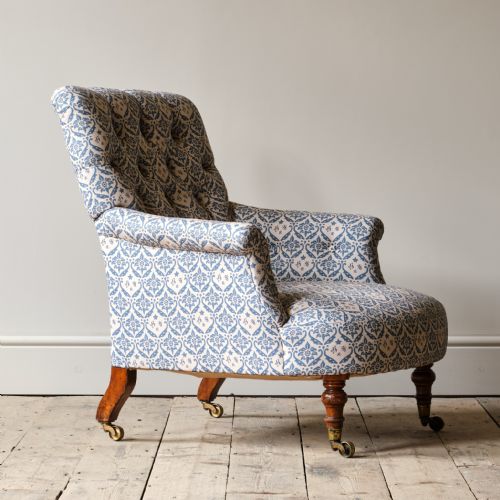
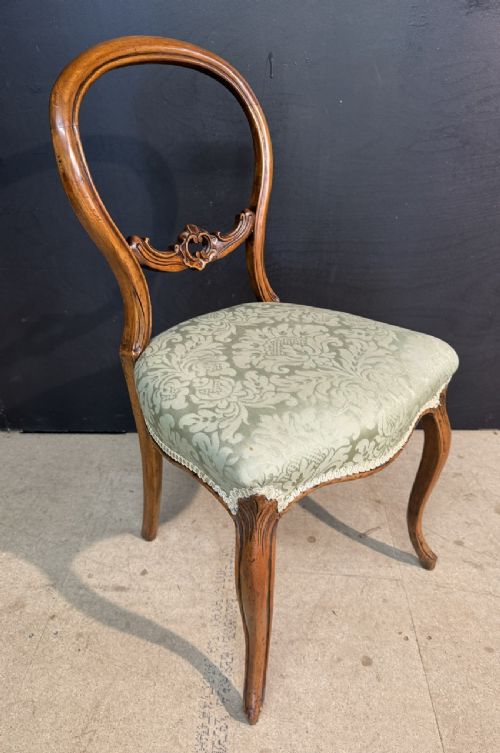
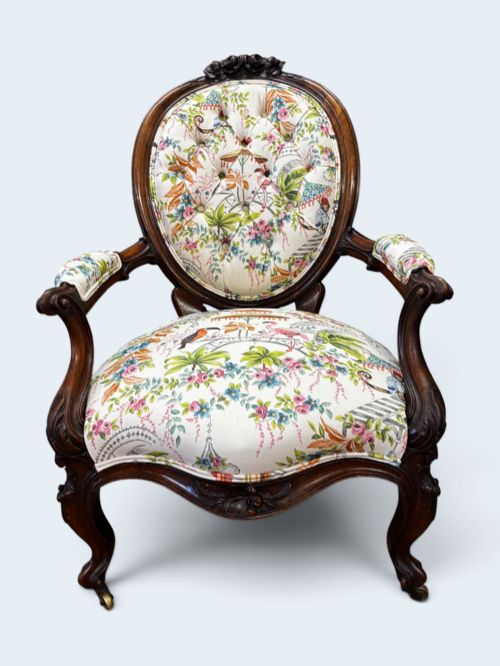
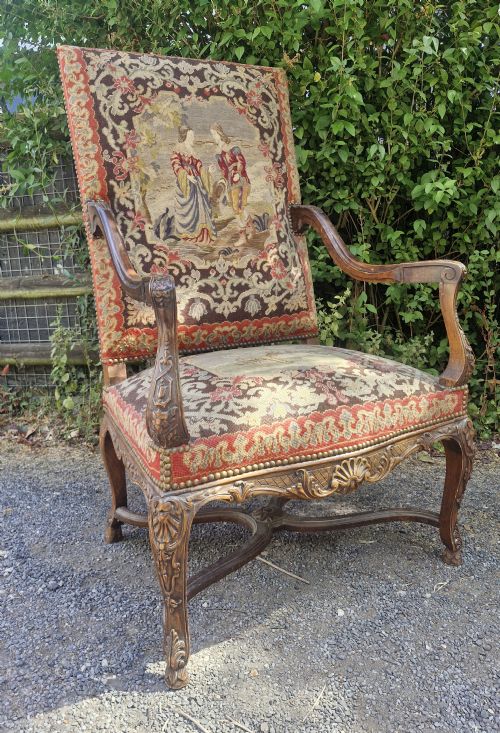
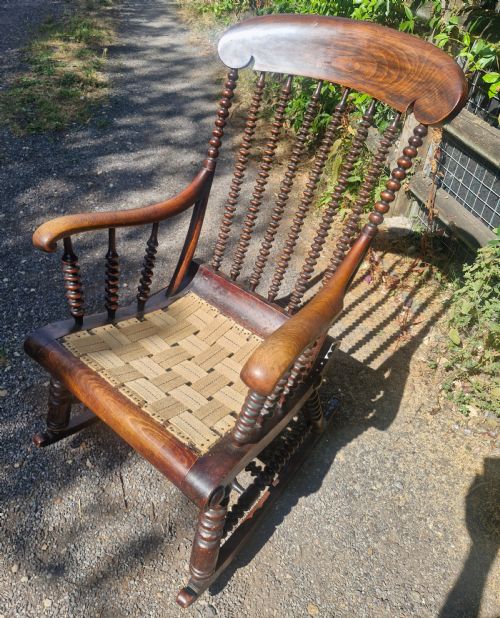
Victorian X Frame Chair
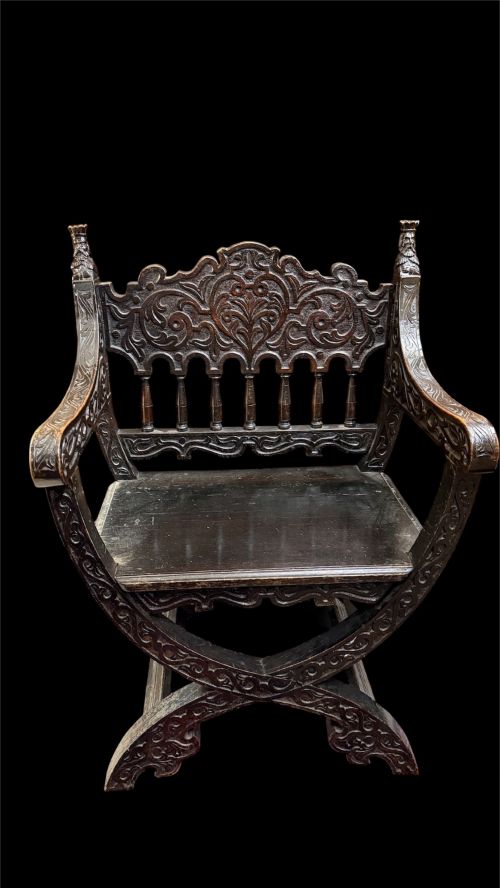
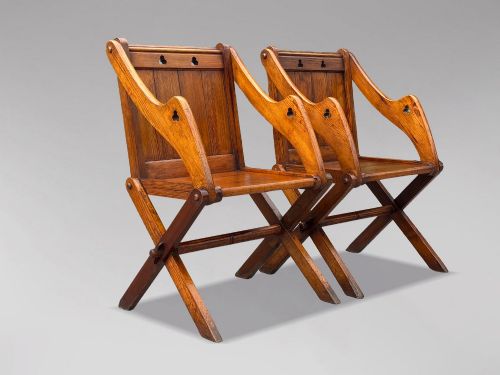
A victorian x frame chair brings architectural geometry and deep comfort into a room through its crossed intersecting stretchers.
Victorian X Frame Chair
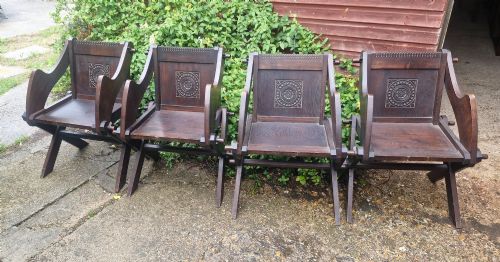
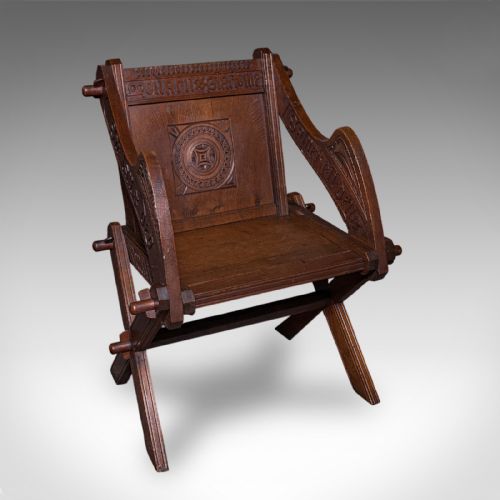
A buyer seeking a victorian x frame chair is looking at distinct architectural seating built with crossed structural supports beneath the arms and seat. These pieces emerge primarily during the nineteenth century across Victorian and Edwardian periods, drawing on Gothic and Renaissance revivals.
The most common format on this page is the robust oak or mahogany armchair, often featuring carved details and upholstered pads. Alongside conventional armchairs, variations include dining chairs, corner chairs, and low salon seating.
Origins span English workshops and continental makers, incorporating styles from heavy Gothic Revival to lighter Napoleon III designs. The defining cross-frame geometry remains constant across these diverse regional interpretations and secondary forms.
Materials and Technique
Carpenters constructed these frames from dense hardwoods like oak, walnut, mahogany, and pitch pine, ensuring the intersecting members could bear substantial weight. Joinery relied on precise halving joints where the cross braces met, reinforced by internal dowels and pegs.
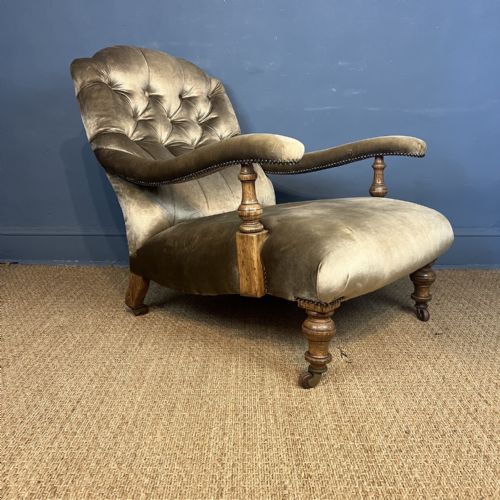
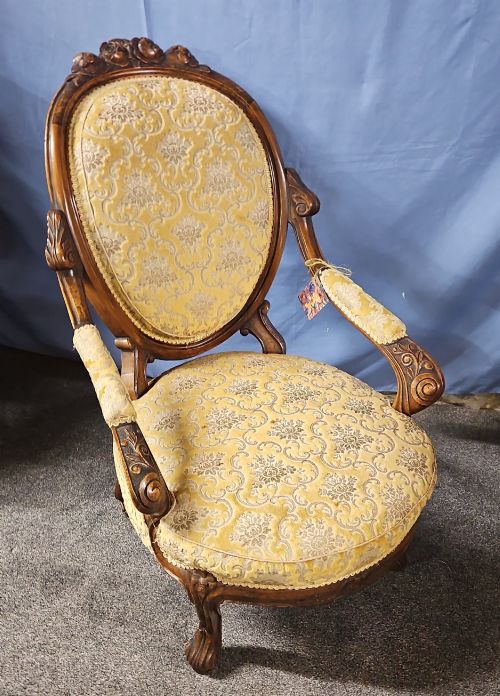
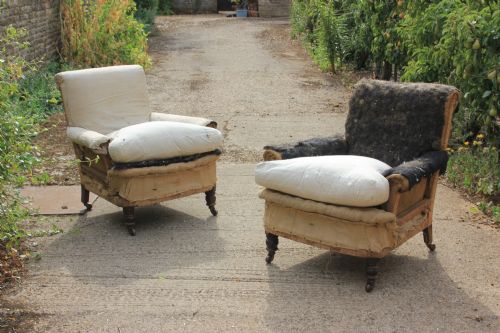
Upholstery methods utilised traditional stuff-over techniques with horsehair stuffing, secured by hessian webbing beneath leather, velvet, or woven fabric. Cast iron and brass components also appear on specific metal-framed or brass-accented variants.
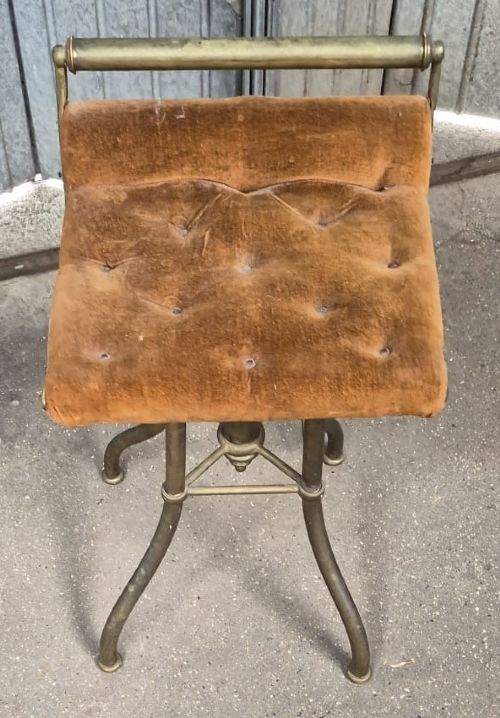
One enthusiastic harpist clearly needed specialised seating, judging by the brass-framed upholstered seat designed specifically for musicians.
Craftsmanship and Proportion
Quality reveals itself in the rigidity of the central cross-frame intersection and the depth of the timber carving. Superior examples exhibit seamless joinery where the diagonal members cross, maintaining structural integrity without supplementary metal brackets.
Proportion and wood selection separate standard utility pieces from exhibition grade seating. Finer pieces employ figured walnut or rich mahogany with crisp, deep-relief carving along the crest rail and arm supports.
Howard and Sons·Gillows·Morison and Co·R W Wingfield
The Victorian X Frame Chair Glossary
- X-frame
- A chair construction method utilising two diagonal members crossing beneath the seat to form an X shape. This structural arrangement has ancient precedents but saw significant revival during the Victorian era.
- Gothic Revival
- An architectural and decorative style drawing inspiration from medieval forms. Pieces in this style often feature pointed arches, trefoils, and heavy carved oak frames.
- Hessian
- A coarse woven fabric typically manufactured from jute fibres. It serves as the traditional concealed foundation layer for supporting upholstery stuffing.
- Salon suite
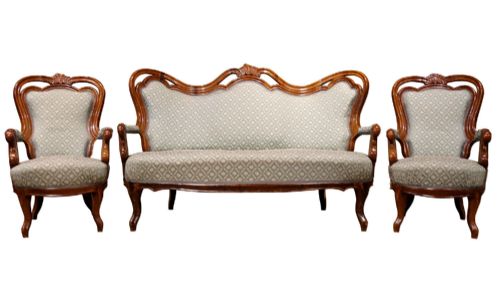
- A matched set of seating furniture designed for formal reception rooms. These groupings commonly include a central settee accompanied by armchairs and side chairs sharing identical timber and upholstery.
Victorian X Frame Chair: Frequently Asked Questions
How do I identify a true Victorian x frame chair?
Examine the timber species, joinery methods, and the style of the carving. Nineteenth-century examples typically employ solid oak, walnut, or mahogany with hand-cut joints rather than modern mechanical fasteners.
Look for period-appropriate upholstery foundations such as hessian and traditional webbing beneath the seat. Secondary indicators include nineteenth-century turnings and stylistic nods to Gothic or Renaissance revivals.
Were these chairs used for dining or lounging?
Their usage depended entirely on the specific sub-form and frame height. Sturdier oak iterations functioned as library or hall seating, while padded velvet variants served in drawing rooms.
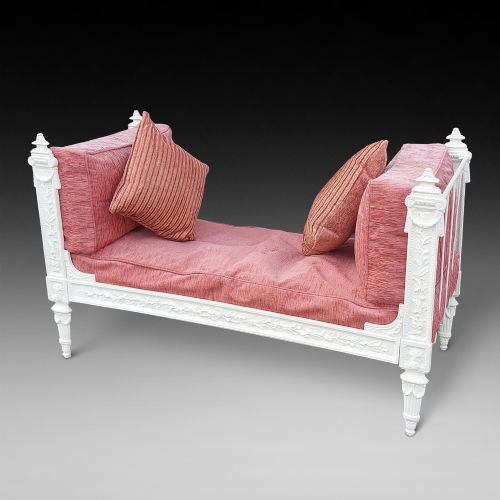
Lower seated versions and daybeds provided relaxed lounging, whereas matching sets of X-frame chairs were built specifically for formal dining rooms.
How should I care for the leather and wood?
Maintain the timber by applying traditional beeswax periodically to nourish the grain and prevent the wood from drying out. Avoid placing the furniture near direct heat sources or in strong sunlight.
Condition leather upholstery with specialised natural balms to preserve suppleness and prevent cracking over time. Dust carved crevices gently with a soft dry brush.
Can these chairs handle daily modern use?
Solid hardwood frames built with cross-braced geometry offer exceptional structural stability. Most pieces are robust enough for everyday seating when the underlying joinery remains sound.
If a piece feels slightly loose at the cross-section, a professional readjustment of the internal pegs or joints restores full functionality for modern living.