


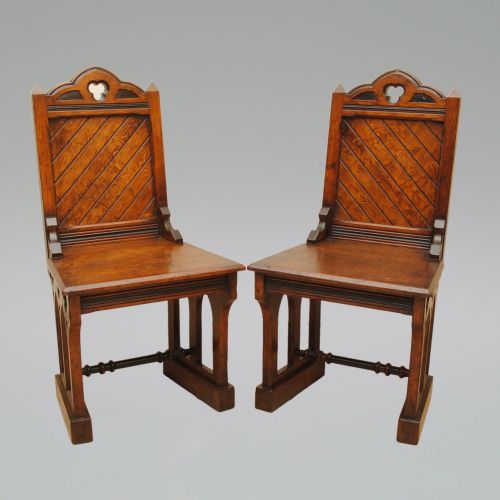


Pitch Pine Hall Seating
Pitch pine hall seating brings robust Victorian Gothic character into an entranceway through heavy timber construction and ecclesiastical design.
Pitch Pine Hall Seating
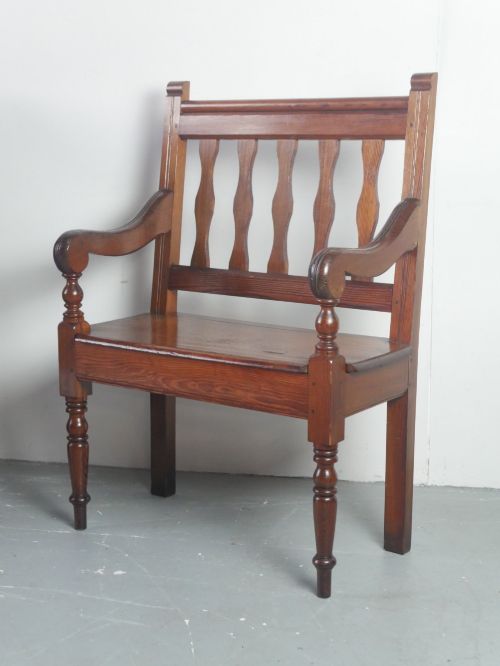
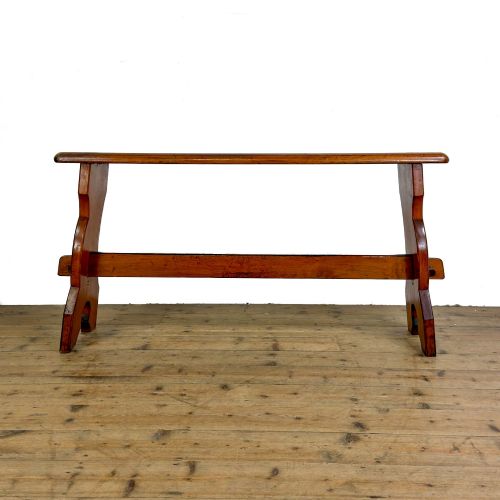
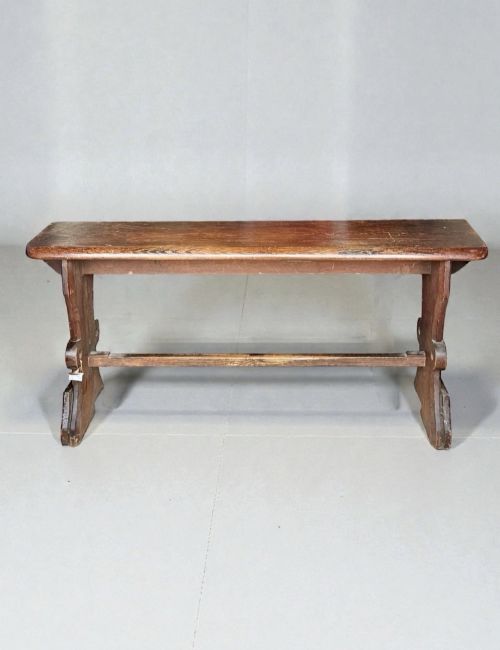
Pitch pine hall seating encompasses sturdy benches, settles, and armchairs designed for hallways and entrance spaces during the Victorian era. These pieces draw heavily on Gothic revival aesthetics, featuring architectural details and substantial timber frames.
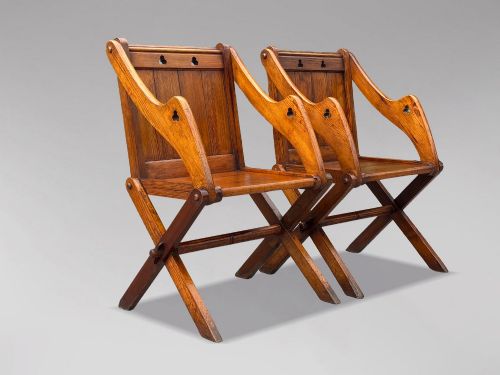
The selection frequently includes paired armchairs in the Glastonbury style alongside single benches and church organist seats. Dating primarily from the mid to late nineteenth century down to the early twentieth century, these items reflect utilitarian domestic and ecclesiastical origins.
Makers utilised dense, resinous timber to construct durable furniture meant to withstand heavy daily use in entrance halls and vestibules. The visible grain and warm amber tones of the wood define the visual appeal of these functional antiques.
Materials and Construction
Craftsmen built these items using pitch pine, a dense and durable wood prized for its prominent grain pattern and natural resin content. This timber allowed for crisp carving and strong structural joints necessary for heavy hallway furniture.
Construction frequently incorporated architectural joinery methods alongside secondary materials such as brass, cast iron, and metal studs. Upholstery fabric occasionally appears on padded seats, complementing the stark wooden frames.
Flip-over benches allowed Victorian musicians to quickly reverse their seating direction, a clever mechanism that now serves quirky dual purposes in a modern hallway.
Assessing Quality in Hall Seating
Quality rests in the crispness of the Gothic carving and the distinctness of the pitch pine grain across the visible surfaces. Pieces displaying refined proportions and purposeful architectural detailing stand apart from simpler utilitarian forms.
The integrity of the timber frame and the survival of original metal elements dictate the overall standard of preservation. Strong joinery and honest patination reflect the original workshop execution without masking the age of the wood.
The Pitch Pine Hall Seating Glossary
- Pitch pine
- A durable nineteenth-century timber known for high resin content and pronounced parallel grain patterns. It darkens richly over time when exposed to light.
- Gothic Revival
- An architectural and decorative style popular during the Victorian period, drawing on medieval forms. It manifests in pointed arches, cusping, and heavy vertical lines.
- Glastonbury armchair
- A folding chair design with X-framed legs, flat arms, and a sloping back, revived during the nineteenth century in the Gothic taste. This form derives from ancient ecclesiastical examples.
- Organ bench
- A long, narrow seating form designed for church musicians, often adapted for domestic hallway use. These pieces share the sturdy construction and utilitarian height of ecclesiastical furniture.
Pitch Pine Hall Seating: Frequently Asked Questions
Where should I place a pitch pine hall bench?
These benches suit spacious entryways, corridors, or boot rooms where their substantial timber frames command adequate room. Their utilitarian origins make them practical for everyday use near an entrance.
Ensure the placement allows the deep grain and architectural details to remain visible rather than obscured by coats and bags.
How do I care for pitch pine furniture?
Maintain the wood by dusting with a dry cloth and occasionally applying a traditional beeswax polish to nourish the dry timber. Avoid placing the furniture near direct heat sources that might dry out the resinous wood.
Gentle care preserves the natural patination built up over more than a century of domestic or ecclesiastical service.
What defines the Gothic revival style in these chairs?
Gothic revival pieces feature pointed arches, trefoils, and sturdy framework reminiscent of medieval architecture and church furnishings. This aesthetic was immensely popular in Victorian Britain for domestic entrance seating.
The style emphasises verticality and solid construction over delicate ornamentation, creating a commanding presence in a hallway.
Are these seats comfortable for daily sitting?
Most historic hall seating prioritises durability and upright posture over deep squabs or cushioning, reflecting its original purpose for short-term waiting. Some variations include padded elements or wide wooden arms for added support.
Adding a simple loose cushion can increase comfort without altering the historic character of the timber seat.