


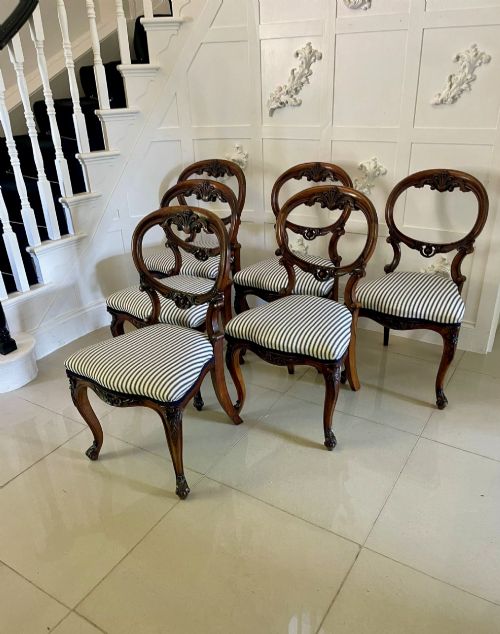
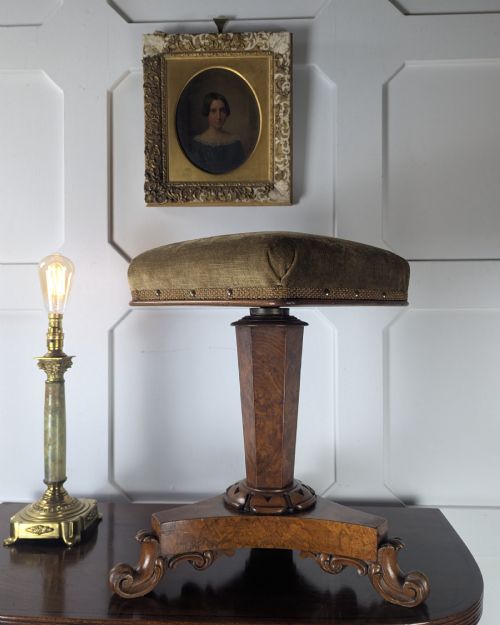
Victorian Walnut Seat
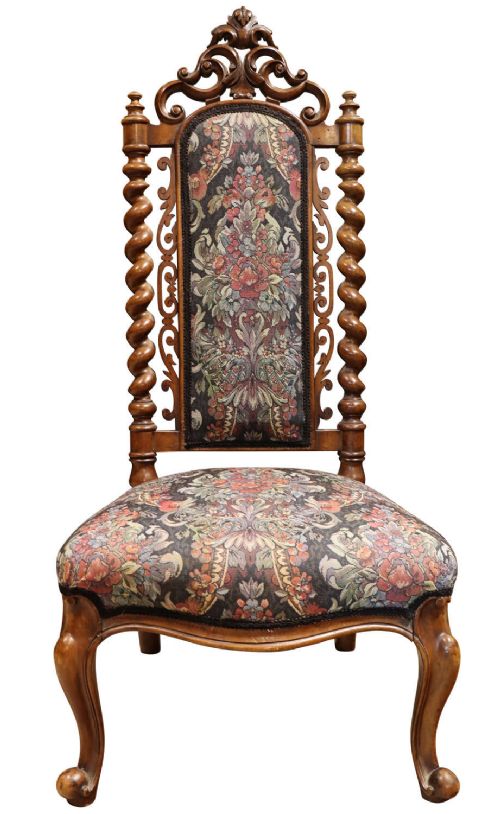
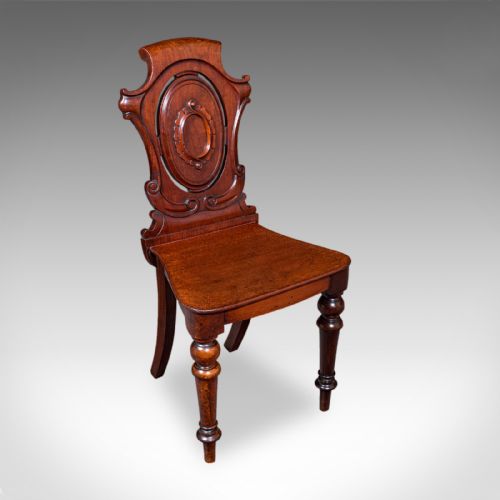
A victorian walnut seat brings rich timber tones and varied nineteenth-century forms into a modern room, from dining chairs to compact nursing seats.
Victorian Walnut Seat
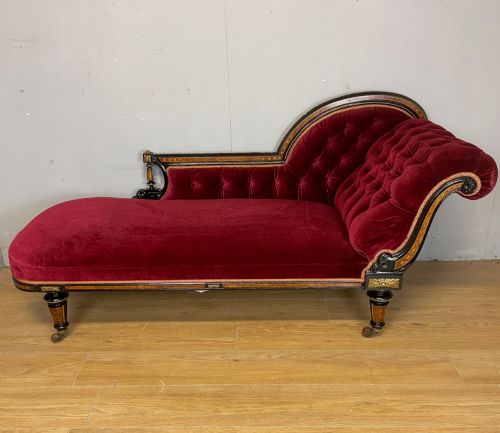
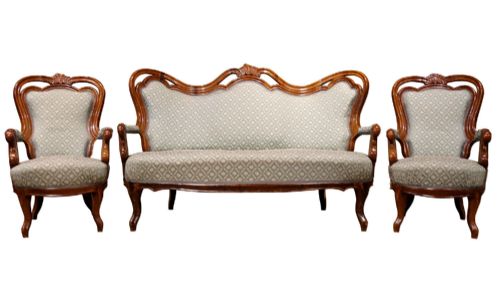
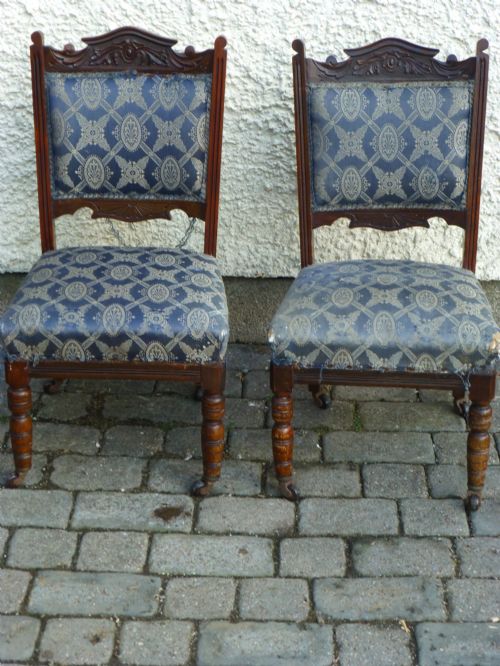
The selection ranges from single occasional chairs and pairs of side chairs to larger sets of dining chairs and multi-piece salon suites. Specialist seating such as revolving desk chairs, adjustable piano stools, and low-slung conversation seats also appear across the nineteenth-century timeline.
Stylistic influences vary considerably, drawing upon Rococo Revival curves, Queen Anne proportions, and French Louis XV details alongside heavier Scottish Baronial forms. Many examples integrate structural framing with diverse upholstery, ranging from original tapestry work to modern textile coverings.
Materials and Construction
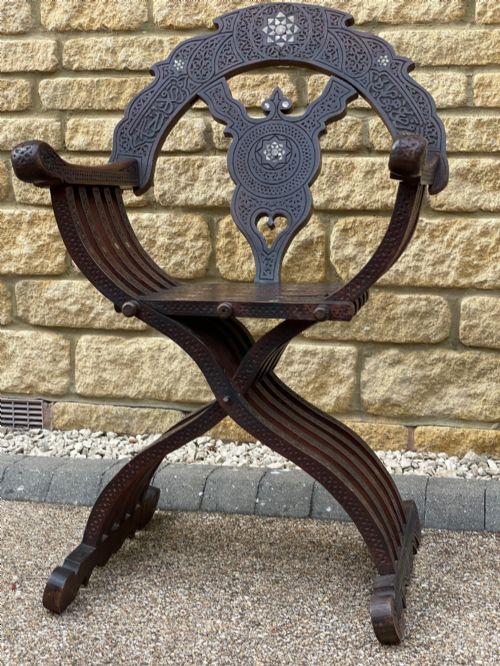
Makers utilised solid walnut and decorative walnut veneers applied to supportive framing timbers, frequently pairing the rich dark wood with brass castors, ormolu mounts, and mother of pearl inlay. Interior padding relies on traditional stuffing methods supported by webbing and hessian foundations.
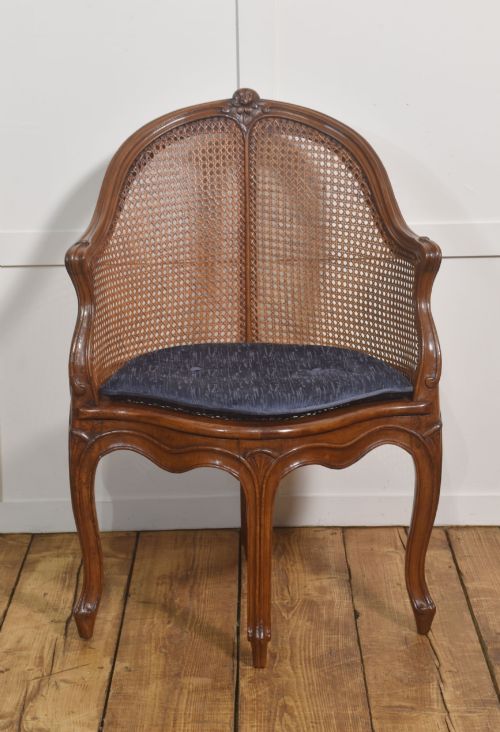
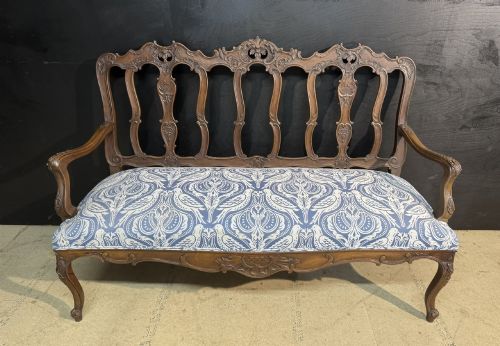
Upholstery finishes span velvet, fabric, leather, and tapestry, while specific regional pieces incorporate cane panels or intricate hand-carved detailing along cabriole legs and balloon backs.
Some Victorian conversation seats were engineered so thoroughly that three people could sit facing entirely separate corners of the room at once.
Markers of Quality
Quality reveals itself in the depth of timber figure, particularly the richness of burr walnut veneers, and the crispness of hand-carved ornamentation along the frame. Superior examples maintain structural integrity in the joints without excessive movement.
The standard of upholstery materials and the fidelity of revival styles, whether Rococo or Queen Anne, further separate standard utilitarian seating from exceptional parlor pieces.
Howard and Sons·Doveston Bird and Hull·SF Cullen
The Victorian Walnut Seat Glossary
- Burr walnut
- A highly figured timber veneer prized for its swirling grain patterns derived from tree growths. It was frequently utilised on the primary visual surfaces of nineteenth-century cabinet work and seating frames.
- Cabriole leg
- A furniture leg that curves outward and then tapers inward, mimicking an animal's limb. This form is commonly seen on mid to late nineteenth-century seating influenced by earlier decorative periods.
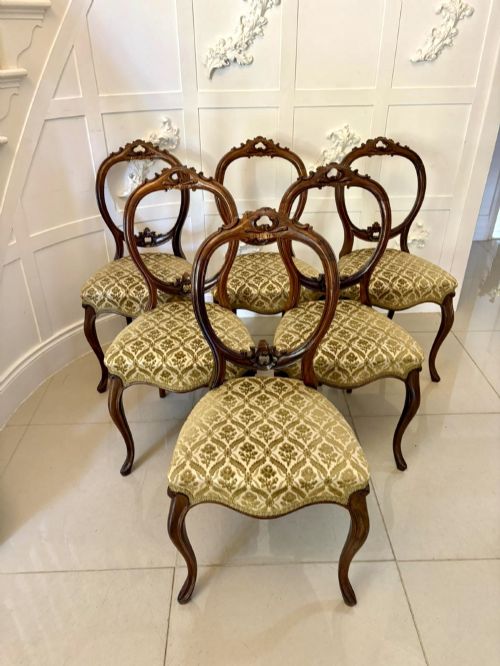
- Balloon back
- A rounded, oval-shaped chair back resembling the silhouette of a hot air balloon. It represents a defining profile of Victorian dining and side chairs.
- Conversation seat
- A multi-person upholstered seat designed with curved seating positions so occupants face different directions. These pieces are often referenced as loveseats or confidantes.
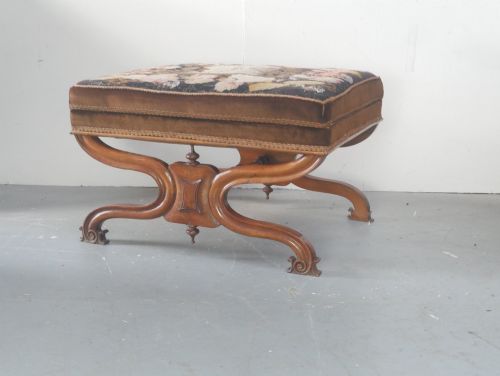
- X frame stool
- A cross-legged stool design utilising intersecting structural supports beneath the upholstered top. This geometric form often includes decorative beadwork or needlepoint seats.
Victorian Walnut Seat: Frequently Asked Questions
How do I identify a Victorian walnut chair?
Look for the characteristic dark, rich tones and prominent grain of walnut timber, often contrasted with mahogany or secondary woods. Nineteenth-century characteristics typically include hand-carved frames, balloon backs, or cabriole legs reflective of revival styles.
Examine the construction methods beneath the upholstery where visible, such as traditional joinery and hand-tied webbing. Period pieces also feature distinct proportions and decorative flourishes like button backs or inlaid panels.
What is a conversation seat used for?
A conversation seat, sometimes called a courting chair or loveseat, was designed for Victorian parlor socialization. The curved configuration allowed two or more people to converse comfortably while facing different directions.
These distinctive upholstered seats served as focal points in large reception rooms and formal drawing spaces. Their unusual multi-directional layouts make them standout statement pieces in contemporary interiors.
Are nursing chairs lower than normal chairs?
Nursing chairs feature lower seats paired with high backs, originally designed to assist women with infant care during the nineteenth century. The low stature allowed the sitter to hold children comfortably while maintaining proper back support.
Today, these compact seats function well as occasional chairs in bedrooms or tighter living spaces. Their diminutive height and decorative carved frames make them particularly versatile.
How should I care for antique walnut furniture?
Maintain antique walnut by keeping seating away from direct heat sources and strong sunlight, which can dry out timber and fade delicate fabrics. Regular dusting with a soft, dry cloth preserves the polished surface without damaging the wood.
Treat upholstered elements according to their specific textile type, employing professional cleaning for delicate velvets or tapestries. Periodic checks of the frame joints help ensure long-term structural stability.