
Victorian Walnut Console Table
When you search for a victorian walnut console table, you are looking for mid-to-late nineteenth-century timber forms that combined decorative presence with daily utility.
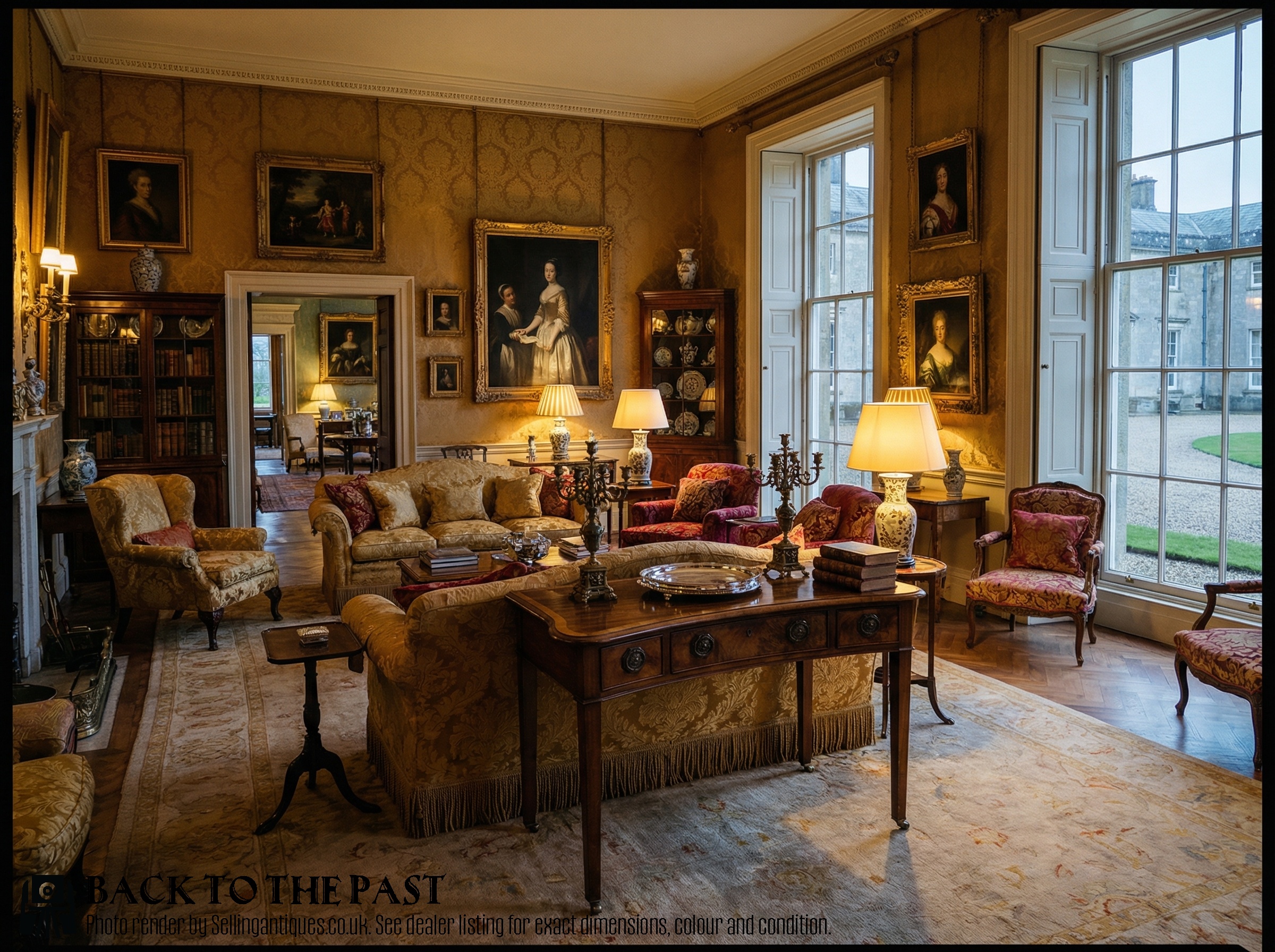
Victorian Walnut Console Table
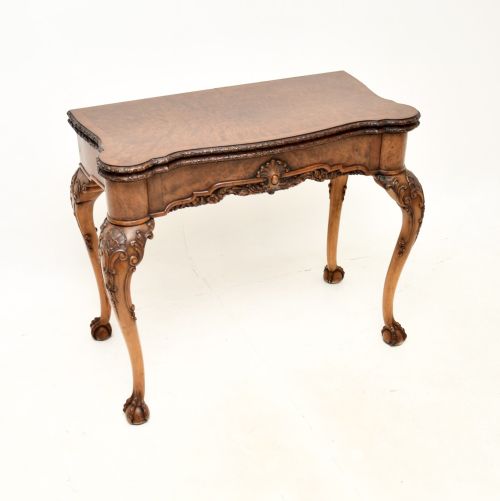
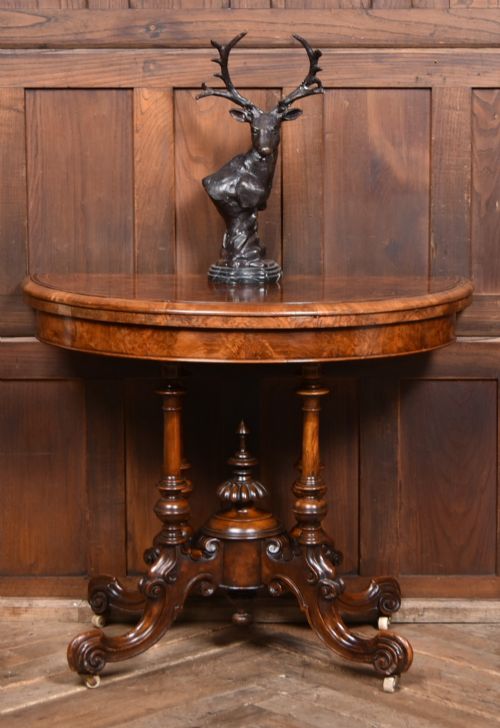
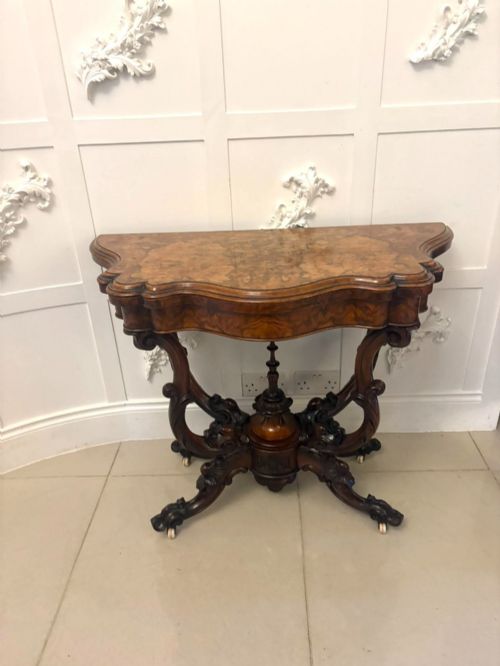
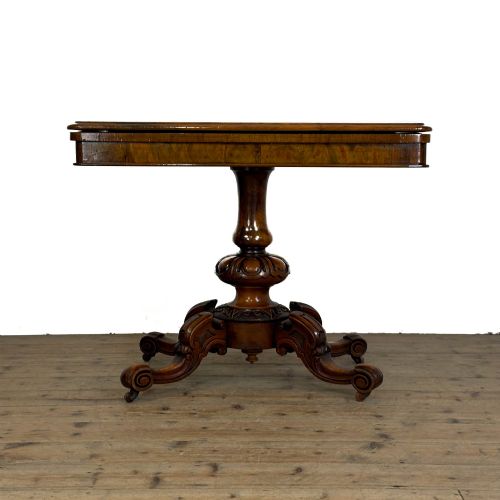
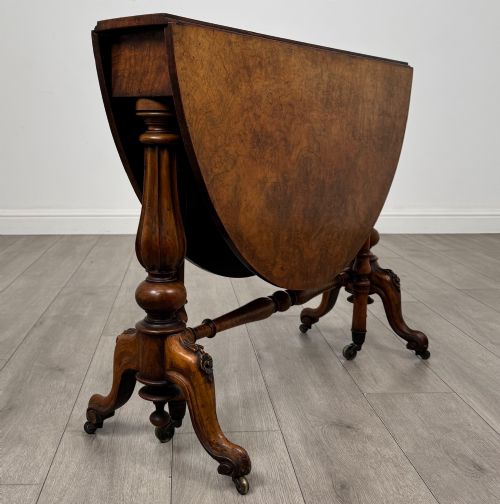
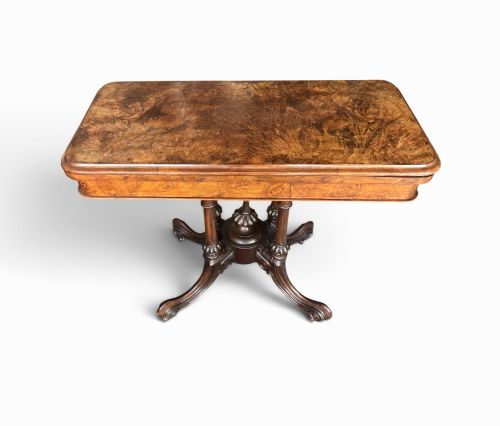
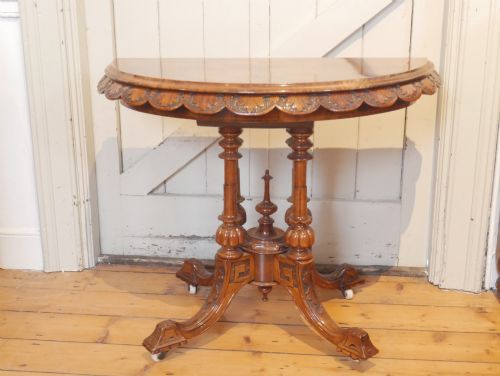
A victorian walnut console table encompasses a range of timber furniture pieces designed primarily to sit against a wall, frequently appearing in forms that also served as card, games, or tea tables with fold-over tops. The pieces recorded here span the mid nineteenth century into the early twentieth century, taking stylistic cues from Rococo Revival and French revival designs.
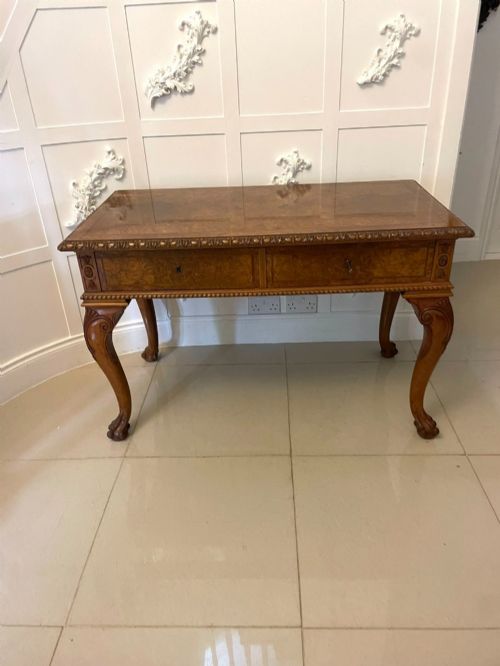
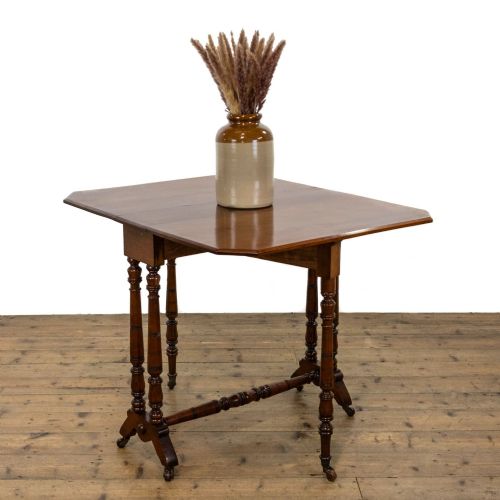
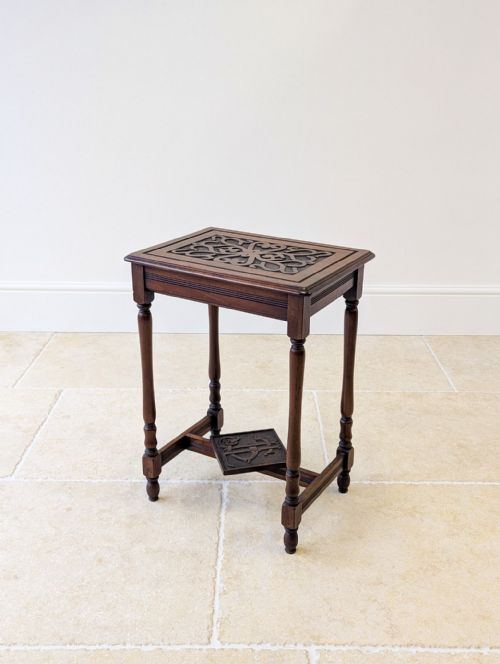
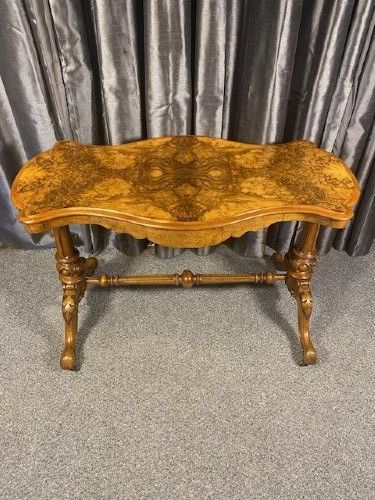
Makers and workshops of the period utilised the dense grain of walnut to produce side tables, occasional pieces, and serving tables alongside traditional console formats. Many examples feature serpentine fronts, carved supports, and fitted compartments intended for domestic entertaining and display.
How they were made
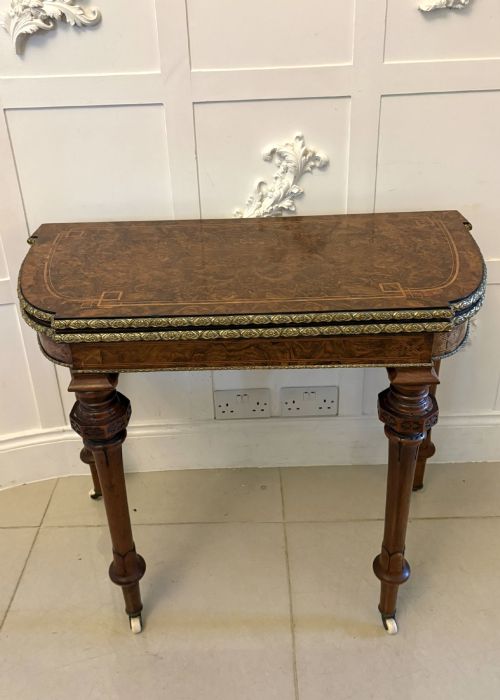
Cabinet makers selected figured walnut and burr walnut veneers over secondary timbers, applying fine marquetry inlay and floral details to the primary display surfaces. Structural elements often integrated solid walnut and ebonised wood, supported by carved timber bases or scrolled legs.
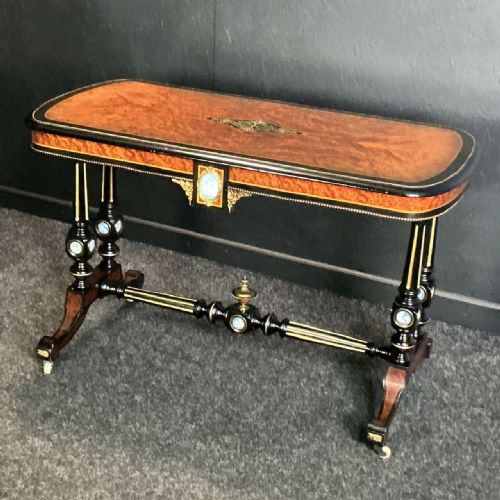
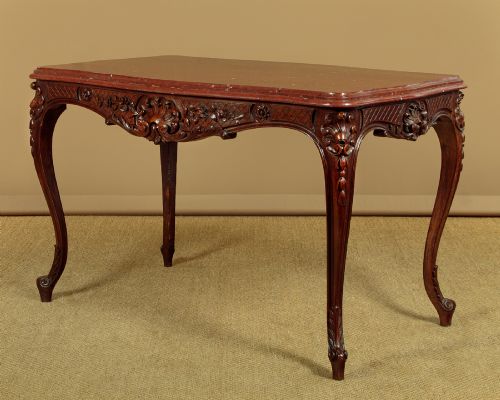
Higher grade examples incorporated cast ormolu mounts, brass hardware, and inset marble tops, particularly on French and Italian influenced console designs. Joints were typically pegged and tenoned, while fold-over mechanisms on games tables relied on precision wooden hinges and pivoting frames.
Some tables hide secret compartments beneath their folding tops, ready for forgotten cards and counters.
What varies in quality
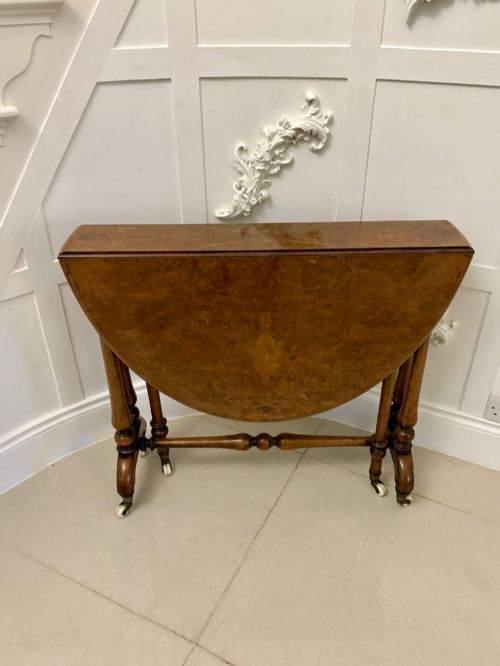
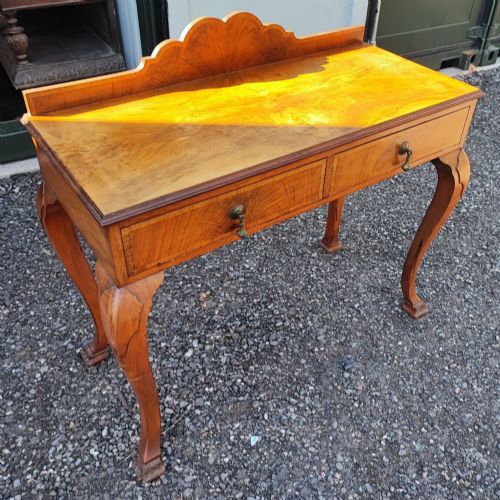
The distinction between standard domestic production and exhibition quality pieces lies in the selection of the burr walnut veneer and the intricacy of the marquetry. Rich, highly figured grain patterns paired with profuse, hand-carved basket bases or floral inlay elevate specific tables above simpler side forms.
Construction depth also dictates standing, with superior items displaying substantial solid timber framing, refined Ormolu mounts, and balanced proportions that maintain rigidity across extended console and card table formats.
Edwards & Roberts·Gillow and Co·J & T Scott
The Victorian Walnut Console Table Glossary
- Burr walnut
- A specialised timber veneer harvested from the wart-like growths on walnut trees, prized for its swirling, highly figured grain patterns. It was frequently used on the top surfaces of high-end Victorian tables.
- Marquetry
- The art of applying small pieces of veneer to a structure to form decorative patterns and pictures. Floral motifs in lighter woods were commonly inlaid into darker walnut backgrounds.
- Ormolu
- Gilded bronze mounts applied to furniture for decorative enrichment. These metallic accents appeared on revival console tables influenced by French design.
- Serpentine front
- A furniture front characterised by a wavy contour, curving outward in the centre and inward at the sides. This shape added visual movement to walnut side and card tables.
- Fold-over top
- A hinged tabletop design that doubled the surface area when opened, commonly found on tables intended for games or tea.
Victorian Walnut Console Table: Frequently Asked Questions
What is a victorian walnut console table?
A victorian walnut console table is a nineteenth-century timber furnishing built to stand against a wall, frequently featuring figured burr walnut veneers and decorative carving.
Many examples double as card or games tables with fold-over tops, reflecting the multipurpose nature of domestic furniture during the period.
How were these tables used originally?
These tables served primarily as decorative hall or parlour furniture, providing a surface for lamps, ornaments, or serving.
In dual-purpose formats, they transformed into card or tea tables when hosting guests during evening gatherings.
How do I identify different styles?
Styles range from plain Victorian side tables to elaborate Rococo Revival pieces featuring scrolling supports and floral marquetry.
Look for the presence of Ormolu mounts, marble tops, and French revival influences to date specific design variations.
How do I care for walnut veneer?
Walnut furniture benefits from stable indoor humidity and protection from direct sunlight to prevent the veneer from drying or fading.
Regular dusting with a dry cloth preserves the polished timber finish without damaging historical surfaces.