
Victorian Upholstered Slipper Chair
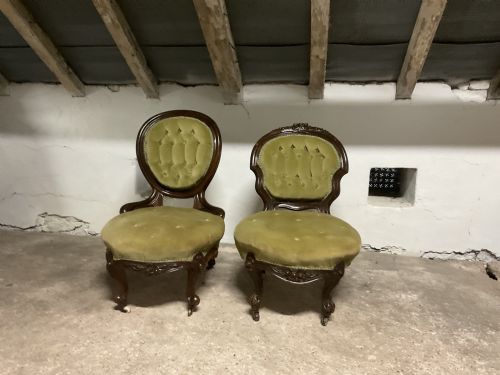
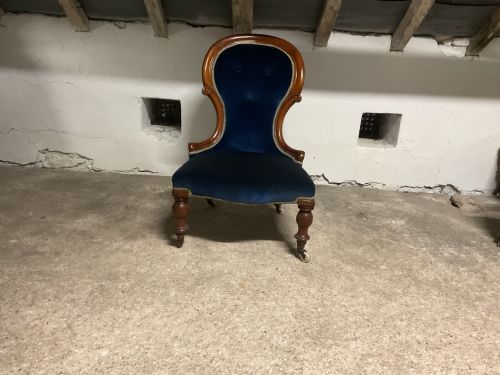
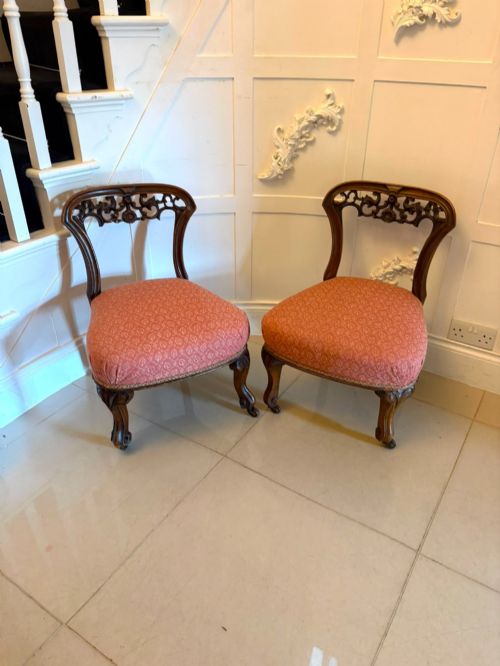
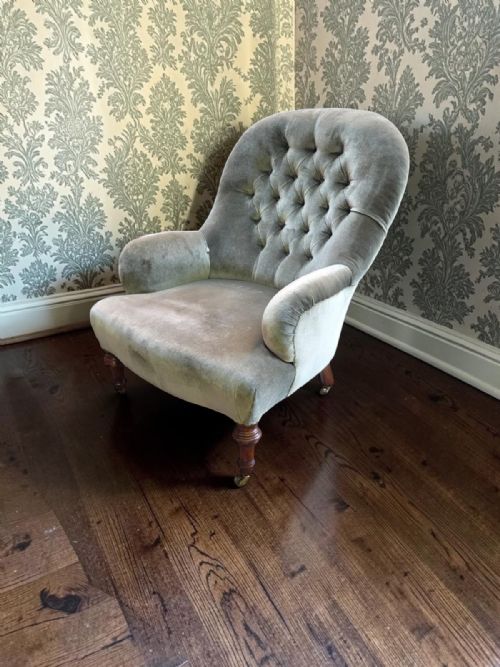
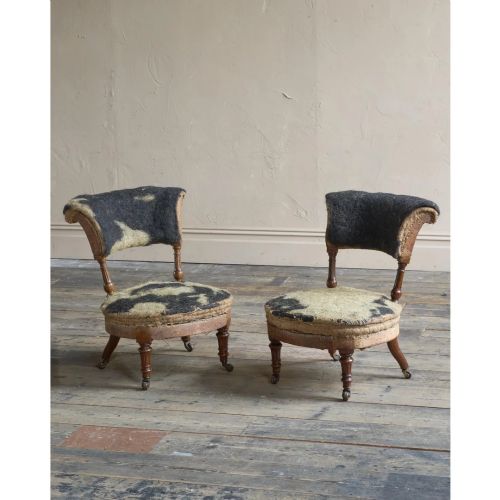
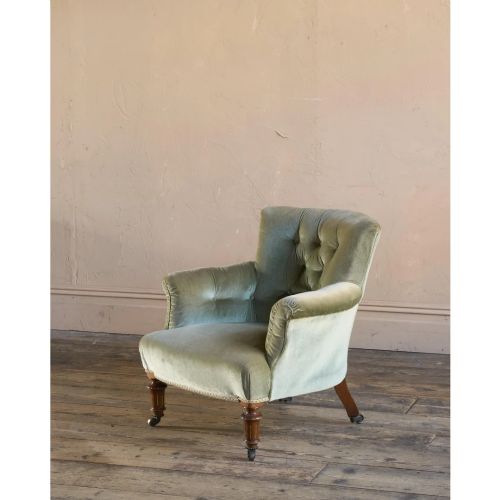
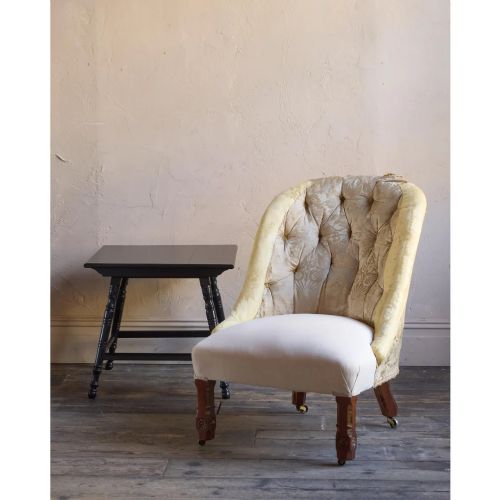
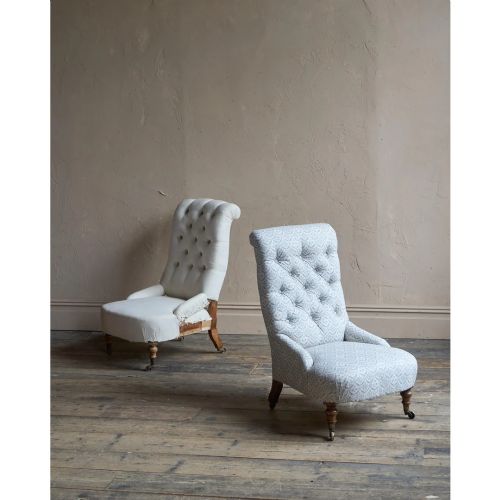
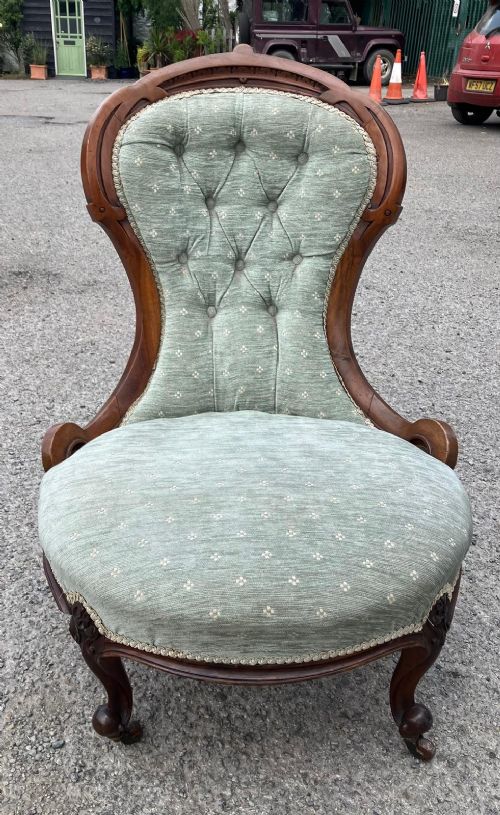
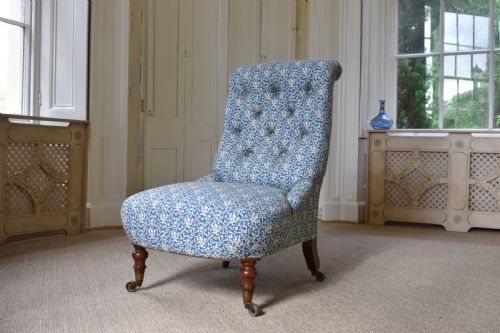
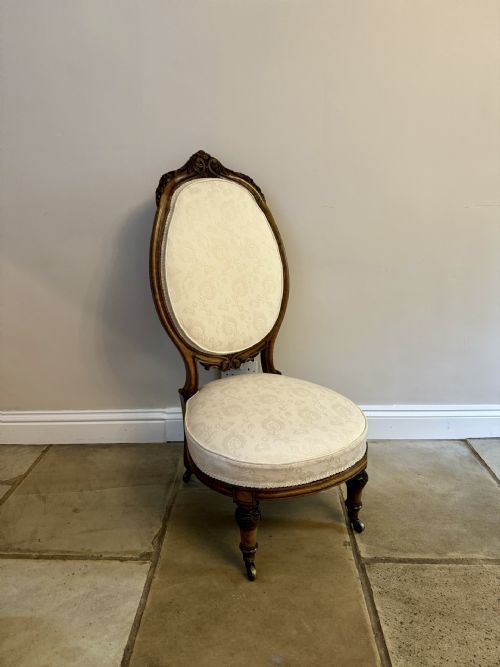
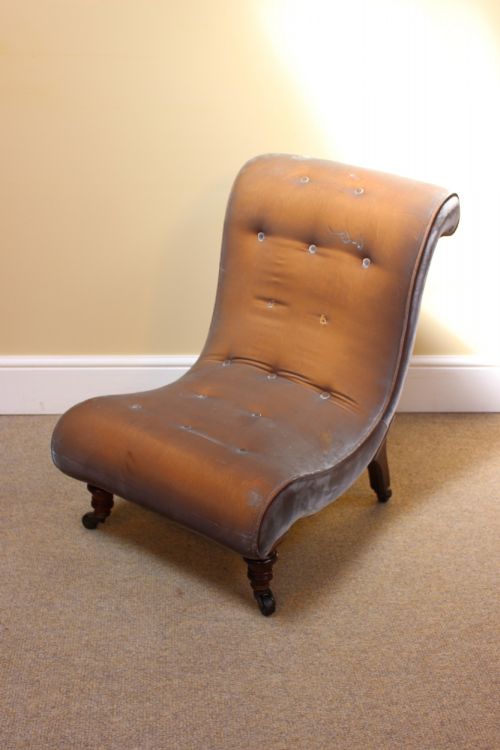
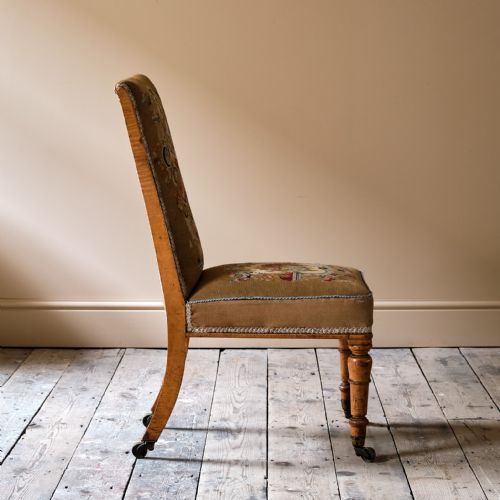
These low-slung seats are a Victorian upholstered slipper chair, designed for domestic comfort near the hearth or in the bedroom.
Victorian Upholstered Slipper Chair
A Victorian upholstered slipper chair is a low-seated armchair designed originally for bedrooms and dressing rooms, allowing ladies to sit comfortably while putting on footwear or garments.
The selections on this page span the nineteenth century, including the Victorian era, alongside Edwardian and William IV periods, appearing as nursing chairs, side chairs, and occasional chairs.
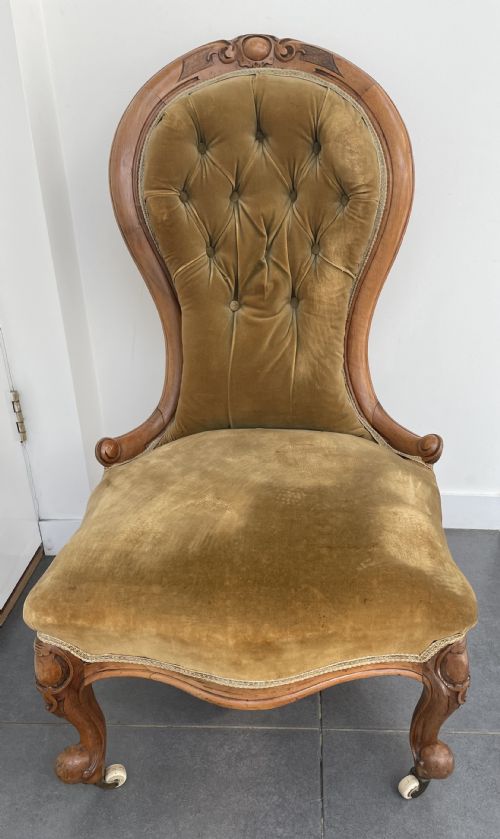
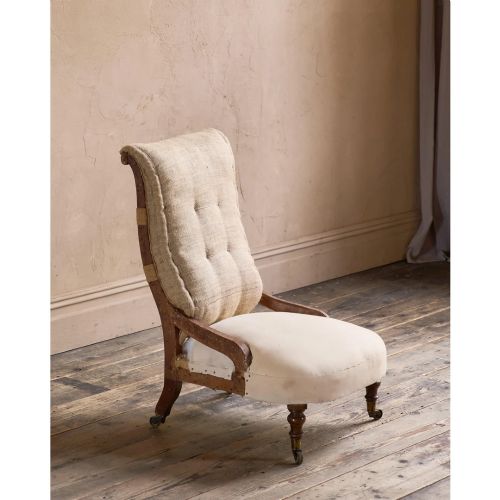
Frames take specific forms such as tub chairs, spoonbacks, and scroll backs, showing origins in English workshops as well as French Napoleon III designs.
How They Were Made
Carved timber frames in mahogany, walnut, rosewood, birds-eye maple, and giltwood provide the structural foundation for these low seats.
Traditional upholstery techniques utilise hessian webbing, internal stuffing, and button back detailing finished in velvet, tapestry fabric, and patterned textiles.
Cast brass or metal castors often support the front legs, while iron back constructions provide hidden strength to the low profiles.
The nineteenth century dates span across Victorian, Edwardian, William IV, and Napoleon III periods.
What Varies in Quality
The refinement of the timber carving on the exposed frame separates standard production from superior examples.
Makers known for exceptional joinery and branded stamps elevate a piece above ordinary workshop output.
The integrity of the original sprung stuffing and the choice of textile covering determine the finish of each seat.
Howard and Sons·Gillows·Holland and Sons
The Victorian Upholstered Slipper Chair Glossary
- Spoonback
- A chair back shaped like the bowl of a spoon, curved to fit the human spine. This padded design became popular during the mid nineteenth century.
- Button back
- An upholstery technique where deep indentations are formed by pulling twine through padding to secure buttons. This creates a diamond pattern across the fabric.
- Nursing chair
- A low-seated chair historically designed for feeding infants or personal grooming. These seats feature shortened legs and supportive upright backs.
- Tub armchair
- A comfortable seat with a continuous curved back and arms forming a rounded enclosure. This style often sits on low wooden legs.
- Giltwood
- Timber coated with a thin layer of gold leaf or gilt powder. This decorative finish appears on ornamental frames from the period.
Victorian Upholstered Slipper Chair: Frequently Asked Questions
Why are these chairs so low?
These seats were designed for dressing rooms and bedrooms, where low seating made changing shoes or garments easier.
Their compact height also kept occupants away from cold floor draughts near ground level.
How do I spot a nursing chair?
Nursing chairs feature very low seats combined with relatively tall backs for head and shoulder support.
They lack high armrests to allow voluminous Victorian skirts to drape freely over the sides.
Are these chairs comfortable for daily use?
The low profile and deep buttoned upholstery offer a surprisingly relaxed sitting position for modern living spaces.
Many examples provide substantial lumbar support through their curved nineteenth century frames.
Where should I place a slipper chair?
These compact seats fit easily into bedrooms, dressing areas, or corners of drawing rooms where space is limited.
Their low stature makes them useful accent pieces that do not block sightlines.
What is an iron-back chair?
An iron-back chair uses a concealed metal internal frame to provide structural rigidity to a slender wooden profile.
This technique allowed makers to build sturdy chairs with delicate curved silhouettes.