



Armless Accent Chair
An armless accent chair is a low-slung seating form designed for comfort and ease, spanning Victorian and Edwardian periods.
Armless Accent Chair
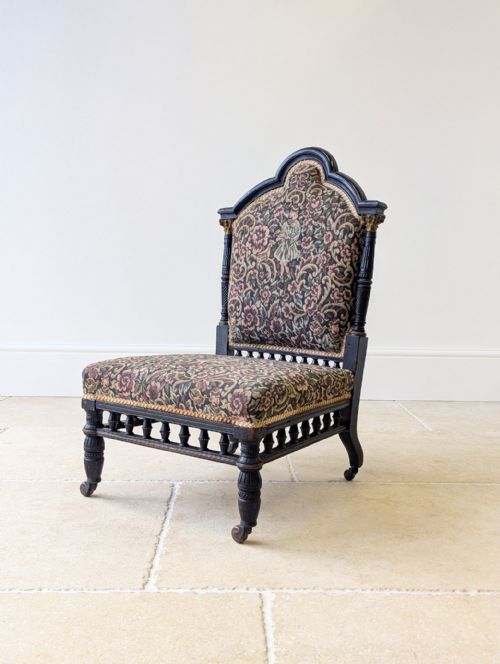
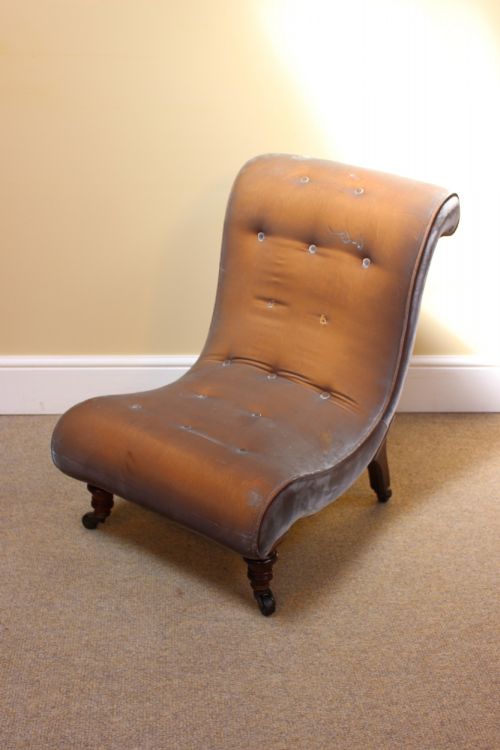
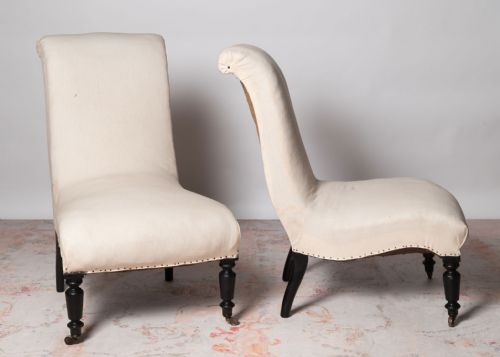
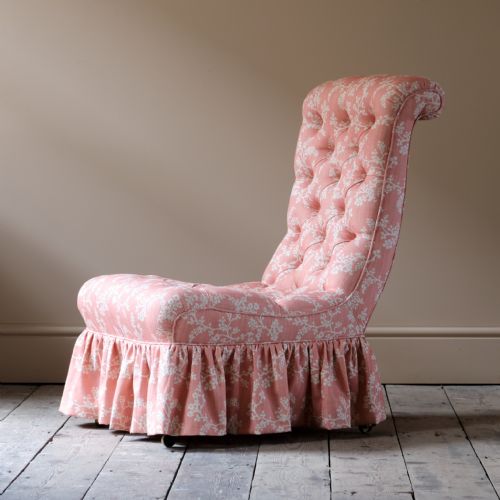
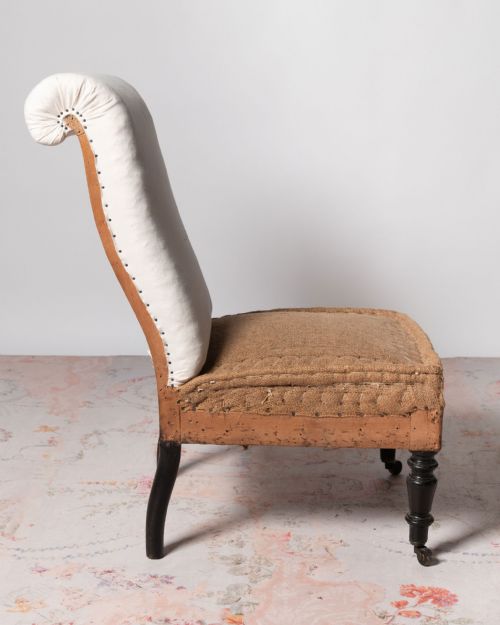
When you search for an armless accent chair, you encounter a selection spanning the nineteenth century through the Edwardian era, predominantly featuring low-slung forms known historically as slipper, nursing, or salon chairs. These low-profile seats were originally designed for bedrooms and dressing rooms, allowing individuals to sit comfortably while managing footwear or infants without obstruction from traditional armrests.
The selections available here range from carved walnut and ebonised wood frames to robust oak and mahogany structures. You will regularly find distinct regional and stylistic variations, including French scroll-back designs, Aesthetic Movement pieces, and Chinese yoke-back and hall chairs.
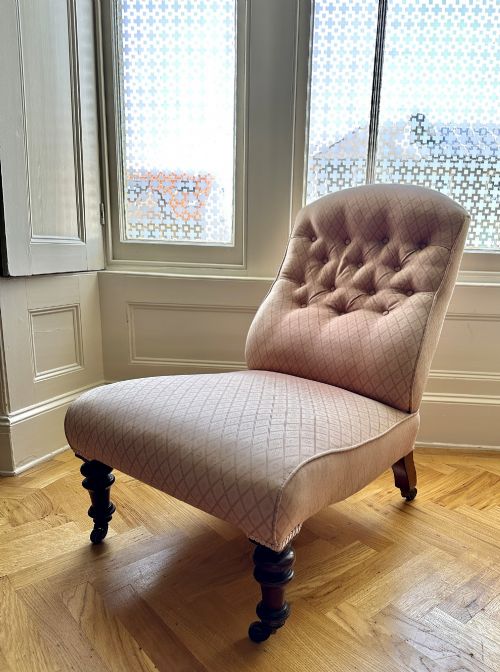
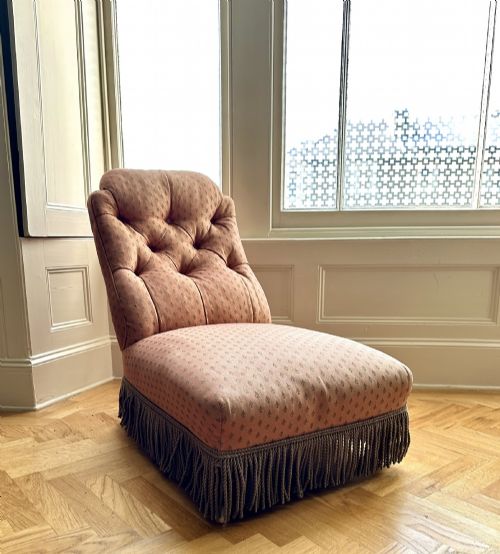
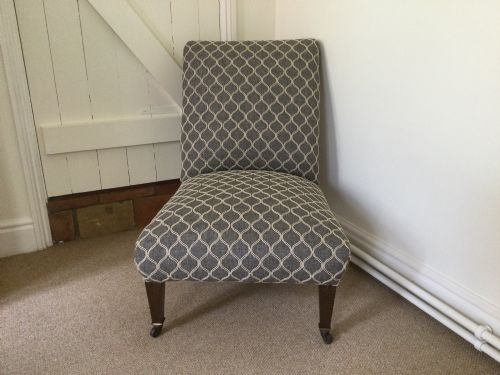
Victorian examples frequently showcase button-backed upholstery and turned or cabriole legs, whilst Edwardian interpretations tend towards cleaner lines and solid timber frames. These pieces function naturally today as decorative focal points in sitting rooms, reading corners, and bedrooms where space efficiency and low profiles matter.
How they were made
The structural framework of these chairs relies on traditional cabinet-making timbers such as walnut, mahogany, rosewood, and oak, often shaped with carved details or finished with ebonising and gilding. Frames are joined using robust interior joinery techniques to support the upholstered bodies without the lateral stability typically provided by armrests.
Upholstery forms the core of these seating types, utilising traditional stuffing and springing finished in materials ranging from textured velvet and woven carpet to contemporary upholstery fabrics. Brass castors and metal fittings frequently appear on nineteenth-century examples to facilitate movement across carpeted chambers.
Armless Accent Chair Retail Price Guide 2026
Typical asking prices for armless accent chair among the pieces listed under this phrase on Sellingantiques today, from the lower quarter to the upper quarter. They describe what is for sale here now, not the wider market.
The listings here span the 1850s through the Edwardian era, predominantly featuring walnut, ebonised wood, and mahogany frames upholstered in velvet and fabric.
What varies in quality
The distinction between ordinary and exceptional examples lies in the integrity of the timber frame and the refinement of the carved or ebonised details. Master workshops invested greater precision in the structural joinery and the subtlety of cabriole or bobbin-turned legs, ensuring the chair retained its rigidity despite the absence of bracing arms.
Upholstery execution and maker attribution also separate higher-tier pieces from standard production. Chairs bearing documented cabinet-maker stamps or originating from esteemed workshops command greater interest due to superior proportion, balance, and surviving original decorative treatments.
Gillows·Hindley and Sons·Howard and Sons
The Armless Accent Chair Glossary
- Slipper chair
- A low-seated, armless chair historically used in bedrooms for putting on footwear. These pieces sit close to the floor and often feature scroll backs.
- Nursing chair
- A low upholstered chair designed to give a person comfort and room while holding an infant. They share many physical traits with slipper chairs.
- Ebonised wood
- Timber treated with a dark stain or chemical finish to imitate ebony. This technique was widely utilised during the Victorian and Aesthetic Movement periods.
- Cabriole leg
- A furniture leg that curves outward and then tapers inward, terminating in a foot. This form draws inspiration from animal limbs and appears frequently on Victorian seating.
- Scroll back
- A chair back featuring an upper rail that curves backward in a tight scroll shape. It is a common stylistic marker on nineteenth-century French and English chairs.
Armless Accent Chair: Frequently Asked Questions
What is an armless accent chair used for?
These low-profile chairs were originally created for domestic chambers, dressing rooms, and nurseries, where their lack of arms provided freedom of movement for dressing or tending to children. Today, they serve as versatile occasional seating in living rooms and bedrooms.
Because they lack arms, they slide easily into compact spaces and allow conversational groupings without obstructing sightlines across a room.
How do I date a Victorian slipper chair?
Dating relies on examining the timber frame, leg style, and upholstery construction methods. Mid-nineteenth-century examples often utilise solid walnut with deep button-backed upholstery and turned wooden legs.
Later Victorian and Aesthetic Movement pieces introduce ebonised finishes and distinct brass hardware, while Edwardian variations show lighter oak or mahogany frames with simpler profiles.
Are these chairs comfortable for daily sitting?
Most pieces offer a surprisingly comfortable, relaxed sit due to their deep seats and supportive upholstered backs. Their low height encourages a relaxed posture rather than an upright desk seating position.
Buyers intending to use them daily often look for models with strong internal webbing and springs, or those that have been professionally reupholstered.
What distinguishes a nursing chair from a slipper chair?
While both share an armless, low-slung silhouette, nursing chairs historically emphasised enclosed comfort for mothers with infants. They frequently feature pronounced button-backing and lower seats.
Slipper chairs can share these traits but often lean towards decorative European styling, such as French scroll backs or Aesthetic Movement ebonised frames.