

Low Lounge Chair
A low lounge chair offers a relaxed, deep-seated posture suited to nineteenth and twentieth-century interiors.
Low Lounge Chair
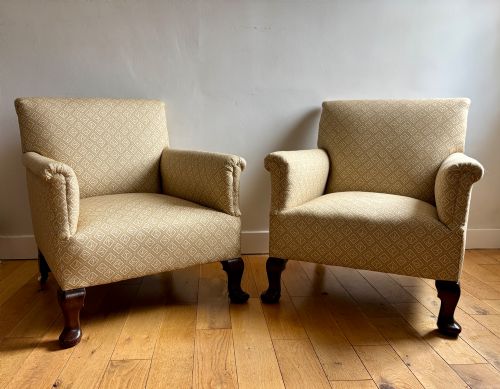
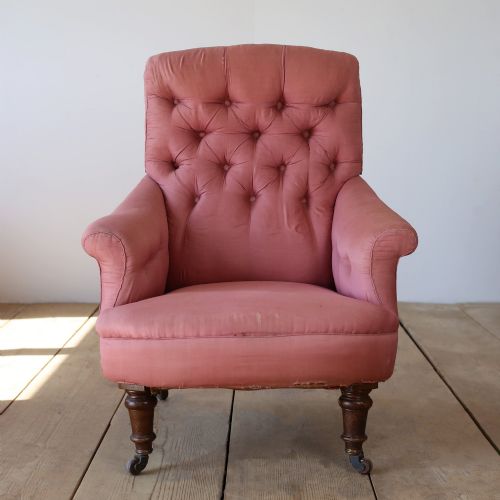
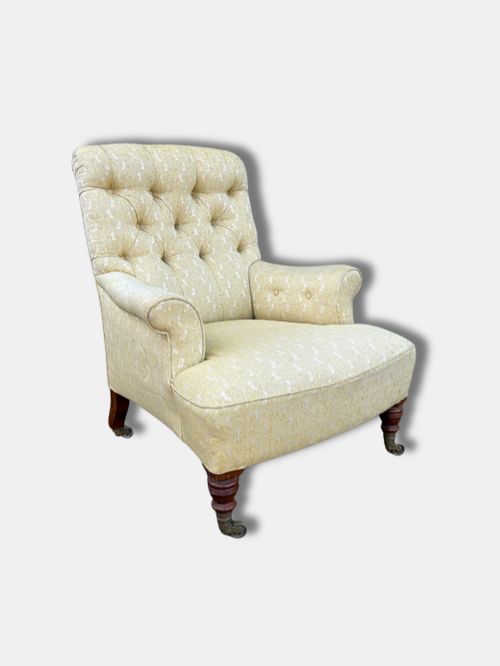
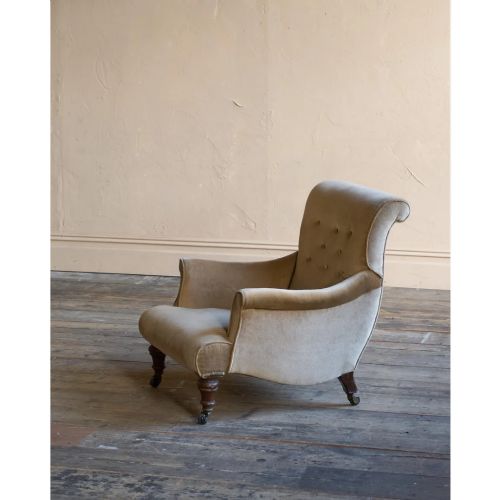
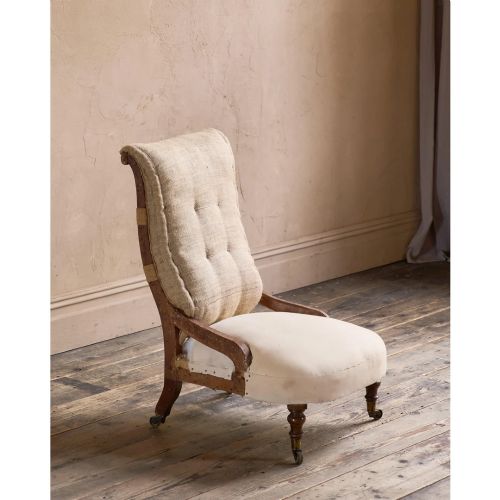
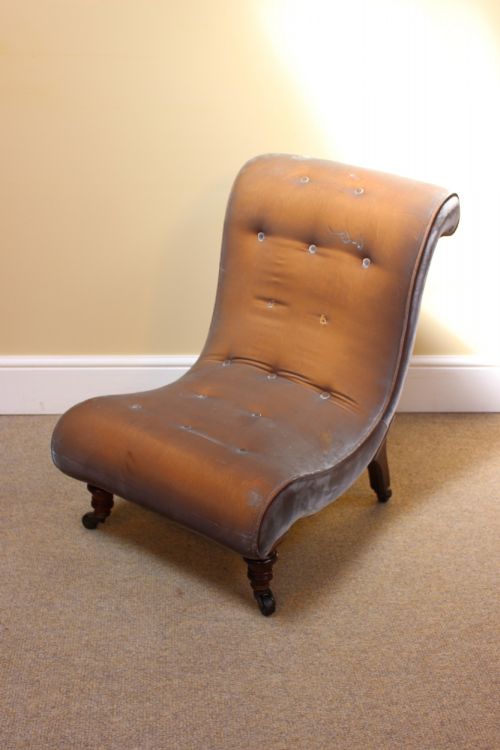
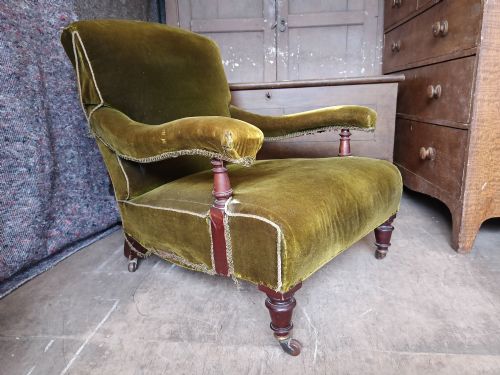
A low lounge chair sits close to the ground, taking forms such as nineteenth-century nursing chairs, slipper chairs, and deep country house armchairs. These seats originate from periods spanning the Victorian and Edwardian eras through to Art Deco designs of the 1930s.
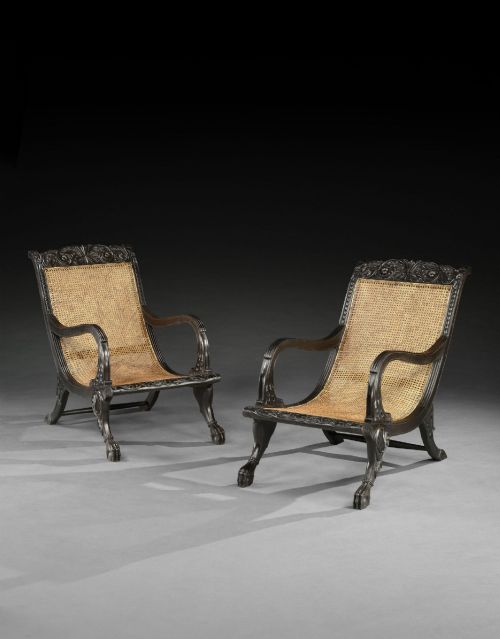
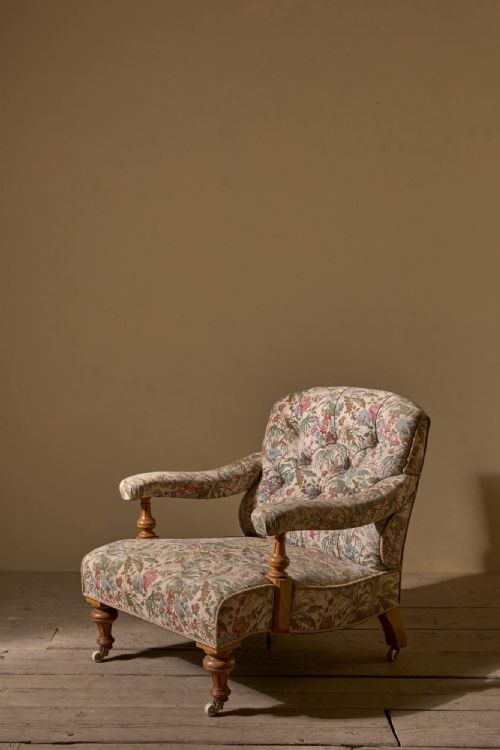
Buyers will encounter varied silhouettes on this page, including button-backed occasional seating, spoon-back frames, and club armchairs designed for comfort. Origins range from English country houses to French Napoleon III pieces and Ceylonese ebony examples.
The selection prioritises upholstered forms built for lower seating heights, whether structured as open armchairs or low bedroom chairs. Each piece reflects the domestic seating habits of its respective period, from Victorian parlours to twentieth-century living spaces.
How they were made
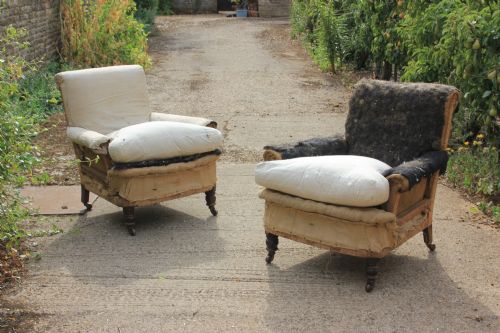
Frames rely on hardwoods including mahogany, walnut, rosewood, and ebony, alongside general timber construction to support sprung and padded interiors. Joinery and carved details, such as claw and ball feet, demonstrate traditional cabinet-making methods.
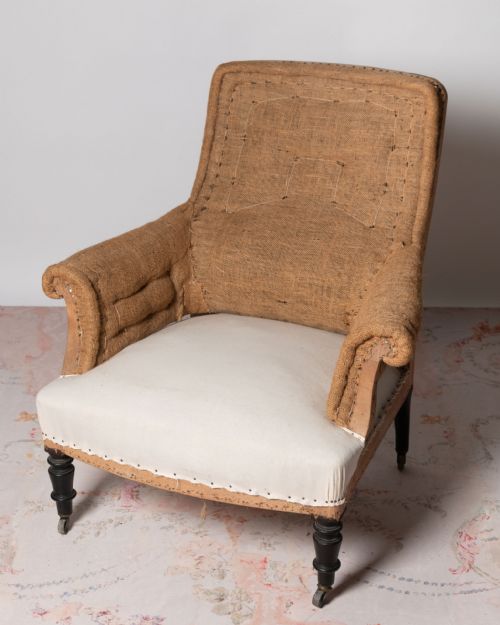
Upholstery defines the surface character, utilising velvet, leather, fabric, and ticking over deep padding. Button-backing and fringing complete the traditional finishing techniques recorded across the nineteenth and early twentieth-century examples.
Victorian nursing chairs sit low to the floor so ladies could manage their voluminous skirts without tripping.
What varies in quality
The integrity of the underlying hardwood frame and the depth of the seating construction dictate the standard of a low lounge chair. Pieces bearing maker attribution or distinct stylistic adherence to firms like Howard and Sons tend to exhibit superior upholstery structure.
Refinement shows in the hand-carving of timber components, such as mahogany legs and walnut frames, set against standard commercial joinery. The selection of covering materials, from original velvet to antique ticking, influences the overall integrity of the piece.
Howard and Sons·Whytock and Reid·Hampton and Sons·Shoolbred
The Low Lounge Chair Glossary
- Slipper chair
- An upholstered chair with low legs, historically designed for bedrooms to allow easier dressing.
- Nursing chair
- A low-seated Victorian armchair originally built without arms to accommodate the voluminous skirts worn by women.
- Button back
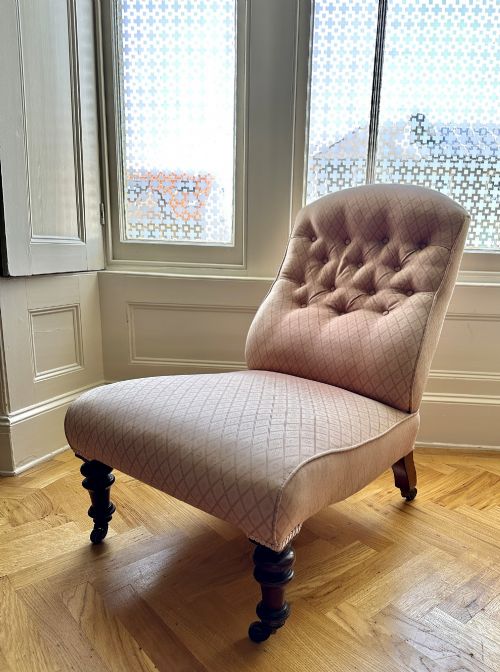
- An upholstery technique where buttons are pulled deep into the padding to create a symmetrical diamond pattern.
- Club armchair
- A deep, heavily upholstered seat designed for maximum comfort, often associated with nineteenth-century English lounging.
- Spoon back
- A padded chair back shaped like the bowl of a spoon, characteristic of mid-nineteenth-century seating.
Low Lounge Chair: Frequently Asked Questions
What is a low lounge chair?
A low lounge chair is a seat built closer to the ground than standard dining or desk chairs, intended for relaxed postures. The category encompasses Victorian nursing chairs, Edwardian slipper seats, and deep nineteenth-century club armchairs.
These pieces prioritise upholstered comfort, using sprung seats and padded backs. They appeared in bedrooms, drawing rooms, and country house smoking rooms across the nineteenth and early twentieth centuries.
How do I identify a Victorian chair?
Victorian chairs often feature dark hardwoods like walnut or rosewood, frequently paired with button-backed velvet upholstery. Details such as spoon-backs and low profiles for nursing or slipper chairs are common during this era.
Construction methods rely on solid timber frames and traditional stuffing materials. Comparing the carved woodwork and upholstery style to documented nineteenth-century forms helps confirm the period.
What is a Howard style armchair?
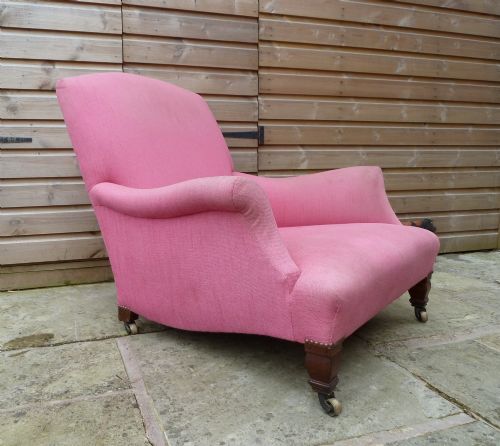
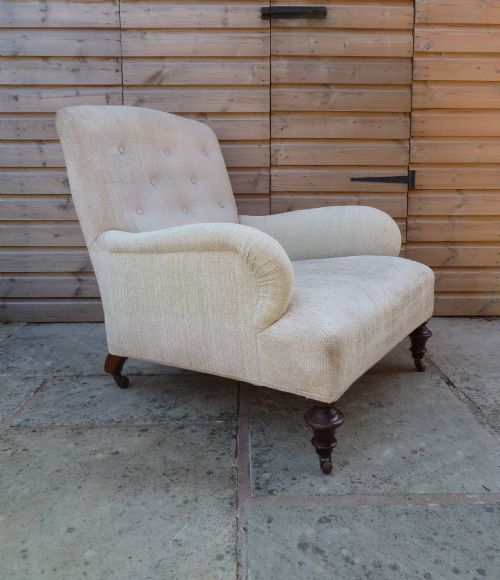
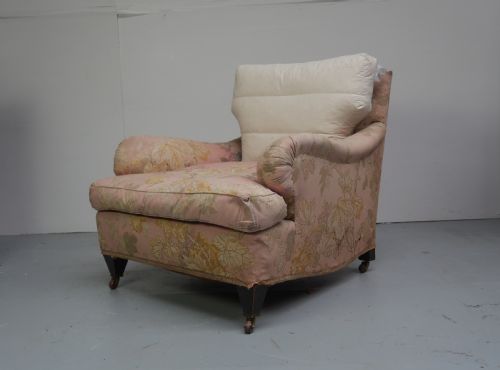
A Howard style armchair is a deep-seated, generously proportioned seat known for exceptional comfort and understated English design. These chairs typically feature rolled arms and sit on low castors.
Original pieces and quality style variants often utilise ticking fabric or heavy upholstery. Their proportions make them central seating elements in traditional country house interiors.
Where were low chairs used?
Low chairs were placed primarily in bedrooms, dressing rooms, and intimate parlour spaces where relaxed seating was preferred. Nursing chairs were specifically designed to allow women to tend to infants without obstruction from chair arms.
In larger reception rooms, low club chairs provided a contrast to upright dining and occasional seating. Their reduced height suited the domestic routines and interior scales of the Victorian and Edwardian periods.