
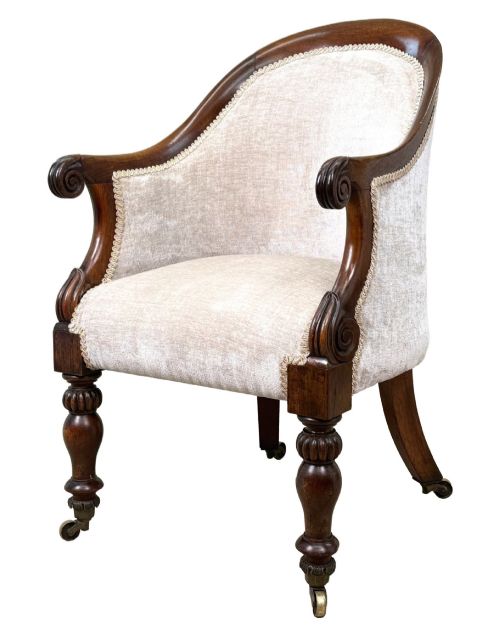

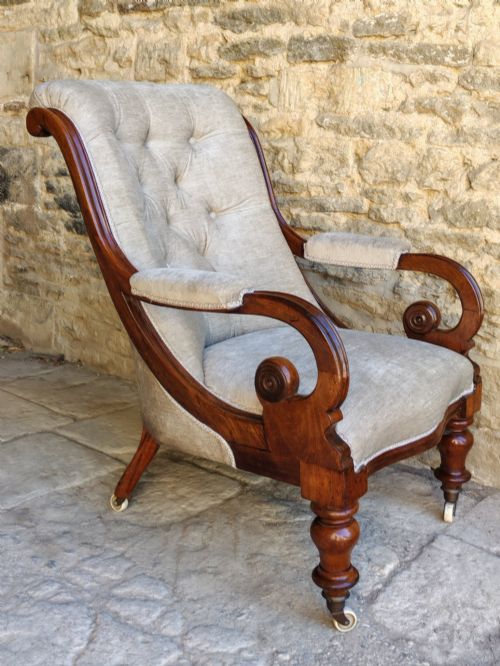
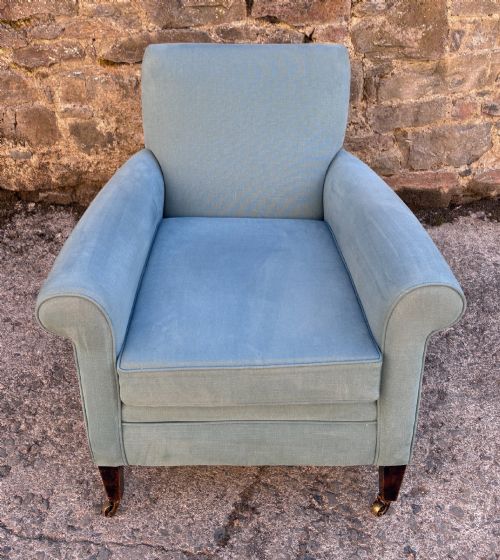
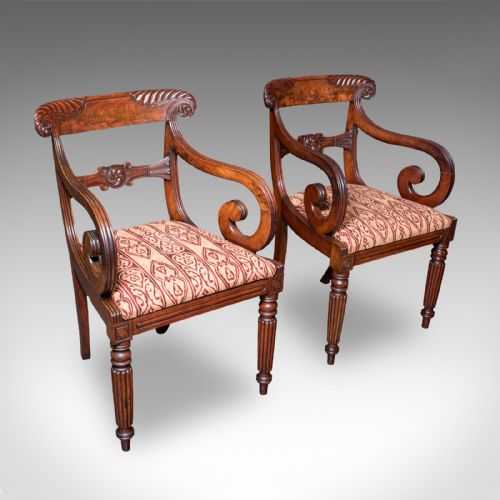
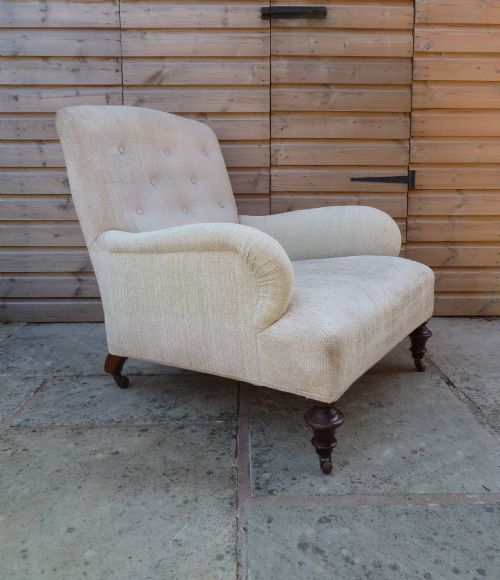
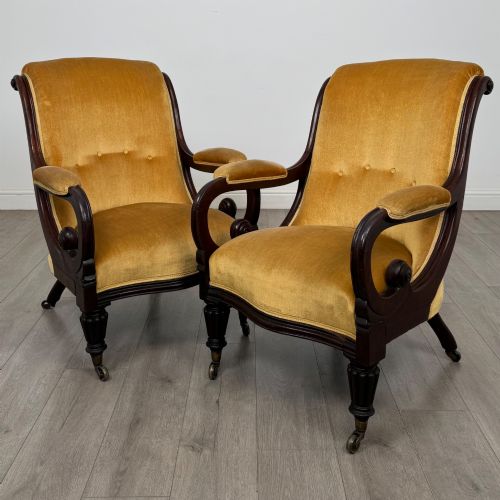
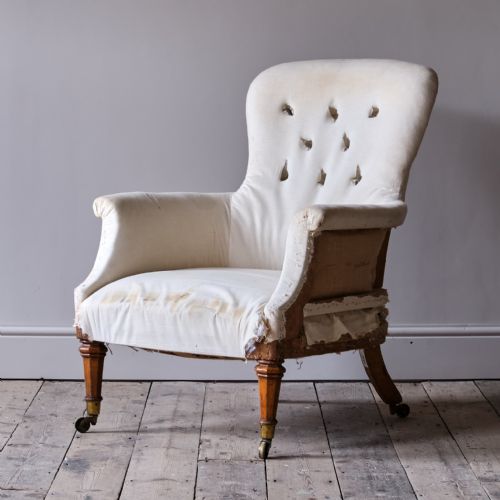
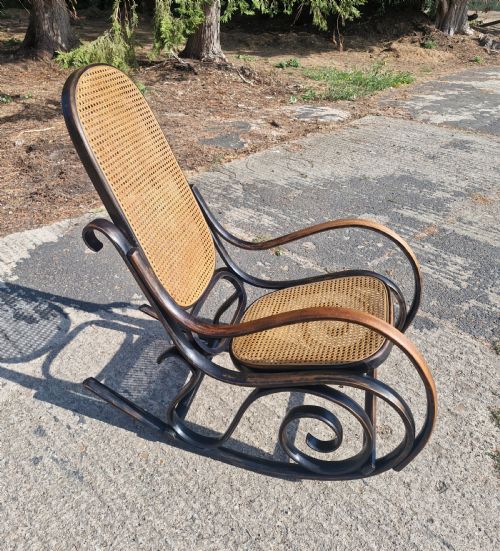
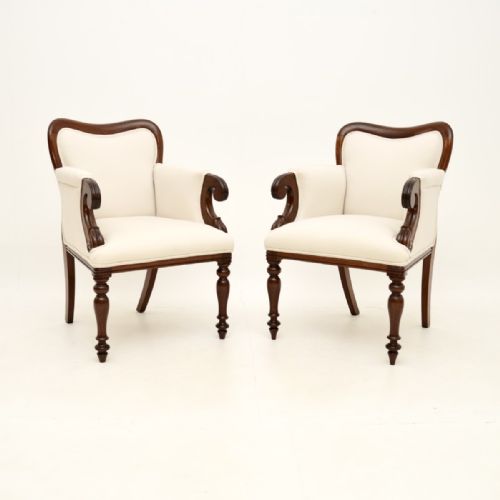
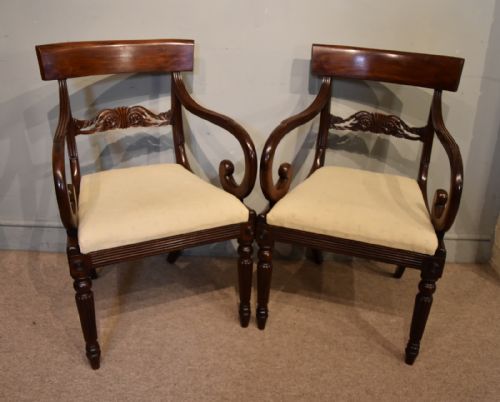
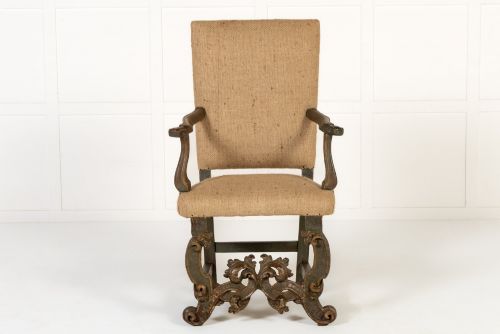
Scrolled Arm Armchair
A scrolled arm armchair is a sturdy seating choice that brings period character and firm structural support to a traditional room.
Understanding the scrolled arm armchair
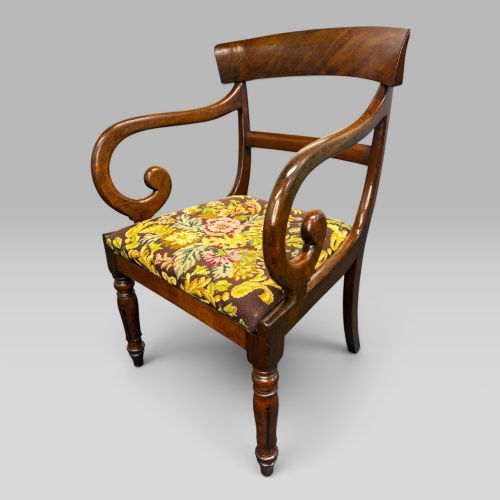
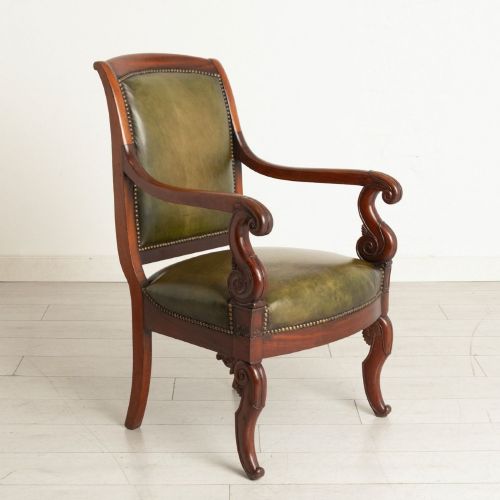
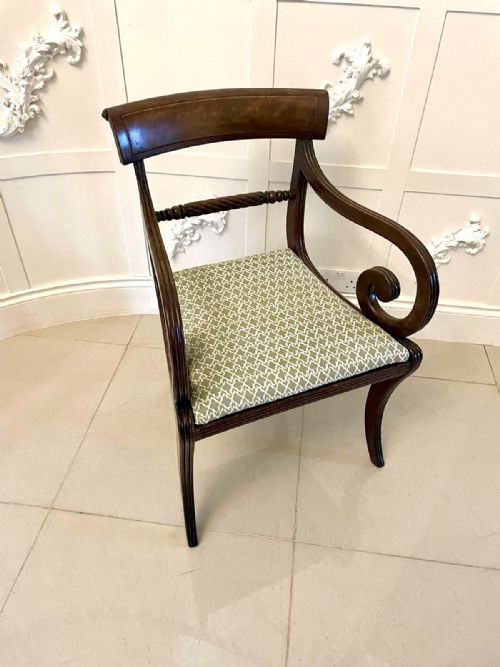
A scrolled arm armchair is a substantial seating form defined by its distinctively curved armrests, appearing across several distinct historical periods and vernacular styles. Buyers exploring this search phrase encounter pieces ranging from formal Regency library designs to relaxed Edwardian and country house seating.
The materials recorded in these listings show a strong reliance on timber frames paired with varied upholstery treatments. Mahogany and hardwood form the structural core of many examples, often complemented by fabric, cotton, tapestry upholstery, and occasional brass details.
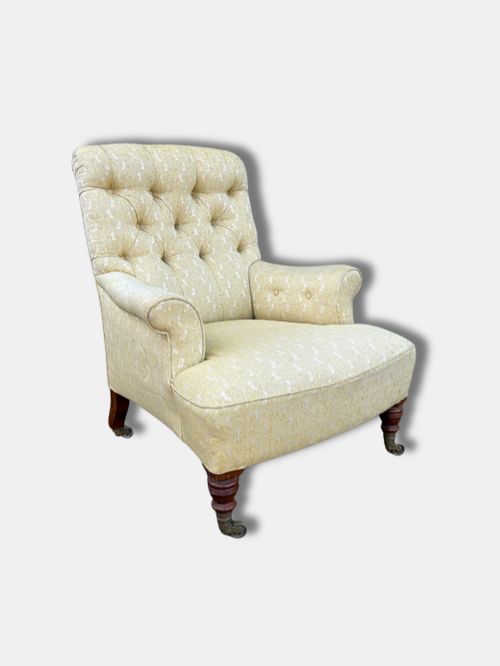
Stylistic variations span Early Victorian, William IV, and English Country House traditions. These pieces frequently feature deep seats and button-backed profiling designed for comfort as much as for formal reception rooms.
Construction and materials
Makers built these frames using dense timbers such as mahogany and assorted hardwoods to ensure structural longevity under heavy daily use. Joinery techniques supported the outward sweep of the arms, which were shaped directly from solid timber or built up with structural blocks.
Upholstery methods evolved across the represented periods, moving from traditional stuffing held by webbed bases to sprung seats covered in cotton, fabric, or heavy tapestry. Brass elements occasionally appeared in castors or decorative tacking, adding functional mobility and contrast to the dark wood frames.
Retail Price Guide 2026
Typical UK retail prices for scrolled arm armchair, calculated from the Sellingantiques database of over a million retail prices indexed since 2003. This retail price guide relies exclusively on Sellingantiques data; no external sources or auction records are used, so the figures do not describe the wider market.
Materials across the inventory include mahogany, rosewood, hardwood, brass, tapestry upholstery, and cotton.
Distinctions in quality
Quality in these armchairs rests upon the integrity of the timber frame and the sculptural fluency of the arm scrolls. Superior examples display crisp carving and harmonious proportions where the curved timber flows seamlessly into the upright supports.
The grade of the secondary woods and the precision of the joinery separate standard vernacular seating from finer library and drawing-room models. Better-executed pieces maintain rigid structural stability without excessive weight, reflecting careful selection of seasoned hardwood.
Howard and Sons·JC Loudon
The Scrolled Arm Armchair Glossary
- Bergere
- An enclosed armchair with upholstered back and sides, typically featuring exposed wooden framing. This form provides a lighter visual presence than fully padded upholstered seats.
- Button back
- An upholstery technique where depressions are formed in the padding by stitching through to the base and securing with buttons. This creates a diamond pattern that keeps stuffing evenly distributed.
- Elbow armchair
- A traditional term for a chair with armrests, frequently used to describe seating designed for a desk or dining table. These frames often feature compact proportions compared to deep lounge chairs.
- Library armchair
- A large, heavily upholstered seating form intended for prolonged reading and study. These chairs prioritize padded support and often incorporate wide armrests.
- Regency
- A British design period spanning the early nineteenth century, characterised by classical restraint and refined proportions. Furniture from this era often draws inspiration from ancient Greek and Roman forms.
Frequently Asked Questions
What periods do these armchairs come from?
The pieces span the nineteenth and twentieth centuries, including Regency, William IV, Early Victorian, and Edwardian eras. Each era contributes distinct proportions and decorative vocabulary to the frame design.
Buyers will also find twentieth-century pieces that interpret earlier country house and library styles using traditional timber and upholstery methods.
Are these chairs comfortable for daily use?
Many examples feature deep seats and generous padding designed specifically for relaxation in domestic settings. Country house and Edwardian variants in particular prioritize deep cushioning.
Formal library and Regency models offer a firmer sit, supporting an upright posture suited to reading or working at a desk.
What woods were used for the frames?
Mahogany is the predominant timber found across the listings, valued for its strength and deep reddish-brown grain. Other pieces utilise general hardwood or rosewood for structural elements.
Exposed wooden components like the scrolled arms and legs showcase these dense timbers, often polished to a smooth finish.