


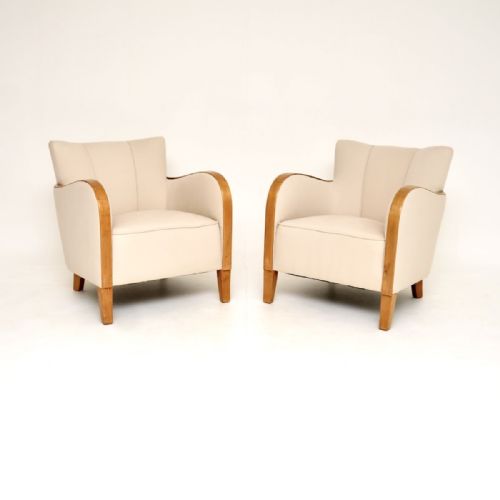

White Upholstered Armchair
A white upholstered armchair brings clean lines and classic comfort to a room, drawing on centuries of seating design from French chateaux to English country houses.
White Upholstered Armchair
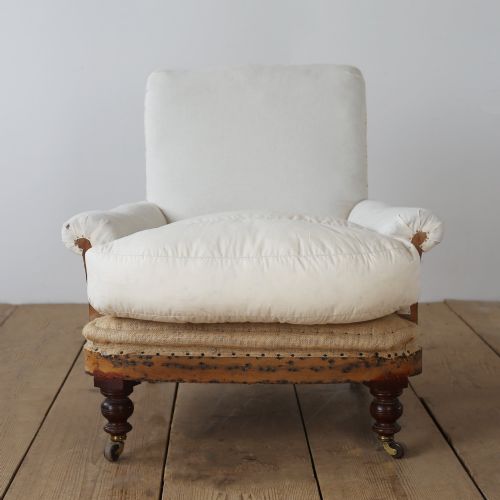
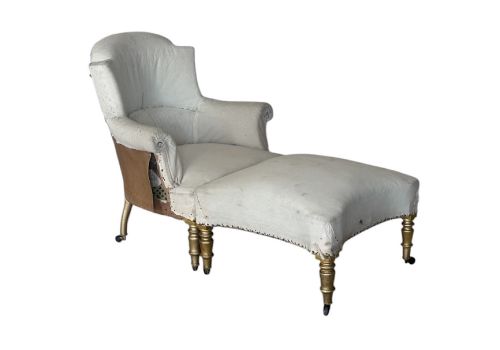
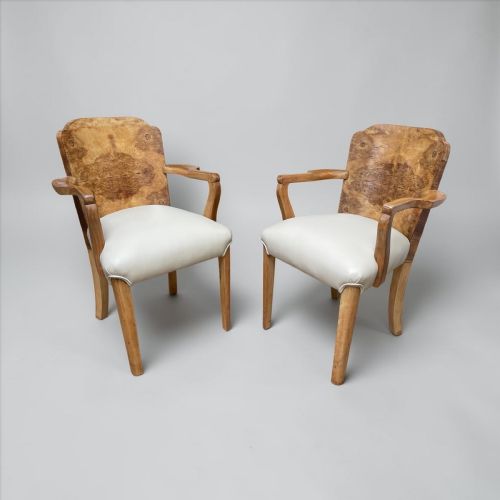
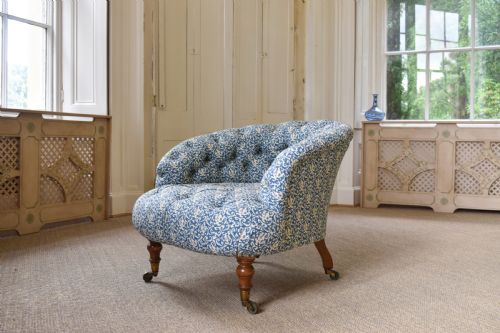
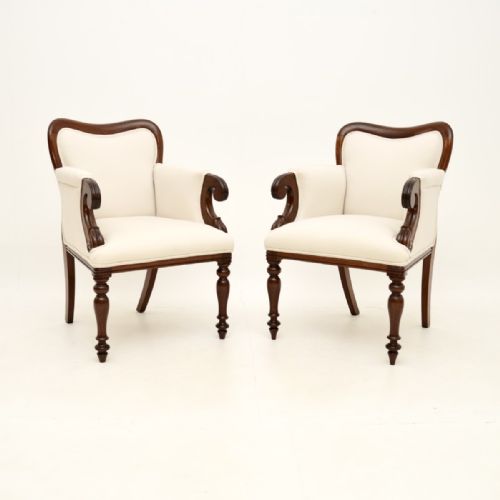
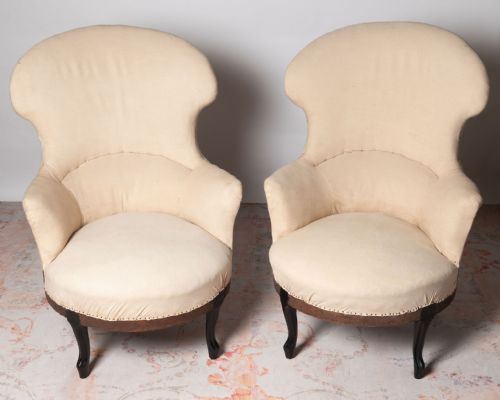
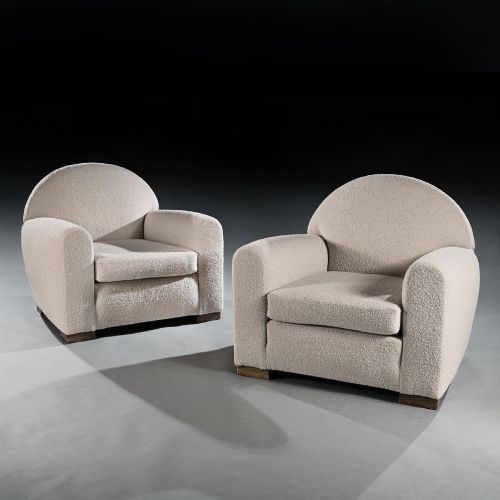
A white upholstered armchair spans several centuries of design, with 19th century pieces and Victorian styles forming a large share of the selection alongside earlier George III examples. Buyers encounter everything from compact tub chairs and square back armchairs to large wingbacks and low chaise longues.
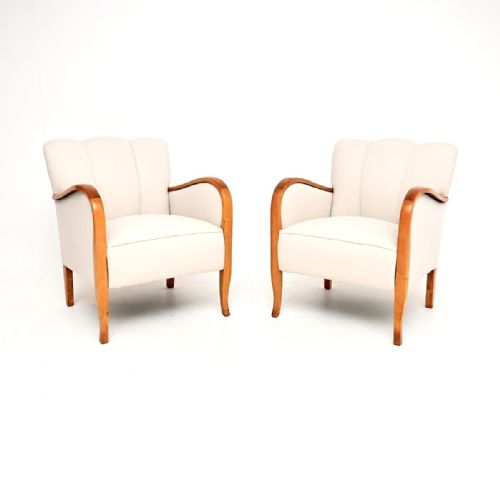
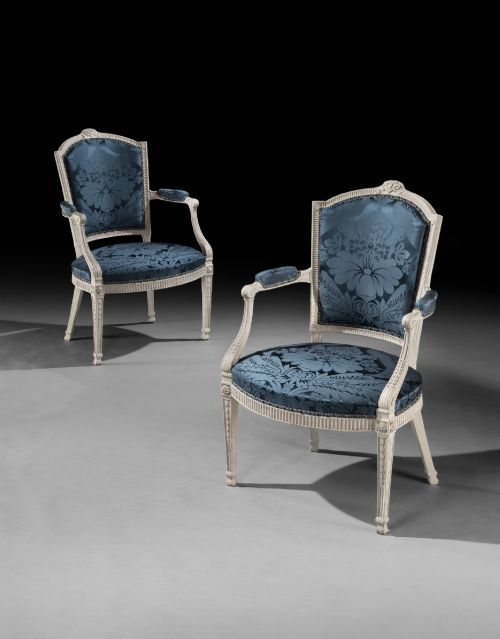
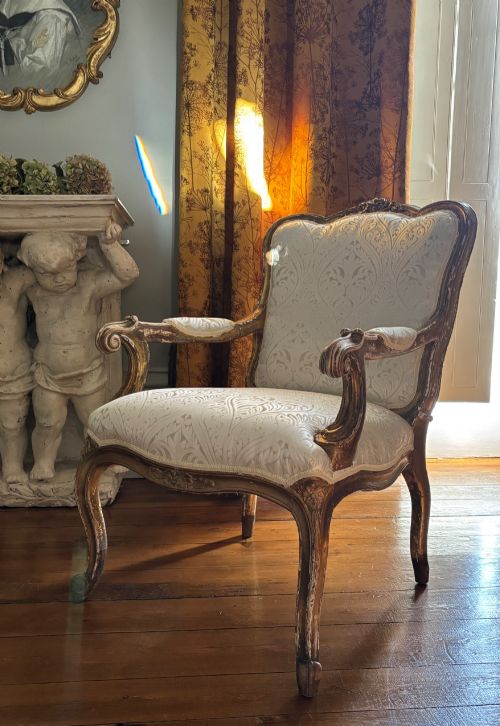
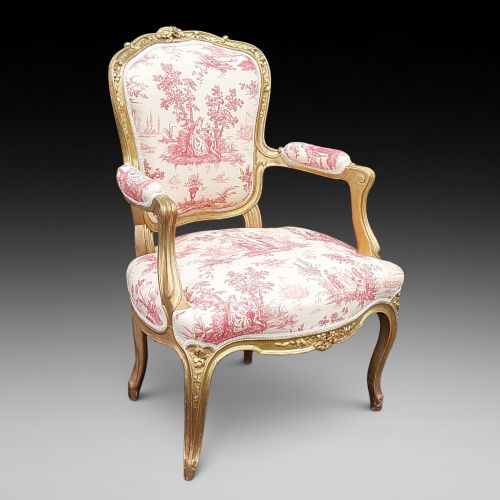
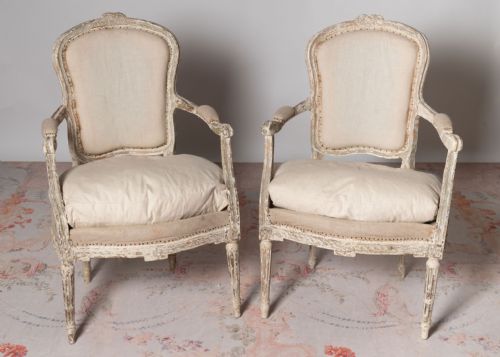
French influences dominate many of the offerings, featuring Louis XVI style open armchairs, giltwood fauteuils, and painted frames. Swedish Art Deco armchairs in satin birch provide a lighter, geometric alternative from the 1930 period.
English seating traditions appear strongly through George III mahogany frames, Edwardian club chairs, and chairs associated with makers like Howard and Sons. These pieces range from restrained, simple occasional chairs to substantial, deep-seated club designs.
Materials and construction
Frames rely on sturdy timbers such as mahogany, walnut, beech, and satin birch, often shaped through traditional joinery or carved with giltwood and painted finishes. Brass castors and turned wooden feet frequently support the heavier Victorian and Edwardian frames.
Upholstery relies on foundational layers of fabric, calico, and ticking beneath the final white or patterned top covers. Skilled hand-tacking and buttoning secure the textile layers firmly to the internal wooden and sprung structures.
White Upholstered Armchair Retail Price Guide 2026
Typical asking prices for white upholstered armchair among the pieces listed under this phrase on Sellingantiques today, from the lower quarter to the upper quarter. They describe what is for sale here now, not the wider market.
Listings feature frames constructed from mahogany, walnut, beech, satin birch, and painted wood, paired with upholstery in calico, ticking, and fabric.
Assessing quality in seating
Quality rests heavily on the integrity of the underlying timber frame and the precision of any carved or painted ornament. Finer pieces demonstrate crisp joinery and substantial weight, whether constructed in polished mahogany or giltwood.
The standard of upholstery work distinguishes superior pieces, visible in the tension of the fabric, the neatness of buttoning, and the choice of supportive materials like calico beneath the outer textile.
Howard & Sons·Liberty of London·White, Allom & Co.·Sopwith·Anton Rosen·Blaise Maucuy
The White Upholstered Armchair Glossary
- Fauteuil
- An open-framed armchair with upholstered back and armrests, originating in France during the seventeenth century. The wooden frame is typically exposed and carved.
- Tub chair
- A comfortable armchair with a rounded, semicircular back that wraps around the user to form continuous armrests. This form provides a snug and enclosed seating position.
- Giltwood
- Timber that has been coated with a thin layer of gold leaf or gilt powder. It is frequently seen on decorative 19th-century French frames.
- Calico
- A plain-woven unbleached textile used historically as an initial layer of upholstery beneath the outer fabric. It conceals internal stuffing and provides a smooth base.
- Satin birch
- A light-coloured timber with a natural sheen, utilised extensively by Scandinavian designers during the Art Deco period. It offers a smooth surface texture.
White Upholstered Armchair: Frequently Asked Questions
How do I clean a white upholstered armchair?
Maintenance depends entirely on the specific fabric used on the frame, as materials range from delicate silks to sturdy cottons and ticking.
Vacuuming the crevices regularly prevents dust accumulation, while professional cleaning is usually recommended for spot treatments on antique textiles.
Are these armchairs comfortable for daily use?
Most pieces, particularly Victorian club chairs and Edwardian designs, were built with deep cushioning intended for relaxation.
Firmer occasional chairs and giltwood fauteuils offer a more upright seating posture suited to drawing rooms rather than lounging.
How do I identify a French antique armchair?
French pieces often feature characteristic woodwork such as exposed giltwood, carved walnut frames, or painted finishes reflecting styles like Louis XVI and Napoleon III.
They tend to emphasise flowing curves, open arms, and ornamental motifs distinct from heavier English proportions.
Can I place a white chair in a busy room?
Lighter upholstery works well in various interior schemes, providing a crisp contrast against darker wooden furniture and floors.
Using washable loose covers or durable fabrics like heavy calico helps protect the surface from everyday wear in active living spaces.