


Scrolled Arm Easy Chair
These scrolled arm easy chair examples offer deep comfort, pairing robust timber frames with generous upholstered seating across various nineteenth and early twentieth century styles.
Scrolled Arm Easy Chair
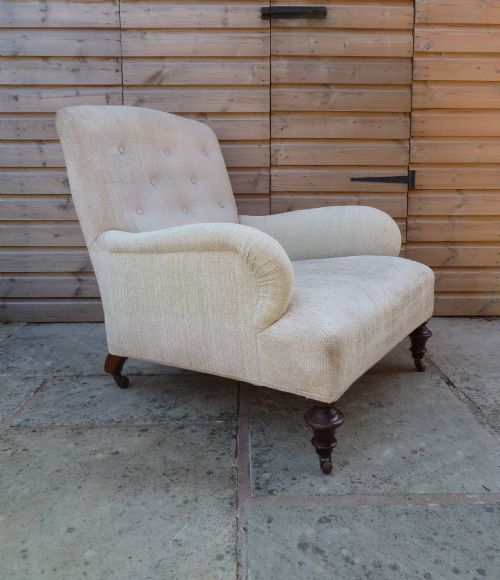
A scrolled arm easy chair is a substantial upholstered seat designed for relaxation, appearing frequently in nineteenth century and early twentieth century forms. These pieces span distinct historical revivals and regional aesthetics, including Regency, Victorian, and Edwardian interpretations.
Materials and construction methods
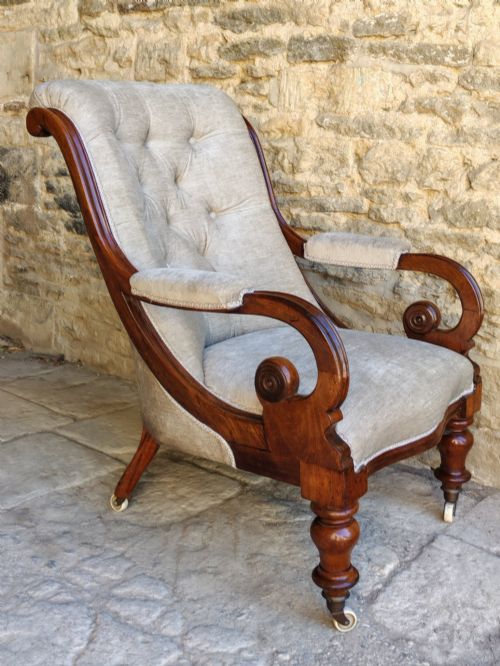
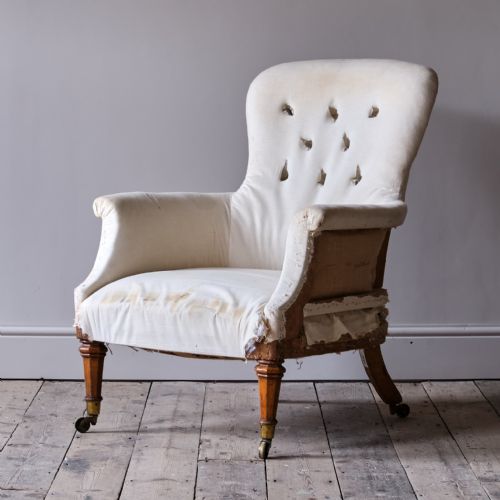
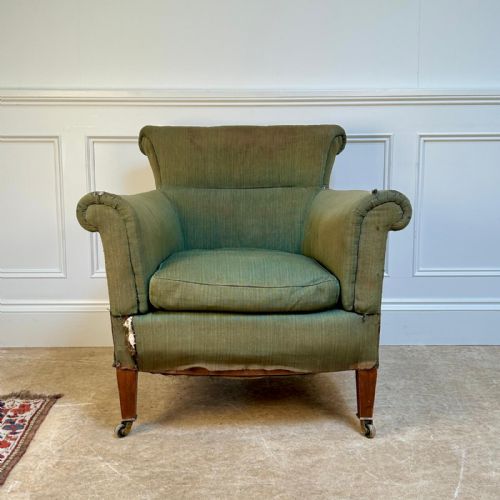
Makers utilised solid hardwoods such as mahogany and walnut to build structural frames, frequently incorporating carved scroll arms and exposed wooden legs. Brass castors often supported the base of heavier nineteenth century seating.
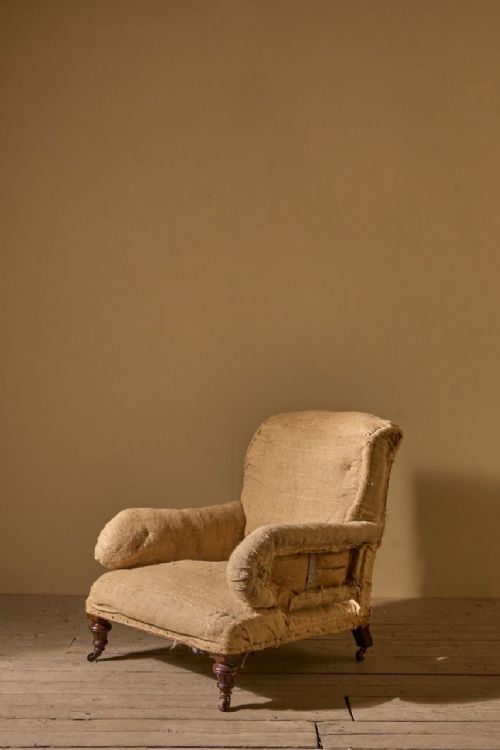
Upholstery foundation work relied on traditional materials including hessian, calico, and durable fabrics. Outer coverings ranged from simple woven textiles to plush velvet and ivory upholstery.
One exceptional chair comes with golfing provenance, having originated directly from the Royal and Ancient Golf Club of St Andrews.
Assessing quality in construction
Subtleties in timber selection and carving depth distinguish standard examples from finer commissions. Walnut and mahogany frames show varying degrees of hand-carving intricacy along the scroll arms and legs.
The integrity of the internal stuffing and the precision of the upholstery work dictate the overall comfort and longevity of the piece. Maker attribution, such as pieces bearing workshop stamps, elevates historical standing.
Howard and Sons·Trollope and Sons·Hampton and Sons
The Scrolled Arm Easy Chair Glossary
- Scroll arm
- An armrest curved outward into a spiral or scroll shape. This defining feature provides both ergonomic support and decorative proportion.
- Club style
- A heavily upholstered armchair characterised by deep seating and low arms. These designs prioritise comfort above elaborate woodwork.
- Hessian
- A coarse woven fabric typically utilised for internal webbing and stuffing retention. It forms the durable foundation beneath outer upholstery.
- Calico
- A plain-woven cotton fabric used historically as an interim lining layer. It secures internal padding before the final decorative textile is applied.
- Regency
- A British design period spanning the early nineteenth century. Pieces from this era often feature classical motifs and rich mahogany timbers.
Scrolled Arm Easy Chair: Frequently Asked Questions
How do I identify a Victorian armchair?
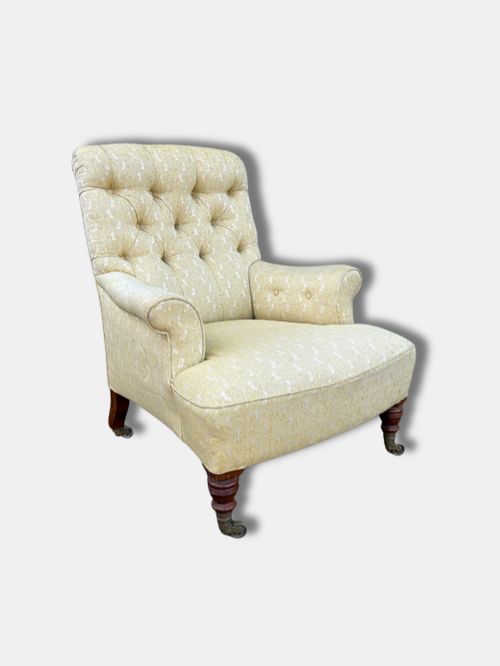
Victorian armchairs typically feature heavier proportions and darker woods like walnut or mahogany, often combined with deep buttoning or scrolled arm details.
These pieces reflect the industrial and stylistic shifts of the nineteenth century, moving toward heavier comfort and eclectic revival designs.
What defines an English country house chair?
An English country house armchair prioritises relaxed comfort, deep seating, and unpretentious upholstery rather than strict formal symmetry.
Such seating accumulated naturally in drawing rooms over generations, resulting in softer lines and generous proportions.
Are Edwardian armchairs different from Victorian ones?
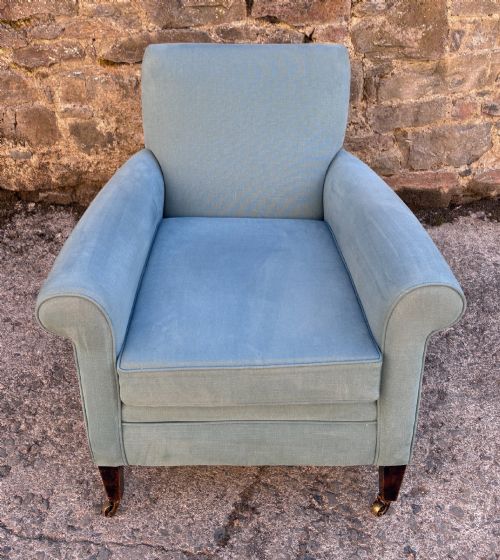
Edwardian armchairs generally exhibit lighter frames and more restrained ornamentation compared to their heavy Victorian predecessors.
Maker output during this period often leaned towards simpler upholstered forms and broader seating comfort.
What woods were used for these frames?
Makers primarily selected dense hardwoods including mahogany, walnut, and occasional rosewood for visible structural elements and carved details.
Internal frames relied on sturdier utility timbers, while brass fittings frequently reinforced the legs.