
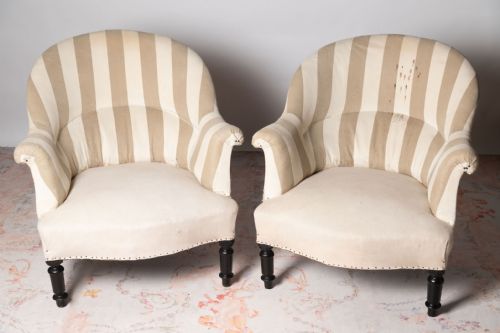
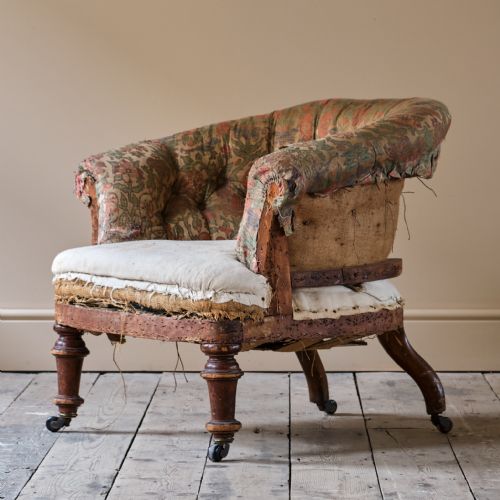
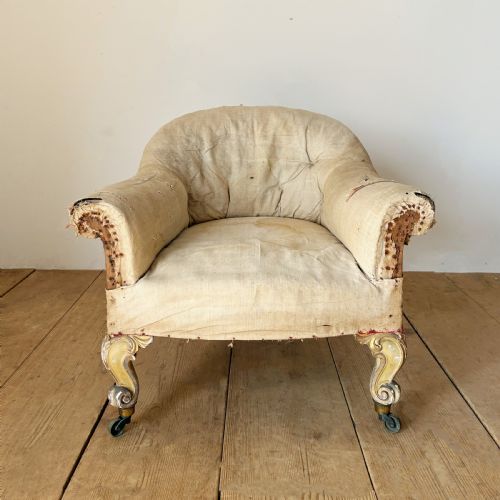


Low Back Club Armchair
A low back club armchair offers deep, low-slung seating designed for comfort, emerging in period styles from Victorian to Art Deco.
Low Back Club Armchair
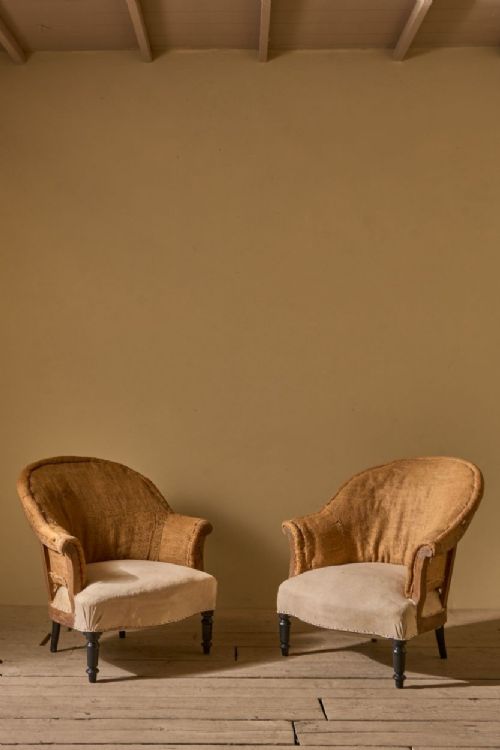
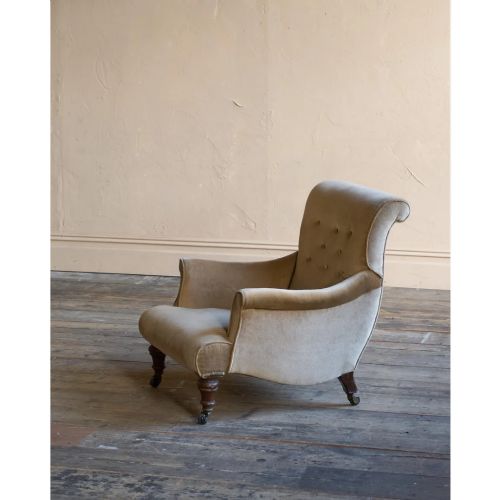
When you examine a low back club armchair, you encounter a piece built for relaxed posture, often featuring generous proportions and heavy padding. The examples on this page span the 19th century through the Edwardian era and into the 1930s, encompassing Victorian, French Chateau, and English Country House aesthetics.
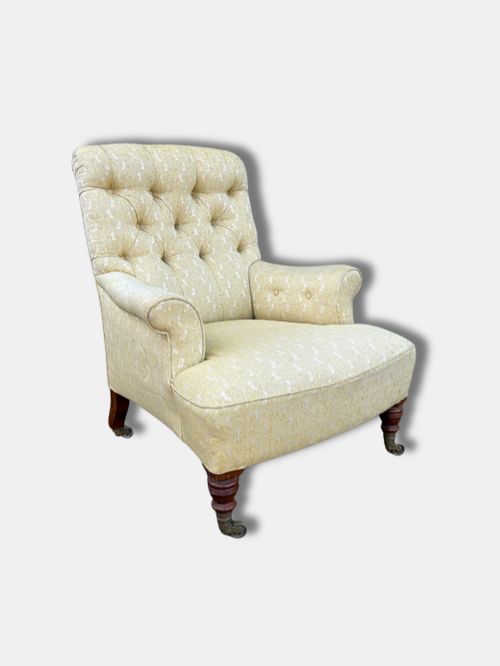
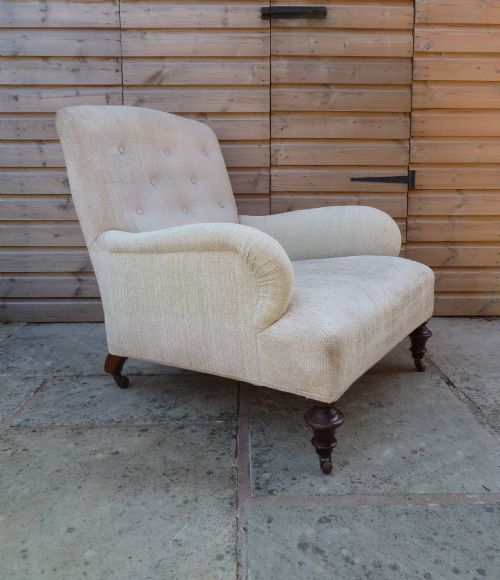
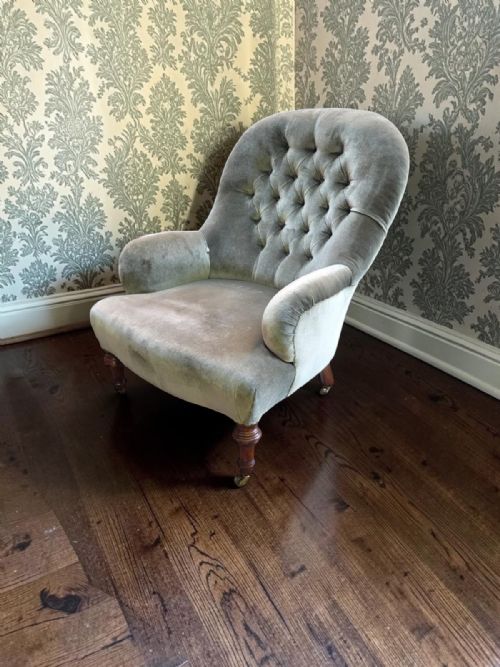
The version you are most likely to meet bears the signature form associated with makers like Howard and Sons, characterised by low profiles and deep seats. These pieces range from button-backed upholstered models to open-armed designs with low backs, reflecting diverse domestic interiors from past centuries.
How they were made
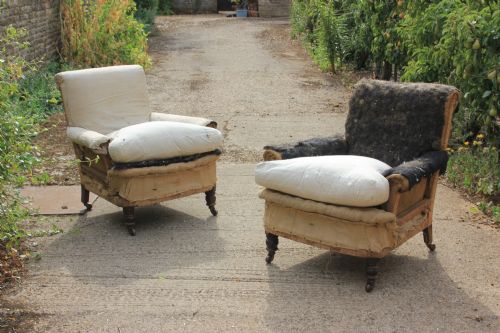
Makers constructed the frames of a low back club armchair using sturdy hardwoods such as mahogany, walnut, beech, elm, and ash, providing a rigid skeleton beneath the upholstery. Exposed wooden legs often show turned details, ebonised finishes, or brass castors.
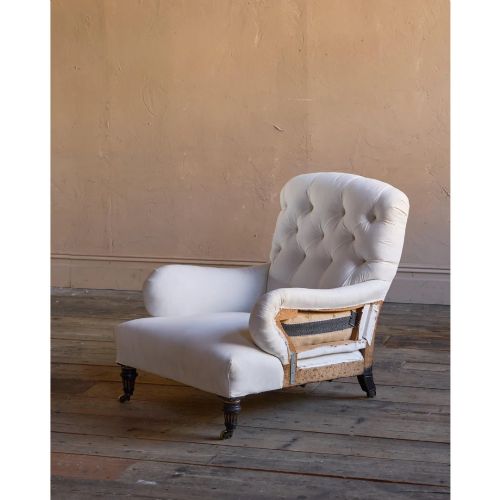
Traditional upholstery techniques layer supportive stuffing beneath outer coverings of fabric, velvet, calico, or ticking. Button-tufting and heavy webbing secure the internal springs and padding to maintain the characteristic low-slung shape over decades of use.
Upholstery choices span plain calico, striped ticking, plush velvet, and even repurposed Ushak turkey carpets.
What varies in quality
The distinction between standard examples and the finest work lies in the integrity of the frame construction and the subtlety of the proportions. Superior pieces maintain robust internal joinery that supports the weight without compromising the low, inviting silhouette.
Quality also rests in the selection of materials, from dense hardwood frames to high-grade upholstery fabrics like heavy ticking, silk velvet, or patterned carpets. The execution of tailored seams, buttoning, and turned wooden legs demonstrates the hand of a skilled maker.
Howard and Sons·Shoolbred·Woodstock
The Low Back Club Armchair Glossary
- Button back
- A method of upholstery where depressions are formed in the padding by pulling buttons deep into the stuffing, creating a diamond pattern. This technique secures the internal filling while adding decorative texture.
- Tub chair
- An armchair with a rounded back that curves continuously into low arms, enclosing the sitter. The style provides a compact, enveloping seat.
- Ebonised
- Wood treated with a dark stain or finish to imitate the appearance of ebony. This treatment appears frequently on the legs of Victorian seating.
- Smoker's bow
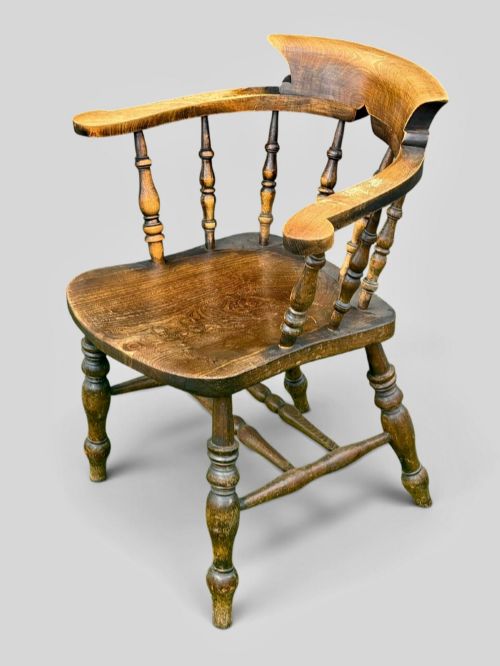
- A low wooden armchair with a continuous curved back rail supported by spindles, commonly associated with the 19th century. These sturdy wooden seats often feature elm and beech construction.
Low Back Club Armchair: Frequently Asked Questions
How do I identify a Howard style armchair?
Howard style chairs are recognised by their exceptionally comfortable proportions, low backs, and expert traditional upholstery. They often sit on low turned wooden legs fitted with brass castors.
Many bear signatures or stamps on the castors, though pieces in the style of the firm share the same distinctive low profile.
What fabrics were used on antique club armchairs?
Original upholstery materials include heavy cotton ticking, calico, and plush velvet. Some exceptional examples utilise decorative carpets or patterned textiles for the outer cover.
Underneath these decorative layers, traditional horsehair and springs provide the internal support.
Where should I place a low back club armchair?
These chairs suit studies, libraries, and living rooms where relaxed seating is paramount. Their low stature prevents them from dominating a field of vision in smaller spaces.
Pair them with reading lamps and side tables to create a dedicated space for quiet repose.