


Chair on Brass Castors
A chair on brass castors brings together timber frames and mobile metal feet across Georgian, Victorian and Edwardian periods.
Chair on Brass Castors
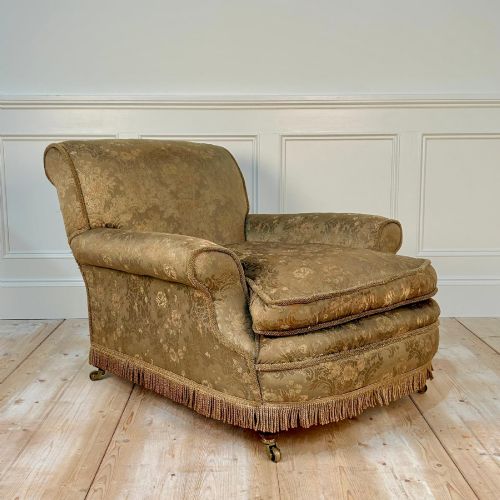
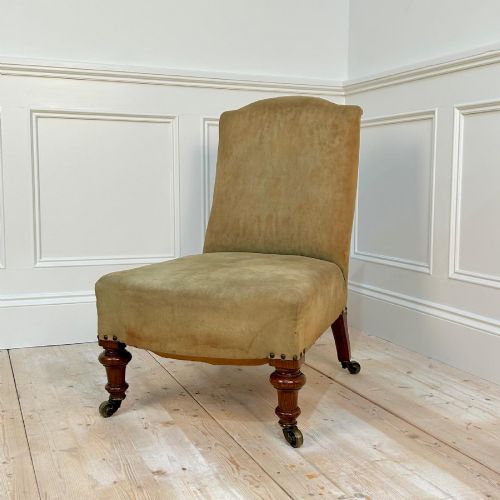
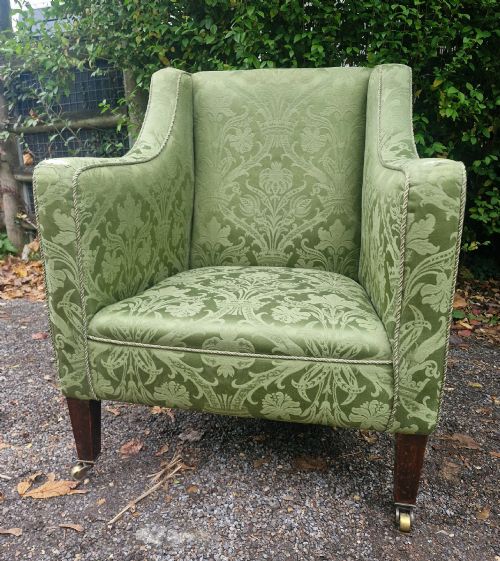
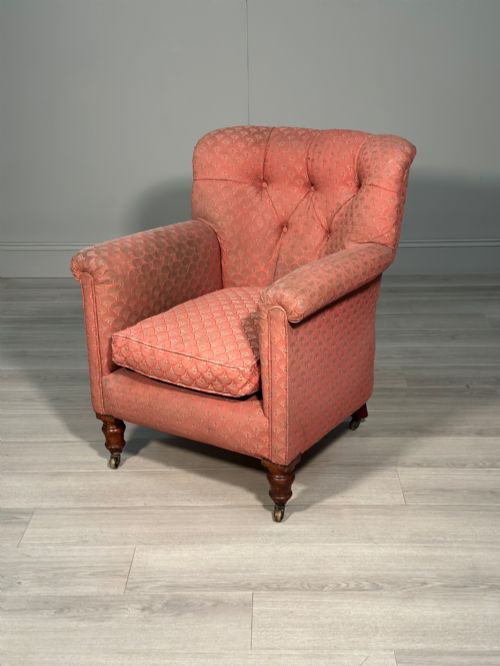
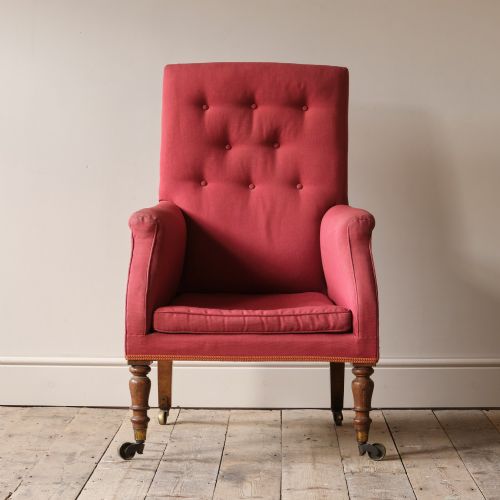
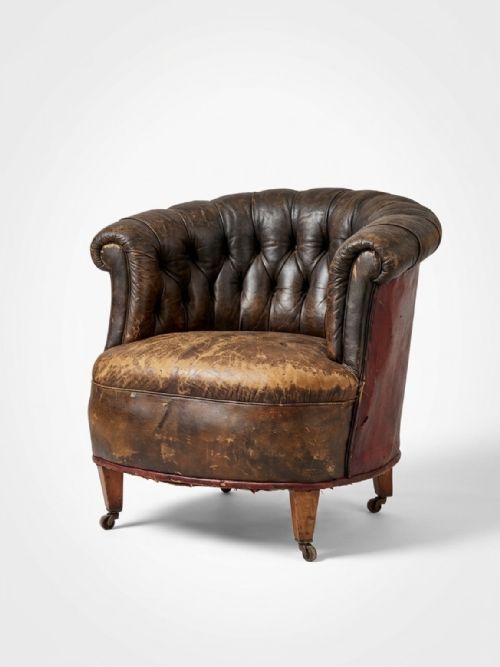
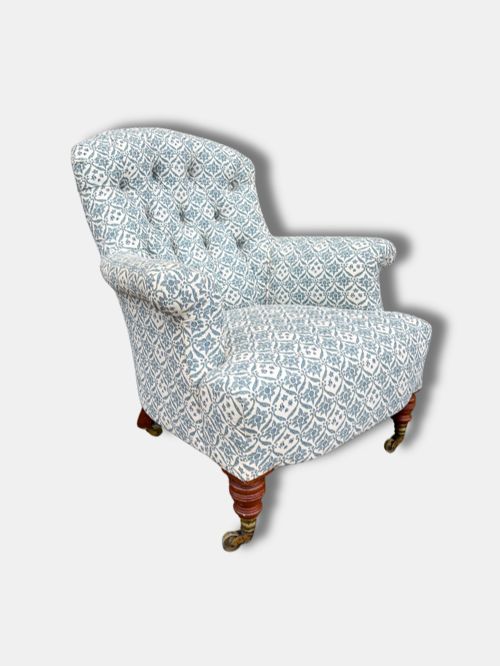
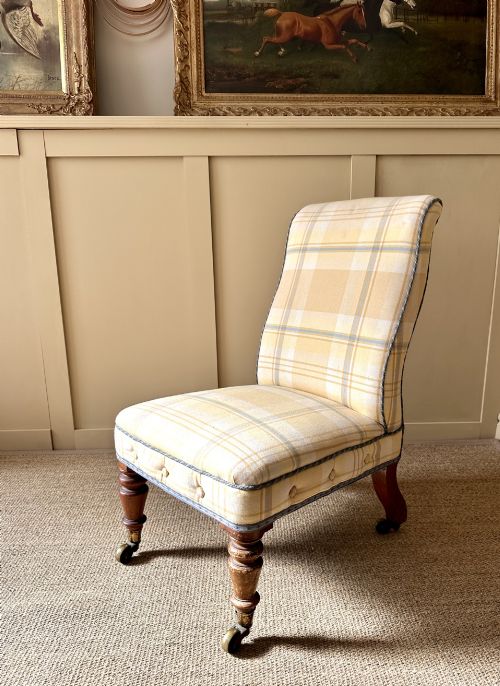
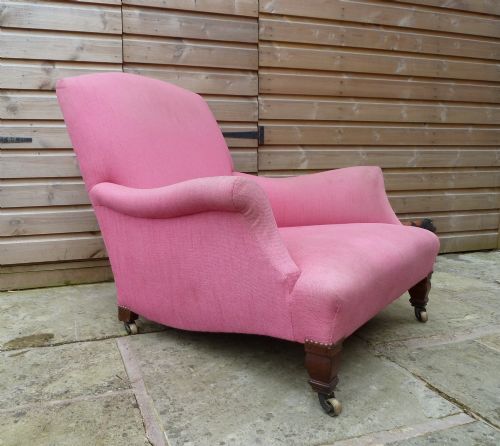
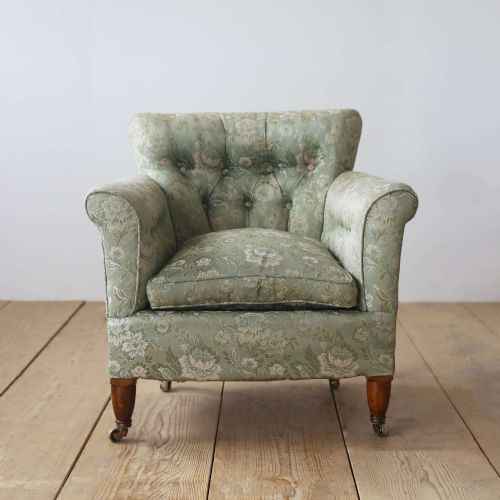
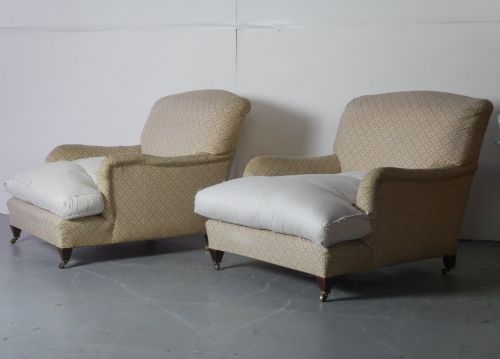
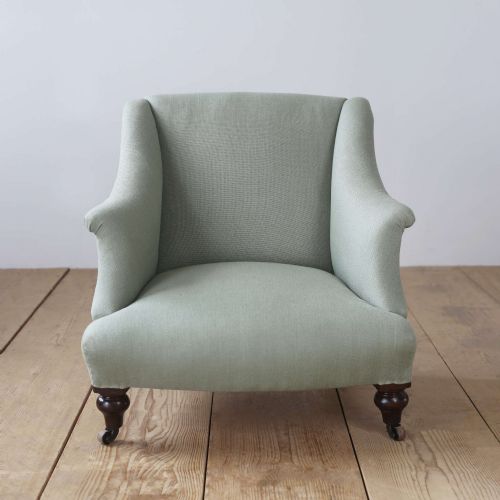
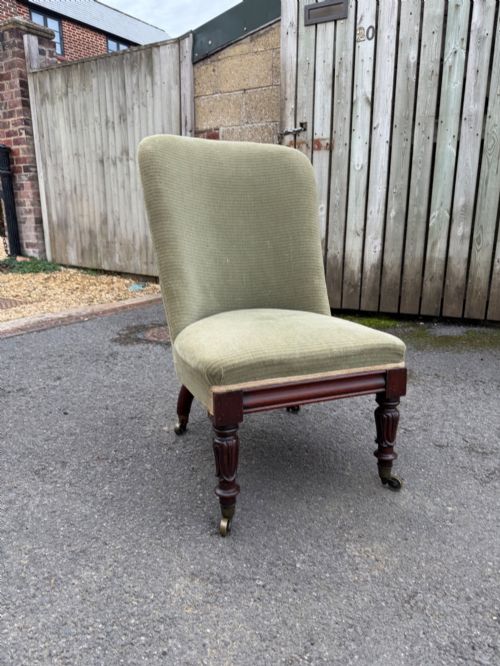
A chair on brass castors is primarily represented here by library armchairs, country house seating and occasional chairs resting on metal wheels. These pieces span Georgian, Regency, William IV, Victorian and Edwardian eras, utilising mahogany, rosewood, walnut and ebonised timber.
Makers and workshops such as Howard and Sons, Gillows, Hindley and Sons, Hampton and Sons, and William Birch feature within the records. Buyers encounter both documented cabinetmaker pieces and looser style interpretations.
How they were made
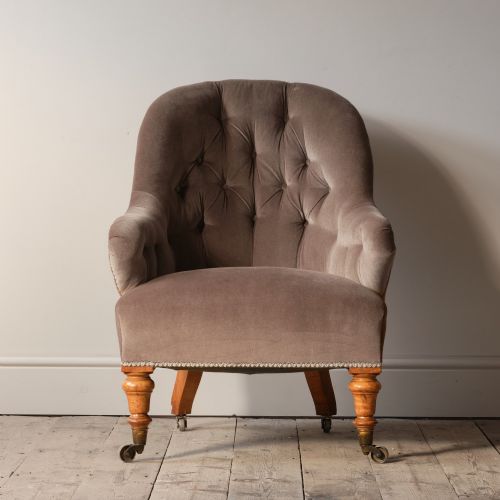
Timbers like mahogany, rosewood and walnut form the structural frames, shaped into reeded, fluted or bobbin turned legs. Turning and joinery techniques anchor the brass castors securely to the foot.
Upholstery methods rely on traditional stuffing covered in leather, calico, hessian or fabric, frequently finished with buttoning. Brass components include simple cup castors, cappings and bun feet.
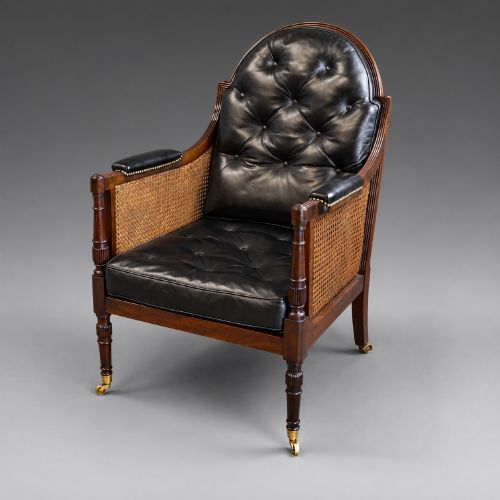
Caning appears on specific bergère forms, combining woven cane panels with timber frames and mobile castor fittings.
Chair on Brass Castors Retail Price Guide 2026
Typical asking prices for chair on brass castors among the pieces listed under this phrase on Sellingantiques today, from the lower quarter to the upper quarter. They describe what is for sale here now, not the wider market.
Some library armchairs retain down sack cushions that remember the exact slump of a Victorian reader.
What varies in quality
The refinement of the timber turning and the proportion of the frame dictate the structural standard. Heavier library armchairs show deeper carving and more robust mahogany frames than lighter occasional seating.
The integrity of the original upholstery materials, leather surfaces and castor mountings distinguishes well-preserved examples from altered pieces. Maker stamps or labels on the frame elevate historical standing.
Howard and Sons·Gillows·Hindley and Sons·Hampton and Sons·William Birch·Morris and Co
The Chair on Brass Castors Glossary
- Castor
- A small wheel fixed to the foot of a piece of furniture to allow easy movement. These are typically cast in brass, sometimes shaped as cups or fitted with cappings.
- Bergère
- An upholstered armchair with an enclosed wooden frame where the sides and back are frequently filled with cane work. This style appears notably in Regency and 19th-century designs.
- Library armchair
- A substantial, deeply padded seat designed for reading rooms, often upholstered in leather and supported on timber legs with castors.
- Bobbin turned
- A form of wood turning consisting of rounded, spool-like shapes resembling bobbins. This decorative profile occurs on 19th-century frames.
- Chaise longue
- An upholstered long chair intended for reclining, combining elements of a sofa and a chair. Examples frequently rest upon timber legs fitted with brass wheels.
Chair on Brass Castors: Frequently Asked Questions
What periods do these chairs cover?
The listings span from the Georgian and Regency eras through the William IV period into Victorian and Edwardian times. Later 19th-century pieces dominate the selection.
Cabinetmaking styles shift accordingly from classical mahogany frames to deep-buttoned country house armchairs.
Are the castors always made of brass?
The castors fitted to these frames utilise brass, frequently taking the form of simple wheels, cup fittings or protective cappings over wooden feet.
These metal mounts assist the movement of heavy library seating and lighter occasional chairs across carpets and floorboards.
How do I identify a Howard and Sons chair?
Pieces attributed to this firm often display characteristic low profiles, turned walnut legs and brass castors stamped with maker details. Upholstery frequently conceals traditional sprung frames.
Copies and style pieces also appear, replicating the comfortable proportions associated with the maker.
What materials are used for upholstery?
Original and replacement coverings include red morocco leather, calico, hessian, fabric and patterned textiles. Button-backed padding is a frequent feature.
Underneath the top cover, traditional stuffing materials support the padded arms and sprung seats.