
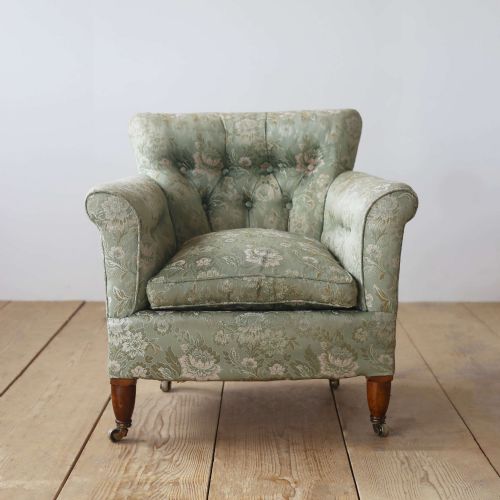
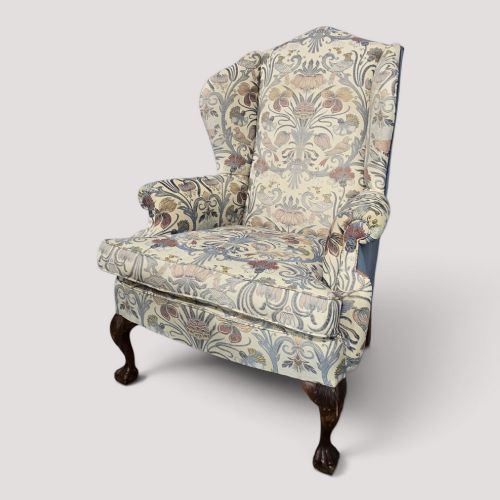
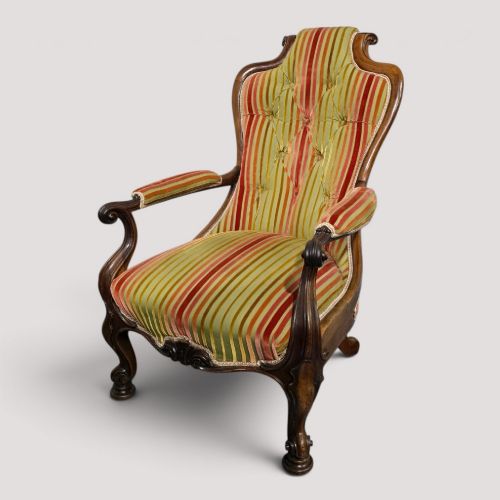
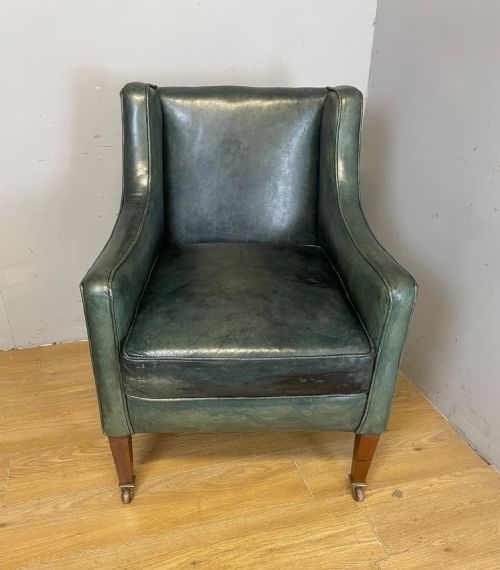
Upholstered Lounge Chairs
Upholstered lounge chairs bring deep seating comfort and period character to a room, spanning button-backed Victorian designs and sleek Art Deco forms.
Upholstered Lounge Chairs
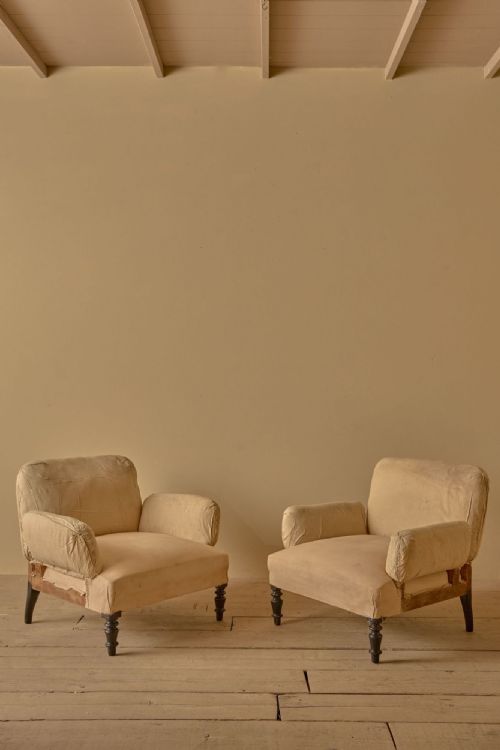
Upholstered lounge chairs encompass a varied range of seating from the nineteenth and twentieth centuries, designed primarily for relaxation in studies, bedrooms and living spaces. The selection relies heavily on nineteenth century Victorian and 1930s examples, alongside Regency, Edwardian and Art Deco iterations.
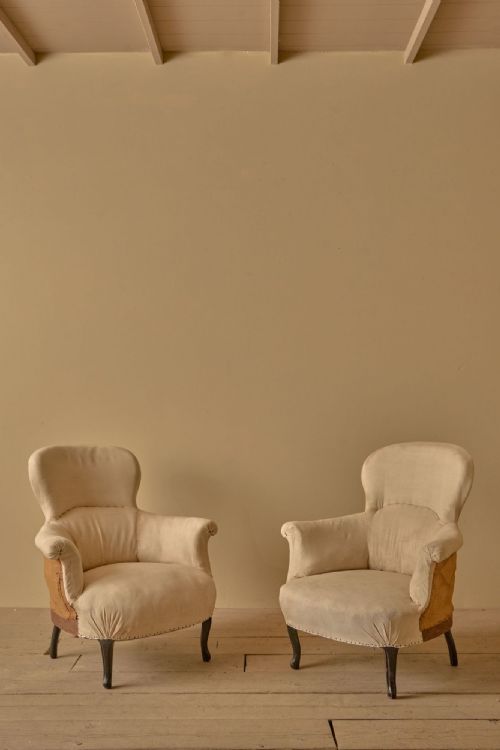
Makers and makers' styles represented include Howard & Sons, Whytock & Reid, Woodstock, Grafton and Napoleon III French designs. Pieces range from straightforward country house armchairs to formally carved mahogany gentleman's armchairs and library seating.
How they were made
Wood frameworks form the structural skeleton, utilising dense hardwoods like mahogany, walnut, rosewood, oak and satin birch. These timbers are shaped, turned or carved into legs, arm supports and show-frames to bear the weight of the sitter.
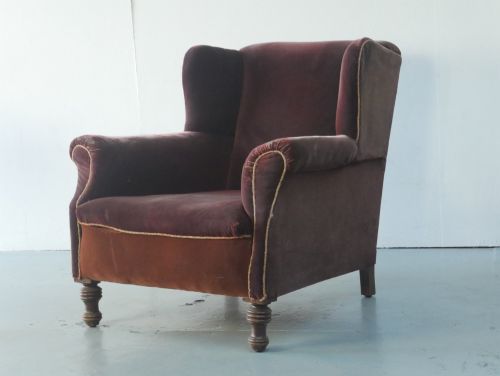
Upholstery techniques rely on traditional springing, stuffing and stitching to create deep, resilient seats and supportive backs. Covering materials span velvet, brocade, calico, leather and diverse woven fabrics, secured with brass tacks or piping where appropriate.
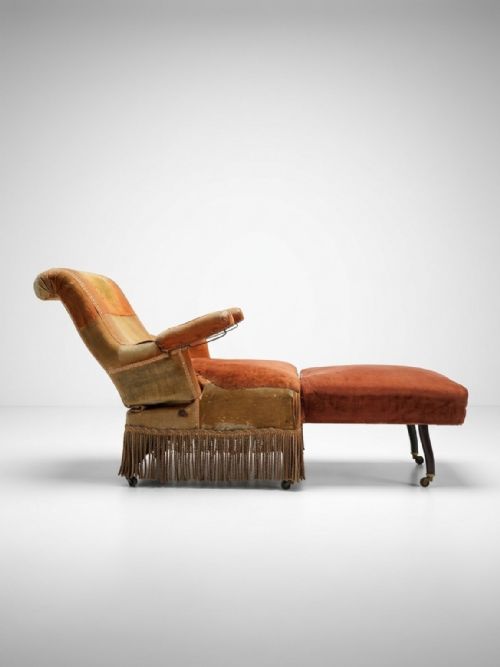
Several armchairs incorporate hidden brass castors, allowing nineteenth century sitters to glide across the parlour without disturbing the carpet pile.
What varies in quality
The integrity of the internal wooden frame and the precision of the joinery dictate the foundational endurance of the chair. Heavier, denser hardwoods and robust structural joints distinguish higher grade seating from lighter alternatives.
The standard of upholstery work, from the depth and resilience of the internal springing to the choice of covering fabric, determines the refinement of the piece. Finer examples display meticulous hand-stitched detailing, balanced proportions and sympathetic restoration.
Howard & Sons·Whytock & Reid
The Upholstered Lounge Chairs Glossary
- Bergere
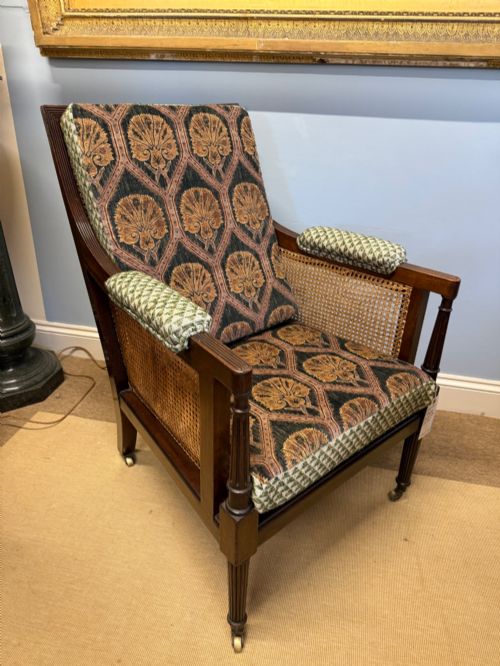
- An upholstered armchair with cane or wicker side panels enclosed by a wooden frame. The technique originates from eighteenth century French seating traditions.
- Button back
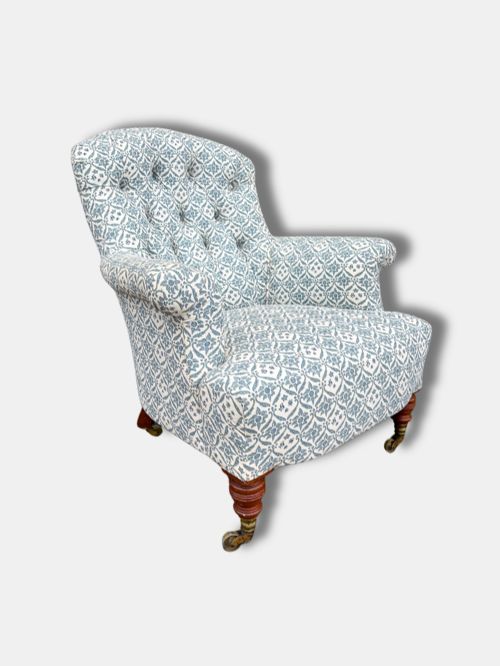
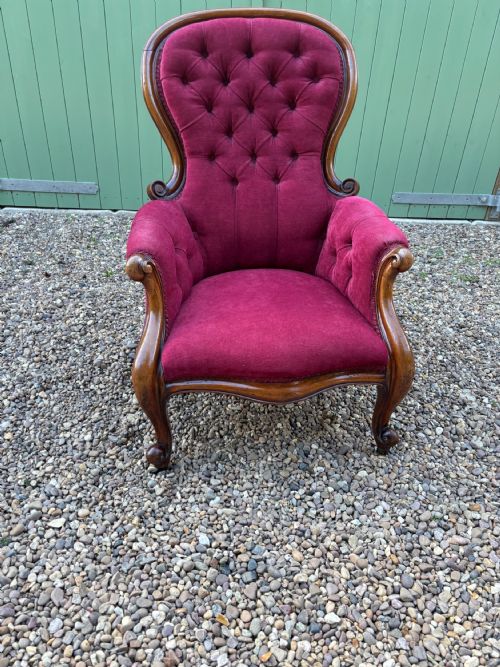
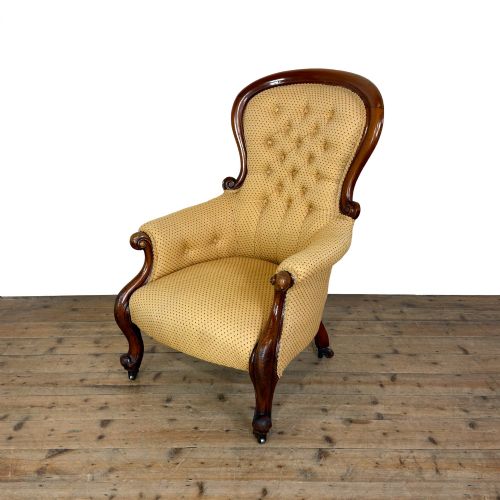
- A style of upholstery where the fabric is pulled tight and secured with recessed buttons arranged in a grid or diamond pattern. This method adds structural tension and visual texture to the backrest.
- Spoon back
- An oval-shaped upholstered chair back that curves inward to mimic the bowl of a spoon. This form is particularly characteristic of mid nineteenth century Victorian seating.
- Wing back
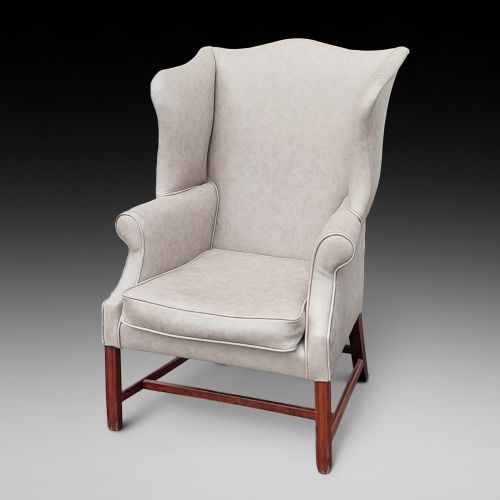
- An armchair featuring protective side panels projecting from the backrest to shield the sitter from drafts. Early versions were designed for fireside placement.
- Tub chair
- A compact armchair with a continuous curved back and arms forming a single semi-circular enclosure. The design offers a snug, enveloping seat.
Upholstered Lounge Chairs: Frequently Asked Questions
What is an English country house armchair?
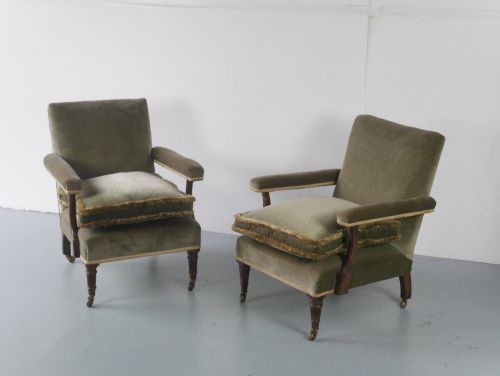
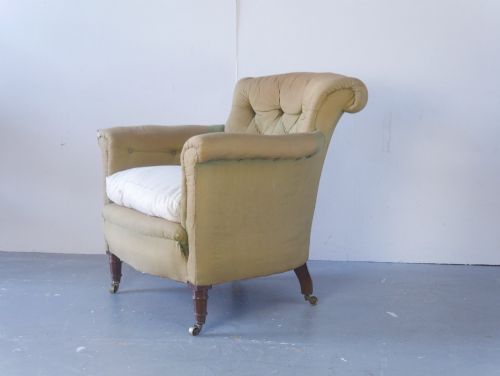
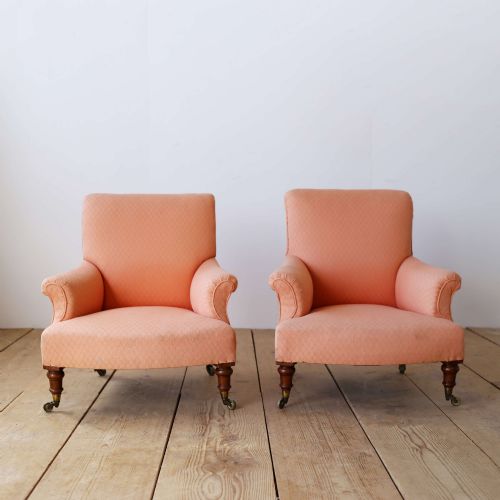
English country house armchairs focus primarily on deep comfort and relaxed proportions rather than rigid formal symmetry. They frequently feature soft scroll backs, generous padding and loose down-filled cushions.
These chairs were built to be lived in, often accumulating layered upholstery over decades of domestic use. Their unpretentious charm suits eclectic, traditional and contemporary interiors alike.
How do Art Deco lounge chairs differ?
Art Deco lounge chairs from the 1930s embrace streamlined geometric forms, smooth curved armrests and exotic wood veneers like satin birch. They abandon Victorian ornamentation in favour of clean, architectural lines and club chair comfort.
These pieces make a strong visual statement through their polished timber frames and club-style proportions. They bridge the gap between traditional lounge seating and modern minimalist design.
Can I use a library armchair in a living room?
Library armchairs, such as Regency mahogany tub designs, suit living rooms very well. Their enclosed backs and supportive armrests provide practical seating for reading or socialising.
Their refined wooden frames add architectural interest to a seating arrangement. Pairing a library chair with a sofa creates a balanced and functional layout.