

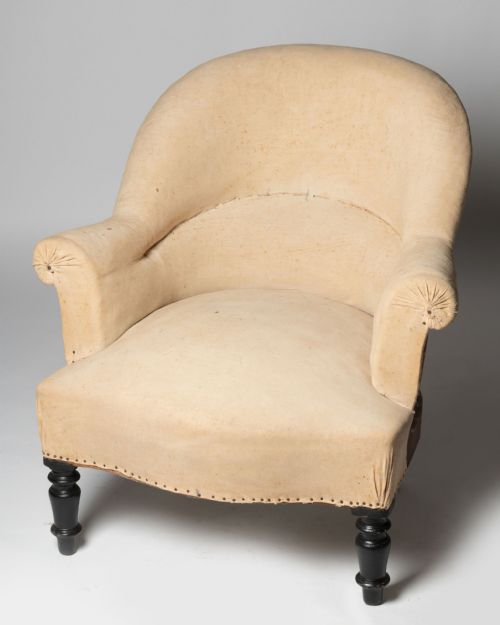
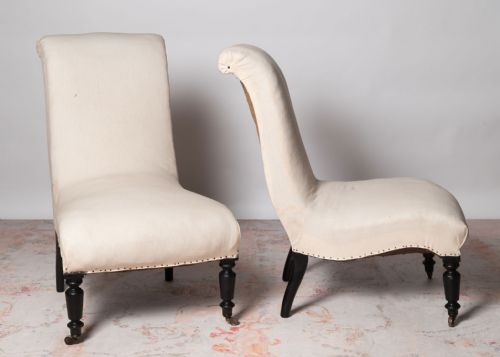


Scroll Back Bedroom Chair
A scroll back bedroom chair brings quiet Victorian and nineteenth-century elegance to a corner, offering a low seat for private dressing rooms.
Scroll Back Bedroom Chair
A scroll back bedroom chair sits low to the floor, designed originally for dressing rooms and private chambers during the Victorian and nineteenth-century periods. These seats take various forms on this page, including slipper chairs, nursing chairs, occasional chairs, and compact armchairs.
The defining feature across these pieces is the curved upper rail, often accompanied by carved scrollwork or splayed timber frames. Makers of the period produced them in diverse styles, ranging from English mahogany and walnut to French Napoleon III and Italian country designs.
Most examples found here date from the Victorian era or the broader nineteenth century, with occasional earlier eighteenth-century items. Upholstery varies from plain fabric and velvet to damask and tapestry, frequently mounted on wooden frames with brass castors.
How they were made
Cabinet makers built the structural frames of a scroll back bedroom chair using dense hardwoods like mahogany, walnut, oak, and rosewood. These timbers were shaped through turning and hand carving, creating curved backs, cabriole legs, and distinctive scroll arms.
Upholstery techniques involved stuffing hair or natural fibres over sprung or webbed bases before securing top coverings of velvet, damask, or tapestry with decorative brass tacks. Some specialised pieces also incorporate intricate bone inlay into the wooden framework.
Scroll Back Bedroom Chair Retail Price Guide 2026
Typical asking prices for scroll back bedroom chair among the pieces listed under this phrase on Sellingantiques today, from the lower quarter to the upper quarter. They describe what is for sale here now, not the wider market.
Upholstery materials seen across these chairs include damask, velvet, tapestry, and plain fabric.
What varies in quality
The distinction between ordinary and superior examples lies in the crispness of the timber carving and the architectural balance of the frame. Heavy, well-figured mahogany or walnut provides structural integrity that lighter secondary woods lack.
Original details such as brass castors, bone inlay, and period-appropriate upholstery materials elevate a piece. Finer chairs retain harmonious proportions between the curved backrest and the turned or cabriole supports.
The Scroll Back Bedroom Chair Glossary
- Scroll back
- A chair back featuring an outward or inward curved wooden terminal resembling a rolled scroll. This decorative flourish defines the silhouette of many nineteenth-century seating pieces.
- Slipper chair
- A low-set upholstered chair traditionally used in bedrooms for putting on shoes. These seats lack arms and sit close to the floor for comfort during dressing.
- Cabriole leg
- A furniture leg that curves outward in a convex arc and then bends inward in a concave arc, ending in a pad or foot. This form appears frequently on eighteenth and nineteenth-century seating.
- Damask fabric
- A reversible figured cloth traditionally woven on a jacquard loom with patterns formed by contrasting warp and weft threads. It provides a durable and textured covering for antique upholstery.
- Nursing chair
- A low-seated Victorian chair designed without arms to allow a woman holding an infant to sit comfortably. They often feature high backs and sprung upholstery.
Scroll Back Bedroom Chair: Frequently Asked Questions
What is a scroll back bedroom chair?
A scroll back bedroom chair is a low-slung, upholstered seat designed for private chambers during the Victorian and nineteenth-century periods. They served practical functions in dressing rooms while displaying refined woodwork and carved details.
These pieces encompass forms such as slipper chairs, nursing chairs, and compact armchairs. Their defining characteristic is the curved wooden top rail that rolls outward in a scroll shape.
How were these chairs used historically?
Victorian and nineteenth-century households placed these chairs in bedrooms, dressing rooms, and boudoirs for personal grooming and relaxation. Their low profile made them practical for tasks like putting on footwear or tending to infants.
Unlike formal drawing-room furniture, bedroom chairs prioritised intimate comfort and compact proportions. They fitted easily into corners or beside dressing tables without dominating the floor space.
How do I identify a Victorian scroll back chair?
Victorian examples typically employ dense woods such as mahogany, walnut, or rosewood, often paired with button-tufted upholstery or tapestry. Look for turned legs, sometimes fitted with brass castors, and characteristic carved scroll motifs along the upper frame.
Earlier nineteenth-century pieces may show stylistic influences from French Napoleon III designs or William IV proportions. The joinery and timber grain help confirm the period of manufacture.
Can I use an antique bedroom chair daily?
Most antique scroll back chairs remain structurally sound for regular sitting, provided the internal webbing and frame are stable. Many pieces on this page retain or have been updated with durable velvet, damask, or fabric upholstery.
Placing them in light-traffic corners preserves both the antique fabric and the wooden framework. Regular dusting and careful handling keep the carved timber and castors in good condition.