
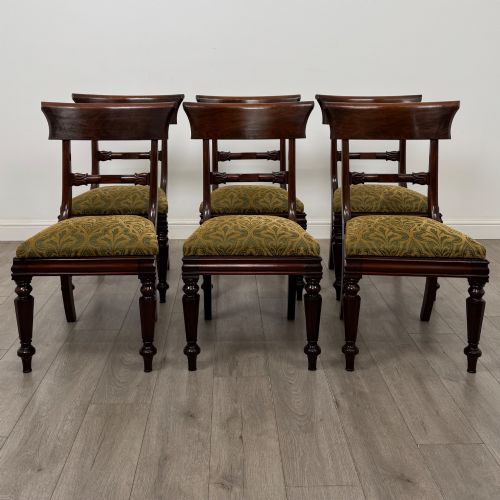
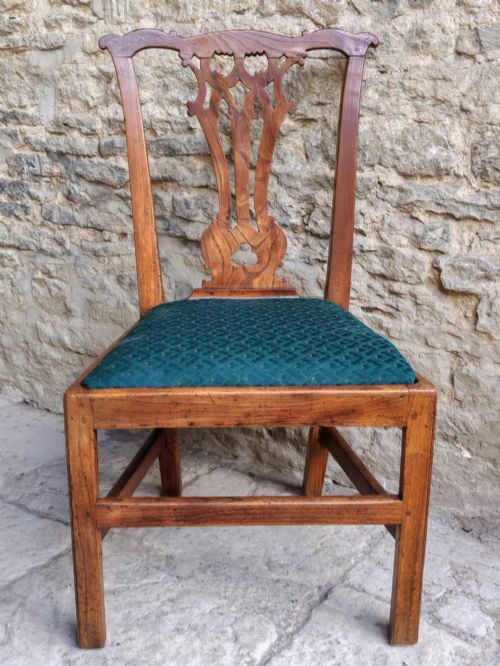
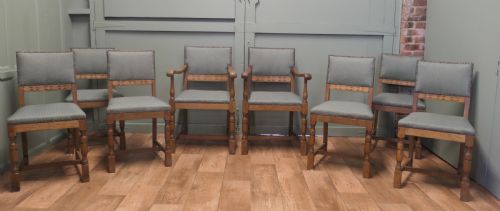
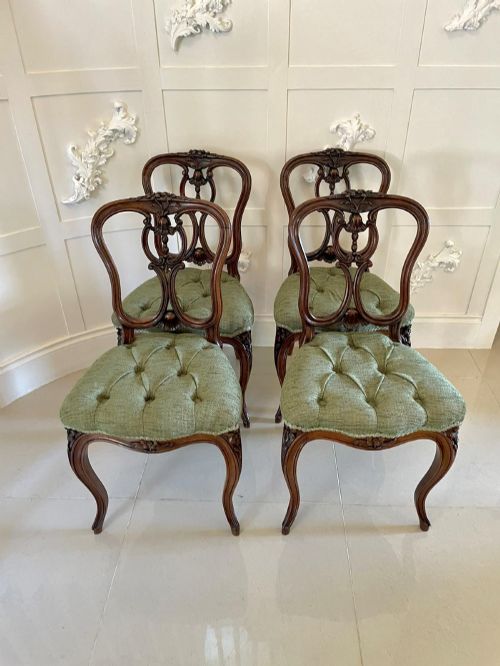


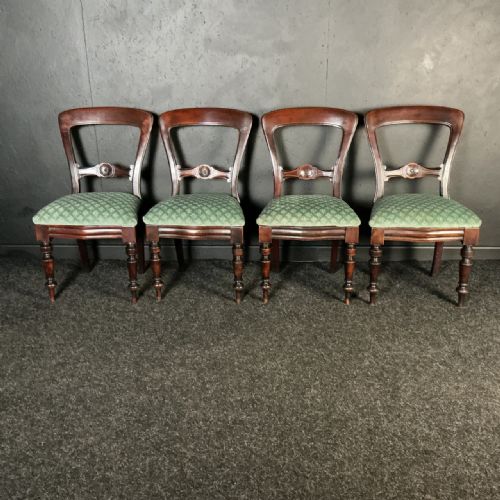
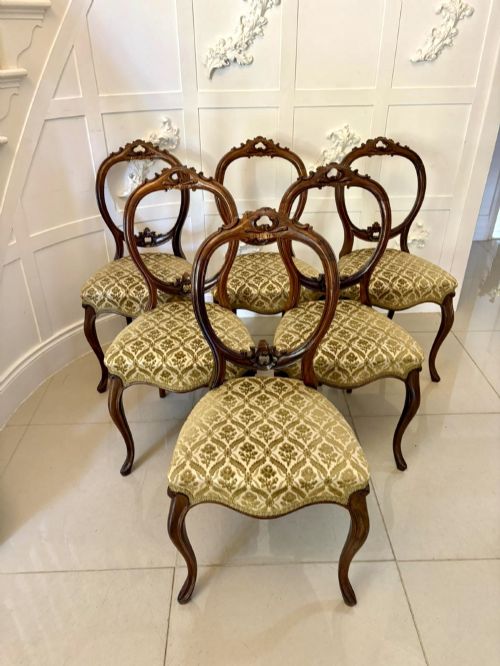
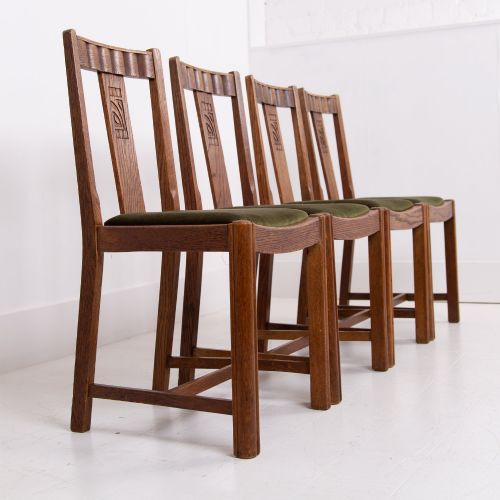
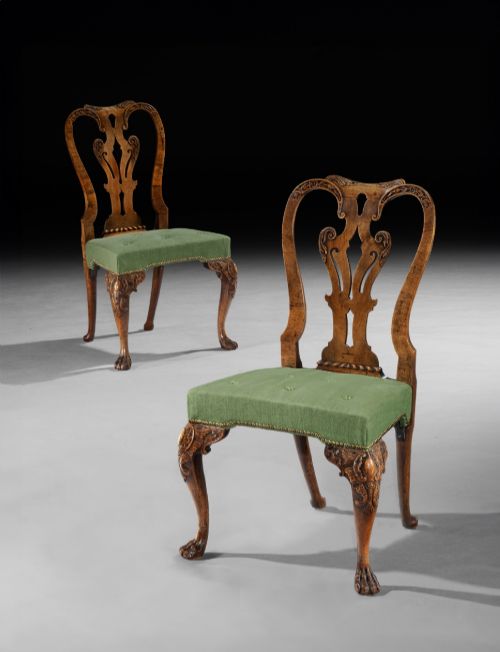
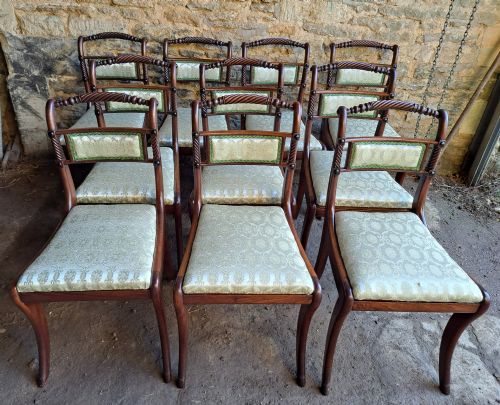
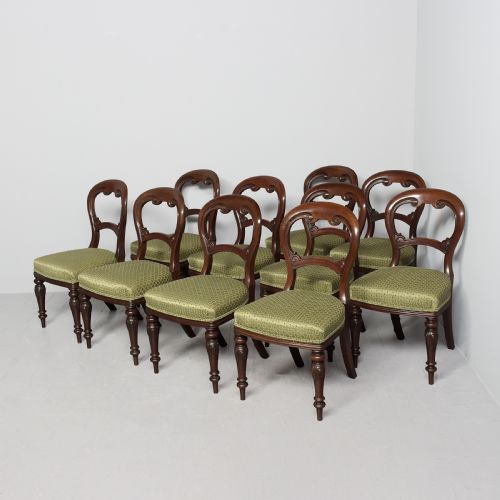
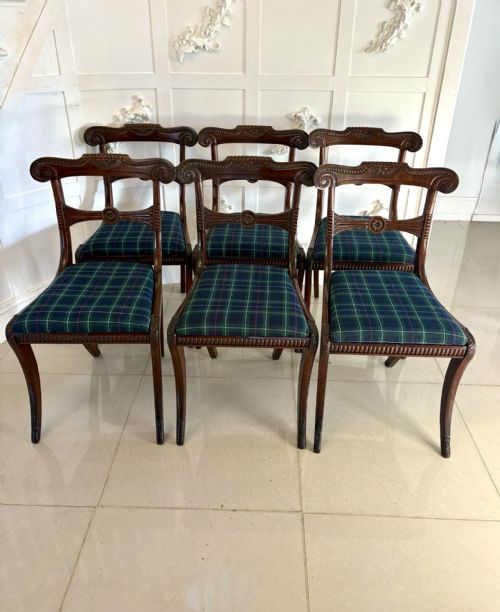
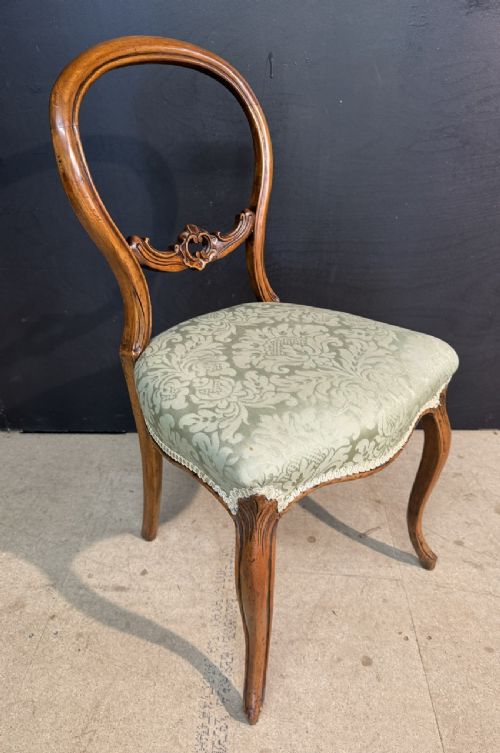
Green Upholstered Side Chairs
Green upholstered side chairs bring rich colour and firm seating to a room, spanning periods from Georgian mahogany to Victorian walnut.
Green Upholstered Side Chairs
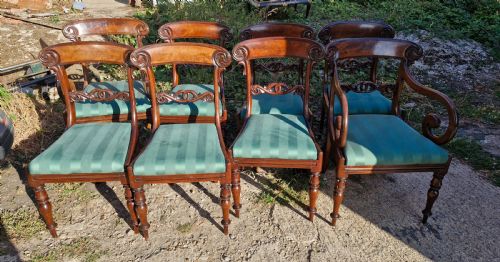
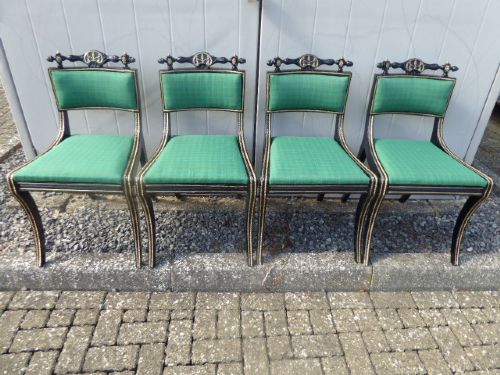
Green upholstered side chairs encompass seating designed for dining, dressing, and occasional use across several centuries. When searching for green upholstered side chairs, buyers encounter forms ranging from simple Regency single seats to elaborate carved Victorian walnut models.
The material evidence on this page demonstrates that these chairs appear frequently in sets or pairs, often constructed from timbers such as mahogany, walnut, and oak. They serve both utilitarian and decorative functions within the home, drawing the eye through distinctive frame shapes and textile seats.
How They Were Made
Cabinetmakers built these frames using dense hardwoods like mahogany, walnut, oak, and rosewood, employing traditional joinery such as mortise and tenon. Carved details on backs and legs demonstrate the hand labour typical of Georgian, Regency, and Victorian workshops.
Upholstery relies on fabric or velvet stretched over padding to provide a supportive seat. Brass details occasionally appear as decorative tacks or structural elements, completing the construction of the frame and pad.
Bobbin chairs use turned wooden spools that resemble a seamstress's cotton reels.
What Varies in Quality
The standard of carving and the selection of timber dictate the hierarchy of these chairs. Finely figured mahogany and walnut with deep, crisp hand-carving represent the upper tier of craftsmanship.
Simpler timbers like elm and country oak, alongside plainer structural lines, form the more utilitarian end of the spectrum. The weight of the wood and the integrity of the joinery further distinguish standard production pieces from exhibition examples.
Bruce Talbert·Gillows
The Green Upholstered Side Chairs Glossary
- Side chair
- A chair without arms, traditionally used at the dining table or placed against a wall. These pieces offer compact seating without the wider footprint of an armchair.
- Mahogany
- A durable, reddish-brown tropical hardwood favoured by cabinetmakers from the eighteenth century onward. Its stability made it the primary choice for fine dining chairs.
- Walnut
- A rich brown timber prized for its decorative grain and strength, frequently utilised during the walnut period and later revival styles. It takes fine carving exceptionally well.
- Regency
- An English design period spanning the early nineteenth century, characterised by classical restraint and influences from antiquity. Chairs from this era often feature ebonised finishes or elegant curved lines.
- Victorian
- A nineteenth-century period covering the reign of Queen Victoria, encompassing diverse revivals from Gothic to Rococo. Furniture from this time displays robust proportions and varied ornamental carving.
- Bergère
- An enclosed upholstered armchair with wooden framing, often featuring cane work or fabric sides. This French-inspired form provides a deep, comfortable seat.
Green Upholstered Side Chairs: Frequently Asked Questions
How do I date a side chair?
Dating relies on examining the timber species, the style of the legs, and the construction methods used in the frame. Georgian pieces often show lighter proportions, while Victorian examples tend to be heavier with moulded details.
Secondary woods inside the frame also provide clues to the period of manufacture. Comparing the carving style against known historical periods helps confirm the decade of origin.
Where should I place these chairs?
These chairs fit naturally around a dining table, function as desk seats, or stand as occasional pieces in a hallway or bedroom. Their compact, armless design allows them to tuck neatly against walls or under surfaces.
Pairing them with a matching table or using them as contrasting accents brings character to a living space. Their varied heights and timber tones suit both traditional and modern interiors.
Are these chairs comfortable for daily use?
Most examples provide firm seating supported by traditional upholstery and sturdy wooden frames. The inclusion of padding ensures they remain practical for everyday sitting.
Height and back support vary between styles, with high-back and upholstered models offering more upper body support. Choosing the right version depends on whether the chair is intended for dining or lounging.
How do I care for antique timber?
Maintaining the wood requires keeping the pieces away from direct heat sources and sudden temperature shifts. Regular dusting with a soft cloth preserves the finish without damaging the surface.
Occasional application of appropriate wax feeds the timber and maintains its natural lustre. Avoiding harsh chemical cleaners protects both the polished wood and the surrounding upholstery fabric.