


French Walnut Salon Chairs
French walnut salon chairs bring ornamental proportion and figured timber to domestic interiors through 19th and early 20th century revival forms.
French Walnut Salon Chairs
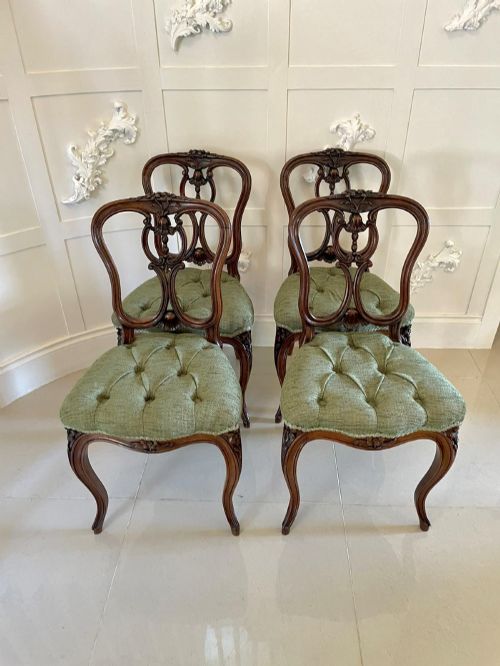
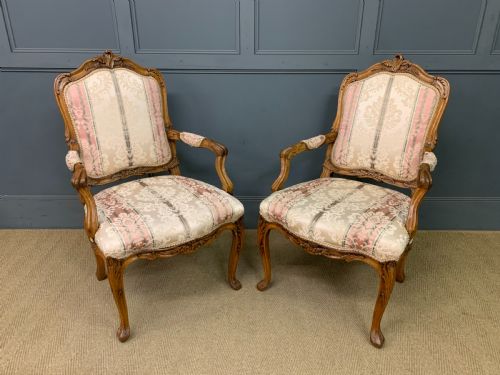
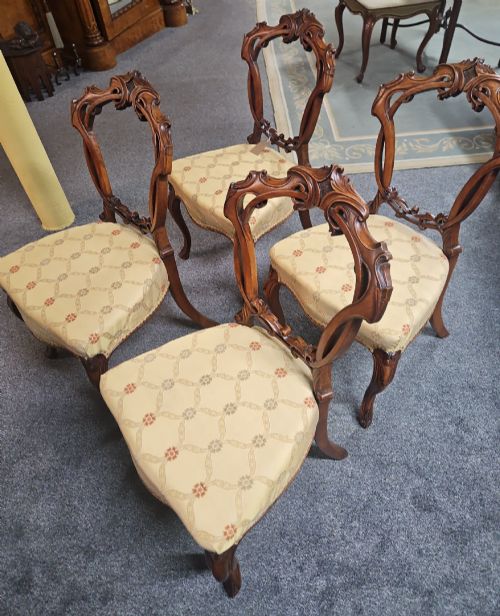
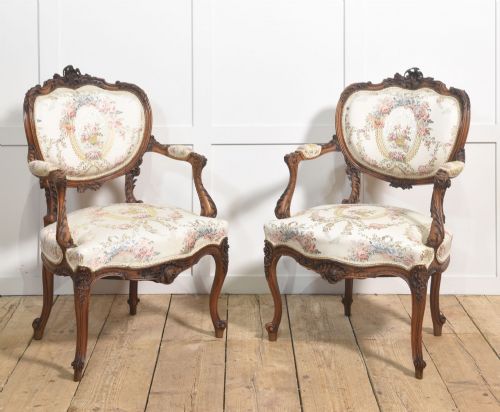
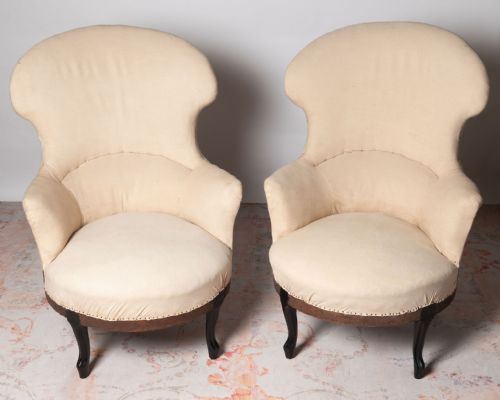
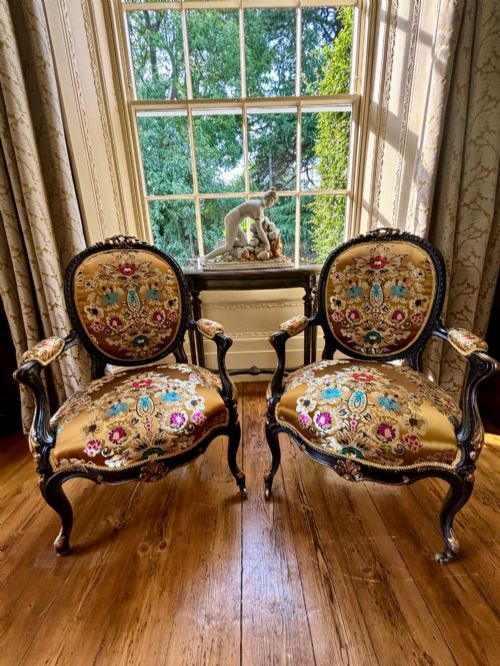
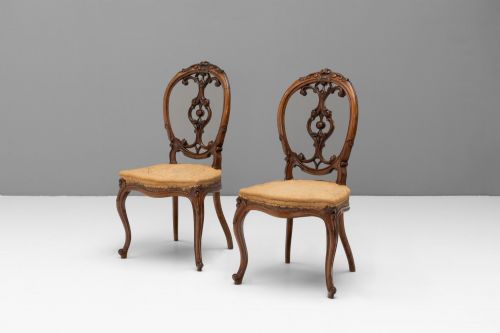
French walnut salon chairs combine open or closed armchair frames with carved walnut timber, appearing frequently in pairs or matched sets across this selection. These seating forms span the nineteenth and early twentieth centuries, drawing heavily upon Rococo Revival and Louis XV design idioms.
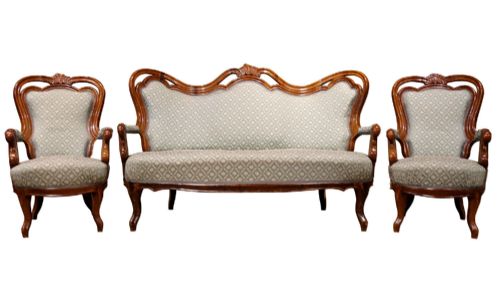
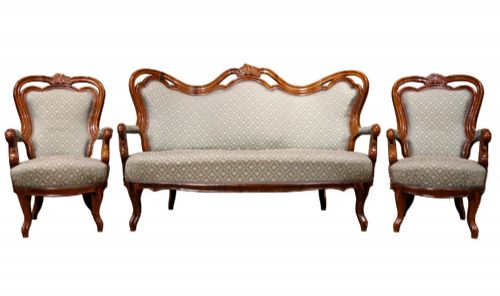
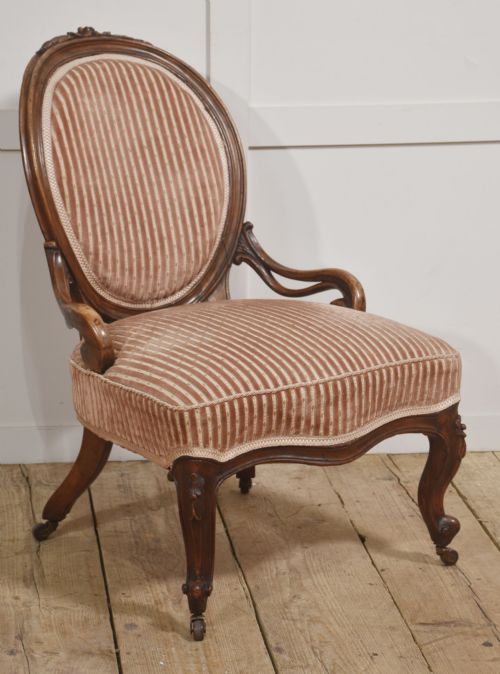
Buyers encounter distinct variations ranging from single side chairs to complete salon suites and parlour settings. The construction frequently incorporates oval backs or open arms alongside upholstered components intended for formal reception rooms.
Materials and Construction
The primary structural timber is solid walnut, chosen for its rich grain pattern and suitability for deep curvilinear carving. Frame members are shaped into cabriole legs and scrolled armrests reflecting period revival aesthetics.
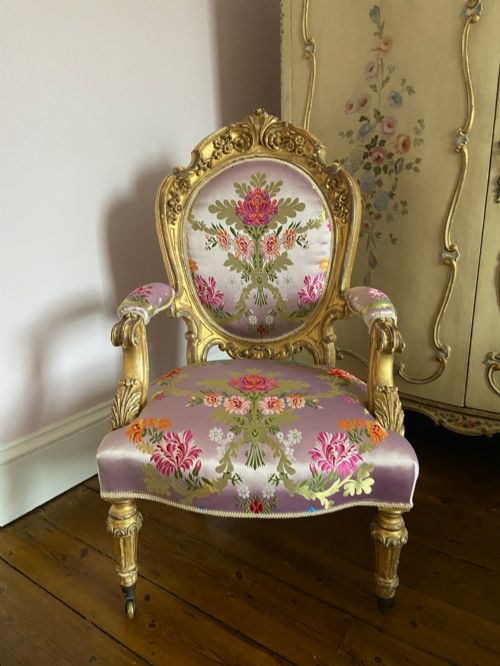
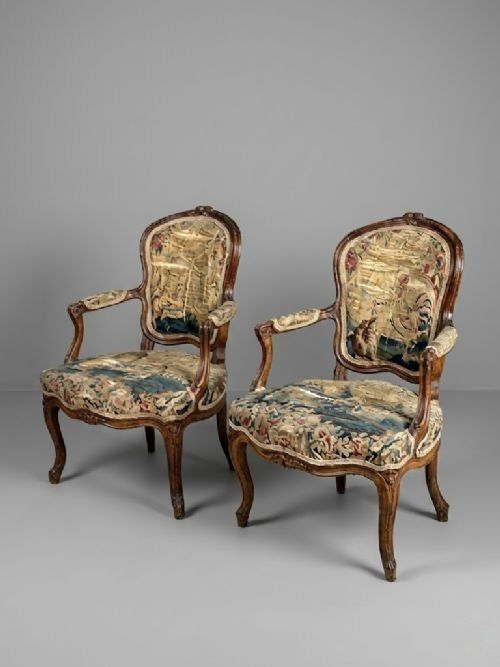
Upholstery relies upon traditional textile coverings including silk, velvet, needlepoint tapestry, and Aubusson panels. Brass tacking and button-back detailing frequently secure these fabric layers to the wooden framework.
Some chairs spent decades quietly listening to Victorian gossip before finding new life in modern bedrooms.
Assessing Quality and Execution
Quality separates along the depth and crispness of the hand-carved ornamentation upon the walnut framework. Superior examples display fluent, undercut botanical motifs rather than shallow or mechanical shaping.
The integrity of the original joints and the quality of the selected upholstery textiles also distinguish finer productions. Matching timber figure across paired armchairs indicates careful initial material selection by the maker.
Morison & Co of Edinburgh
The French Walnut Salon Chairs Glossary
- Fauteuil
- An open-armed upholstered armchair with exposed wooden framing characteristic of French seating design. These typically feature padded armrests and a wide seat.
- Rococo Revival
- A decorative style popular in the nineteenth century characterised by asymmetrical scrollwork, C-scrolls, and floral carvings. It draws inspiration from earlier eighteenth-century French design.
- Salon Suite
- A matched set of seating furniture comprising a sofa or settee alongside several armchairs and side chairs. These groupings were designed for formal entertaining in period drawing rooms.
- Needlepoint
- Hand-stitched canvas embroidery utilising wool or silk yarn to create pictorial or geometric patterns on chair upholstery. It appears frequently on nineteenth-century parlour seating.
- Cabriole Leg
- A furniture leg featuring a double curve, swelling outward at the knee and tapering inward toward the foot. This form is central to Louis XV style seating.
French Walnut Salon Chairs: Frequently Asked Questions
What is the difference between an armchair and a salon chair?
Salon chairs generally refer to lighter, more decorative seating intended for formal entertaining rooms rather than heavy library or dining use. They often feature open arms or smaller proportions suited to conversational groupings.
Many salon chairs take the fauteuil form with exposed carved walnut frames and upholstered backs. Side chairs without arms also appear frequently within larger salon suites.
How can I date a walnut salon chair?
Dating relies upon stylistic revival indicators, construction methods, and timber patination spanning the nineteenth and early twentieth centuries. Mid-century examples often display robust Rococo Revival carving, while later twentieth-century pieces adopt cleaner Edwardian or transitional lines.
Examining the hand-cut joinery and the wear patterns on the walnut timber provides further clues to the exact manufacturing era. Upholstery fabrics may be later replacements while the underlying wooden frame remains entirely period.
Are these chairs suitable for daily use?
Most antique salon chairs tolerate normal seating when structurally sound, though their lighter nineteenth-century construction warrants thoughtful placement. They function effectively as occasional chairs in low-traffic reception spaces.
Periodic checks of the joint stability help preserve the antique walnut frames over time. Modern users often balance historical preservation with practical domestic placement in sitting rooms.
What textile types should I expect on the upholstery?
Period upholstery materials include woven silk, velvet, needlepoint tapestry, and Aubusson textile panels. These fabrics often showcase floral or pastoral motifs that complement the carved walnut woodwork.
Many surviving pieces have undergone reupholstery over their lifespan to maintain usability. Finding original period fabric remains less common than encountering sympathetic later restorations.