
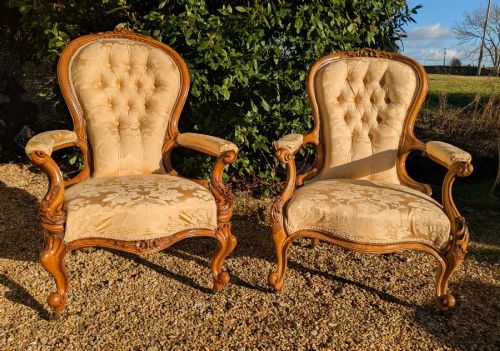
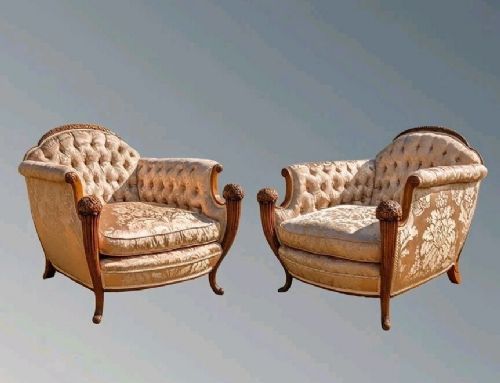
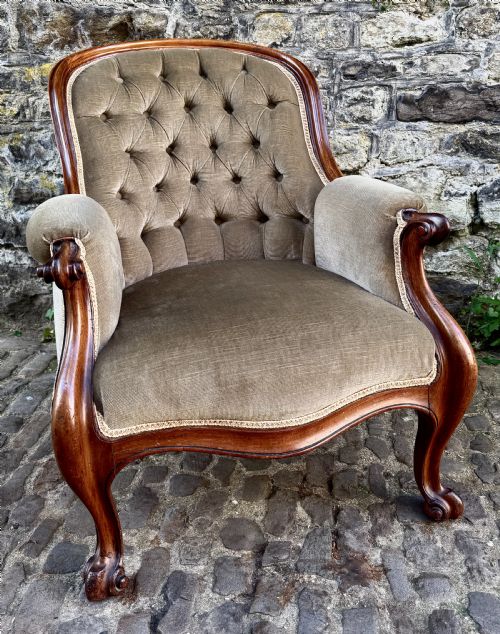
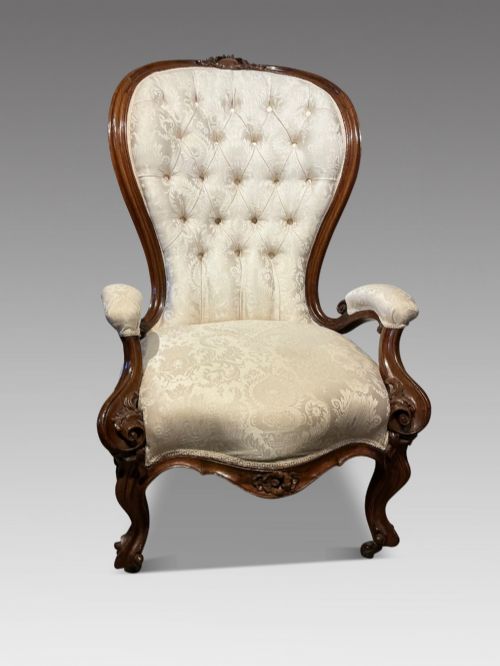
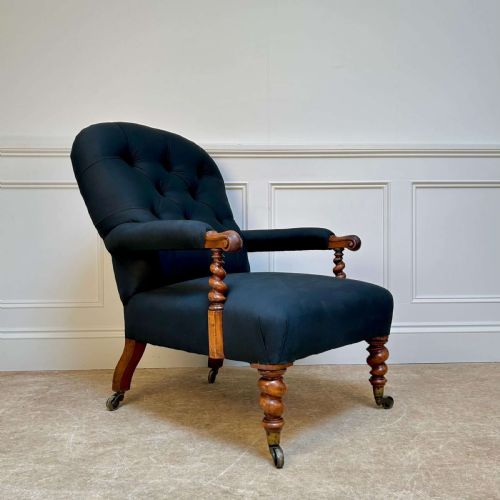
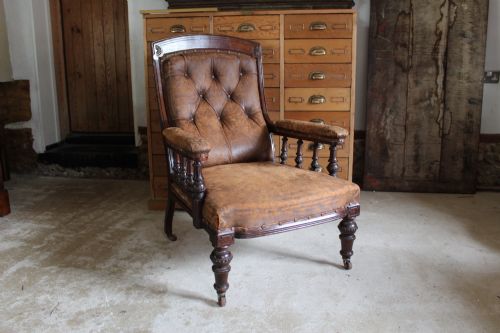


Button Tufted Walnut Chairs
Button tufted walnut chairs combine rich timber frames with deep, plush upholstery, offering both firm support and distinct period character for sitting rooms.
Button Tufted Walnut Chairs
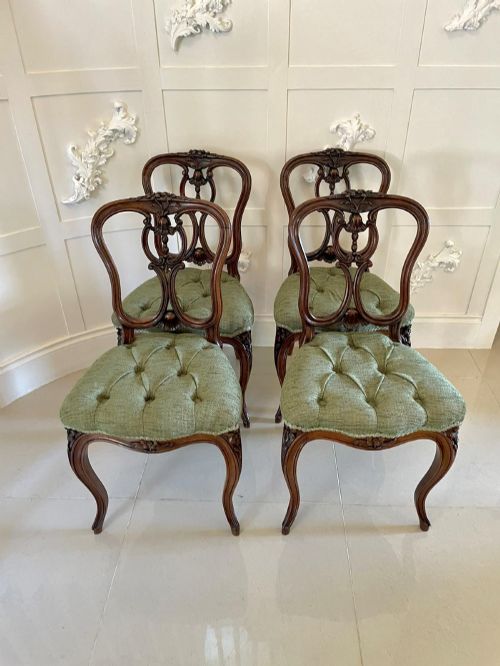
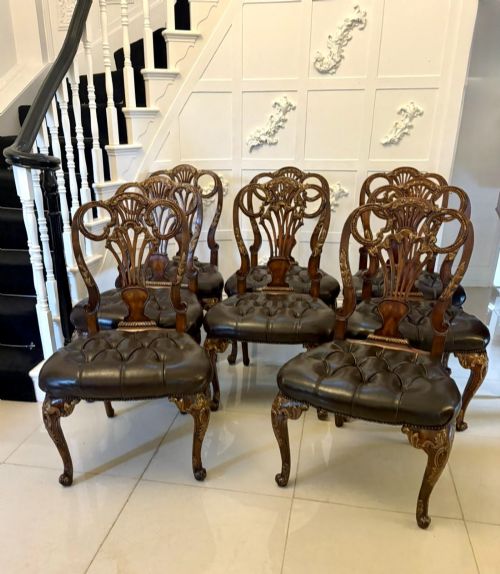
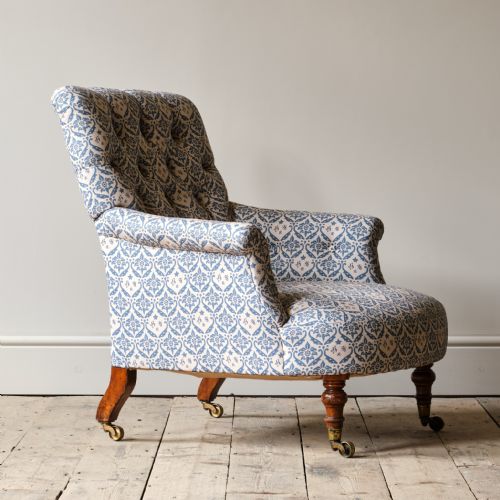
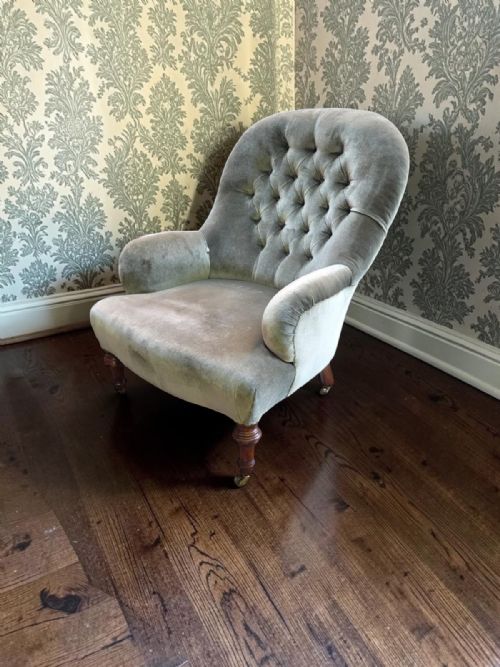
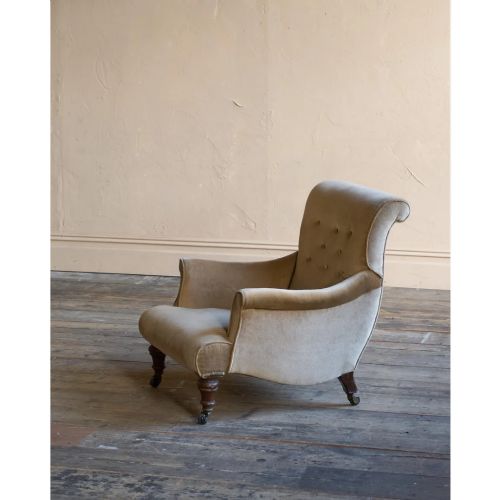
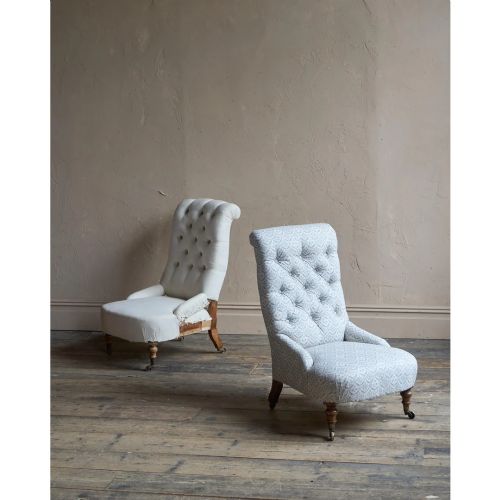
Button tufted walnut chairs appear chiefly in Victorian and Edwardian forms, spanning armchairs, nursing chairs, and dining sets. These pieces rely on dark timber frames shaped with carved details or smooth curves to support padded seats.
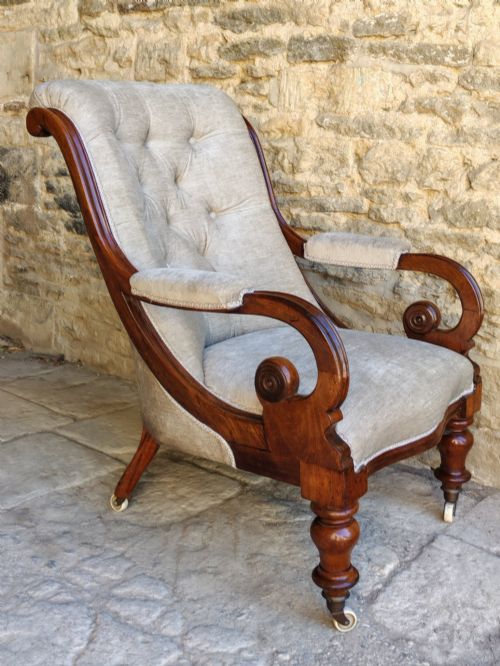
Victorian examples dominate the selection, often taking the form of low-backed nursing chairs or high-backed reading seats with generous upholstery. Makers utilised walnut for its rich grain, pairing the timber with velvet, silk, or leather coverings secured by deep buttoning.
Materials and construction
Frames are constructed from solid walnut, sometimes featuring gilded highlights or intricate carved motifs along the crest rails and cabriole legs. Joinery relies on traditional methods to ensure stability across open armchairs and heavy library seats.
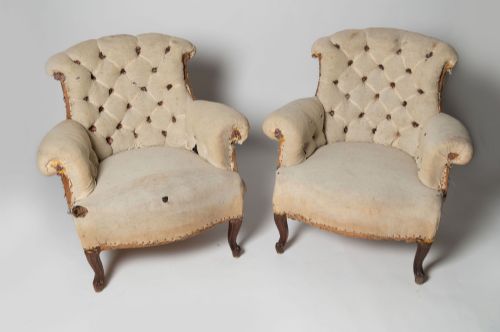
Upholstery involves layered stuffing held in place by textile covers, punctuated by rows of recessed buttons that create the characteristic tufted surface. Materials range from durable cotton and linen to luxurious silk and supple leather.
Seating forms range from low bedroom chairs and chaise longues to complete three-piece drawing room suites.
Evaluating the pieces
Quality rests in the crispness of the timber carving and the depth of the walnut grain visible through the polish. Superior examples display balanced proportions and seamless joinery in the frame.
The standard of the upholstery work defines the upper tier, noting the precision of the tufting and the suitability of the fabric to the period of the frame.
Howard & Sons·Hindley & Sons·Blyth & Sons·Holland and Sons
The Button Tufted Walnut Chairs Glossary
- Button back
- A style of upholstery where fabric is pulled deep into the padding by buttons arranged in a geometric diamond pattern. This technique secures the internal stuffing while creating a textured surface.
- Spoonback
- An open armchair or nursing chair design featuring a concave, oval-shaped backrest resembling the bowl of a spoon. It emerged during the mid nineteenth century to support the human spine.
- Nursing chair
- A low-seated upholstered chair designed for comfort near the hearth or nursery. These seats typically lack arms to allow voluminous garments to drape freely.
- Cabriole leg
- A furniture leg that curves outward at the knee and tapers inward toward the foot, often ending in a scroll or pad. This form is common on revival and mid nineteenth century seating.
Button Tufted Walnut Chairs: Frequently Asked Questions
How do I date a button tufted walnut chair?
Dating relies on stylistic shifts in the walnut frame and the height of the backrest. Mid nineteenth century pieces often favour curved spoonbacks, while later Victorian and Edwardian examples introduce upright frames and distinct carved motifs.
Examine the construction beneath the upholstery where possible, noting the transition from hand-shaped joinery to later factory methods. Timber colour and polish finish also offer clues to the decade of manufacture.
Where were these chairs used in a Victorian home?
These seats served distinct functions across different rooms, from formal libraries to private bedrooms. Low nursing chairs sat near fireplaces, while larger armchairs anchored main reception spaces.
Library chairs provided sturdy support for reading, and matching suites furnished formal parlours for receiving visitors. Each room demanded a specific scale and level of upholstery comfort.
What is the difference between an armchair and a nursing chair?
Armchairs feature supportive side rests and upright proportions intended for general sitting and reading. They occupy a prominent place in studies and drawing rooms.
Nursing chairs sit lower to the ground and omit armrests altogether to accommodate heavy nineteenth century dresses. Their compact footprint made them easily movable between bedrooms and private quarters.
How should I care for antique walnut furniture frames?
Maintain the timber by dusting regularly with a soft, dry cloth to prevent grit accumulation. Avoid placing walnut pieces in direct sunlight or near heat sources to protect the polished surface from drying out.
Apply a minimal amount of appropriate furniture wax only when the wood appears dry. Protect upholstered sections by keeping fabrics clean and avoiding harsh chemical cleaners near the timber.