

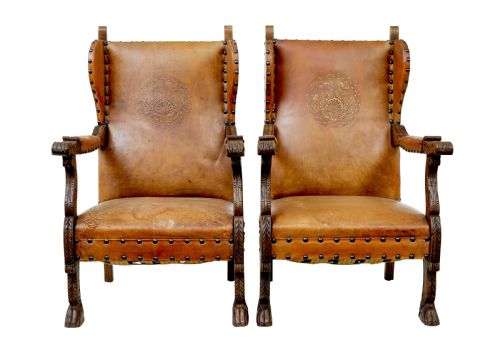
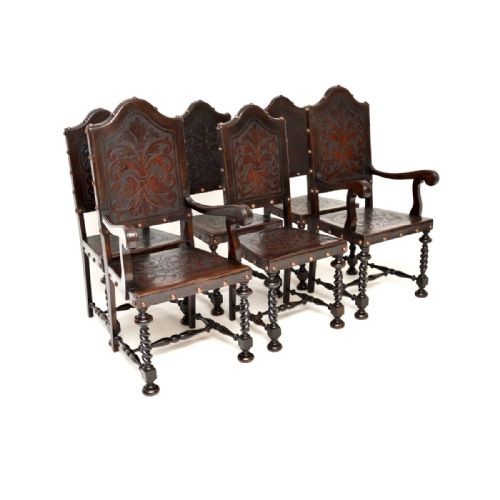
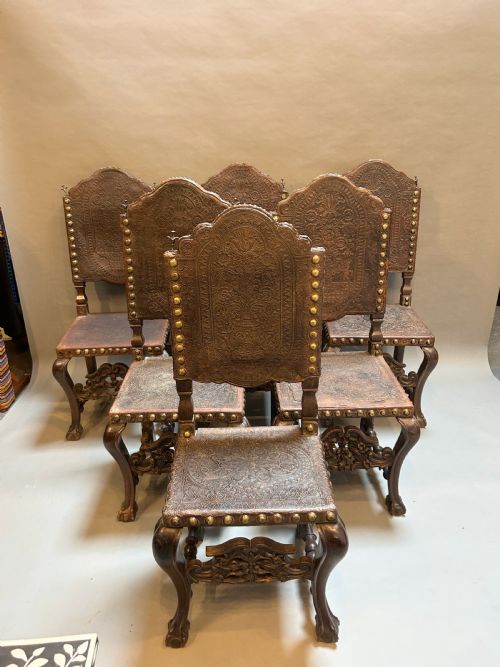


Embossed Leather Back Chairs
Embossed leather back chairs bring tactile depth and rich historic character to a room through centuries of skilled craftsmanship.
Embossed Leather Back Chairs
Embossed leather back chairs combine robust wooden framing with patterned hide upholstery, appearing across various centuries and regional revivals. These seating options range from single hall seats and throne chairs to matched sets intended for formal dining rooms.
The materials span oak, walnut, mahogany, birch and brass, anchored by decorated leather panels on the upright supports. Buyers encounter distinct historic interpretations, including Victorian Gothic Revival, Spanish Revival and Portuguese Baroque styles.
Forms include side chairs, armchairs, rocking chairs and tall dining pieces. The selection reflects both stately 18th century origins and the heavier ornamentation favoured during the 19th century and around 1900.
How they were made
Construction relies on solid hardwoods such as oak, walnut and mahogany, shaped through hand carving and joinery techniques appropriate to each period. Frames frequently feature elaborate detail, from figurative motifs to turned structural elements.
The signature leather panels are typically embossed and often secured to the wooden framework using decorative brass elements. These hides provide a durable, textured surface that contrasts with the polished timber of the legs and rails.
Embossed Leather Back Chairs Retail Price Guide 2026
Typical asking prices for embossed leather back chairs among the pieces listed under this phrase on Sellingantiques today, from the lower quarter to the upper quarter. They describe what is for sale here now, not the wider market.
What varies in quality
The standard of carving across the wooden frame dictates much of the visual distinction between pieces, with deep hand execution outperforming simpler mechanical shaping. Timber selection also plays a role, as dense, well-figured oak, walnut or mahogany provides superior structural integrity.
The clarity and depth of the embossed leather tooling determine the artistic merit of the backrest. Preservation of the original hide and the precision of its attachment to the frame mark the difference between standard production and finer regional workshop output.
The Embossed Leather Back Chairs Glossary
- Embossing
- The process of stamping or raising a design in relief onto the surface of leather. This technique creates tactile patterns that catch the light on chair backs.
- Gothic Revival
- An architectural and decorative style drawing inspiration from medieval forms. Pieces in this manner often display pointed arches and heavy, imposing timber construction.
- Throne chair
- A high-backed, imposing armchair designed to command attention in a room. These seats typically feature substantial carved wood and extensive decorative elements.
- Bar back
- A chair design featuring horizontal wooden bars across the backrest rather than a solid splat or upholstered panel. It provides sturdy structural support with a clean linear appearance.
- Side chair
- An upright seat without arms, traditionally used around a dining table or placed against a wall. These pieces rely on a decorative backrest for their primary visual impact.
Embossed Leather Back Chairs: Frequently Asked Questions
What periods do these chairs come from?
The available selection spans several distinct eras, stretching back to the 18th century and continuing through the 19th century and around 1900. Victorian examples are also common.
Craftsmanship evolves across these periods, moving from earlier regional iterations towards elaborate revival styles like Spanish Revival and Victorian Gothic.
How were embossed leather chairs used historically?
These seating options served multiple purposes depending on their form, from formal dining settings to grand hall entrances. Throne chairs and armchairs were often placed in prominent reception spaces to denote status.
Dining chairs were produced in sets for communal meals, while side chairs and rocking pieces functioned in parlours and studies.
How do I care for antique leather upholstery?
Maintaining embossed leather requires keeping the material away from direct sunlight and extreme heat sources which can dry out the hide. Gentle cleaning preserves the textured surface.
Applying suitable leather conditioners periodically helps maintain flexibility and prevents cracking across the embossed panels.
What woods are typically found in these chairs?
Makers utilised robust hardwoods suited to enduring structural demands and detailed carving. Oak and walnut appear frequently in regional revival pieces.
Mahogany and birch are also utilised, providing different grain patterns and tonal qualities that complement the dark embossed leather backrests.