
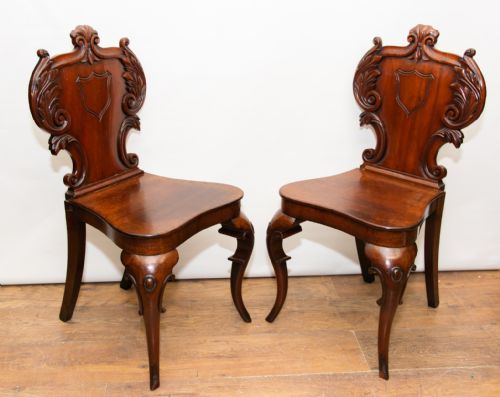


Victorian Mahogany Hall Chairs
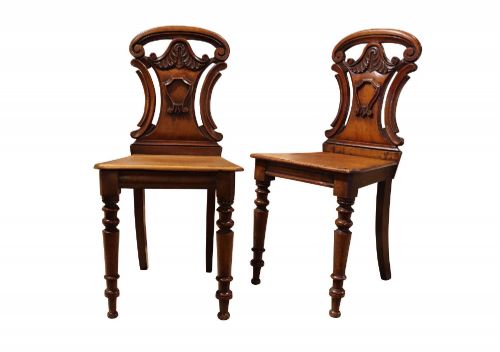
Victorian mahogany hall chairs are sturdy, timber-framed seats designed for entranceways, combining functional utility with carved heraldic or shield backboards.
Victorian Mahogany Hall Chairs
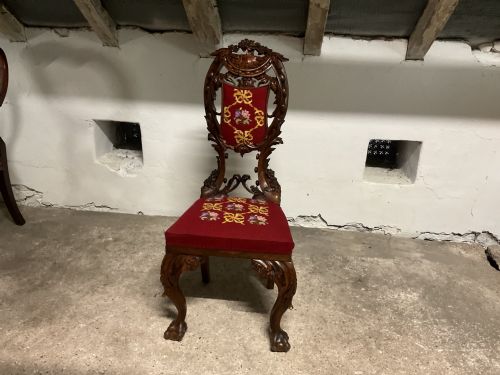
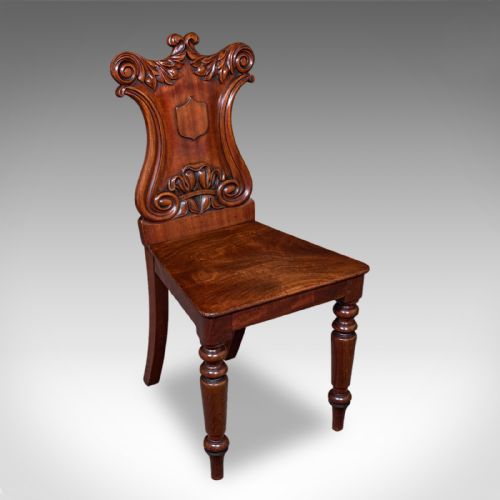
Victorian mahogany hall chairs are solid timber seats made for grand entrances, vestibules and corridors, serving visitors waiting briefly before entering the main rooms. These pieces typically feature solid wood seats and elaborate upright backrests rather than upholstered comfort.
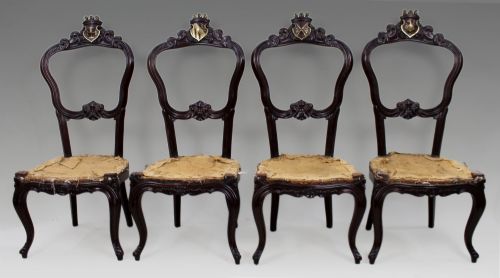
Most examples found here date from the nineteenth century, ranging from the early decades through to the late Victorian period. Buyers frequently encounter single items or pairs, alongside occasional sets of three or four sharing matching heraldic crests or shield-shaped backs.
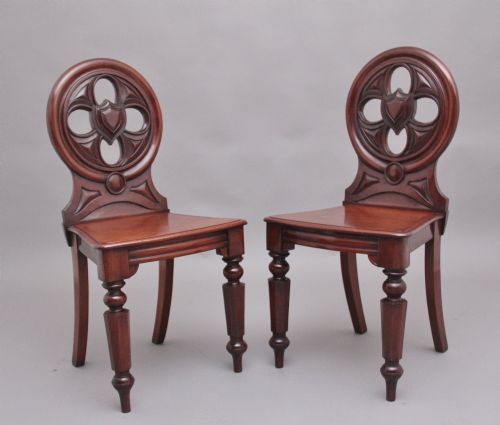
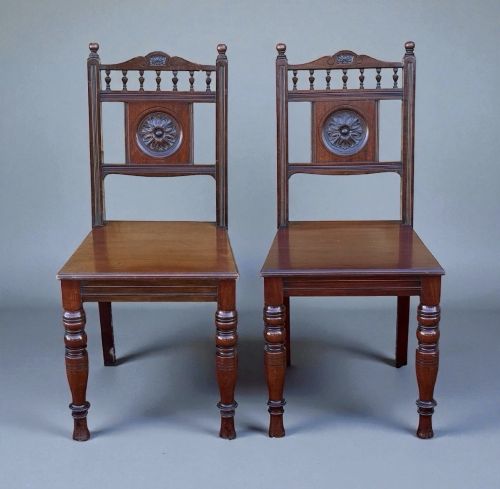
Regional variations appear across the selection, including Scottish origins, Irish sets and specific stylistic revivals such as Gothic Revival or Aesthetic Movement designs. While primarily intended for halls, many pieces transition easily into reception rooms as occasional or side seating.
How They Were Made
Makers relied primarily on mahogany timber for its strength, deep reddish grain and ability to hold crisp hand-carved details. Woodworkers shaped solid planks into shaped seats, while secondary elements occasionally incorporated brass fixtures or turned wooden legs.
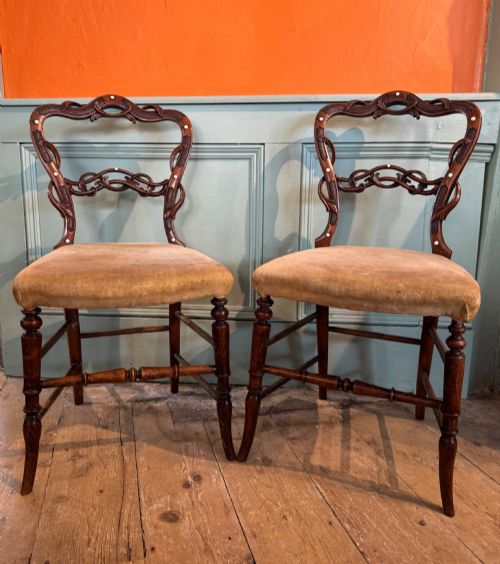
Carpenters constructed the upright backs either as solid carved panels, shield shapes or fretted frameworks fixed securely to the seat rails. Surface finishes relied on traditional polish to highlight the natural figuration of the mahogany without obscuring the grain.
What Varies in Quality
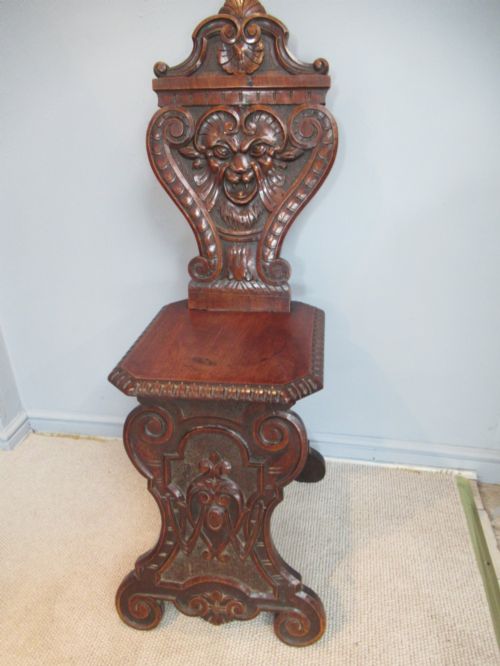
The standard of a Victorian mahogany hall chair depends heavily on the depth and precision of the hand carving on the backrest. Simple flat panels sit at one end of the scale, while deeply sculpted heraldic crests, shell motifs and pierced scrollwork represent higher craftsmanship.
Structural integrity also separates individual pieces, with heavier gauge timber and robust joinery providing superior longevity. Furthermore, matching sets command distinct interest compared to single surviving chairs due to the difficulty of assembling original pairs or groups.
The Victorian Mahogany Hall Chairs Glossary
- Hall chair
- A rigid wooden seat built for an entranceway, featuring no upholstery and a decorated backrest. These items were built for durability and display rather than lounging.
- Heraldic crest
- An engraved, painted or carved family coat of arms displayed centrally on the chair back. Such motifs were commissioned by prominent households to mark lineage.
- Shield back
- A chair back shaped in the outline of a heraldic shield, popular during the nineteenth century. This design provided a smooth surface for carved crests or central cartouches.
- Gothic Revival
- An architectural and decorative style drawing inspiration from medieval forms, incorporating pointed arches and trefoils. This aesthetic appeared frequently on nineteenth-century hall furniture.
- Occasional chair
- A movable side seat brought into use when extra accommodation is required in reception rooms. These pieces match the timber and period of primary dining suites.
Victorian Mahogany Hall Chairs: Frequently Asked Questions
Where were hall chairs placed in Victorian homes?
These seats stood strictly in entrance halls, corridors and vestibules where guests removed outerwear. They functioned as functional waiting spots rather than comfortable lounge seating.
Because entrance spaces demanded formal display, the chairs faced outward to showcase carved crests and timber grain to arriving visitors.
Why do most hall chairs lack upholstered cushions?
Makers omitted padding because entrance areas experienced heavy foot traffic, damp weather and dust from outside. Wood surfaces withstood moisture and dirt much better than fabric.
Solid timber construction allowed households to clean and polish the seats quickly between the visits of tradespeople and guests.
How can I date a Victorian mahogany hall chair?
Dating relies on observing stylistic markers such as Gothic Revival arches, Aesthetic Movement lines or classical shield shapes. Construction joints and timber density also provide clues to the decade of manufacture.
Cabinetmakers evolved backrest carving techniques steadily across the nineteenth century, moving from plain Regency influences toward heavier Victorian ornamentation.
Can I use antique hall chairs around a dining table?
Many buyers repurpose these solid wooden items as occasional dining or desk seating. Their compact footprints allow them to tuck neatly against tables when not in use.
However, the lack of padding means they suit shorter meals rather than extended evening seating.