


Carved Timber Hall Chairs
Carved timber hall chairs stand ready in entrance spaces, offering firm seats and striking carved backs that impress visitors upon arrival.
Carved Timber Hall Chairs
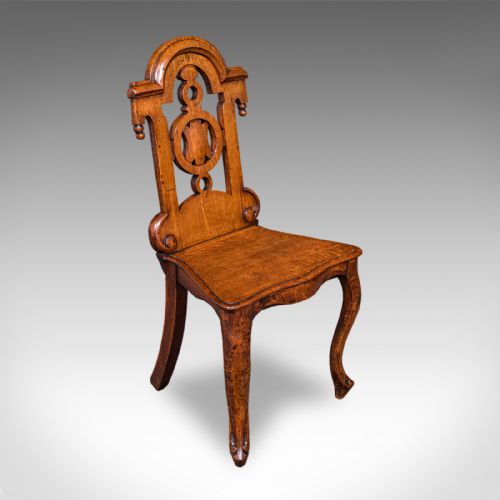
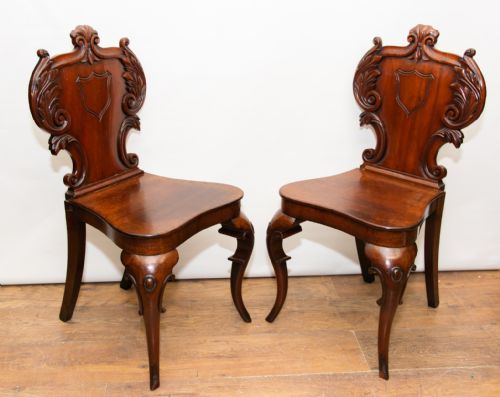
Carved timber hall chairs serve as formal seating designed for hallways, corridors, and entrance spaces in period homes. These pieces emerge predominantly from nineteenth-century workshops, drawing upon Regency, Victorian, and Georgian stylistic traditions.
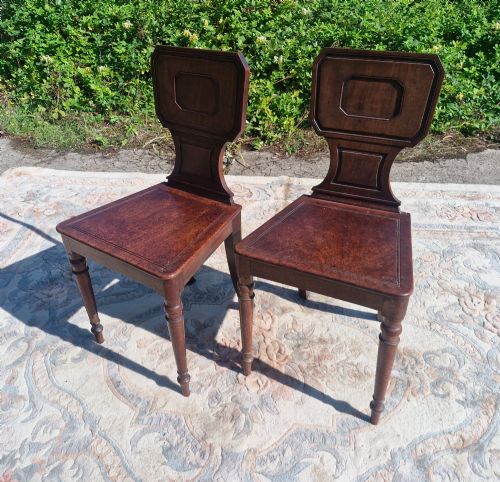
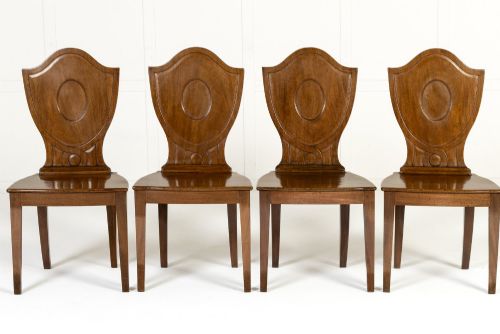
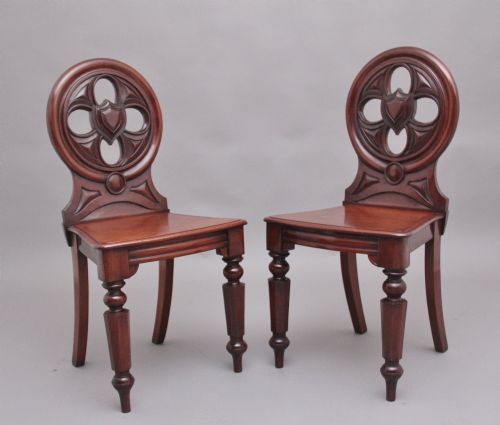
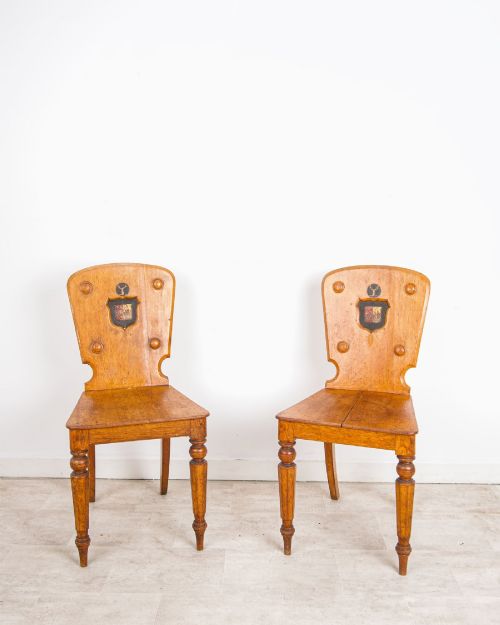
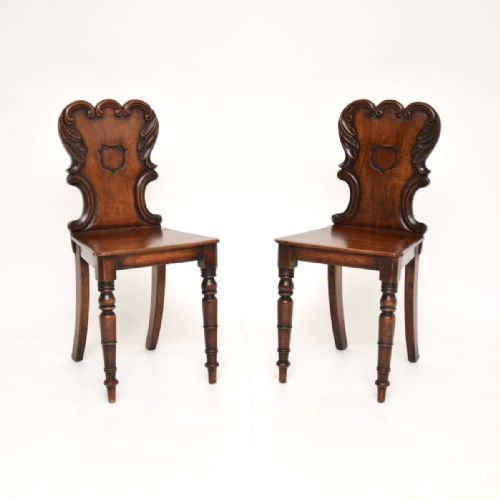
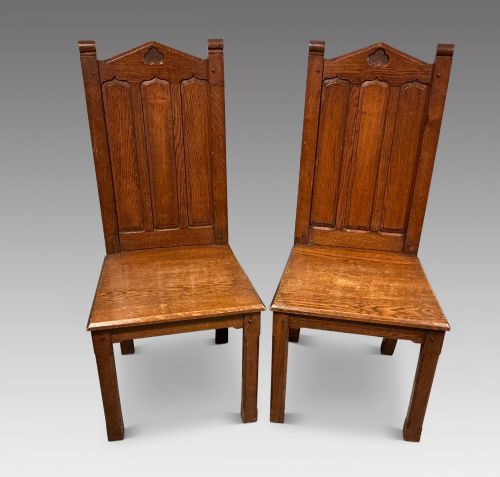
Makers shaped these chairs primarily as side seats rather than lounging furniture, featuring solid timber seats and upright backs. Examples frequently appear as pairs or larger sets, often displaying heraldic shields or carved motifs within the wood.
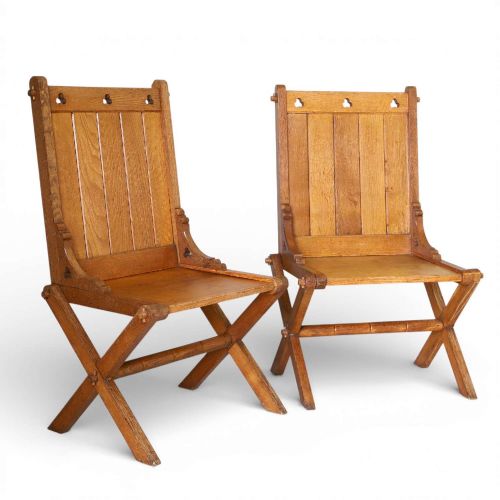
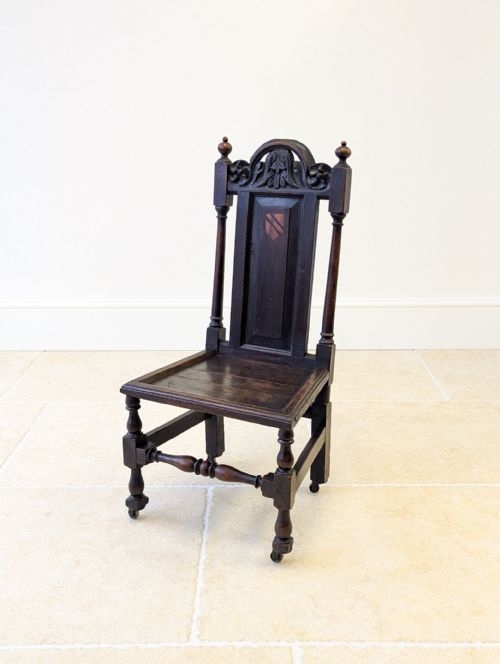
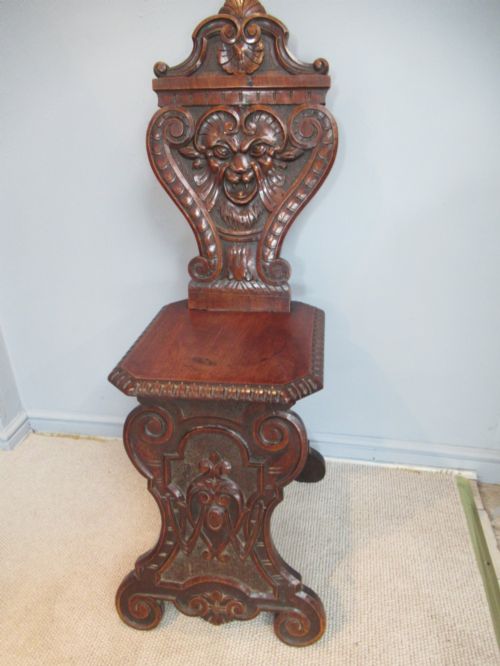
The selection ranges from early nineteenth-century mahogany forms to later oak interpretations influenced by Gothic Revival and Jacobean styles. Each piece reflects the functional requirements of grand reception spaces combined with decorative woodworking.
How they were made
Carpenters constructed carved timber hall chairs using dense hardwoods like mahogany, oak, and walnut, selecting materials that could withstand regular use in busy entryways. Timber selection determined both the weight of the chair and the depth achievable in carved details.
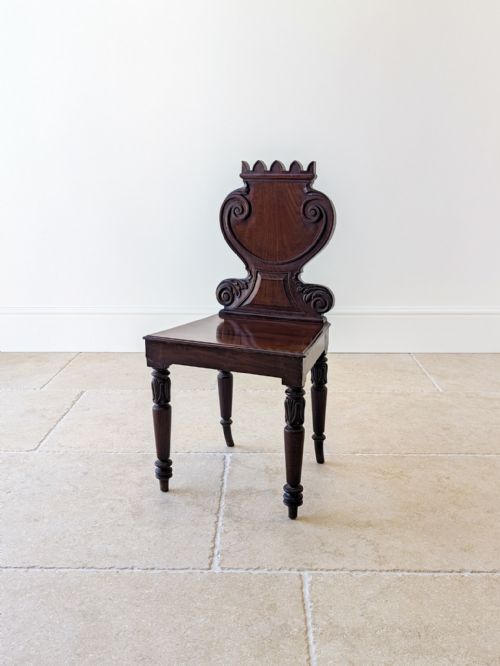
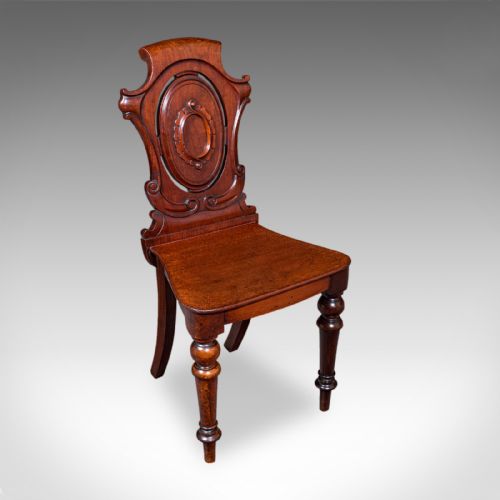
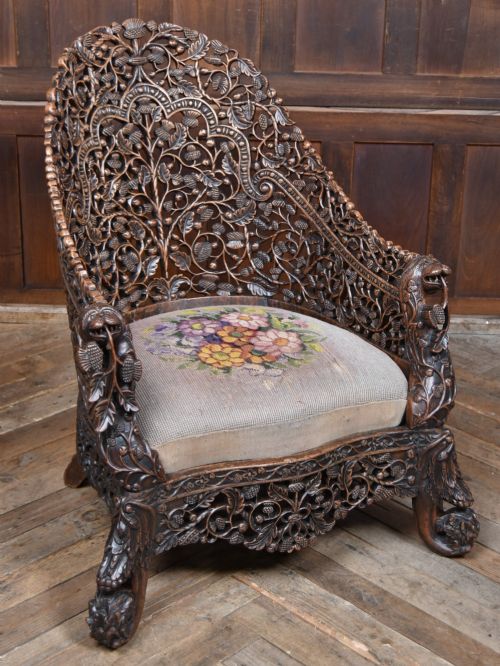
Craftsmen utilised hand-carving techniques to shape shield backs, shell motifs, and heraldic details directly into the solid wood. Joinery relied on traditional methods to secure upright backs and solid seats without relying on upholstered cushioning.
One exceptional listing includes an apprentice piece, where a young woodworker proved their skill by carving a miniature chair.
What varies in quality
Quality rests upon the crispness of the carving and the depth of the timber work displayed on the backrest. Chairs featuring sharply defined heraldic shields or intricate shell motifs demonstrate superior craftsmanship compared to simpler, plain-backed variants.
The choice of dense hardwood influences the stability and longevity of the piece, with well-figured mahogany and quarter-sawn oak representing higher standards of construction. The structural integrity of the joint where the upright back meets the solid seat dictates the durability of the chair.
Gillows·White Allom And Co
The Carved Timber Hall Chairs Glossary
- Shield back
- A chair back shaped in the form of a heraldic shield, frequently carved with crests or armorial bearings.
- Gothic Revival
- A nineteenth-century design movement incorporating medieval architectural motifs such as trefoils and pointed arches into furniture.
- Regency
- A stylistic period spanning the early nineteenth century defined by classical restraint and influences from antiquity.
- Mahogany
- A heavy, durable tropical hardwood prized for its reddish-brown tone and suitability for detailed carving.
- Side chair
- An upright chair without arms, designed for placement against a wall or around a table.
Carved Timber Hall Chairs: Frequently Asked Questions
Where were carved timber hall chairs placed?
These chairs stood in entrance halls, corridors, and reception rooms to provide brief seating for guests waiting to be received.
Because hallways were public areas of the home, the furniture chosen for them emphasised formal design and family heraldry over comfort.
How do I identify a Regency hall chair?
Regency examples display classical lines, often utilising mahogany with carved shell or scroll motifs on the backrest.
They date from the early nineteenth century and reflect the architectural tastes of the Regency period.
Are these chairs comfortable for daily sitting?
Hall chairs feature solid timber seats and upright wooden backs designed for brief periods of waiting rather than prolonged lounging.
Their primary purpose was visual impact and heraldic display in an entrance space rather than relaxed seating.
What woods were used for hall chairs?
Carpenters primarily worked with dense hardwoods including mahogany, oak, and walnut to ensure the chairs endured heavy hallway use.
These timbers allowed craftsmen to execute deep, permanent carvings into the wooden backrests.