

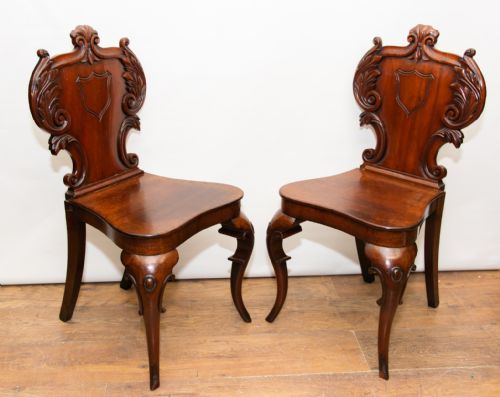


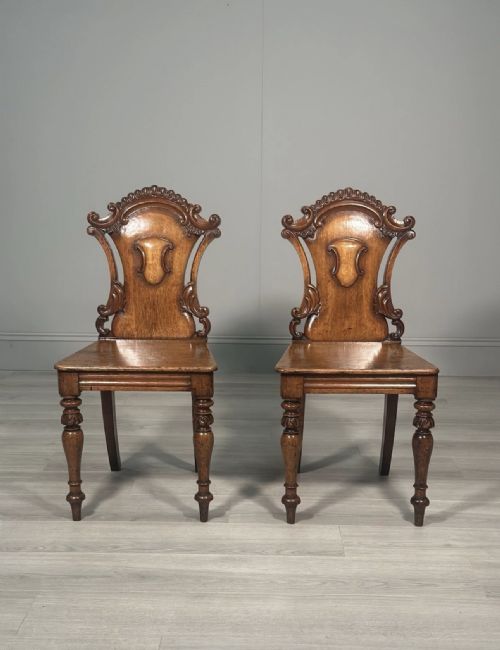


Victorian Shield Back Seating
Victorian shield back seating brings carved wooden elegance into a hallway or dining room, offering classic revival forms that collectors prize.
Victorian Shield Back Seating
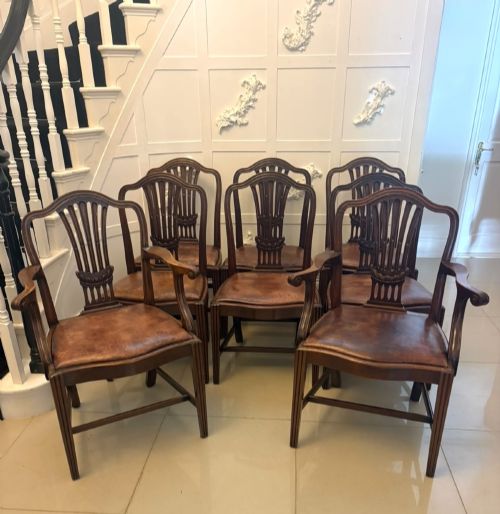
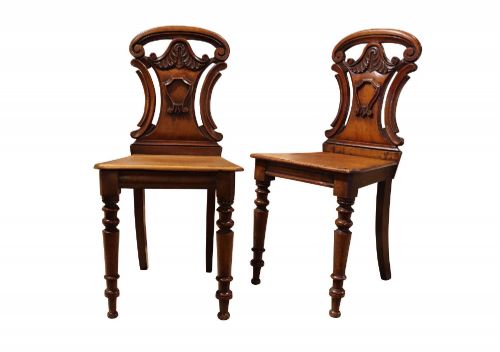
Victorian shield back seating encompasses robust hall chairs and formal dining chairs created during the nineteenth century. These pieces draw heavily on earlier eighteenth-century designs, reinterpreting classic shapes through the lens of Victorian craftsmanship.
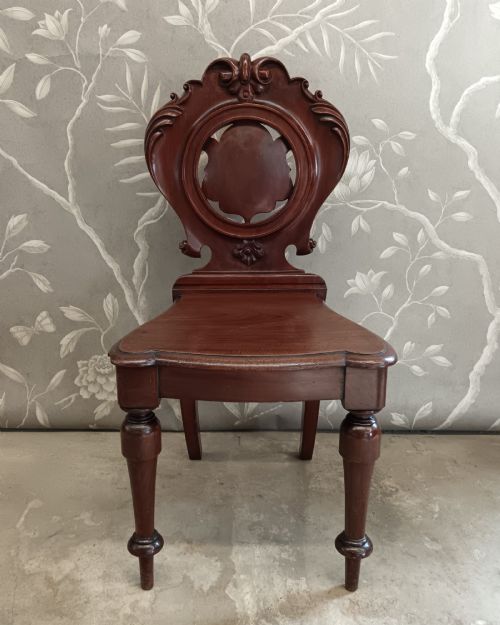
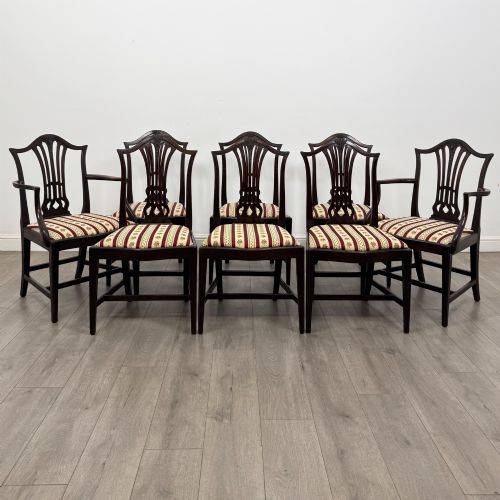
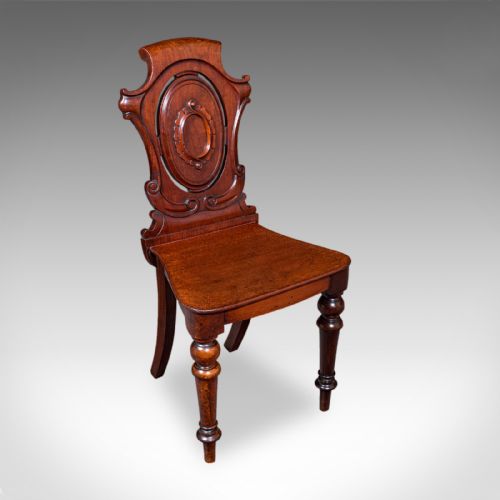
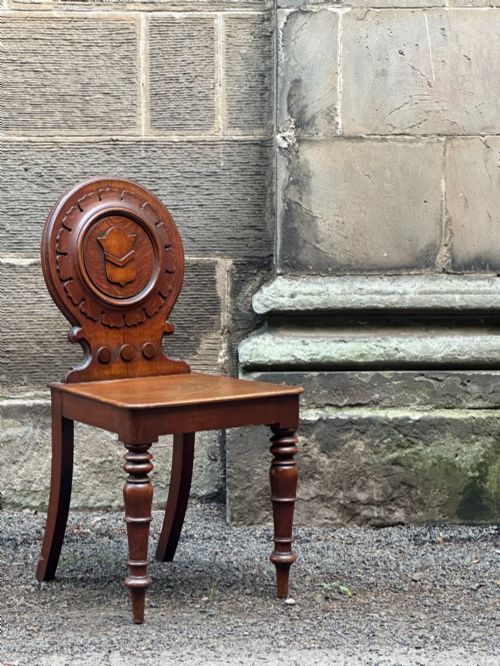
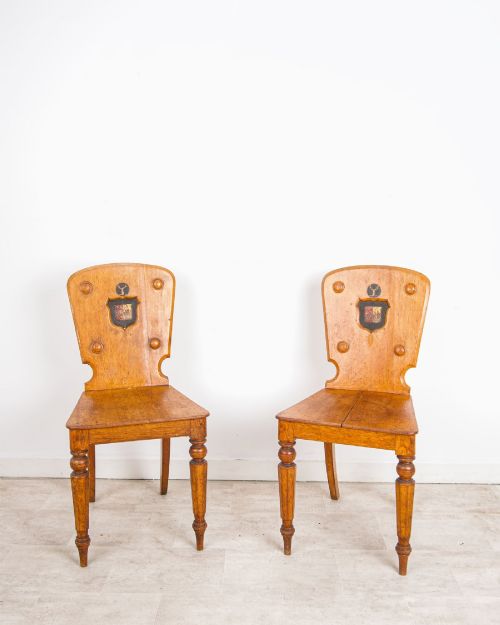
The selections on this page concentrate on two primary forms: sturdy oak or mahogany hall chairs designed for grand entryways, and larger dining sets featuring carved details. Scottish and English origins appear frequently among these surviving examples.
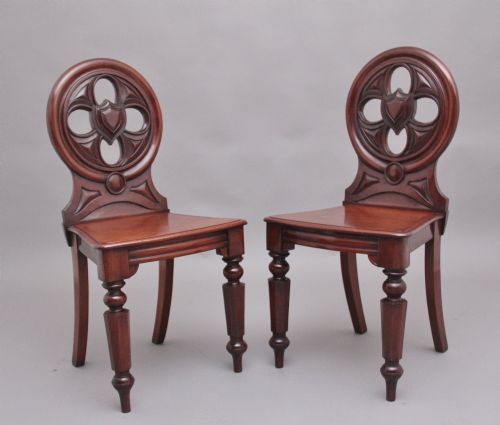
Makers of the period adapted the iconic curved shield outline into various aesthetic movements, incorporating Gothic revival elements and Hepplewhite revival proportions. Each piece serves as a functional seat while displaying notable carved ornamentation on the backrest.
Materials and construction methods
Makers relied primarily on dense hardwoods such as mahogany, oak, and walnut to build these resilient frames. These timbers provided the structural integrity needed to support elaborate carving along the shield-shaped backrests.
Victorian Shield Back Seating Retail Price Guide 2026
Typical asking prices for victorian shield back seating among the pieces listed under this phrase on Sellingantiques today, from the lower quarter to the upper quarter. They describe what is for sale here now, not the wider market.
Heraldic shields carved into chair backs let visitors ponder imaginary noble lineages while waiting in the hallway.
Factors defining quality
The depth and crispness of the wood carving distinguish superior examples from simpler production pieces. Skilled artisans achieved sharper relief and more balanced proportions on the shield backrests, elevating the visual impact of the chair.
The choice and thickness of the primary timber also dictate the caliber of the item. Dense, well-figured mahogany or golden oak provides greater durability and a richer grain pattern than lesser woods.
The Victorian Shield Back Seating Glossary
- Shield back
- A chair backrest shaped like a heraldic shield, tapering towards the base and curving gracefully at the top. This design became popular in the eighteenth century and saw a major revival during the Victorian era.
- Hall chair
- A stiff-backed wooden seat traditionally placed in an entrance hall or reception room. These pieces usually lack upholstery and often feature carved crests or heraldic motifs.
- Hepplewhite revival
- A nineteenth-century design movement that recreates the lighter, elegant furniture styles associated with George Hepplewhite. Pieces in this style emphasise tapered legs and balanced neoclassical ornamentation.
- Carver
- An armchair designed with armrests, typically made as the matching head of a dining chair set. These contrast with side chairs which lack arms.
- Damask
- A reversible figured fabric woven on a loom, commonly utilised for upholstery on formal dining seats. Its patterns catch the light through contrasting matte and satin threads.
Victorian Shield Back Seating: Frequently Asked Questions
How do I use a hall chair?
Hall chairs serve primarily as decorative accent pieces in entryways, corridors, or reception spaces. Their stiff wooden seats suit transient placement rather than long periods of lounging.
Many owners position a single chair against a wall beneath a mirror or utilise a matched pair to frame a hallway console.
Are these chairs comfortable for dining?
Wooden hall chairs offer a firm, upright sit intended for formal dining or brief use rather than relaxed relaxation. Their solid timber or leather seats encourage good posture.
Dining sets featuring upholstered leather or fabric pads provide additional cushioning while maintaining the rigid structural support typical of the period.
How do I distinguish Victorian from older styles?
Victorian interpretations often display heavier timber dimensions, deeper relief carving, and machine-assisted precision alongside hand-finishing. Makers of this period frequently blended Gothic and revival aesthetics.
Examining the wood species, joinery methods, and wear patterns helps differentiate nineteenth-century revival pieces from their eighteenth-century predecessors.