


Solid Mahogany Side Chairs
Solid mahogany side chairs bring robust timber forms into domestic spaces, uniting functional seating with period cabinet-making.
Solid Mahogany Side Chairs
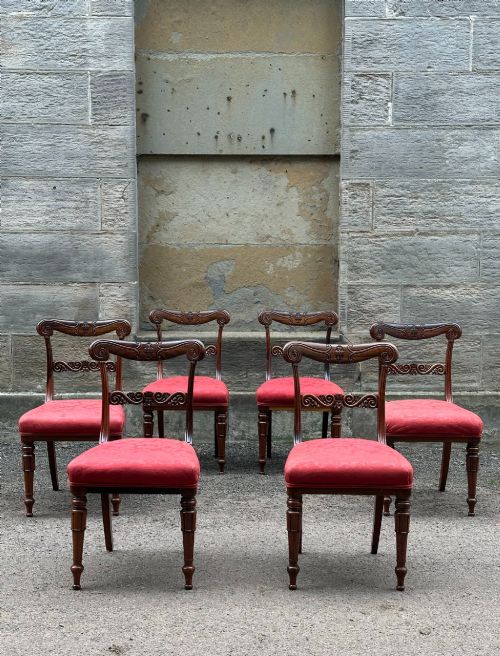
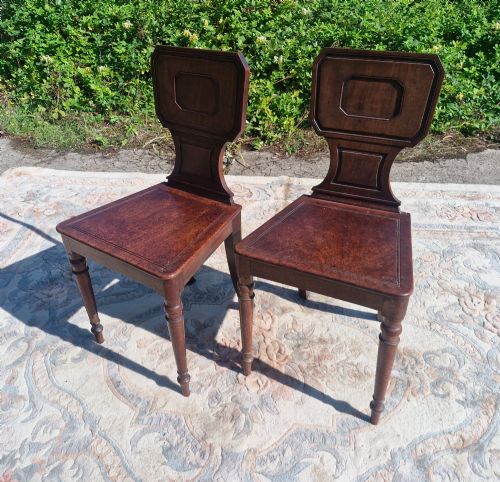
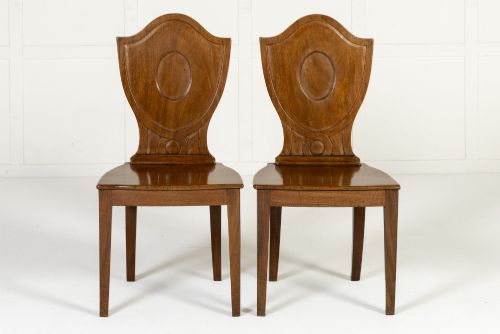
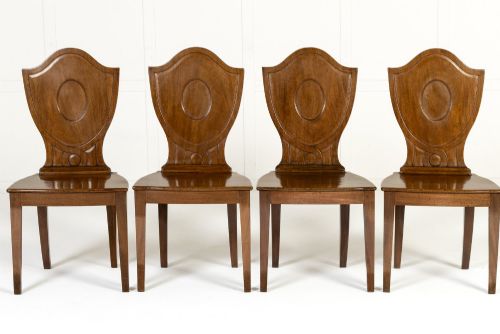
Solid mahogany side chairs encompass dining seats, hall chairs, and occasional reception pieces spanning the eighteenth and nineteenth centuries. The listings show heavy representation from the Regency and Victorian eras, alongside Georgian and William IV examples.
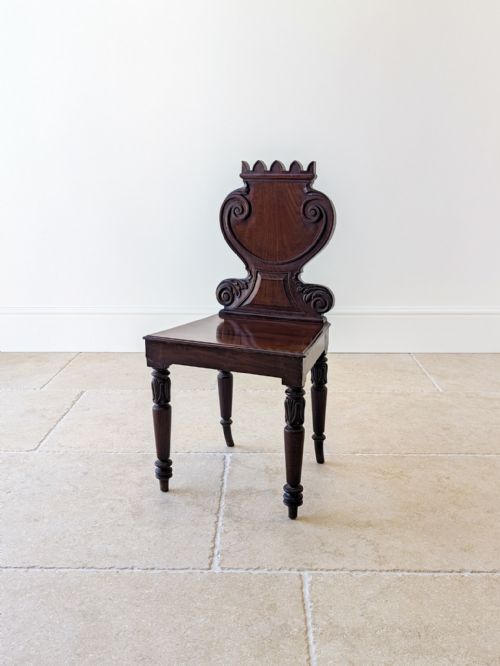
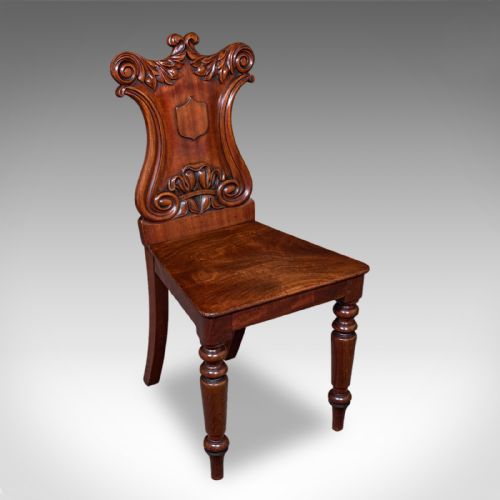
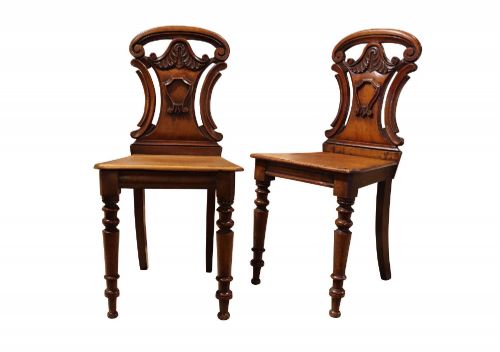
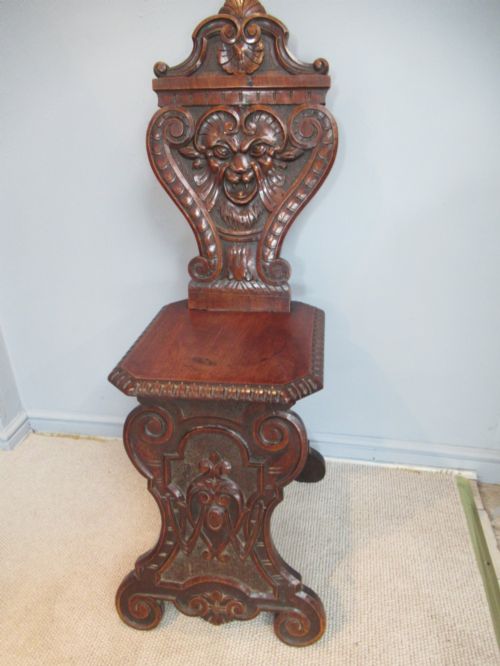
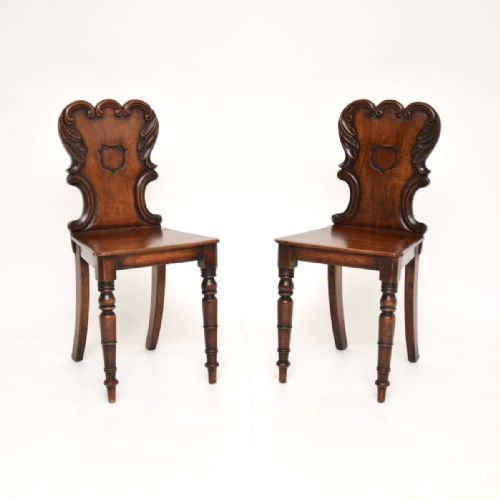
These items primarily function as firm, upright seating constructed from dense hardwoods. Forms range from plain timber backs to highly carved shell motifs and sculptural pelta designs.
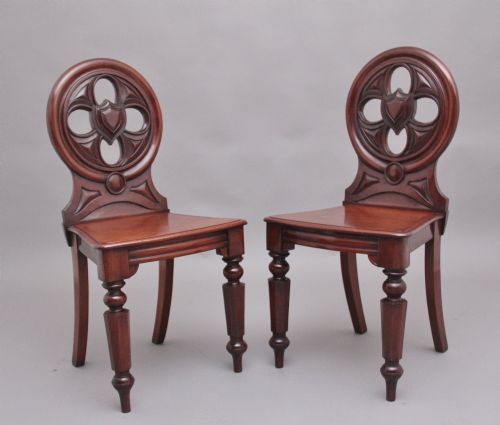
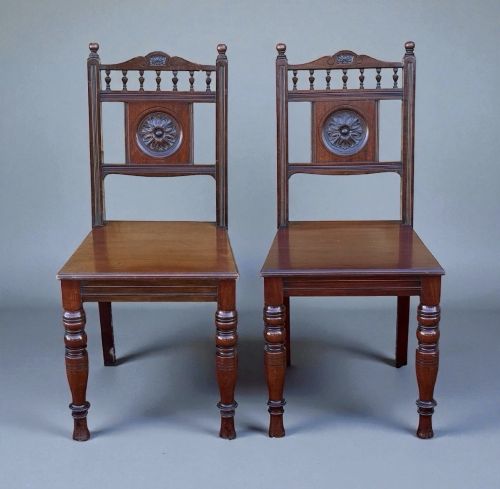
Buyers encounter regional variations, including Scottish and Irish constructions, alongside stylistic interpretations such as Gothic Revival and Aesthetic Movement designs.
How they were made
Cabinet-makers relied on solid mahogany and hardwood timbers to build stable frames capable of withstanding daily use. Workshops incorporated carved details directly into the wood, frequently shaping backs into distinct shell or pelta profiles.
Selected pieces integrate brass inlay or paintwork to accentuate the structural lines of the timber. Upholstery appears alongside plain carved wooden seats, depending on whether the chair served a dining room or an entrance hall.
Some nineteenth-century hall chairs feature sculpted wooden seats carved so deeply that sitting down feels like settling into a wooden saddle.
What varies in quality
The depth and execution of the wood carving separate standard items from superior examples. Crisp relief work on shell backs or sculptural panels indicates skilled hand-tooling by the maker.
The selection of figured mahogany timber and the structural integrity of the solid hardwood frame dictate the enduring strength of the piece. Matching sets display uniform grain selection and consistent proportions across every chair.
The Solid Mahogany Side Chairs Glossary
- Side chair
- A chair without arms, intended for occasional use or dining. These pieces stand easily against a wall when not in use.
- Hall chair
- An upright wooden seat designed for an entrance hall or reception space. They often feature solid timber seats and carved heraldic or decorative backs.
- Figured mahogany
- Timber exhibiting distinctive natural patterns within the grain, such as flame or fiddleback figures. Cabinet-makers reserved these boards for prominent surfaces.
- Pelta back
- A chair back shaped in the form of a classical shield or crescent. This ancient architectural motif found popularity during the nineteenth century.
- Gothic Revival
- A design style drawing inspiration from medieval architecture. Pieces incorporate pointed arches, trefoils, and vertical emphasis.
Solid Mahogany Side Chairs: Frequently Asked Questions
Where should I place a solid mahogany side chair?
These pieces suit entrance halls, reception rooms, and bedrooms where an upright, armless seat serves both a practical and decorative purpose.
Avoid placing them in areas with direct sunlight or fluctuating humidity to protect the polished timber finish.
How do I care for solid mahogany furniture?
Dust the timber regularly with a soft, dry cloth to prevent particulate buildup on the carved surfaces.
Condition the wood periodically using traditional wax polish to maintain the natural lustre of the hardwood.
Were these chairs used for dining?
While many examples function as hall chairs with solid wooden seats, others form part of larger dining sets.
Matching sets of four or six pieces frequently appear from the Regency and Georgian periods.
How can I tell a Regency chair from a Victorian one?
Regency pieces often display cleaner classical lines, sometimes incorporating brass inlay or simplified scroll backs influenced by ancient Greek forms.
Victorian items tend towards heavier proportions and more elaborate, deep-relief carving reflecting later revival movements.