





Antique Timber Entry Chair
An antique timber entry chair offers a striking sculptural statement for a hallway, combining rigid formality with rich historical character.
Antique Timber Entry Chair
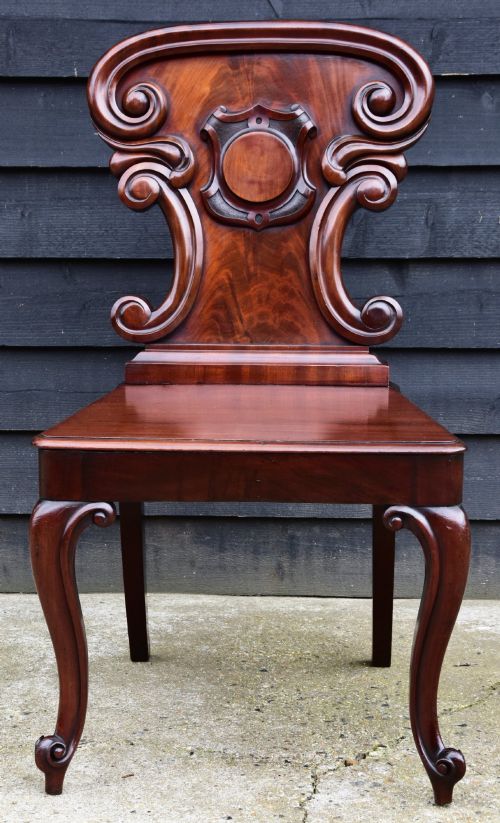
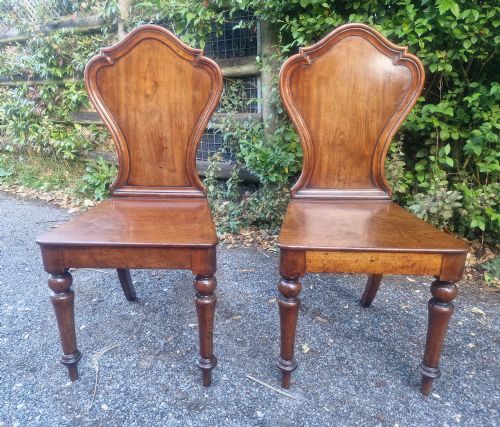
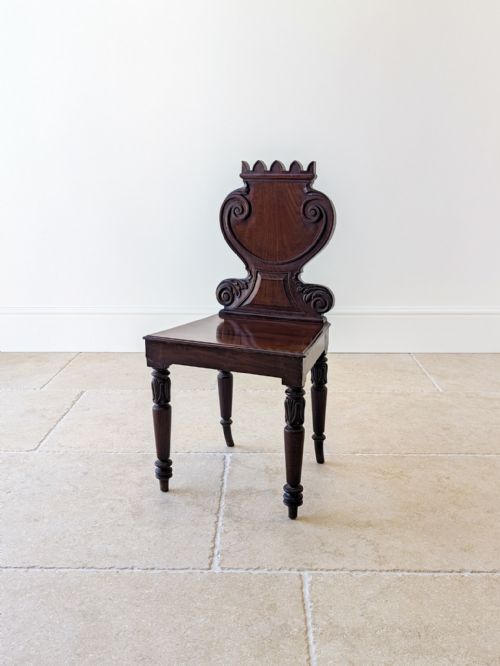
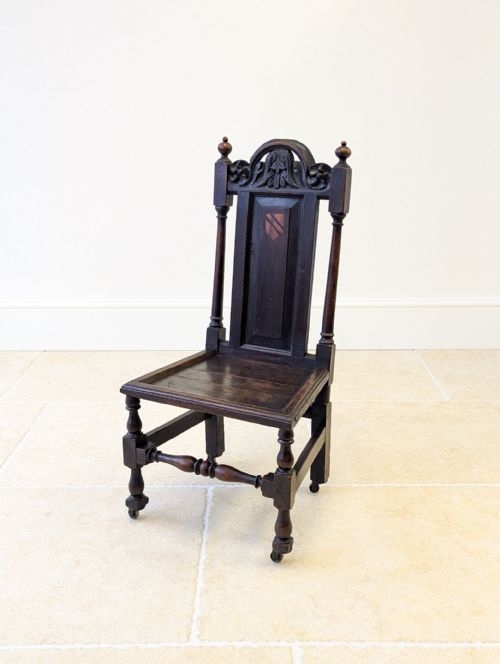
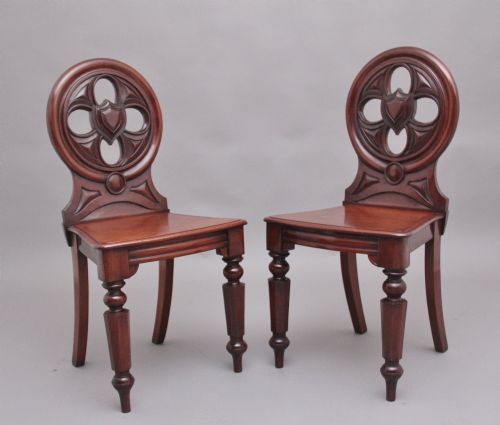
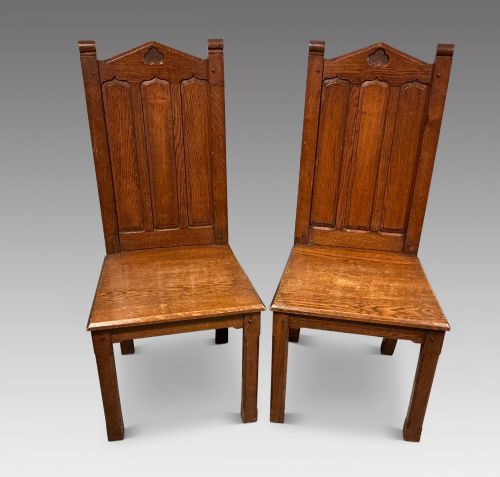
The antique timber entry chair primarily manifests as a hall chair, designed during the Georgian, Regency, and Victorian periods to sit stiffly against hallway walls rather than offer parlour comfort. These upright reception seats appear frequently in mahogany and oak, reflecting the dominant woods chosen by cabinet makers from the eighteenth century through to the late nineteenth century.
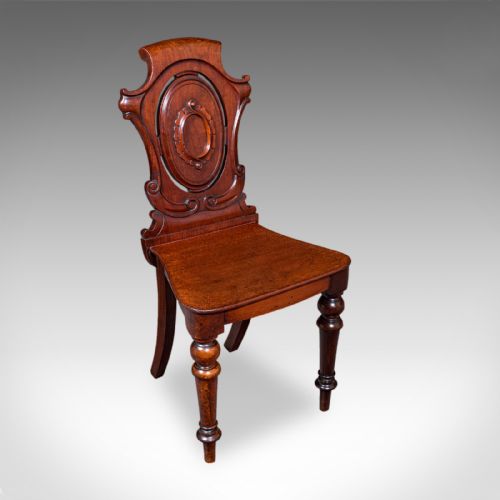
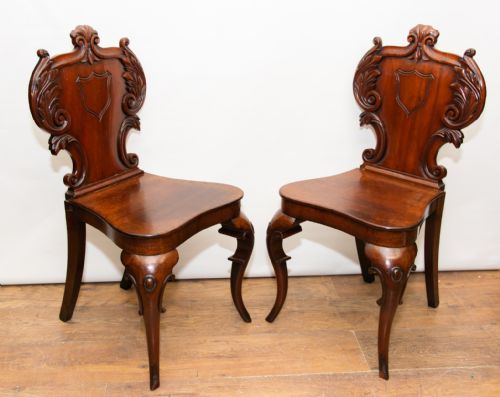
Buyers encountering this page will see various stylistic revivals, including Jacobean Revival, Gothic Revival, and Aesthetic Design interpretations alongside earlier George III, William IV, and Regency forms. Many examples feature solid carved timber seats paired with shield backs, oval backs, or shell backs rather than upholstered padding.
Originating in great houses where guests waited in halls, these timber seats rely on carved crests, panelled backs, and sculptural frames to impress visitors immediately upon entry.
Materials and Construction
Makers constructed these chairs primarily from dense hardwoods like mahogany, oak, and walnut, frequently selecting solid timbers to withstand the rigours of heavy hallway use. Cabinet makers utilised brass accents, ceramic inserts, and occasional fabric components for decoration, though the primary structure remained timber throughout.
Construction techniques rely heavily on robust joinery and deep hand-carving applied directly to the solid wood of the seat and backplate. Shell motifs, shield outlines, and intricate crests were chiselled straight into the mahogany or oak, creating lasting relief work without relying on applied mouldings.
Antique Timber Entry Chair Retail Price Guide 2026
Typical asking prices for timber entry chair among the pieces listed under this phrase on Sellingantiques today, from the lower quarter to the upper quarter. They describe what is for sale here now, not the wider market.
Listings demonstrate a strong preference for solid mahogany and oak, spanning George III origins through to late Victorian revival movements.
Craftsmanship and Sculptural Depth
Quality in these timber seats rests upon the depth and precision of the original wood carving, distinguishing simple utilitarian versions from highly sculptural exhibition pieces. Sculptural shell backs, crisp shield outlines, and integrated Prince of Wales feathers indicate superior workshop output compared to plain, flat-backed alternatives.
The choice of figured timber fundamentally elevates a piece, with richly grained mahogany or figured walnut providing a superior visual texture. The integration of design elements, such as cabriole legs or balanced proportions across a matched set, dictates the upper tier of the range.
Holland & Sons·Gillows
The Antique Timber Entry Chair Glossary
- Hall chair
- A rigid wooden seat designed for an entrance hallway, lacking armrests and upholstery to encourage brief, formal waiting. These pieces often display family crests or carved backs.
- Shield back
- A chair back shaped like a heraldic shield, popular in Georgian and Victorian furniture design. This form allows ample space for central carved motifs.
- Shell back
- A decorative chair back carved to resemble a fluted scallop shell. Cabinet makers utilised this motif extensively during the Regency and Victorian eras.
- Jacobean Revival
- A nineteenth-century style emulating seventeenth-century English furniture through heavy oak construction and geometric panel carving. Pieces from this movement appear dark and substantial.
Antique Timber Entry Chair: Frequently Asked Questions
Where were hall chairs placed?
These chairs stood rigidly against the walls of entrance halls and grand corridors in historic homes. They served as formal seating for visitors waiting to be received by the household.
Because hallways required functional decoration rather than deep comfort, the seats remained un-upholstered and upright to maintain a dignified architectural symmetry.
Are these chairs comfortable to sit on?
Hall chairs are exceptionally firm because they feature solid timber seats without cushions or padding. They were built for brief waiting periods rather than long hours of relaxation.
The absence of upholstery also prevented fabric from absorbing dust and dampness near busy front doors.
Why do many hall chairs feature carved crests?
Carved crests and shield backs often displayed a family's coat of arms, initials, or heraldic symbols to assert lineage and status upon entry. Even when made later in the Victorian era, makers retained these heraldic shapes for decorative gravitas.
This sculptural carving turned a simple wooden seat into an impressive emblem of the household.