

Traditional Wooden Accent Chairs
Traditional wooden accent chairs bring character and historical depth to a room through sturdy timbers and varied regional forms.
Traditional Wooden Accent Chairs
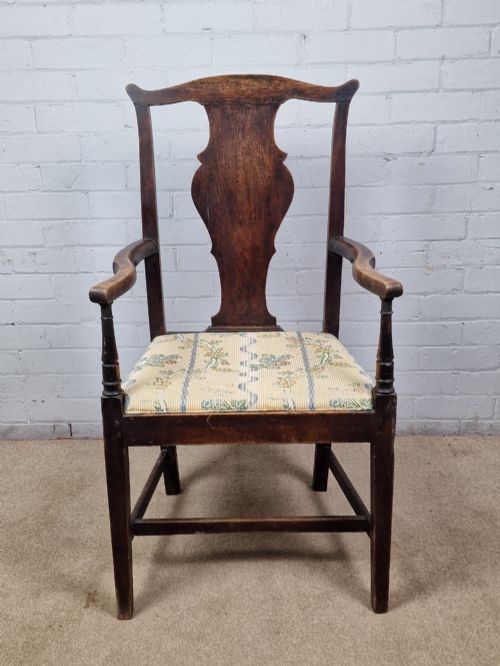
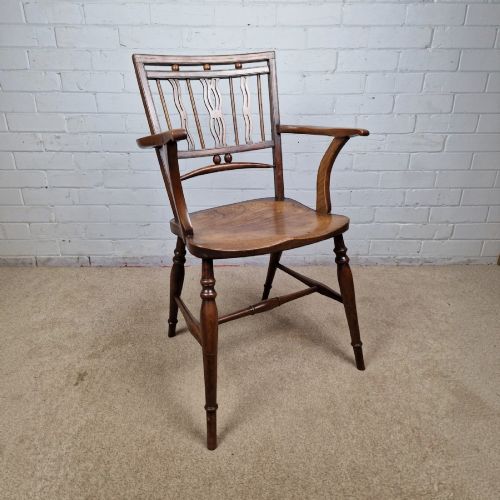
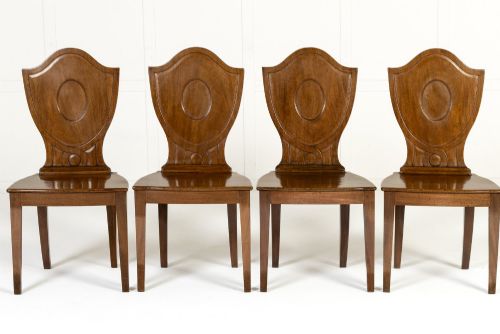
Traditional wooden accent chairs encompass diverse seating options spanning the eighteenth and nineteenth centuries, alongside early twentieth-century examples. Buyers searching for traditional wooden accent chairs encounter varied utilitarian and formal designs, from country windsor armchairs to regency and victorian hall chairs.
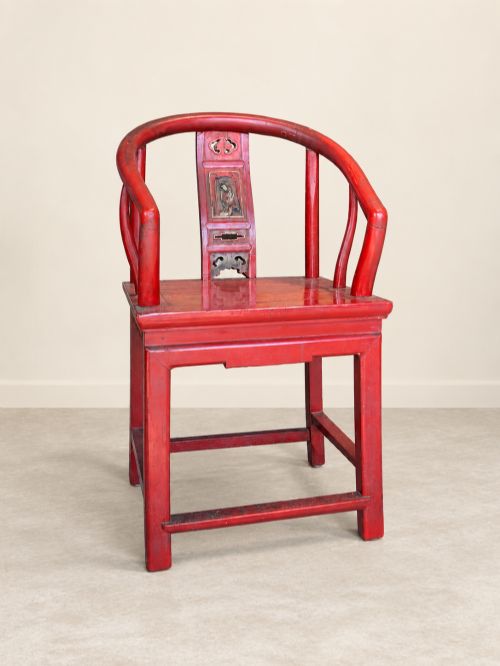
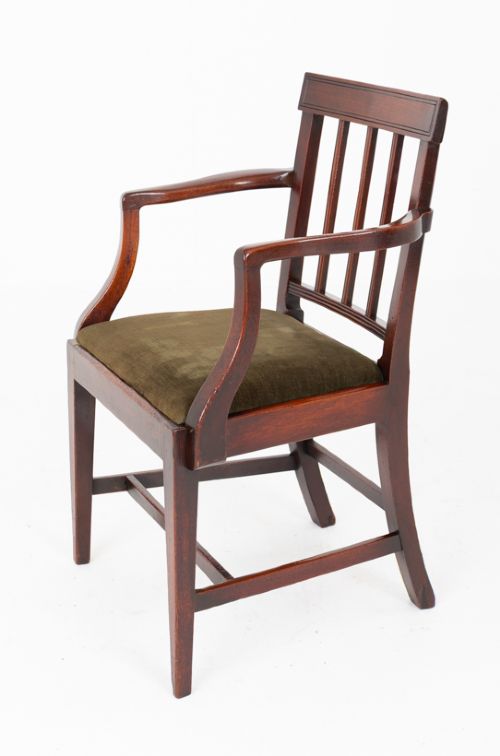
The selection ranges widely across stylistic traditions, including english country vernacular pieces, georgian and regency mahogany carvers, and arts and crafts rush-seated chairs. Side chairs, corner chairs, and low-backed armchairs dominate the selection, often serving specific functional roles in reception rooms, halls, and bedrooms.
Materials and construction
Cabinetmakers and country joiners utilised native hardwoods such as oak, mahogany, elm, beech, ash, and walnut to build these seats. Timbers were frequently combined within a single frame, pairing elm seats with yew or ash spindles and beech legs.
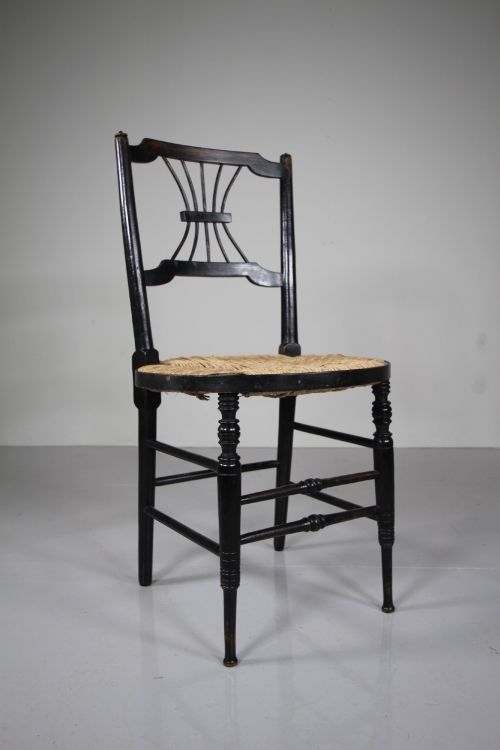
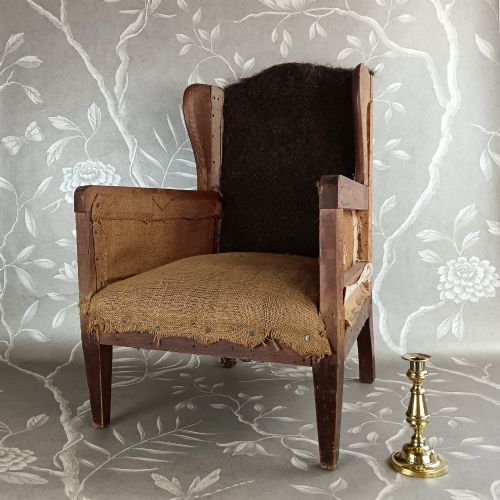
Joinery methods relied on traditional turning, bobbin turning, and steam-bending techniques to shape components like wheel-backs, hoop-backs, and comb-backs. Seats were constructed from solid timber planks or fitted with woven rush inserts, while select models received fabric upholstery.
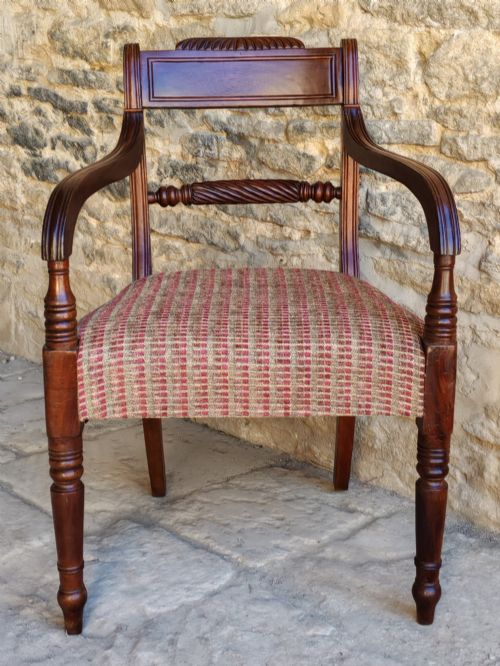
Several chairs feature nimble bobbin turnings that make every leg look like a string of oversized wooden beads.
Craftsmanship and proportion
Superior examples display balanced proportions, crisp carved details, and intelligent timber selection that highlights natural grain patterns. Regional variations in Windsor chairs reveal differing levels of turner skill, seen in the delicacy of spindle shaves and the comfort of carved saddle seats.
Makers achieved durability through precise joinery and compatible wood pairings, whereas lesser pieces show heavier scantlings or replacement components. Original surface patination and honest timber wear distinguish enduring craftsmanship from later alterations.
William Morris
The Traditional Wooden Accent Chairs Glossary
- Carver
- An armchair, typically designed for dining or desk use, featuring open wooden arms that match a set of side chairs. These pieces often anchor a dining table arrangement.
- Windsor
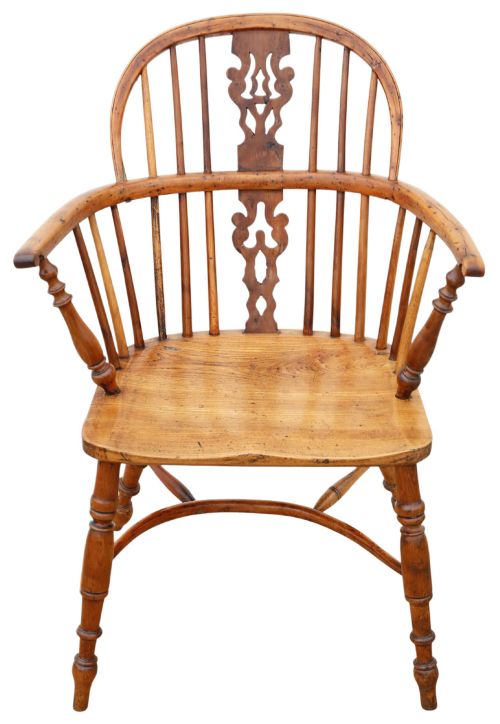
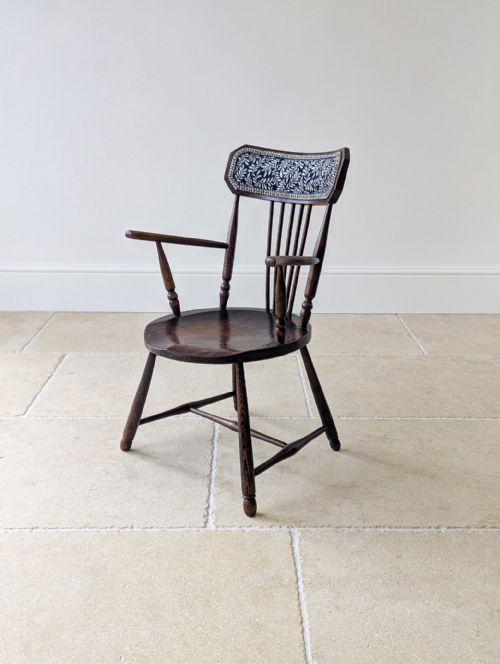
- A traditional wooden chair built with a solid saddle-shaped seat into which the legs, back spindles, and bow are independently fitted. This construction method creates a robust, vernacular seating form.
- Bobbin turned
- A decorative furniture turning technique produced on a lathe to create a sequence of rounded spheres resembling wooden beads on a string. This style appears frequently on seventeenth and nineteenth-century framework.
- Sgabello
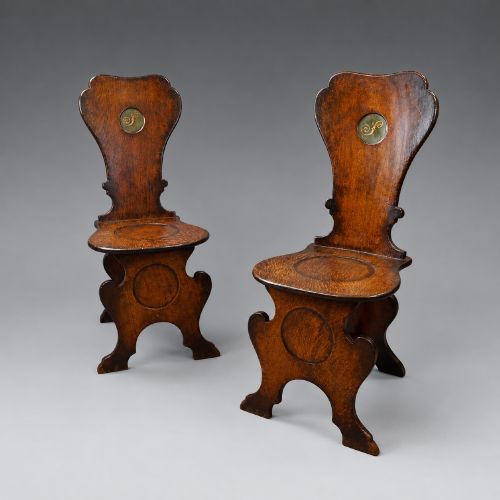
- A rigid, high-backed wooden hall chair featuring solid trestle supports instead of conventional legs. Originating in the Italian renaissance, these decorative seats furnished grand hallways.
Traditional Wooden Accent Chairs: Frequently Asked Questions
How do I identify a windsor chair?
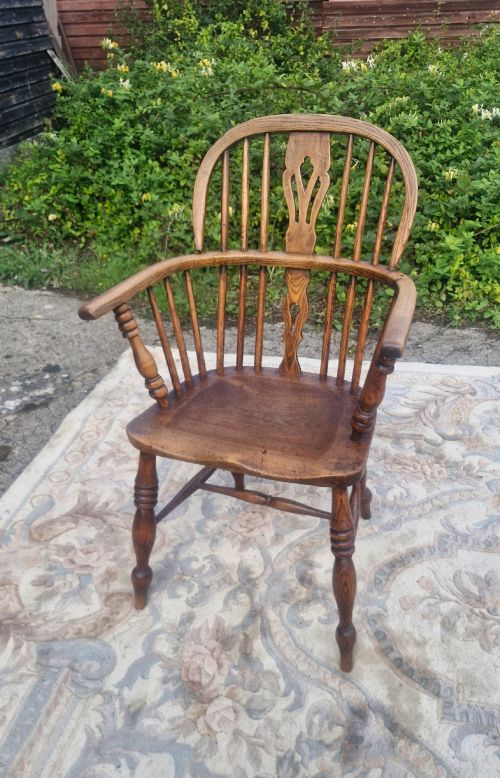
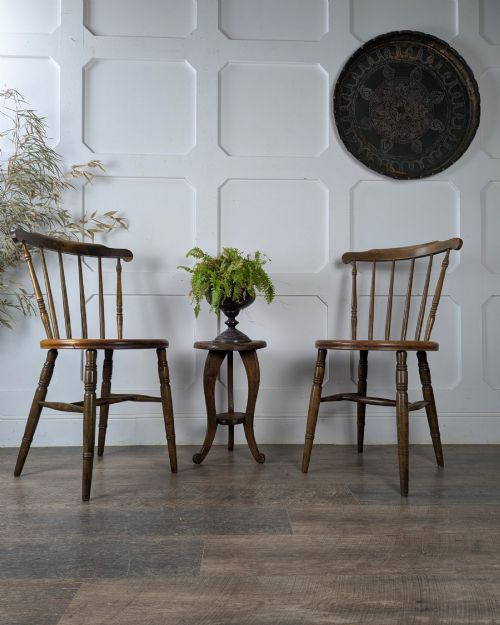
Windsor chairs feature a solid wooden seat into which the structural components are wedged directly, rather than relying on a traditional joined frame. This construction unites legs and back spindles through the thick seat base.
Regional variations appear in the back design, including hoop-backs, comb-backs, and wheel-backs. Beech, ash, and elm are common timbers used across these vernacular forms.
Where should I place a hall chair?
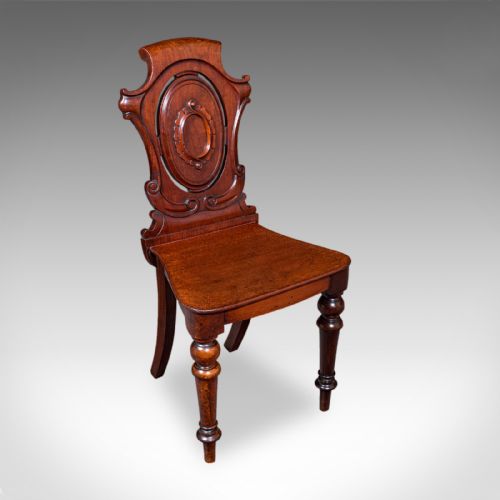
Hall chairs work best in entranceways, corridors, or narrow landings where their upright backs and solid wooden seats make a sculptural statement. Because they were historically designed for brief waiting periods, they suit spaces needing architectural accent rather than deep lounging comfort.
Pairing them as matching pairs enhances symmetrical layouts in formal hallways or reception rooms.
What is the difference between a side chair and a carver?
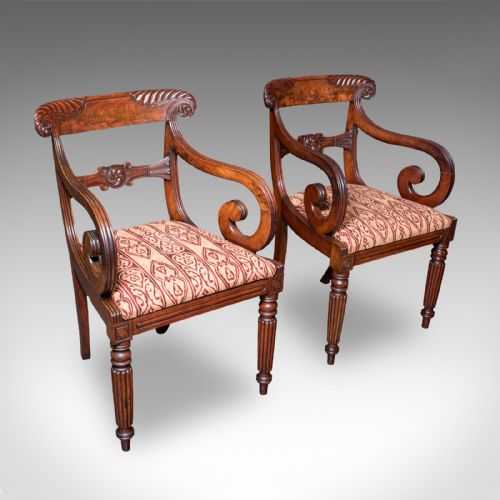
A side chair is built without arms, allowing multiple chairs to tuck neatly around a table or line a wall. A carver includes open wooden arms, traditionally seating the head of the household or a guest of honour.
In many settings, a pair of carvers frames a larger set of matching side chairs.
How do I care for antique wooden chairs?
Maintain antique wooden frames by keeping them away from direct heat sources and drastic humidity changes, which cause timber to split. Regular dusting with a soft, dry cloth preserves the historic surface finish without stripping the patina.
Avoid modern liquid polishes containing silicone, choosing natural waxes instead if conditioning is necessary.