





Georgian Entry Chairs
Georgian entry chairs are sculptural wooden reception seats built to make an impression in a hallway, combining formal dignity with striking carved backs.
Georgian Entry Chairs
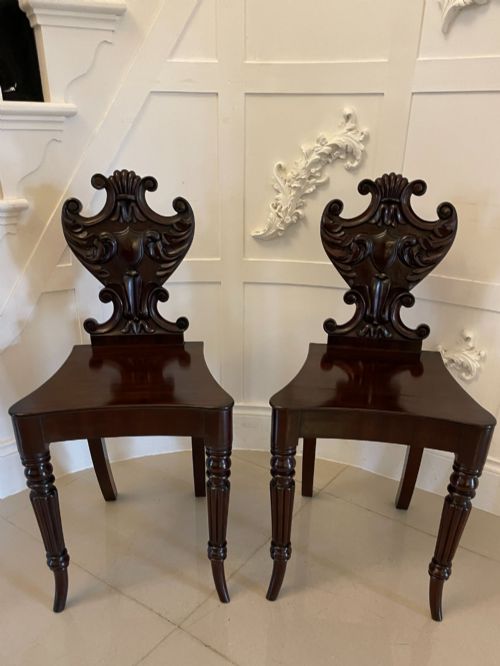
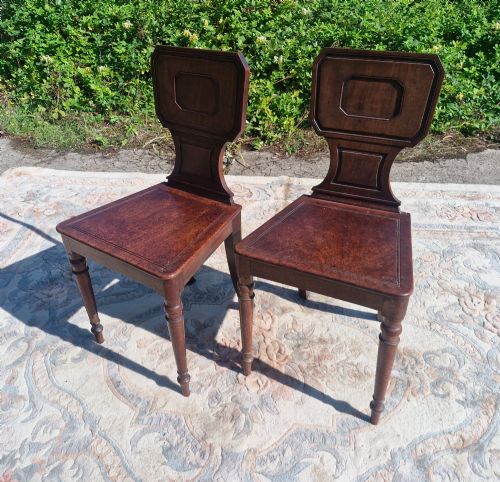
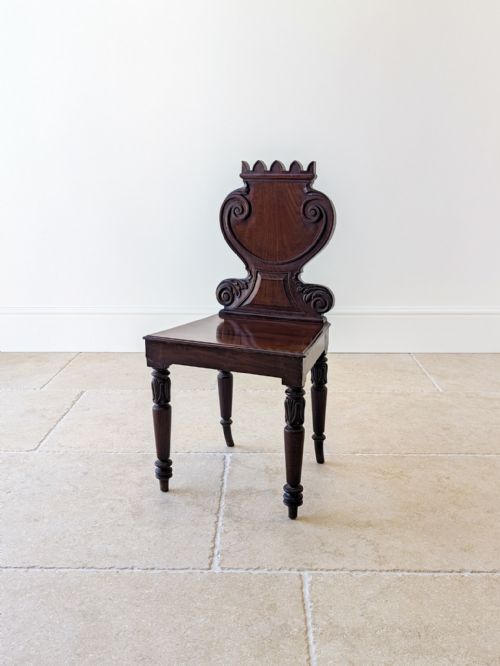
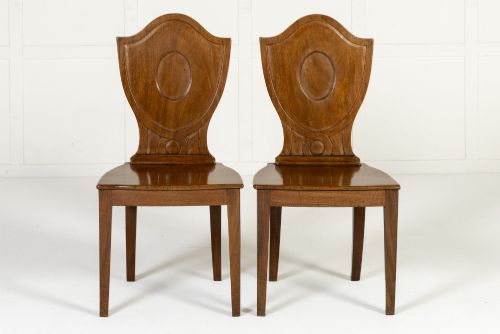
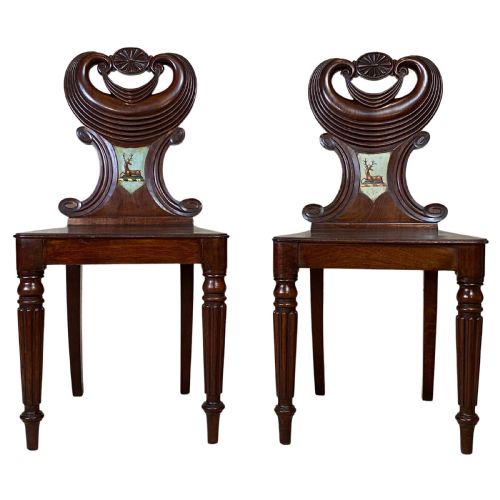
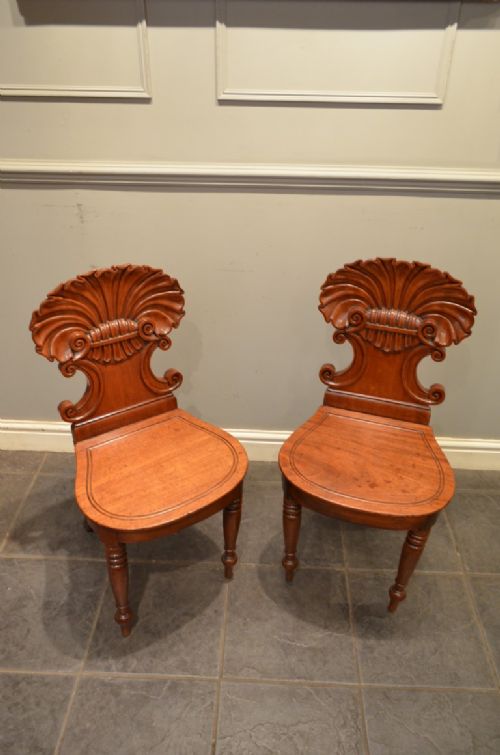
The selection ranges from George II fruitwood sgabello designs up to William IV and Regency iterations. Makers favoured solid timber backs, often featuring carved shells, shields, or armorial bearings, designed to be viewed against a wall.
How They Were Made
Cabinetmakers constructed these reception seats principally from dense timbers such as mahogany and oak, supplemented by occasional fruitwood. Grain selection mattered greatly, with figured mahogany and solid oak chosen to provide visual weight.
Decoration relied on deep carving and inlay rather than upholstery, utilising brass or contrasting wood to highlight heraldic shields and carved shell motifs. Joinery remained robust to withstand the demands of a high-traffic hallway.
Prince of Wales feathers occasionally appear carved into shield backs, offering a jaunty nod to royal allegiance in the hallway.
What Varies in Quality
The distinction between standard and exceptional pieces rests in the crispness of the carving and the ambition of the silhouette. Boldly sculptural shield backs and integrated armorial crests elevate an example above plain timber panels.
Attribution to known workshops introduces another tier of distinction, alongside the survival of matching sets rather than single seats. Superior pieces demonstrate meticulous attention to timber selection, particularly in figured mahogany and brass inlay.
Gillows
The Georgian Entry Chairs Glossary
- Hall Chair
- A rigid wooden seat placed in an entrance hall for guests or waiting attendants. These pieces typically lack upholstery and feature carved wooden backs.
- Sgabello
- An early form of wooden chair with a solid trestle base and a carved back. This Italian Renaissance style influences specific eighteenth century provincial hall seating.
- Shield Back
- A chair back shaped in the outline of a heraldic shield. This design gained prominence during the Georgian period.
- Armorial
- Bearing a family crest, coat of arms, or heraldic symbols. These motifs appear carved or painted on the wooden backs of reception seating.
Georgian Entry Chairs: Frequently Asked Questions
Where were entry chairs placed in a house?
These rigid wooden seats stood against the walls of entrance halls and grand corridors. They served visitors waiting to be announced rather than providing casual comfort.
Because hallways saw heavy foot traffic, the furniture needed to be structurally robust while establishing the aesthetic tone of the interior.
Did these chairs have upholstered cushions?
Traditional hall chairs of this period feature solid wooden seats and lack upholstery. The absence of fabric suited the transitional nature of an entrance space.
Carvers focused attention entirely on the solid timber backrest, leaving the wooden seat plain or shallowly dished for utility.
How do I identify a Regency period hall chair?
Regency examples often incorporate classical revival motifs such as brass inlay, scrolling foliage, and bold architectural lines. Mahogany remains the dominant timber across these nineteenth century variants.
Proportions tend to be heavier than earlier George II designs, with a distinct emphasis on sculptural backrests.
What is an armorial hall chair?
An armorial chair displays a carved or painted family crest upon its wooden backrest. Landed families commissioned these to reinforce lineage and status within their primary reception spaces.
The heraldic details were often integrated directly into the shield or shell shape of the timber frame.