



Victorian Timber Hall Chairs
Victorian timber hall chairs are sturdy, high-backed seats designed for grand entrances, combining practical function with bold period carving.
Victorian Timber Hall Chairs
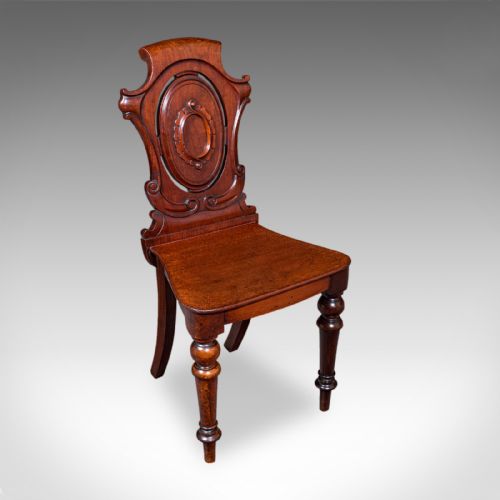
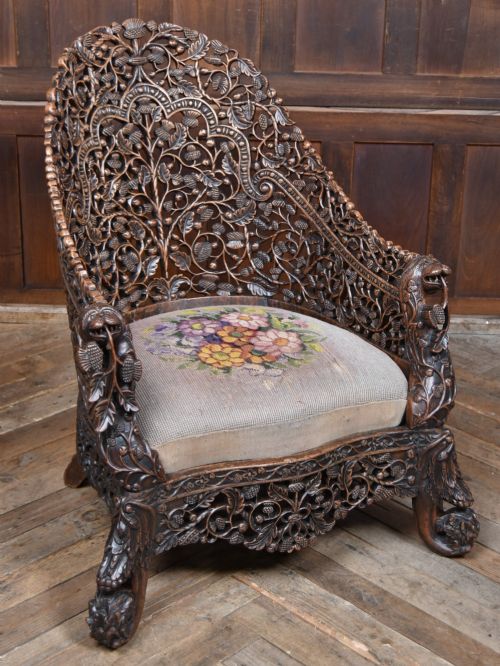
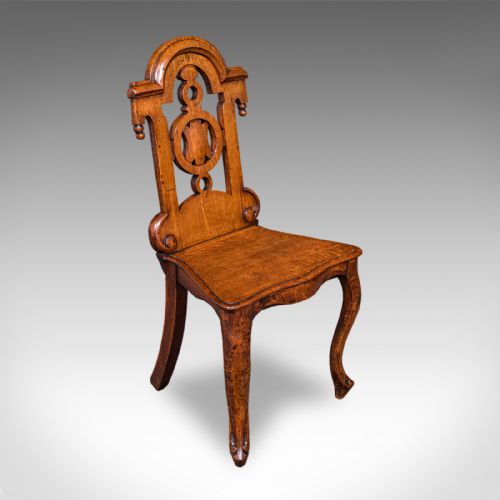
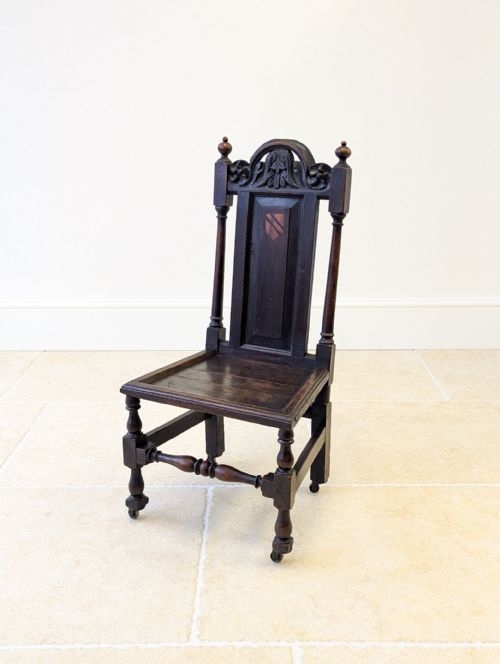
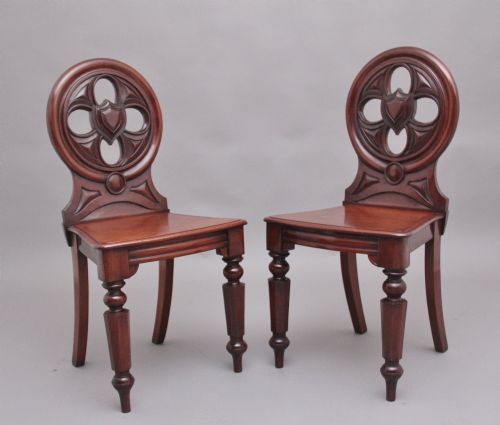
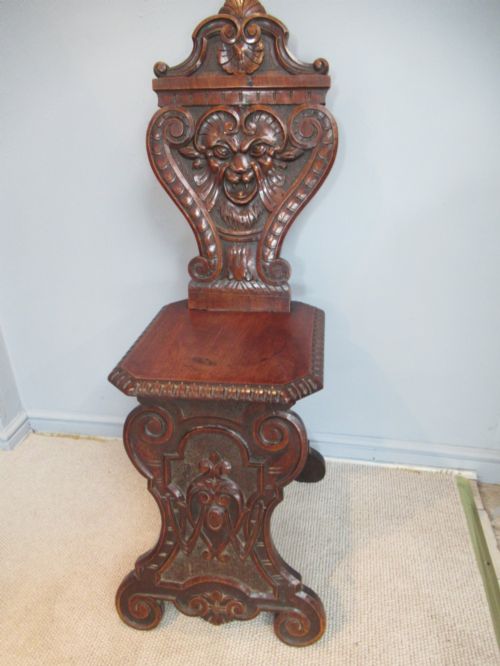
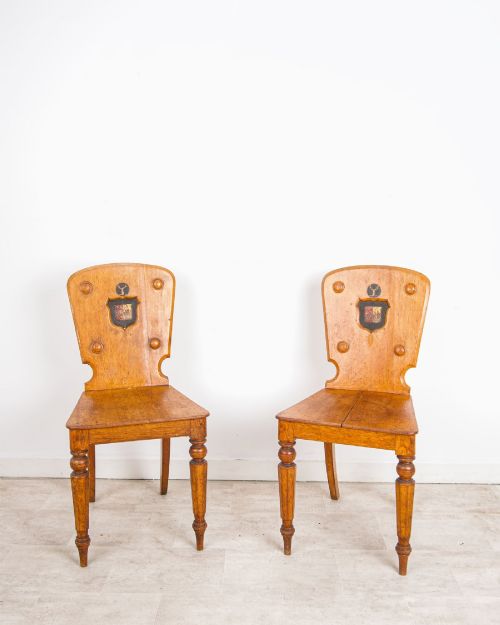
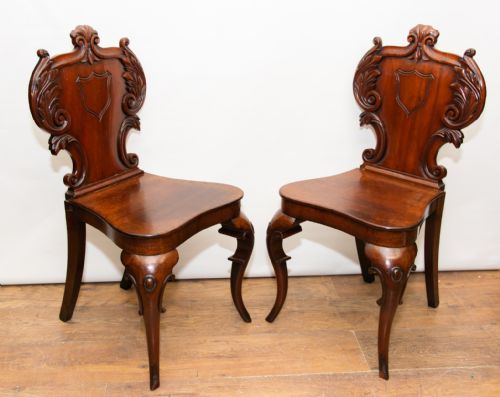
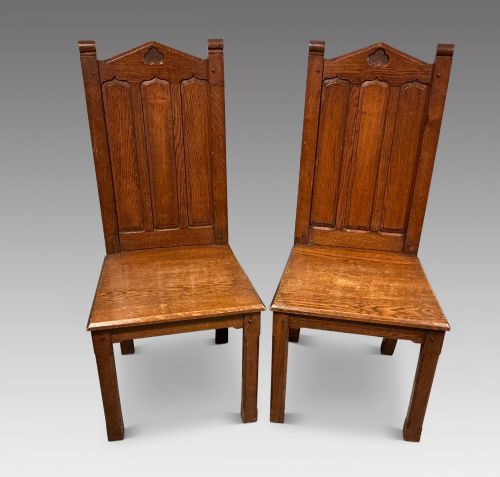
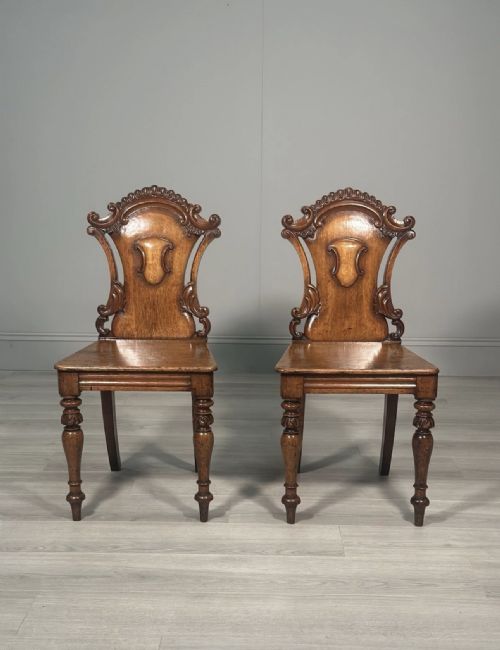
The selections span various distinct revival styles typical of the era. Pieces range from plain wooden seats with carved heraldic shield backs to elaborate Gothic Revival and Jacobean Revival designs. Many survive in matched pairs or small sets.
Makers utilised dense hardwoods to withstand heavy daily use in busy hallways. The forms often incorporate solid timber seats featuring carved crests, panelled backs, and occasionally turned legs.
Materials and construction methods
Cabinetmakers constructed these hall chairs using solid timbers such as mahogany, oak, walnut, and rosewood. These durable woods were selected for their strength and their ability to take deep, crisp carved detail.
Carving was the primary method of ornamentation, executed directly into the solid wood of the backrest. Artisans shaped heraldic shields, thistle motifs, and Gothic tracery straight into the timber structure.
Joinery techniques relied on sturdy mortise and tenon joints to ensure the rigid frames could endure the rigours of a hallway. Seats were typically carved from a single thick plank of timber rather than upholstered.
Some Victorian Scots opted to carve traditional thistles into their hall seats instead of standard English heraldry.
Judging the quality of execution
Quality rests primarily in the crispness and depth of the timber carving. Superior examples display sharply defined heraldic shields and intricate foliage carved directly by skilled hands, while lesser pieces rely on shallow, machine-cut stamping.
The choice of timber heavily dictates the standing of a piece. Dense, well-figured mahogany, rich walnut, and heavy quarter-sawn oak represent the upper tier of construction compared to plain secondary woods.
Holland and Sons
The Victorian Timber Hall Chairs Glossary
- Hall chair
- A rigid, upright timber seat designed for an entrance hall rather than a living area. These pieces typically lack upholstery and feature prominent wooden backrests.
- Shield back
- A chair back shaped in the form of a heraldic shield. This surface frequently displays carved family crests or coats of arms.
- Gothic Revival
- A nineteenth-century design movement inspired by medieval architecture. Pieces show pointed arches, trefoils, and heavy vertical lines.
- Jacobean Revival
- A nineteenth-century style drawing on seventeenth-century motifs. Furniture of this type incorporates geometric panelling, strapwork, and turned supports.
- Aesthetic Movement
- A late Victorian design style focusing on artistic reform and craftsmanship. Items from this period often display simpler lines influenced by wider global trade.
Victorian Timber Hall Chairs: Frequently Asked Questions
Where were hall chairs placed in Victorian homes?
Victorian hall chairs were arranged along the walls of entrance halls and grand corridors. They served as formal seating for visitors waiting to be announced.
Because they were meant for short-term waiting, the wooden seats were kept unpadded and upright. This placement ensured hallways remained tidy and open.
Are these chairs comfortable to sit on daily?
These chairs are not designed for lounging or prolonged sitting. The solid timber seats and rigid, upright backs encourage a straight posture.
Today, buyers typically use them as accent pieces in hallways, bedrooms, or reception spaces rather than primary dining seats.
How do I distinguish Gothic Revival from Jacobean Revival?
Gothic Revival hall chairs display medieval architectural elements like pointed arches, trefoils, and lancet shapes. The carving mimics stone church stonework.
Jacobean Revival pieces instead feature seventeenth-century characteristics such as geometric mouldings, strapwork, and heavy turned legs derived from earlier oak furniture.
Why do hall chairs often appear in pairs?
Hallways in Victorian houses were symmetrical spaces that required balanced furnishings on either side of a doorway or console table. Cabinetmakers built these seats in matched pairs to line the walls correctly.
Surviving pairs remain highly sought after by collectors seeking symmetry for modern interiors.