



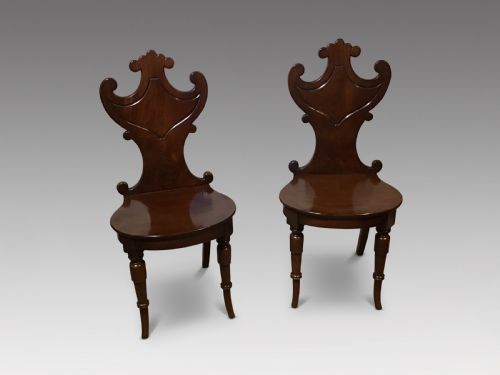

Scroll Back Hall Chairs
Scroll back hall chairs are formal wooden seats built for grand entrances, offering crisp carved silhouettes that anchor a hallway with architectural authority.
Scroll Back Hall Chairs
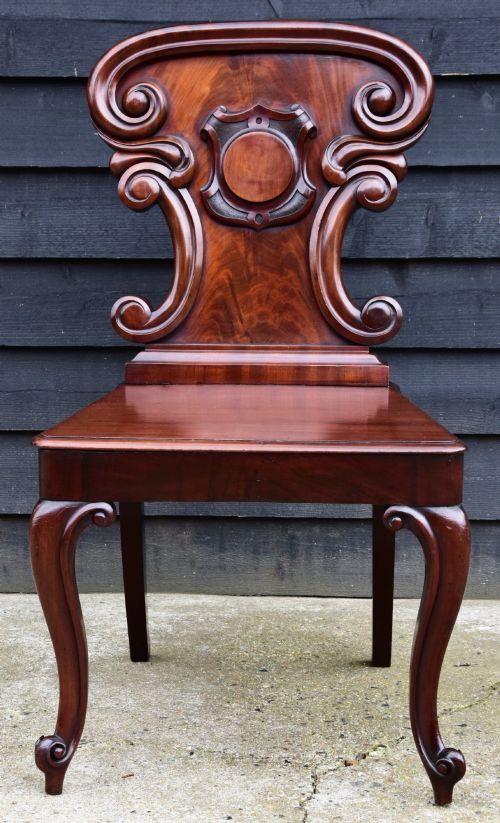
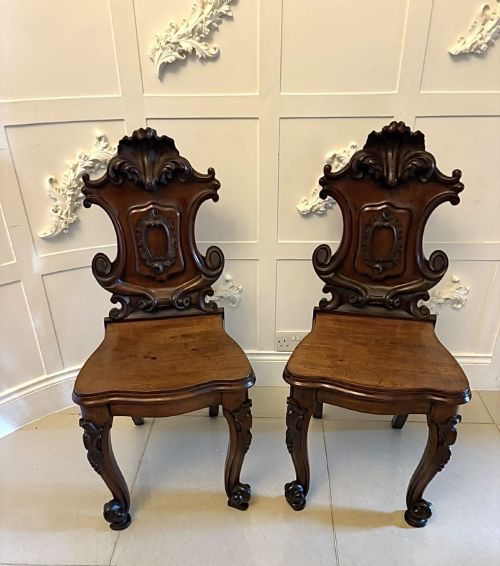
Scroll back hall chairs are rigid wooden seats designed primarily for grand entryways and reception spaces, appearing across the Victorian, Regency, and seventeenth-century periods. These items combine sturdy timber construction with distinctive carved upper rails that curve backward, serving as both functional furniture and striking architectural statements.
The versions most commonly met on this page span the nineteenth century, taking the form of mahogany or oak hall chairs featuring elaborate scrollwork. Buyers also encounter occasional regional variants such as Irish sets, Scottish law chambers pieces, and Italian country walnut examples.
How They Were Made
Makers constructed scroll back hall chairs from dense hardwoods including mahogany, walnut, and oak, often shaping the timber into solid panel seats or carved backs. Joinery relied on traditional framing techniques to ensure the upright posture required for formal entranceways.
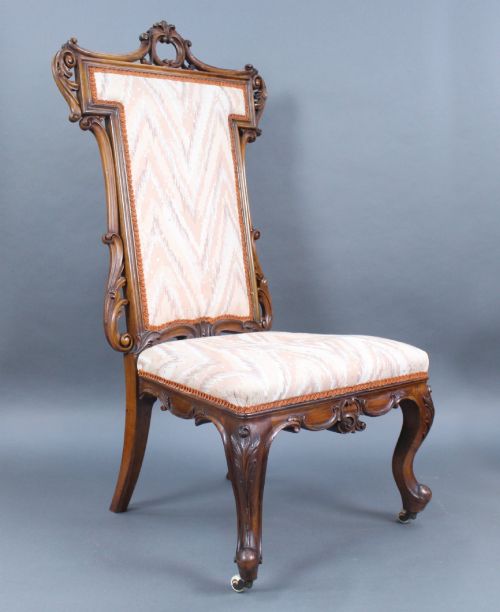
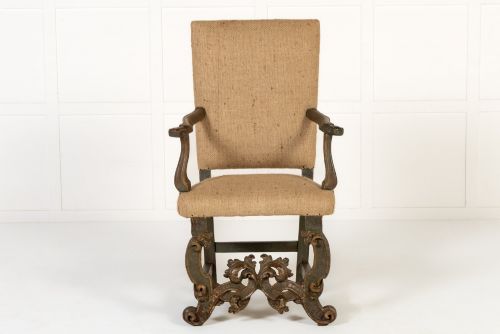
Carving defines the decoration, utilising chisels to create the characteristic upward and outward scrolls on the top rail. Some examples incorporate contrasting textures through cane panels, velvet upholstery, hessian backing, or bone inlay to soften the rigid wooden form.
Scroll Back Hall Chairs Retail Price Guide 2026
Typical asking prices for scroll back hall chairs among the pieces listed under this phrase on Sellingantiques today, from the lower quarter to the upper quarter. They describe what is for sale here now, not the wider market.
Some nineteenth-century hall chairs served in Scottish law chambers, perhaps witnessing countless brief consultations while visitors perched nervously.
What Varies in Quality
Quality in scroll back hall chairs rests upon the crispness and depth of the carved scrollwork on the backrest, which separates standard production from superior craftsmanship. Finer examples display harmonious proportions, substantial timber thickness, and thoughtful integration of decorative elements without overcrowding the form.
The integrity of the timber and the precision of the joinery dictate the longevity and structural stability of each piece. Superior items maintain their original finish and structural coherence, whereas lesser examples show heavy alterations or simplified carving execution.
The Scroll Back Hall Chairs Glossary
- Hall Chair
- A rigid wooden seat intended for temporary use in an entrance hall, rarely upholstered and typically featuring a carved or painted wooden back. These pieces often display family crests or distinctive scroll back designs.
- Backstool
- An early form of seating akin to a chair but lacking arms, common in seventeenth-century English domestic interiors. It provides an upright posture similar to later hall chairs.
- Carolean
- A seventeenth-century stylistic period spanning the reign of Charles II, characterised by lavish Baroque carving, spiralled turning, and scrolling ornamentation. This aesthetic experienced revivals in nineteenth-century furniture production.
- Cane
- Strips of woven rattan used to form breathable panels within chair backs or seats. This technique lightens the visual weight of dense hardwoods like oak and mahogany.
Scroll Back Hall Chairs: Frequently Asked Questions
What is a scroll back hall chair?
A scroll back hall chair is a rigid wooden seat designed for a grand entrance or reception area, featuring a distinctive curved wooden top rail.
These pieces were built to impress visitors rather than provide lounging comfort, often standing against a wall when not in use.
Where were hall chairs placed?
Hall chairs were traditionally positioned along the walls of grand entryways, hallways, and reception rooms in large houses.
Servants, guests, and clients sat upon them briefly while waiting to be announced or attended to by the household.
How do I care for antique wood chairs?
Antique wooden chairs require stable indoor humidity and protection from direct sunlight to prevent timber shrinkage and finish degradation.
Applying occasional appropriate wax preserves the surface sheen of hardwoods like mahogany and oak without harming the antique finish.
How do I date a hall chair?
Dating a hall chair involves examining the timber species, joinery methods, and the specific style of the carved scrollwork.
Victorian pieces often display heavier proportions and machine-assisted precision, while earlier seventeenth-century or Regency examples show distinct regional turning and hand-carved details.