
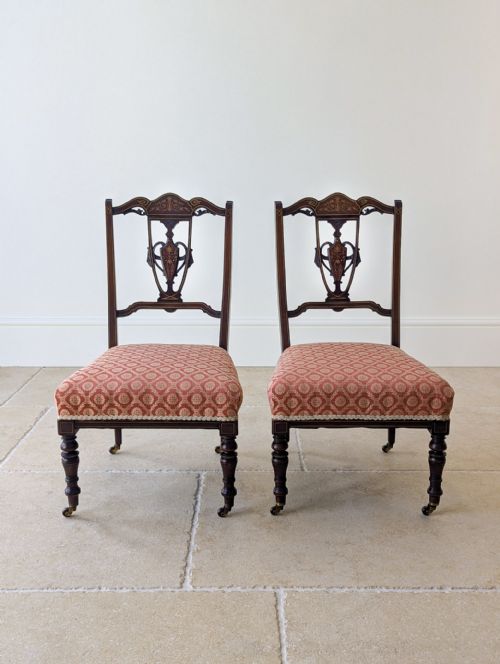
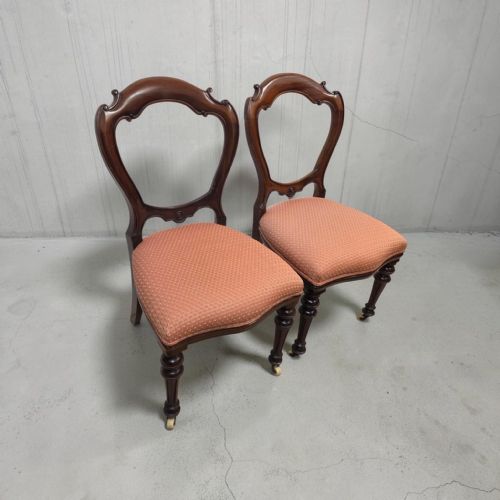
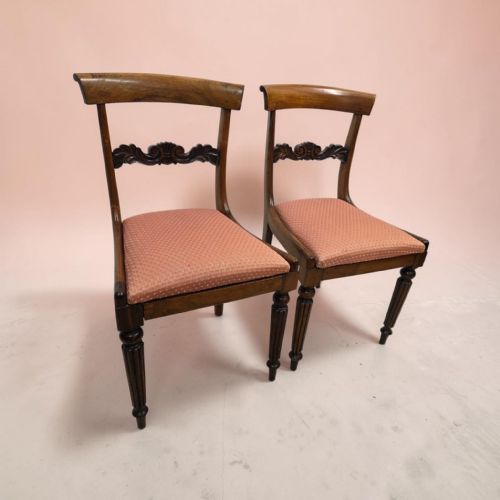
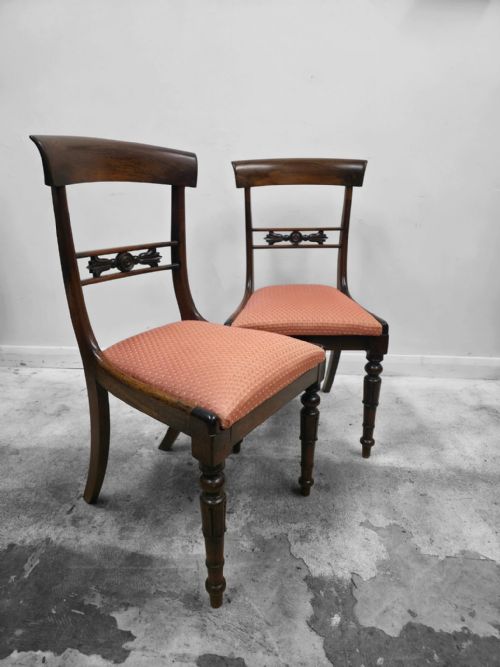
Pair Mahogany Side Chairs
When you choose pair mahogany side chairs, you bring matched formal seating that defined grand dining rooms and reception spaces for centuries.
Pair Mahogany Side Chairs
When searching for pair mahogany side chairs, buyers encounter matched sets of timber seating designed for dining rooms, hallways, and drawing rooms across multiple historic periods. These pieces range from restrained 18th-century Georgian forms to ornate Victorian and Edwardian revival designs, reflecting changing domestic fashions.
The most common examples on this page date from the 19th century, particularly the Regency and Victorian eras, alongside earlier Georgian and later Edwardian interpretations. Makers constructed these chairs primarily for utility around dining tables or as decorative accents against hallway walls.
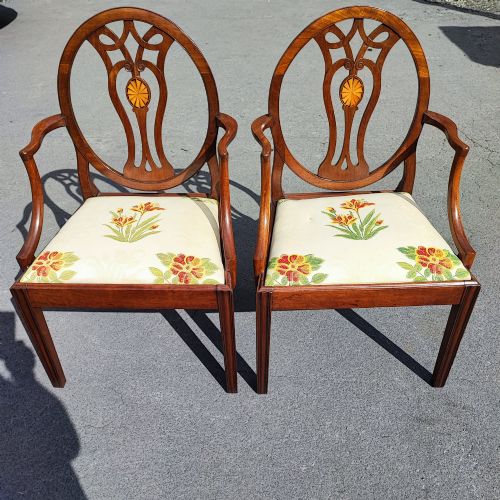
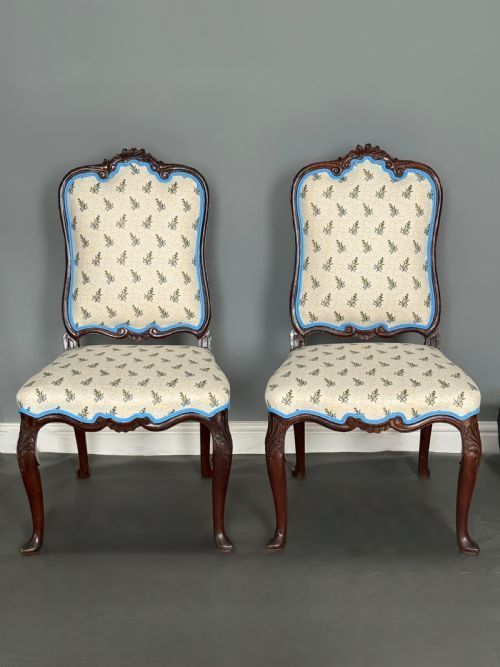
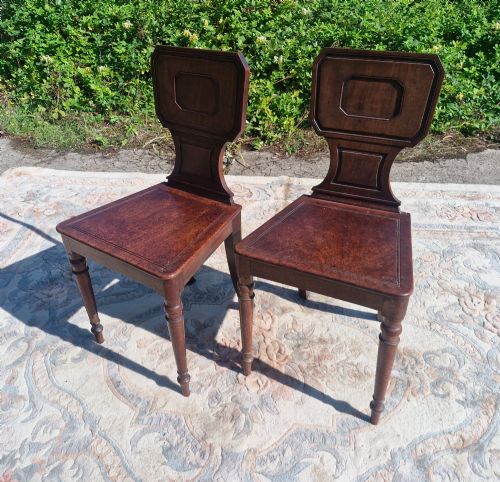
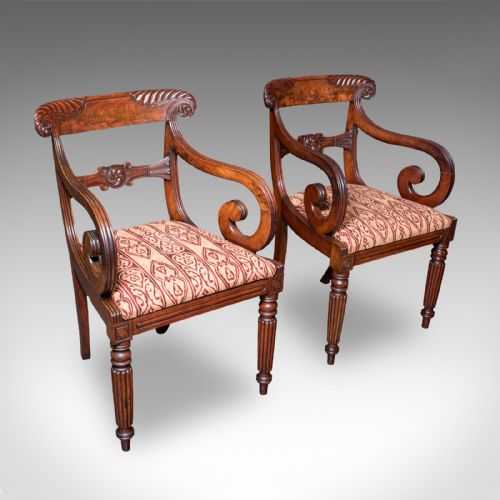
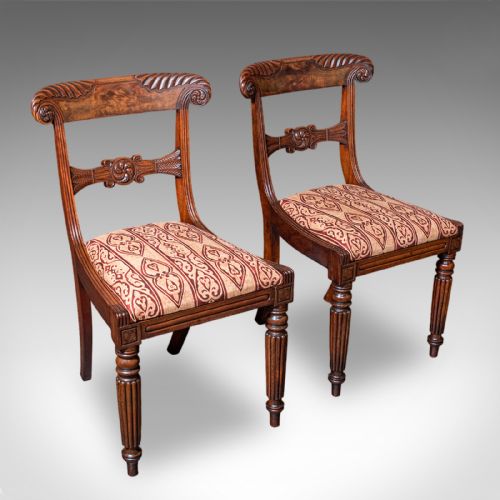
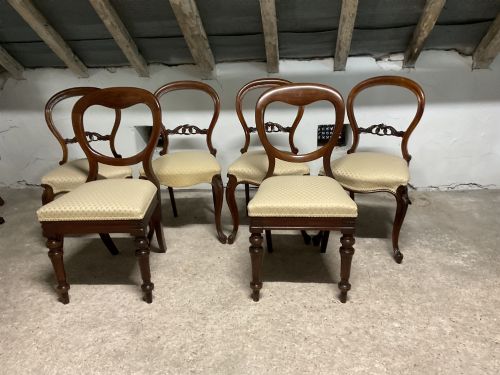
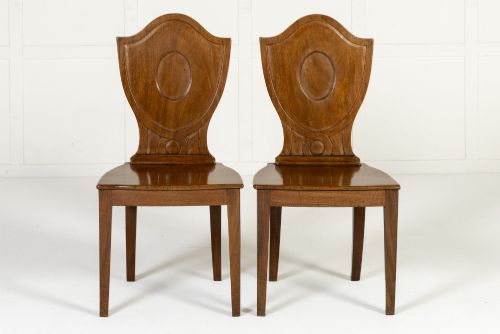
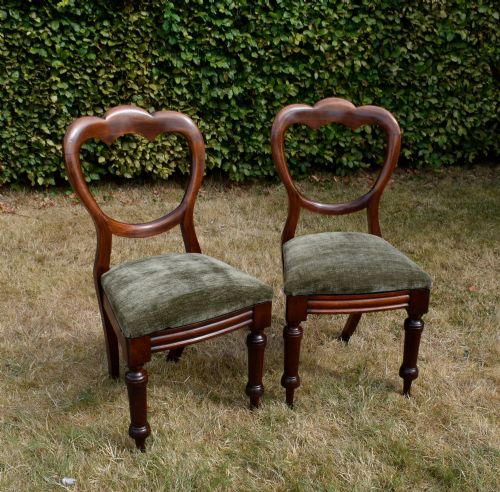
Forms vary from solid wooden hall chairs with carved seats to upholstered models featuring velvet, leather, or fabric coverings. Whether configured as balloon backs, shield backs, or klismos shapes, each matched pair preserves the symmetry demanded by period interior architecture.
How they were made
Cabinetmakers constructed these frames using dense tropical timber, frequently selecting figured mahogany or Cuban mahogany for its grain and structural stability. Workshops utilised traditional joinery techniques such as mortise and tenon joints to ensure the frames withstood daily use without losing rigidity.
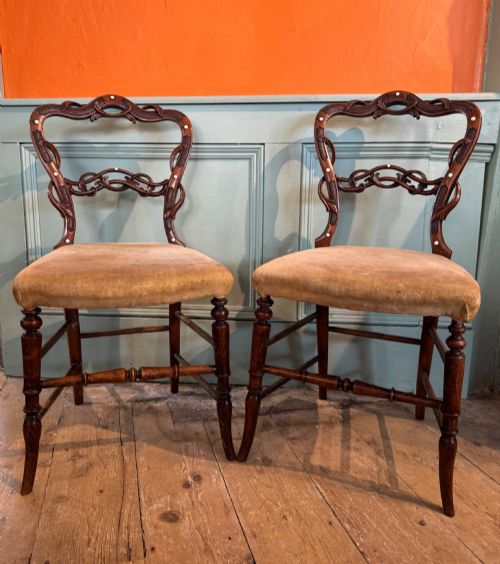
Surface decoration often involved fine hand-carving, marquetry inlay, or brass ormolu mounts, depending on the prevailing style of the period. Upholstered variants integrated webbing, stuffing, and textile coverings including silk, velvet, or leather to provide comfortable seating for guests.
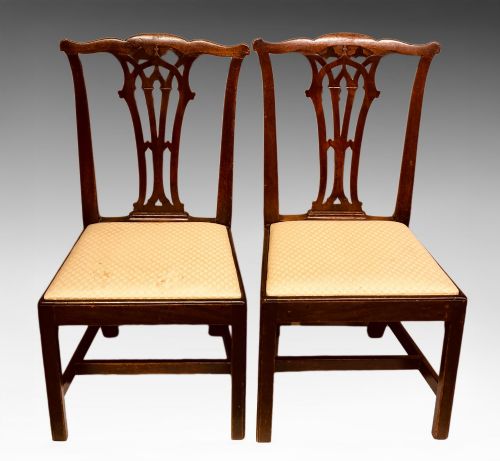
Listings feature diverse styles including Chippendale, Sheraton, and Dutch Baroque across the 18th and 19th centuries.
What varies in quality
The standard of a pair depends heavily on the crispness of the timber carving and the selection of figured mahogany with rich natural grain patterns. Superior examples display seamless joinery and balanced proportions that indicate master craftsmanship rather than hurried workshop production.
Originality of components and surfaces also dictates standing among collectors, with untouched patination and matching timber selection commanding greater appreciation. Later restorations or replacement elements alter the integrity of the pair, shifting the balance from museum-grade authenticity to general decorative utility.
R. Whytock & Co.·J S Henry·Gill & Reigate
The Pair Mahogany Side Chairs Glossary
- Mahogany
- A durable tropical hardwood prized for its deep reddish-brown colour and ability to hold intricate carved details. It served as the primary structural material for fine British seating from the 18th century onward.
- Regency
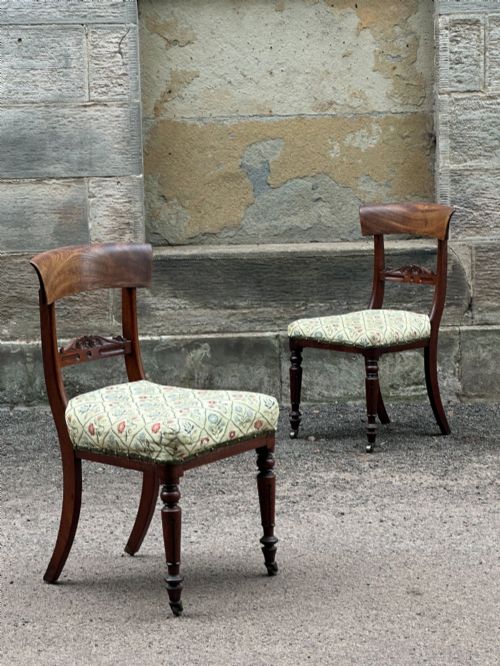
- An English design period spanning the early 19th century, characterised by classical revival motifs inspired by ancient Greece and Rome. Chairs from this era frequently feature sabre legs and scroll-carved top rails.
- Balloon back
- A rounded, oval-shaped chair back resembling the profile of a hot air balloon, popular during the Victorian era. This curved wooden frame offered ergonomic support while showcasing the grain of the mahogany.
- Marquetry
- The art of applying decorative veneer pieces in various woods to create geometric or floral patterns on furniture surfaces. It adds visual complexity to the flat panels of the chair back or seat rail.
- Klismos
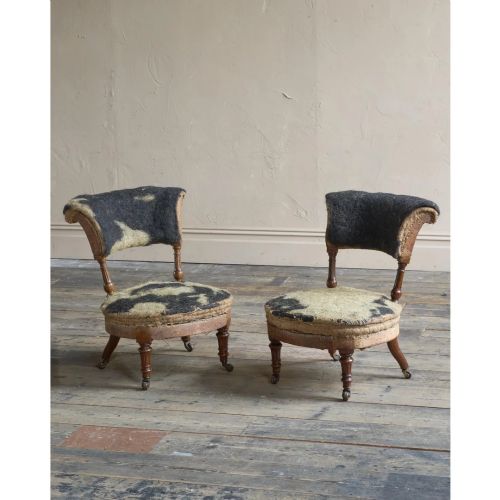
- An ancient Greek chair shape with outward-curving legs and a concave backrest, revived during the Regency period. This profile provides both elegance and comfortable recline for the seated user.
Pair Mahogany Side Chairs: Frequently Asked Questions
How do I date a mahogany chair?
Dating relies on examining the timber species, joinery methods, and stylistic cues unique to specific periods like Georgian or Victorian eras. Earlier 18th-century pieces often utilise heavy native mahogany, while later revivals incorporate machine-tooled elements.
Secondary woods used in the frame construction also provide clues to origin and age. Comparing the carved details against documented design books from Chippendale or Sheraton helps narrow down the decade of manufacture.
Can these chairs be used daily?
Most antique mahogany side chairs possess robust timber frames suitable for regular use around a modern dining table. Careful checks on the joints ensure the structural integrity remains sound before seating guests.
Upholstered versions may require updated internal webbing or padding to support daily weight safely. Preserving the antique finish involves avoiding direct sunlight and maintaining stable room humidity.
What distinguishes Regency from Victorian chairs?
Regency chairs draw direct inspiration from classical antiquity, featuring clean lines, reeded legs, and architectural restraint. They project an air of classical symmetry reminiscent of Greek and Roman furniture.
Victorian chairs tend to be heavier and more exuberant in decoration, often featuring balloon backs and elaborate scroll carvings. This later era embraced diverse revival styles, blending Gothic, Rococo, and Elizabethan influences into domestic seating.