


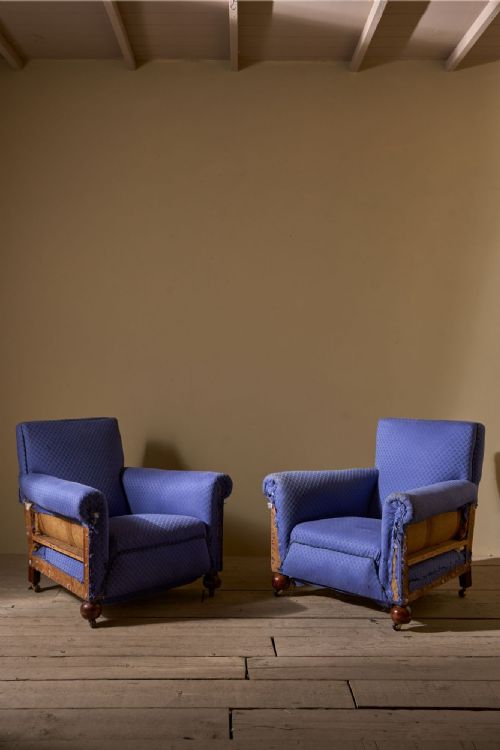
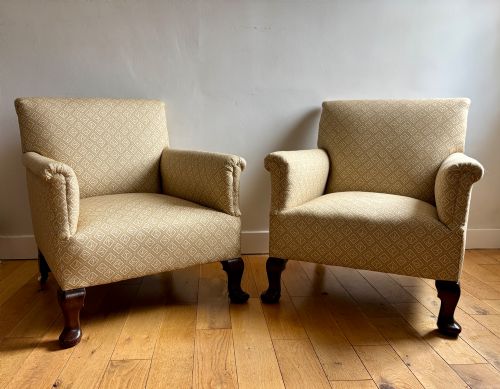
Upholstered Club Chair
An upholstered club chair offers deep comfort and traditional weight, built for long hours of reading or fireside rest.
Upholstered Club Chair
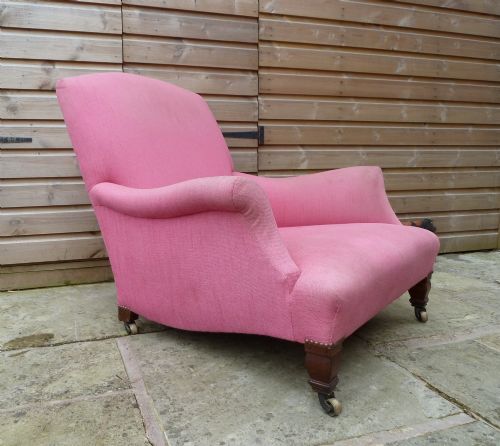
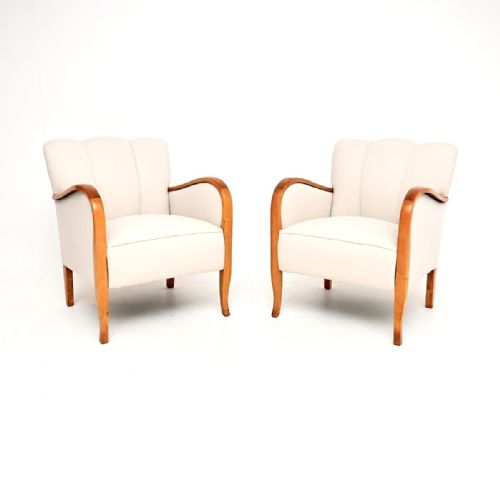
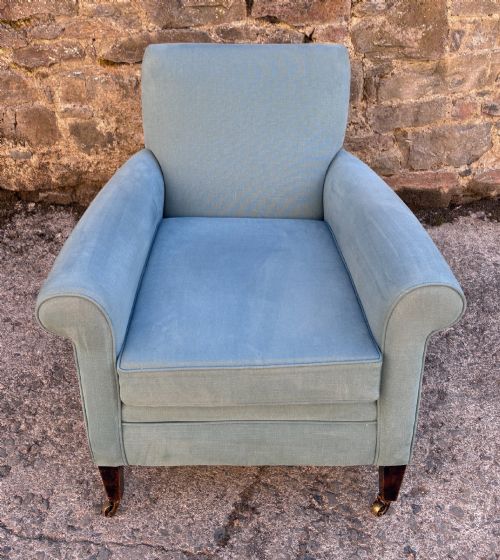
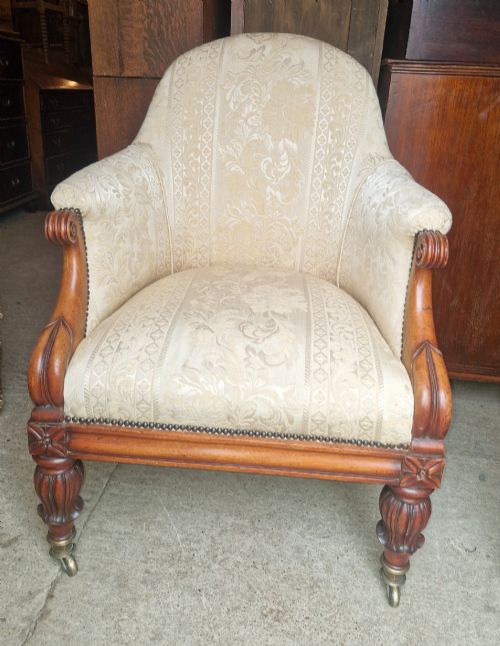
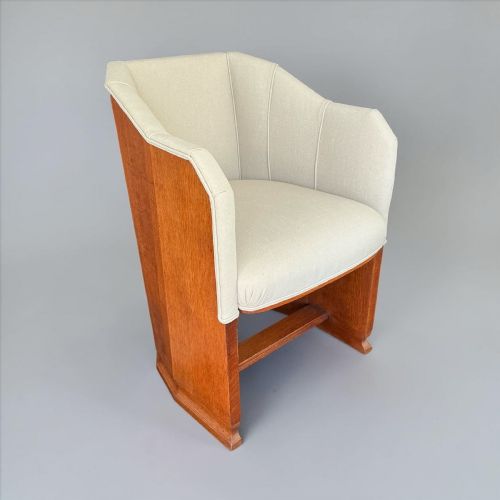
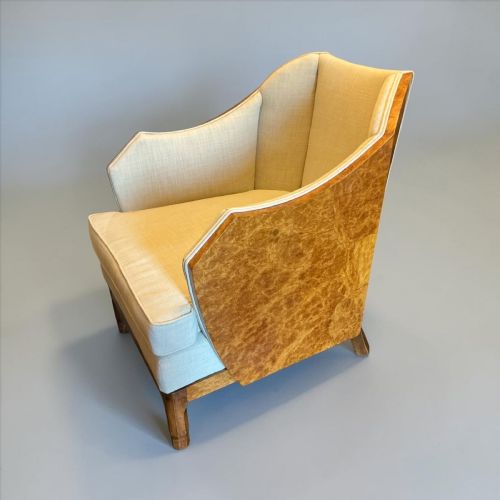
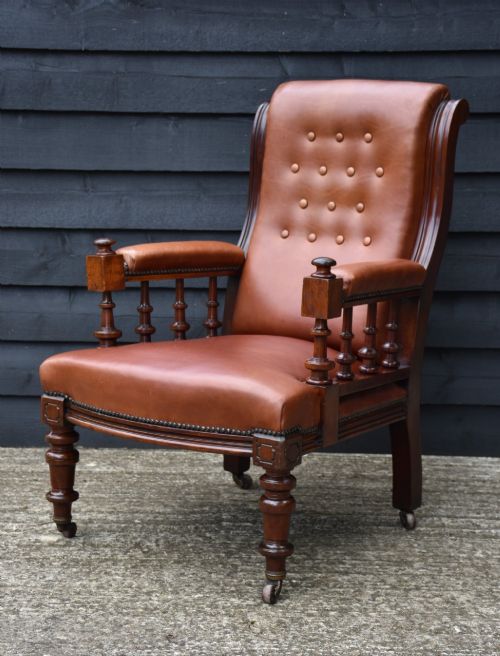
An upholstered club chair provides a substantial, deep-seated form designed primarily for relaxation in studies, libraries and drawing rooms. The pieces gathered here span the Victorian, Edwardian and Art Deco periods, encompassing robust nineteenth-century library chairs alongside sleek twentieth-century continental designs.
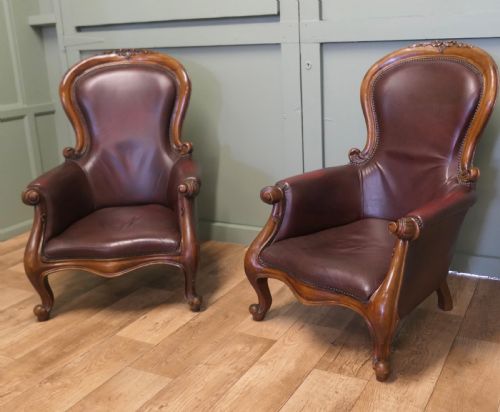
The version most commonly met on this page is the nineteenth-century or Edwardian leather-covered armchair, frequently standing on timber frames of mahogany, oak or walnut. These range from button-backed tub shapes to generous English country house styles built with heavy sprung suspension.
What varies in quality
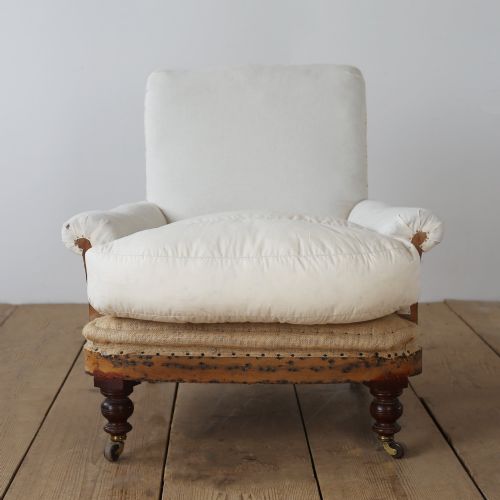
Quality rests in the integrity of the internal joinery and the resilience of the sprung suspension rather than surface appearance alone. A superior frame employs heavy seasoned hardwoods that remain rigid under weight.
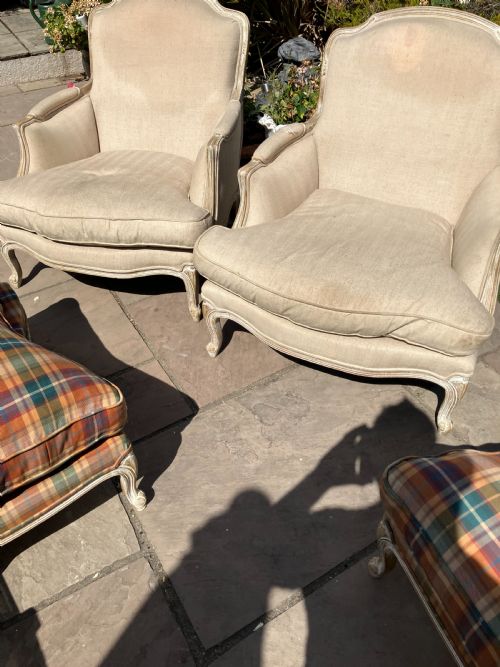
The choice of covering material dictates the character of the piece, with high-grade hand-dyed leathers, textured linens and tightly woven wool plaids showing finer ageing characteristics than standard commercial textiles.
Upholstered Club Chair Retail Price Guide 2026
Typical asking prices for upholstered club chair among the pieces listed under this phrase on Sellingantiques today, from the lower quarter to the upper quarter. They describe what is for sale here now, not the wider market.
Howard and Sons·Whytock and Reid·Morris and Co·Mellier and Co
The Upholstered Club Chair Glossary
- Bergere
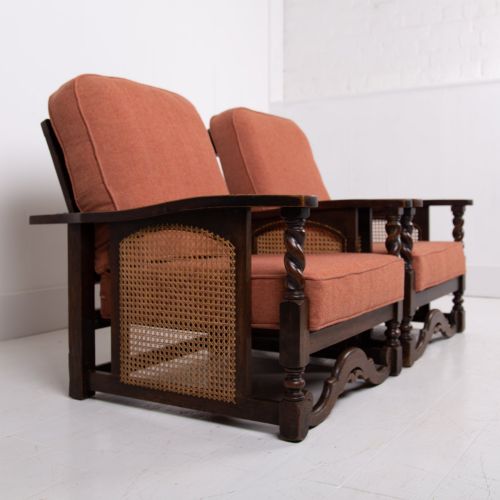
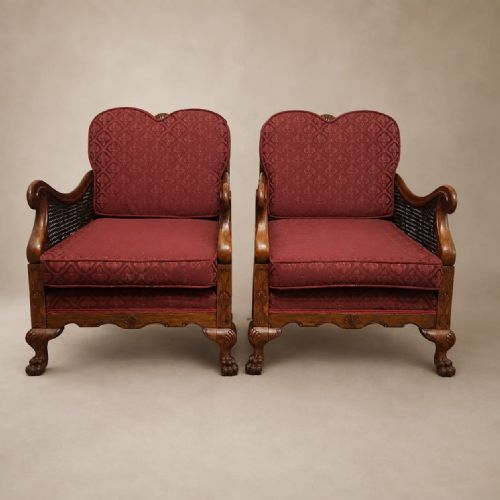
- An upholstered wooden-framed armchair with cane panels set into the arms or back. This French-inspired form appeared frequently in early twentieth-century drawing rooms.
- Library armchair
- A large, sturdy seat designed for reading rooms, typically upholstered in dark leather with a deep seat. These pieces prioritise robust wooden frames and lumbar support.
- Tub chair
- A curved armchair where the back rail flows continuously into low arms, enclosing the sitter. Victorian and Edwardian examples often feature button-backed upholstery.
- Wingback
- An armchair with high back and flanking side panels designed to shield the sitter from draughts. Twentieth-century variations often feature patterned wool or plaid fabrics.
Upholstered Club Chair: Frequently Asked Questions
How do I identify a Howard and Sons chair?
Look for stamped maker marks on the wooden legs, numbered brass castors and traditional webbed framing beneath the seat. These details mark out the most sought-after workshops of the nineteenth century.
Such chairs also exhibit specific proportions, featuring low, deep seats and distinctively turned timber supports that distinguish them from standard vernacular copies.
Are these chairs comfortable for daily sitting?
Most of these pieces were engineered precisely for prolonged relaxation, utilising deep coil springing and substantial horsehair padding. Their generous proportions accommodate various sitting postures.
While antique cushions may feel firmer than modern foam, the underlying suspension provides enduring support for everyday use.
What is the difference between Victorian and Art Deco examples?
Victorian models generally feature carved mahogany or oak frames, deep buttoning, and traditional leather or heavy fabric upholstery. They emphasise ornate woodwork and voluminous curves.
Art Deco alternatives from the 1930s favor streamlined silhouettes, smooth satin birch or walnut frames, and unadorned surfaces that reflect modernist design principles.
How should I care for leather upholstery?
Leather surfaces require regular dusting and occasional treatment with appropriate conditioning balms to prevent cracking. Keeping the hide away from direct heat sources preserves its suppleness.
Natural patination develops over decades of use, meaning gentle cleaning preserves the historical surface character better than aggressive polishing.