


Dark Wood Castors Chair
These dark wood castors chair selections offer sturdy mobility and period elegance, adding timeless character and flexible seating to any traditional room.
Dark Wood Castors Chair
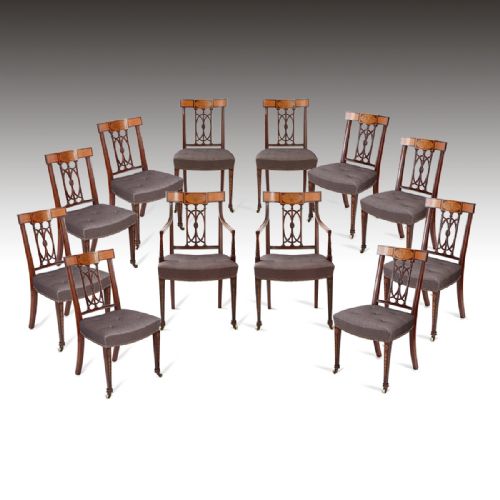
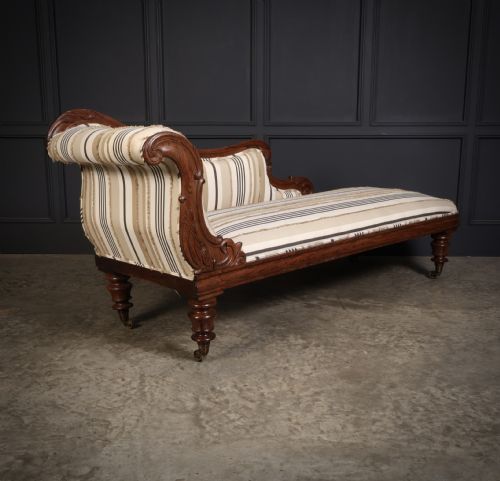
When searching for a dark wood castors chair, buyers encounter a variety of seating designed for mobility and comfort during the nineteenth century. The listings feature armchairs, side chairs, dining chairs, and chaise longues originating from the Regency, Victorian, and William IV periods.
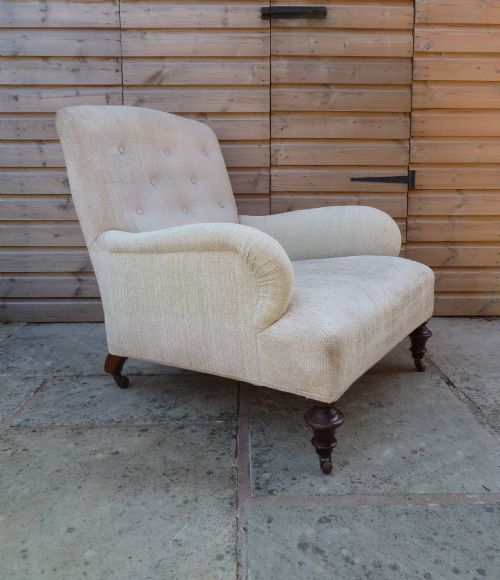
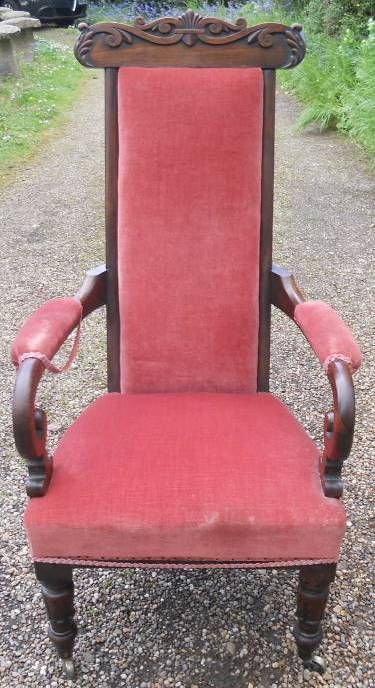
Most items on this page are library armchairs or open armchairs constructed from rich timbers like mahogany and rosewood. These pieces combine robust frames with rolling metal fittings to allow easy movement across carpeted or boarded floors.
Makers and designers from these eras applied refined styles ranging from English Country House to French Empire. Upholstery choices vary from newly applied calico to patterned textiles and floral fabrics.
How they were made
Cabinetmakers constructed these frames using dense hardwoods including mahogany, rosewood, and satinwood, often shaping the timber into curved arms, barley twist supports, or stickback designs. Simulated rosewood surfaces also appear among the selection.
Metal components, specifically brass, were cast and fixed to the base of the legs to hold the small wheel mechanisms that gave each chair its mobility. Skilled upholsterers layered traditional stuffing beneath textiles such as calico, damask, and patterned fabrics.
Listings feature nineteenth-century seating constructed from mahogany, rosewood, and satinwood, fitted with brass castors and upholstered in various textiles.
What varies in quality
The standard of a dark wood castors chair depends on the crispness of the timber carving and the richness of the wood grain in species like rosewood and mahogany. Finer examples display balanced proportions, integrated arm designs, and original brass fittings that turn smoothly.
Construction integrity separates standard utility seating from high-end library chairs attributed to notable workshops. The quality of the underlying frame joinery and the execution of specialist details such as barley twists dictate the overall calibre.
Gillows·Howard And Sons
The Dark Wood Castors Chair Glossary
- Castor
- A small swivelling wheel fixed to the base of a furniture leg for ease of movement. These are typically fashioned from brass on nineteenth-century seating.
- Library armchair
- A comfortable, upholstered seat designed for reading rooms and studies during the Regency and Victorian eras. These often feature generous proportions and padded armrests.
- Barley twist
- A decorative turning technique resembling a rope or twisted barley sugar column. This detail frequently appears on Victorian chair legs and upright supports.
- Calico
- A plain-woven unbleached textile frequently used as a base layer for upholstery before decorative fabrics are applied.
Dark Wood Castors Chair: Frequently Asked Questions
How do I identify a Regency period chair?
Regency chairs typically display clean classical lines, dark mahogany or rosewood timbers, and occasionally brass inlay or sabre legs. These design characteristics reflect the influence of ancient Greek and Roman furniture.
Makers from this era focused on architectural symmetry and restraint, distinguishing them from the heavier ornamentation found in later Victorian pieces.
Were all these chairs originally on castors?
Many library armchairs and reading chairs were fitted with castors from the outset to allow scholars to move heavy timber seats across large rooms without damaging floorboards. Smaller side chairs and dining chairs less commonly featured them.
Checking the leg construction reveals whether the wheel fittings form an integrated part of the original design or represent a later addition.
How should I care for rosewood and mahogany?
Maintain nineteenth-century hardwoods by keeping them away from direct sunlight and sudden temperature changes that can dry out the timber. Regular dusting with a soft, dry cloth preserves the natural sheen of the polished surface.
Avoid using silicone-based polishes or excessive moisture, which can degrade old finishes and affect the surrounding textile upholstery.
What is the difference between a side chair and an armchair?
Side chairs are built without arms to allow multiple seats to fit neatly around a dining table or against a wall. Armchairs feature integrated side supports designed to rest the arms during extended periods of sitting.
Both forms appear across nineteenth-century styles, though armchairs generally received more elaborate woodwork and padding.