

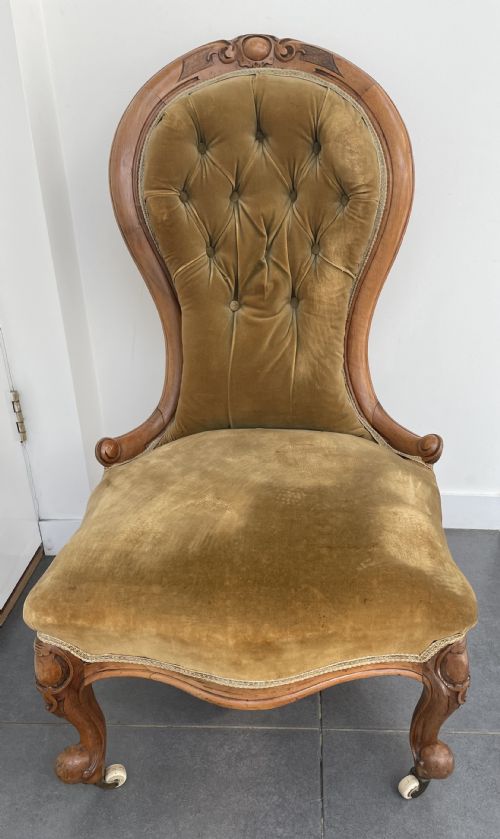


Green Velvet Nursing Chair
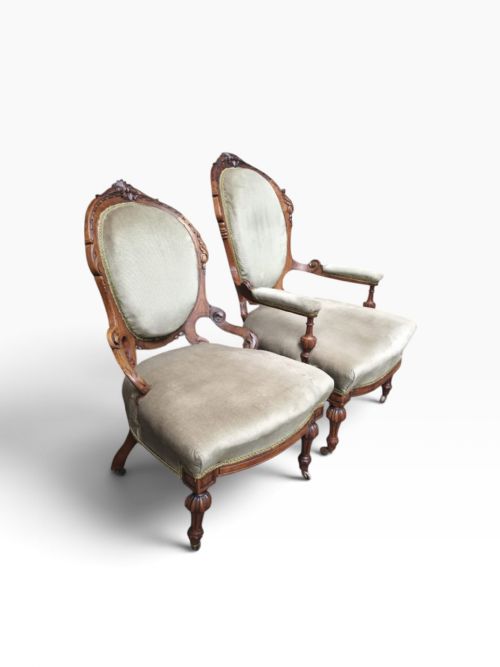
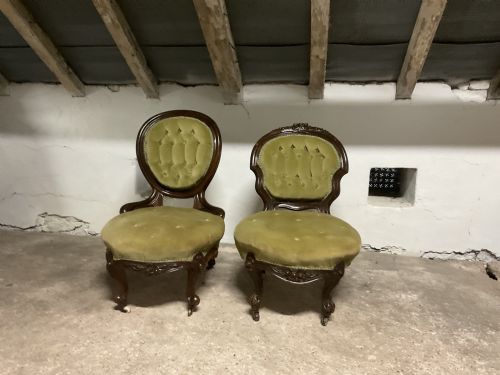
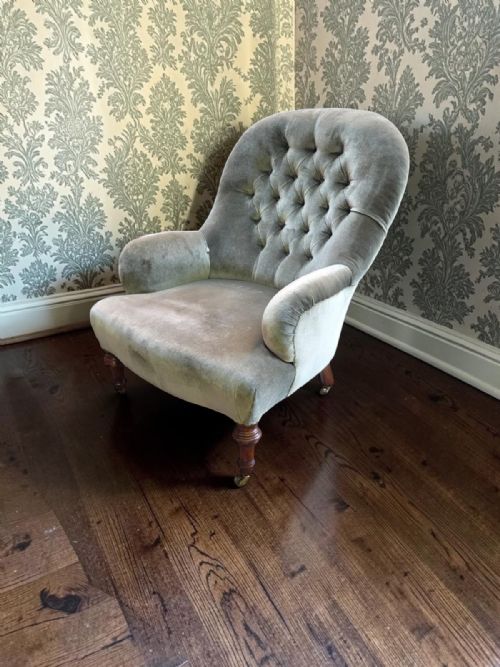
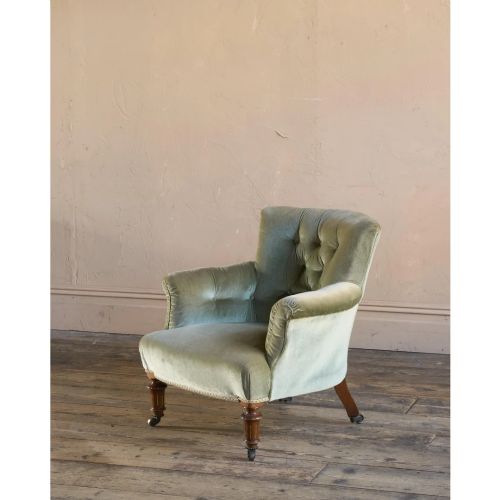
These green velvet nursing chairs bring low-slung seating and rich textile warmth straight into a bedroom or fireside.
Green Velvet Nursing Chair
When you search for a green velvet nursing chair, you are looking at low-seated Victorian, Edwardian, and Regency bedroom furniture designed for comfort and ease of dress. The examples you encounter on this page span the Victorian and Edwardian eras, alongside Regency and William IV pieces, taking forms such as slipper chairs, occasional chairs, and bedroom armchairs.
Most pieces you meet here are Victorian creations upholstered in green velvet, often featuring button backs or scroll sides set on castors. Walnut, mahogany, rosewood, and ebonised wood form the primary timber frames, while specific pieces display barley twist supports or carved details.
How they were made
Cabinetmakers shaped the timber frames from dense hardwoods like mahogany, walnut, and rosewood, frequently turning the wood into barley twist uprights or carving decorative motifs. Ebonised wood also appears among these frames, offering a dark, painted finish that mimics more costly exotic materials.
Upholsterers built up the seat padding before stretching velvet across the frame, often securing the fabric with deep buttoning and adding brass castors to the legs for mobility.
Green Velvet Nursing Chair Retail Price Guide 2026
Typical asking prices for green velvet nursing chair among the pieces listed under this phrase on Sellingantiques today, from the lower quarter to the upper quarter. They describe what is for sale here now, not the wider market.
The selection includes slipper chairs, occasional chairs, and bedroom armchairs fitted with brass castors.
What varies in quality
The distinction between standard and superior pieces rests in the crispness of the timber carving and the complexity of the frame geometry. Chairs with finely turned barley twist members or substantial walnut and rosewood construction sit at the upper end of the range.
Execution of the upholstery work defines the finish, where precise buttoning and robust frame joinery separate robust examples from simpler bedroom seating.
Gillows
The Green Velvet Nursing Chair Glossary
- Nursing chair
- A low-seated Victorian chair designed originally to allow women to nurse infants comfortably while wearing voluminous crinoline skirts. These pieces typically feature a low centre of gravity and minimal arm obstruction.
- Slipper chair
- An upholstered chair standing low to the floor without arms, traditionally used in a bedroom or dressing room for putting on shoes. The compact profile makes them practical for tight spaces.
- Button back
- An upholstery technique where depressions are formed in the padding by pulling thread tightly through the fabric and securing it to the frame in a grid pattern. This secures the internal stuffing while creating a tufted surface.
- Barley twist
- A decorative turning technique on wooden furniture legs and uprights that resembles a twisted rope. It gained popularity during the seventeenth century and saw revivals in later periods.
- Castor
- A small wheel mounted in a swivel housing attached to the bottom of furniture legs to ease movement. Brass fittings are common on nineteenth-century examples.
Green Velvet Nursing Chair: Frequently Asked Questions
What is a green velvet nursing chair used for?
These low chairs serve primarily as bedroom seating, dressing room chairs, or compact fireside seats. Their reduced height allows for relaxed posture in smaller living spaces.
Historically, the low seat accommodated the voluminous garments worn during the nineteenth century. Today, they function well as accent pieces in bedrooms or sitting rooms.
Are these chairs comfortable for daily use?
The low seat and supportive button-backed padding provide a distinct sitting posture suited for reading or resting. They are designed for relaxed lounging rather than upright desk work.
Because original padding relies on traditional stuffing materials, comfort levels depend on the condition of the internal upholstery. Many pieces retain a supportive feel despite their age.
How do I care for velvet upholstery?
Velvet requires gentle brushing with the grain to maintain the pile and prevent crushing. Regular light vacuuming removes dust from the folds.
Professional cleaning is recommended for any deeper stains to protect the delicate pile of the fabric. Keeping the chair away from direct sunlight prevents the green dye from fading.