
Victorian Tufted Accent Chair
A Victorian tufted accent chair offers deep buttoning and rich upholstery, bringing period character and comfort to any room.
Victorian Tufted Accent Chair
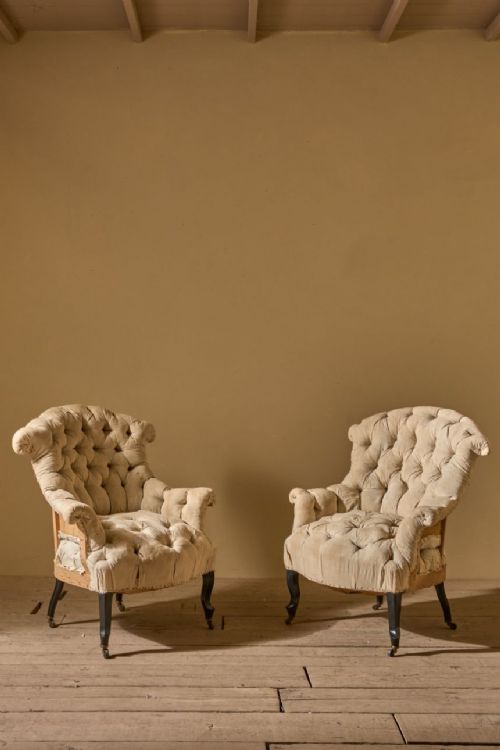
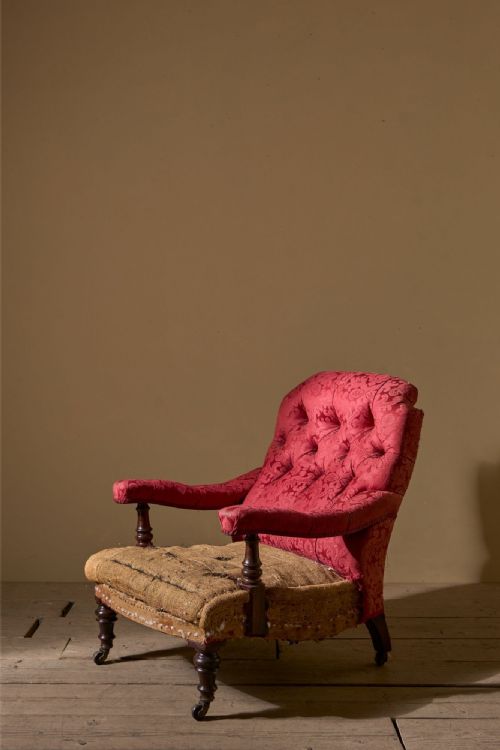
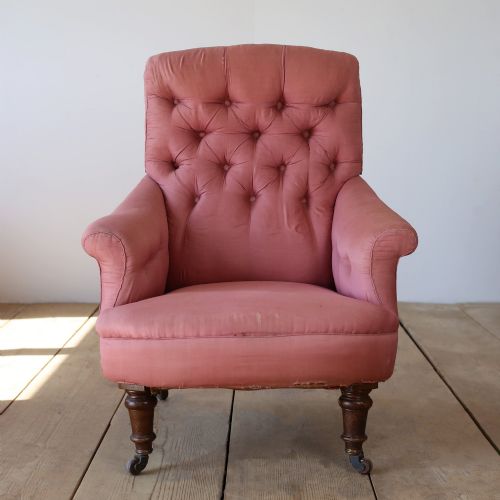
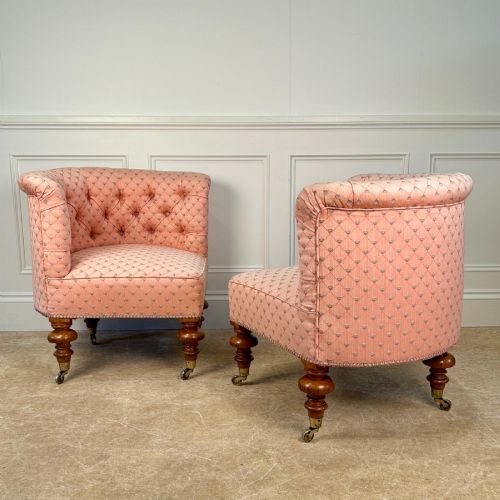
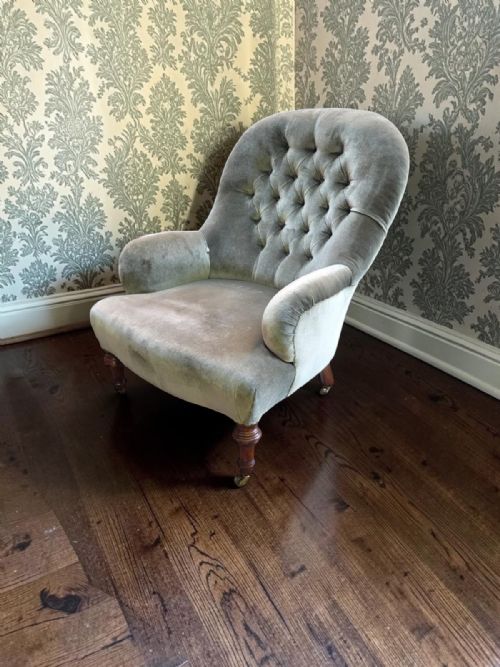
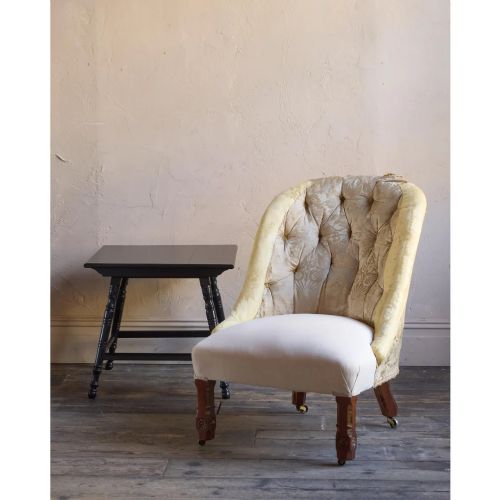
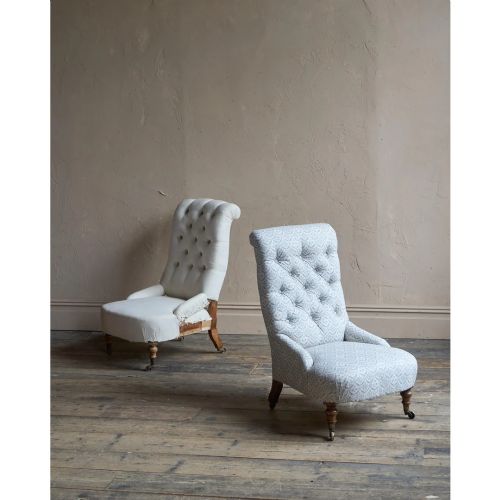
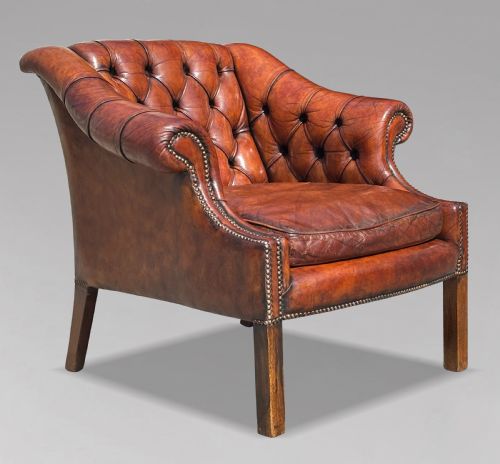
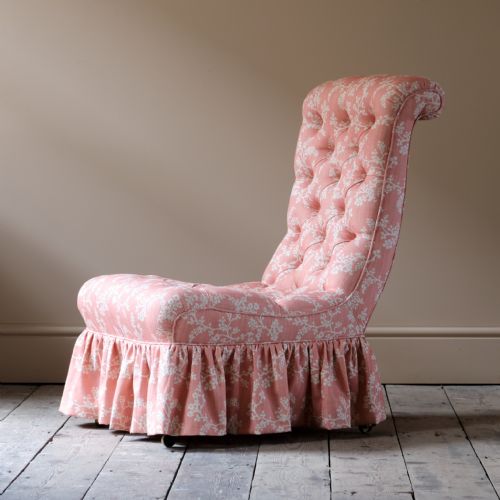
A Victorian tufted accent chair encompasses a variety of seating forms from the nineteenth century, including armchairs, slipper chairs, nursing chairs, and bedroom chairs. These pieces typically feature buttoned upholstery on the back and sometimes the seat, set within frames originating from periods such as the Victorian era, the mid-nineteenth century, and the Edwardian period.
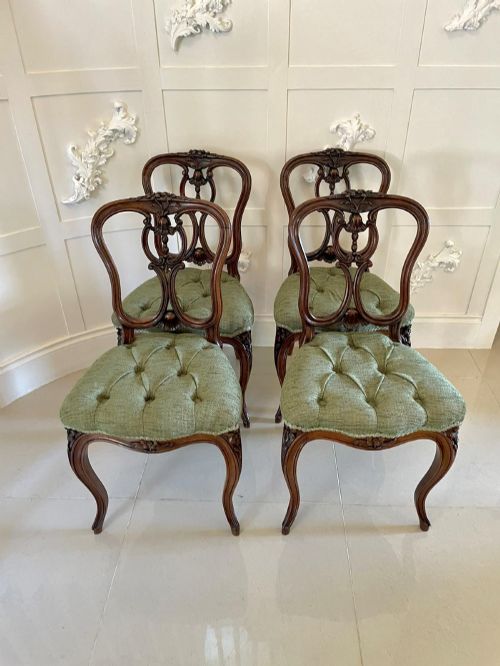
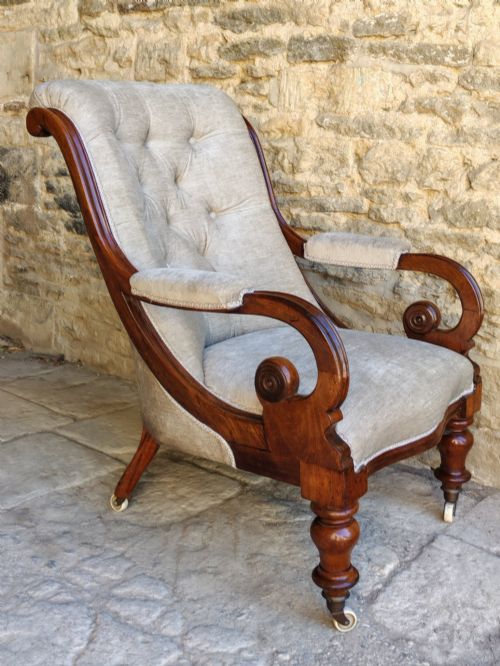
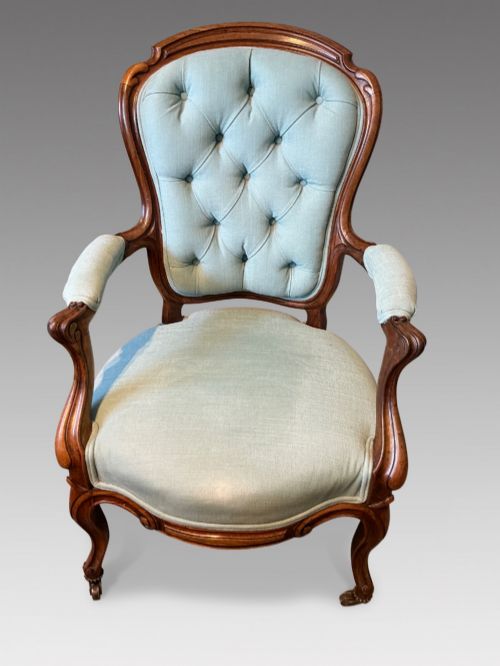
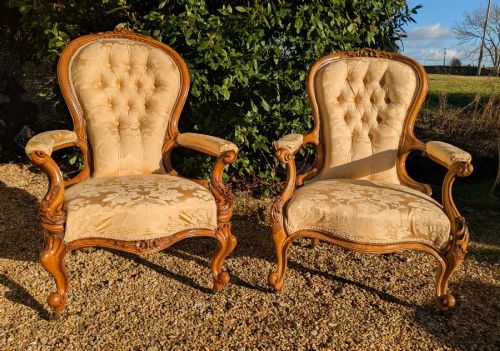
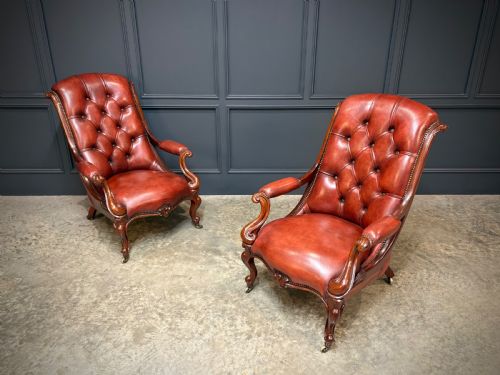
The selections on this page demonstrate distinct stylistic influences spanning Rococo Revival, Gothic Revival, Napoleon III, and Regency designs. Buyers will encounter open armchairs, spoonback chairs, and low slipper chairs constructed in woods like mahogany, walnut, rosewood, and oak.
Originating largely from English and French workshops, these chairs serve as functional seating and decorative accents. The forms vary from intimate corner and occasional chairs to substantial library and club armchairs.
How they were made
Frame construction relies on hardwoods such as mahogany, walnut, oak, and rosewood, often shaped into carved showwood frames, cabriole legs, or barley twist supports. Some pieces utilise ebonised finishes or brass details to accentuate the woodwork.
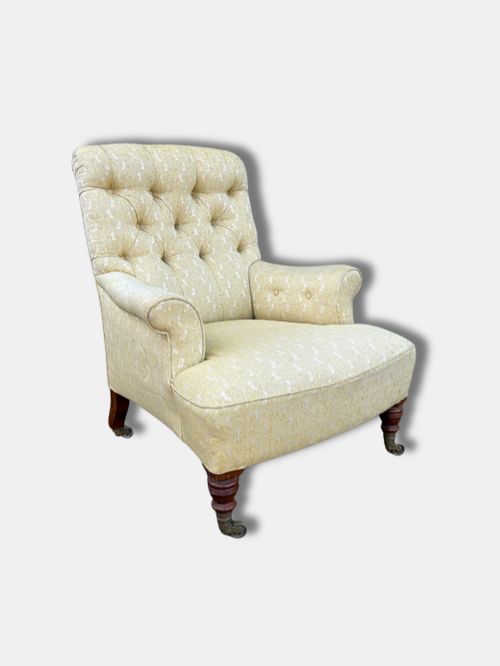
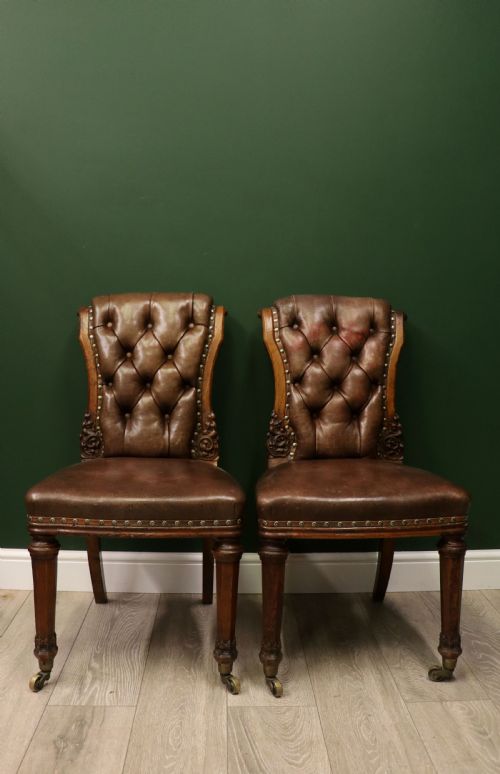
Upholstery techniques involve deep buttoning, known as tufting, applied to velvet, leather, linen, and patterned fabrics. The interior padding supports the characteristic buttoned backrests and sprung seats found across nineteenth-century seating.
Some nineteenth-century bedroom chairs were built with unusually large proportions to accommodate the voluminous crinoline skirts worn at the time.
What varies in quality
The refinement of the woodwork dictates much of the distinction, ranging from simple turned supports to intricate French carved walnut and elaborate showwood frames. Cabinetmaker craftsmanship, visible in the joinery of walnut and rosewood frames, separates standard production from superior pieces.
The integrity and selection of the upholstery materials further separate examples, with high-grade leather, silk velvet, and meticulous buttoning indicating finer production. Maker attribution, particularly pieces associated with recognised workshops like Howard and Sons or Gillows, elevates the standing of an armchair.
Howard and Sons·Gillows
The Victorian Tufted Accent Chair Glossary
- Button back
- A style of upholstery where depressions are formed in the padding by pulling buttons deep into the stuffing, creating a diamond pattern of tufts. This technique provides both structural tension and decorative relief on the backrest.
- Spoon back
- An upholstered chair back shaped defensively like the bowl of a spoon, curving inward to fit the human form. It is particularly common on mid-nineteenth-century nursing and ladies chairs.
- Showwood
- Timber framing that remains visible around the upholstered portions of a chair. Makers use rosewood, walnut, or mahogany for showwood to display fine grain and carving.
- Cabriole leg
- A furniture leg that curves outward in a convex arc and then tapers inward in a concave arc, ending in a pad or scroll foot. This form draws on eighteenth-century design revived during the Victorian era.
- Barley twist
- A type of furniture turning resembling a twisted rope or barley sugar stick. It appears frequently on the wooden legs and arm supports of Victorian chairs.
Victorian Tufted Accent Chair: Frequently Asked Questions
How were button back chairs used?
Button back chairs served varied domestic functions depending on their specific form and proportions. Lower slipper and nursing chairs were traditionally utilised in bedrooms and nurseries, while larger library and club armchairs furnished studies and drawing rooms.
The deep buttoning provided firm support and a tailored appearance suited for formal entertaining or daily relaxation in nineteenth-century homes.
How do I identify a Victorian armchair?
Identifying a Victorian armchair involves examining the timber species, frame style, and upholstery methods. Key indicators include walnut or rosewood showwood frames, cabriole or barley twist legs, and characteristic revival styles such as Rococo or Gothic.
Upholstery details like deep buttoning in velvet, leather, or fabric further point to nineteenth-century manufacturing techniques.
Where should I place an accent chair?
An accent chair fits well in living rooms, bedrooms, or studies where it can serve as a functional seat and a visual focal point. Compact forms like slipper and corner chairs suit smaller spaces or bedroom corners.
Larger library and club armchairs anchor bigger rooms, pairing effectively with side tables or positioned near reading lamps.