




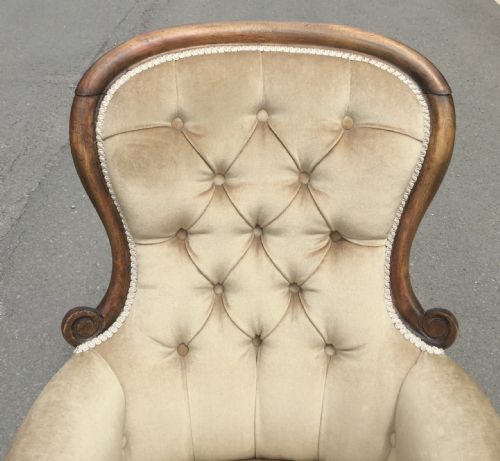
Traditional Velvet Low Chair
A traditional velvet low chair brings low-slung, upholstered comfort and period character to a room, offering an inviting seat that draws the eye.
Traditional Velvet Low Chair
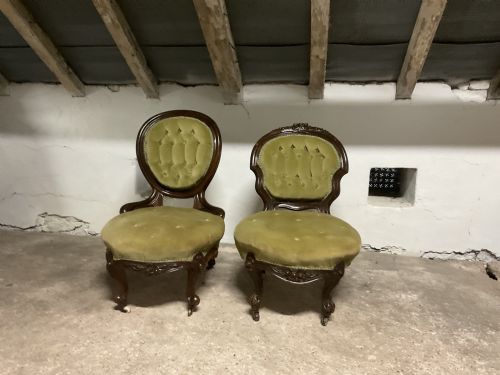
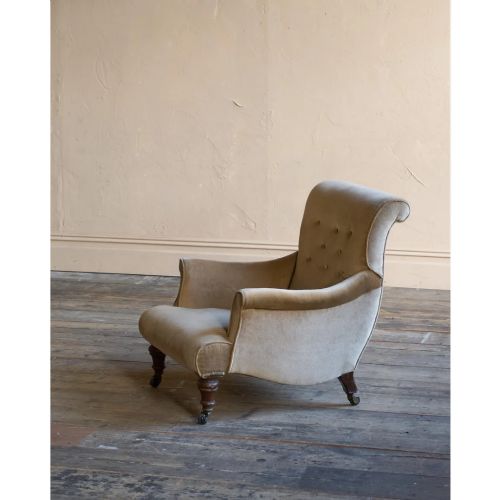
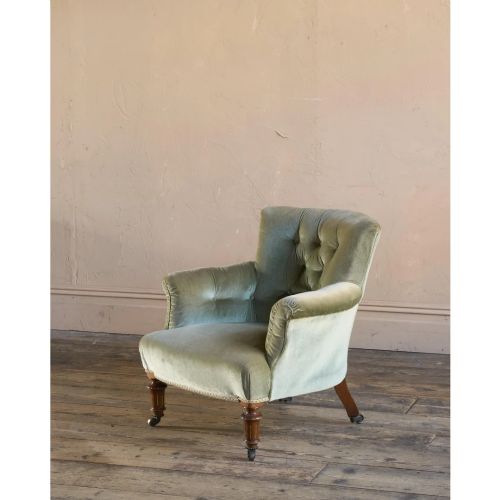
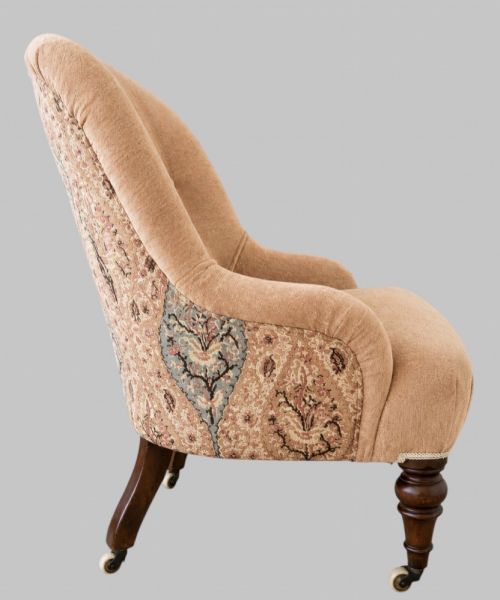
A traditional velvet low chair comprises nineteenth-century forms such as nursing chairs, slipper chairs, and low fireside armchairs designed for intimate domestic spaces. These pieces sit close to the floor, often featuring low backs and generous seats upholstered in plush textiles.
The selections on this page span the Victorian era, the Arts and Crafts movement, and the twentieth century, bringing together mahogany, rosewood, oak, and iron-backed frames. Alongside vernacular country house seating, one finds pieces attributed to notable London workshops of the period.
How they were made
Makers constructed the supportive frames of these chairs from hardwoods including mahogany, rosewood, and oak, often incorporating iron for robust structural reinforcement in nursing chairs. Turned wooden legs frequently terminate in brass castors to ease movement across heavy carpets.
Upholstery techniques combined traditional stuffing with tactile coverings of cotton velvet, tapestry, and printed fabrics, secured with buttoning or tightly pinned edges. Frames reflected both simple country house vernacular and the refined joinery of established cabinet makers.
Traditional Velvet Low Chair Retail Price Guide 2026
Typical asking prices for traditional velvet low chair among the pieces listed under this phrase on Sellingantiques today, from the lower quarter to the upper quarter. They describe what is for sale here now, not the wider market.
The furniture styles represented span Victorian design, Arts and Crafts, and early twentieth-century country house aesthetics.
What varies in quality
The distinction between standard domestic seating and the finest examples lies in the integrity of the underlying woodwork and the pedigree of the maker. Pieces bearing stamps from workshops such as Howard and Sons or Gillows demonstrate superior joinery and more refined proportions.
Quality also rests in the retention of original framing elements, uncompromised structural density, and the thoughtful execution of the upholstery scheme. Better examples maintain their intended stance and balance without leaning or sagging in the frame.
Gillows·Hampton and Sons·Howard and Sons
The Traditional Velvet Low Chair Glossary
- Nursing chair
- A low-seated Victorian armchair originally designed without arms to allow women to nurse infants in comfort whilst sitting close to a hearth. These chairs often feature buttoned upholstery and slender wooden or iron frames.
- Slipper chair
- An upholstered chair with a very low seat, originally placed in a bedroom or dressing room for changing shoes. They typically lack arms and sit close to the floor.
- Balloon back
- A chair back shaped in a continuous oval curve resembling a balloon, popular in mid-nineteenth-century seating. This design provides ergonomic support while maintaining an elegant silhouette.
- Button back
- An upholstery technique where buttons are pulled deep into the padding in a diamond pattern to secure the filling and create a textured surface. This method adds both structural tension and visual depth to the textile.
- Castor
- A small wheel attached to the base of a chair leg to facilitate movement across floor coverings. Brass fixings were frequently employed on nineteenth-century upholstered seating.
Traditional Velvet Low Chair: Frequently Asked Questions
What is a traditional velvet low chair used for?
These low-slung seats serve as comfortable fireside or bedroom chairs, offering an inviting perch that does not overwhelm smaller sitting rooms.
Their compact proportions and tactile velvet upholstery make them practical for everyday lounging while introducing distinct nineteenth-century character to an interior.
How do I identify a Victorian nursing chair?
Victorian nursing chairs are characterised by exceptionally low seats and absence of arms, which allowed women to sit comfortably in heavy period dresses.
They frequently display button-backed upholstery and are supported by turned wooden legs fitted with brass castors.
What is the difference between a slipper chair and a nursing chair?
Slipper chairs and nursing chairs both sit close to the floor, but slipper chairs were traditionally kept in bedrooms specifically for dressing.
Nursing chairs often feature more elaborate carved frames or iron backing designed to support extended periods of sitting near a hearth.
How should I care for antique velvet upholstery?
Velvet upholstery requires gentle brushing with the grain to maintain the nap and prevent the pile from crushing over time.
Keeping these chairs away from direct sunlight protects the richness of the fabric and preserves the underlying natural fibres.