


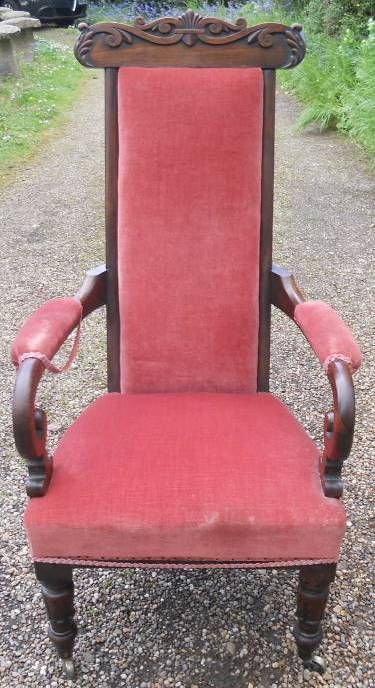

Rosewood Velvet Armchairs
Rosewood velvet armchairs bring deep grain and soft pile together, offering the substantial comfort that collectors seek for a traditional sitting room.
Rosewood Velvet Armchairs
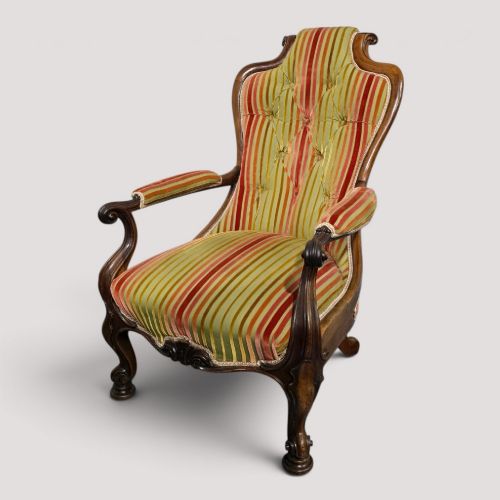
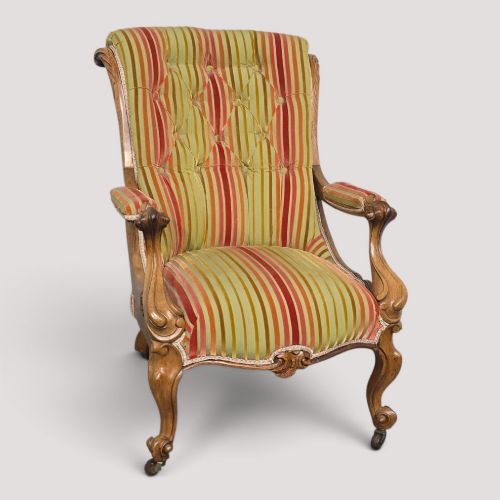
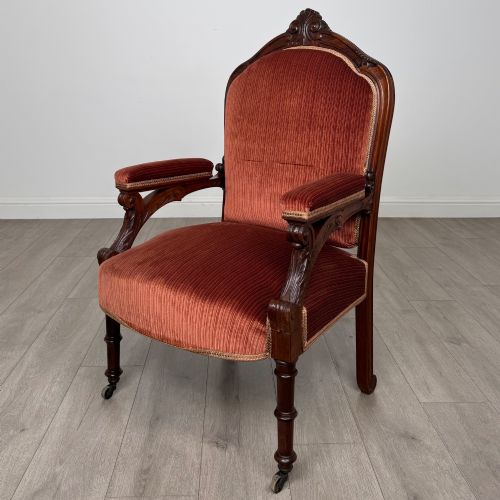
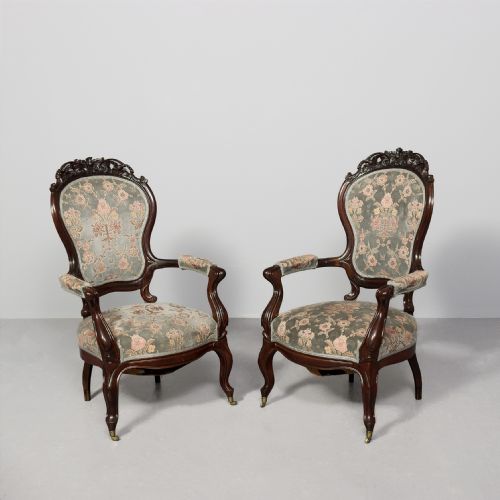
Rosewood velvet armchairs encompass nineteenth-century seating, moving from the clean lines of the Regency period through to heavy Victorian carved styles and Edwardian salon suites. Buyers investigating rosewood velvet armchairs frequently encounter generous Victorian cabriole leg armchairs, low nursing chairs, and open tub chairs.
The selection ranges from early nineteenth-century library armchairs to mid-nineteenth-century easy arm chairs and Anglo-Indian carved hardwood examples. These pieces serve as functional seating and decorative focal points, often appearing in pairs or single elbow chair configurations.
How They Were Made
Cabinet makers utilised dense rosewood and hardwood frames, often shaping the timber with carved details, inlaid motifs, or parcel gilt accents. Brass castors frequently support the heavier frames to aid movement across carpets and wooden floors.
Upholstery techniques of the period involved sprung or padded interiors beneath tactile velvet coverings. Frames were constructed using solid timber joints designed to withstand heavy daily use over generations.
Listings feature rosewood and hardwood frames paired with velvet, brass castors, and parcel gilt across Victorian, Regency, and Edwardian periods.
What Varies in Quality
The depth of the timber grain and the crispness of the carving distinguish finer examples from plain production. Superior pieces display thoughtful proportions, balanced cabriole legs, and harmonious upholstery choices that suit the period of the frame.
Structural integrity of the rosewood frame and the quality of the surviving timber finish dictate the overall standard. Subtle details such as original brass castors and refined inlay separate standard seating from exceptional library and salon furniture.
James Shoolbred
The Rosewood Velvet Armchairs Glossary
- Cabriole leg
- A furniture leg that curves out and then narrows down to a foot, typical of mid-nineteenth-century seating. This design adds an organic fluidity to the heavy rosewood frame.
- Parcel gilt
- A decorative technique where small areas of a wooden or carved surface are highlighted with gold leaf. It creates a subtle contrast against the dark rosewood grain.
- Tub chair
- An upholstered armchair with a rounded continuous back and arms forming a single curved barrier. These provide an enclosed, supportive seat.
- Library armchair
- A sturdy, generous seat designed for reading rooms and studies during the Regency and Victorian eras. They prioritise solid construction and deep cushioning.
- Nursing chair
- A low-seated Victorian chair originally designed to allow mothers to tend to infants comfortably. They frequently feature upholstered rosewood frames without high arms.
Rosewood Velvet Armchairs: Frequently Asked Questions
What periods do these armchairs come from?
These chairs span the nineteenth and early twentieth centuries, covering Regency, William IV, Victorian, and Edwardian eras. The designs reflect the shifting tastes of those decades.
Most pieces date from the mid-nineteenth century, showing the characteristic solid rosewood frames and carved details of the Victorian period.
How do I care for rosewood and velvet?
Rosewood benefits from occasional polishing with suitable natural waxes to maintain the deep lustre of the grain. Avoid placing the timber in direct sunlight to prevent fading.
Velvet upholstery requires gentle brushing to keep the pile lifted and safe from crushing. Professional cleaning is recommended for delicate antique textiles.
Are these chairs comfortable for daily use?
Many nineteenth-century armchairs offer generous proportions and deep padding designed for extended sitting in libraries and drawing rooms. The solid frames provide reliable structural support.
Some older pieces may have undergone reupholstery to ensure modern standards of comfort while retaining their historic wooden frames.
What is the difference between a salon suite and a library armchair?
Library armchairs are built for heavy study use, featuring sturdy rosewood frames and deep upholstery for extended reading sessions. They prioritise comfort and durability.
Salon suite pieces are typically lighter, decorative seating designed for formal entertaining rooms. They often include inlaid details and matching chairs.