
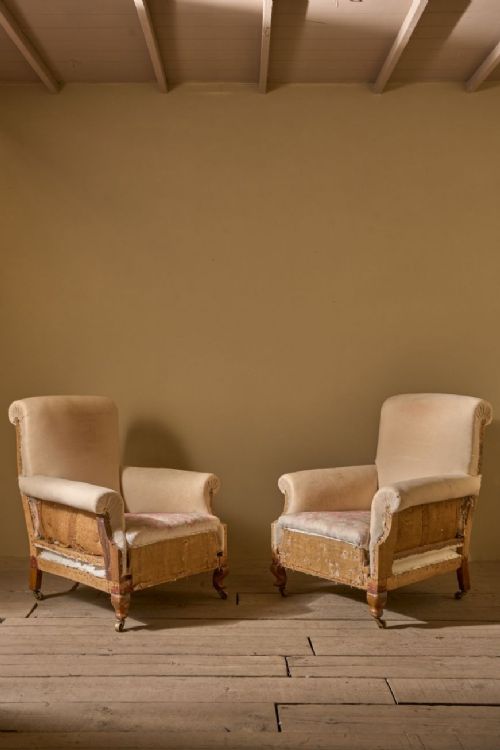
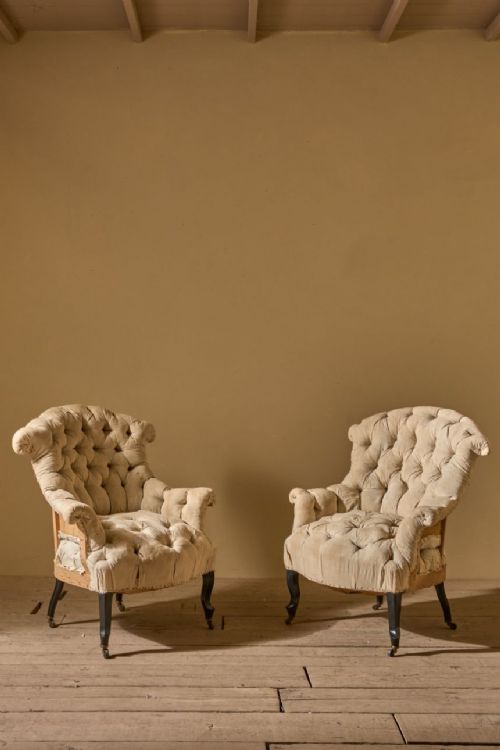
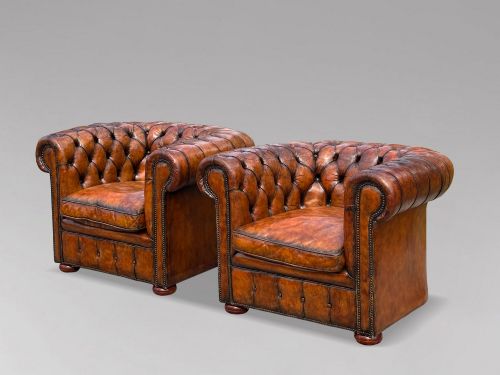
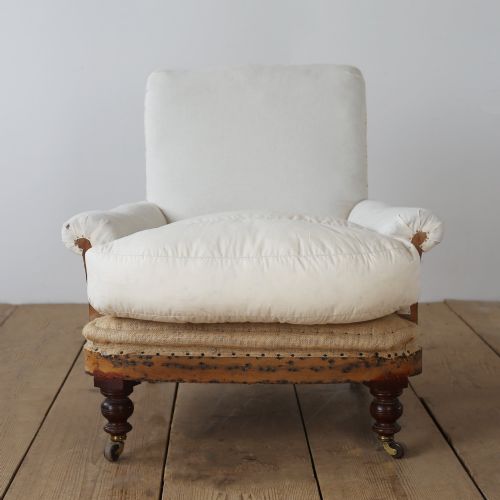



Pair Victorian Easy Chairs
These pair victorian easy chairs bring nineteenth-century comfort to a room, offering deep seats and upholstered frames designed for relaxed sitting.
Pair Victorian Easy Chairs
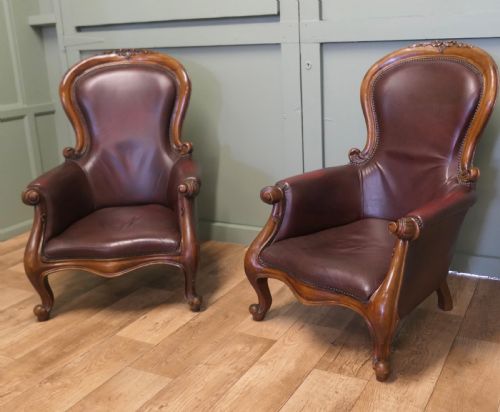
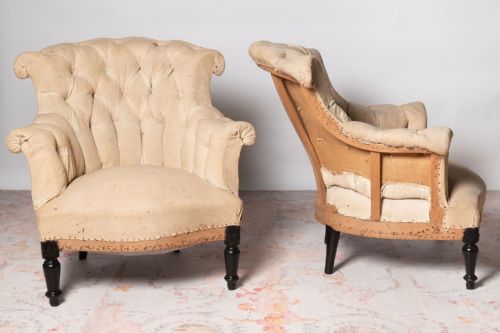
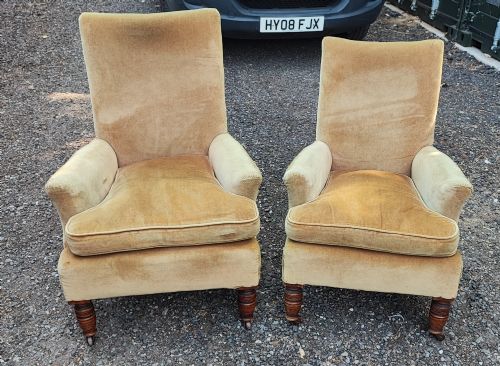
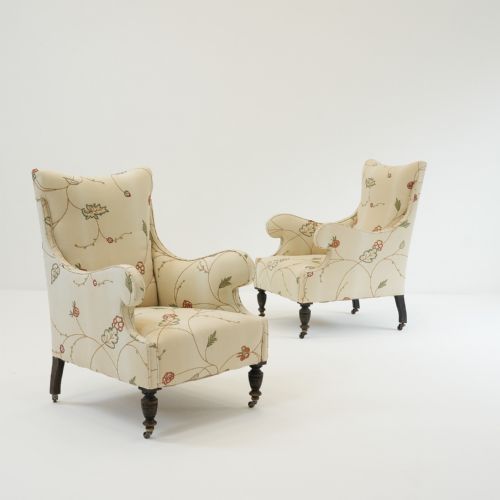
A buyer seeking pair victorian easy chairs encounters nineteenth-century seating designed for comfort, appearing in forms such as scroll back, spoon back, wing back, club, and library armchairs. These matched sets originate predominantly from the Victorian period, alongside related examples from the Edwardian era and around nineteen hundred.
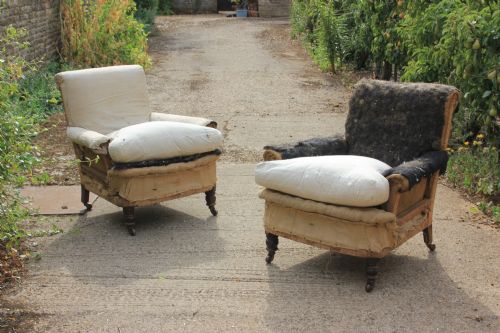
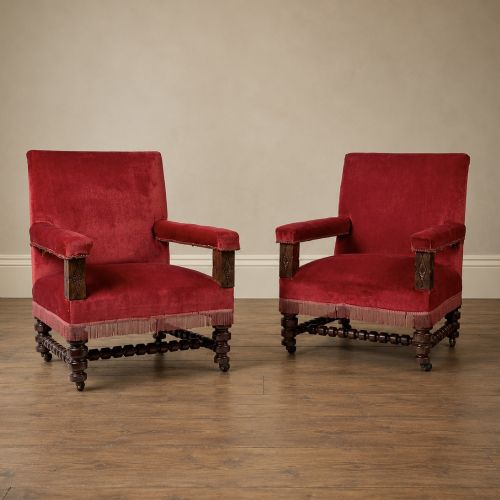
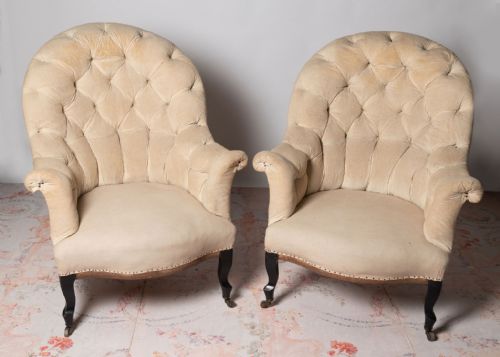
The selection ranges from buttoned back French Napoleon III styles and English country house models to rosewood, walnut, oak, and mahogany frames. Many retain period textiles including velvet, leather, and calico or ticking.
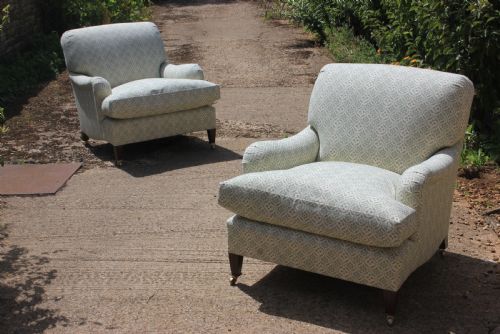
Most entries comprise matching pairs intended for a shared space, spanning low lounge chairs, deep-seated club chairs, and revolving designs.
How they were made
Timbers such as mahogany, walnut, oak, rosewood, and chestnut form the structural frames, sometimes joined by brass elements or parcel gilding.
Upholstery relies on traditional textiles including velvet, leather, calico, fabric, and ticking, often finished with buttoning or crewelwork.
Listings feature frames built from walnut, mahogany, oak, and rosewood, paired with leather, velvet, and ticking.
What varies in quality
The standard of timber framing and the integrity of the underlying woodwork distinguish individual examples, with dense hardwoods like rosewood and mahogany marking finer production.
The execution of upholstery work, from buttoning to the selection of leather or velvet, dictates the finish, alongside maker stamps that denote workshop origin.
Howard and Sons·Harrods London·Gillows·Liberty·Johnstone and Jeanes
The Pair Victorian Easy Chairs Glossary
- Spoon back
- A padded chair back shaped like the bowl of a spoon to fit the human spine. This contour appeared frequently in nineteenth-century boudoir and salon seating.
- Club chair
- A heavy, deep-seated armchair traditionally upholstered in leather. These pieces were built for sustained comfort in libraries and smoking rooms.
- Ticking
- A tightly woven cotton or linen fabric used as a durable upholstery cover. Makers often employed striped ticking on country house armchairs.
- Parcel gilt
- Woodwork partially decorated with gold leaf or gold paint to highlight carved details. This treatment accented rosewood and walnut frames.
- Wing back
- An armchair with side panels attached to the back upholstered to shelter the sitter from drafts. These forms appeared in various Victorian and revival styles.
Pair Victorian Easy Chairs: Frequently Asked Questions
Where were pair victorian easy chairs placed?
These chairs stood primarily in drawing rooms, libraries, and country house reception spaces where comfort was paramount.
Pairs allowed symmetric placement beside fireplaces or across from one another in conversation areas.
How do I identify a Victorian easy chair?
Look for heavy timber frames in mahogany, walnut, or rosewood combined with sprung seats and deep padding.
Characteristic shapes include buttoned backs, spoon backs, and low revolving formats typical of the nineteenth century.
What is country house style?
This aesthetic favours relaxed, lived-in comfort over formal symmetry, often utilising unassuming ticking or worn leather.
Such chairs prioritize deep seating dimensions and practical upholstery for everyday domestic use.
Can I reupholster these armchairs?
Many examples accept new fabric or leather while retaining their original nineteenth-century internal webbing and springs.
Some pieces arrive in calico or ticking ready for bespoke top covers.