




Scroll Back Armchairs
Scroll back armchairs combine structural support with flowing lines, offering deep comfort that collectors seek for traditional and period interiors.
Scroll Back Armchairs
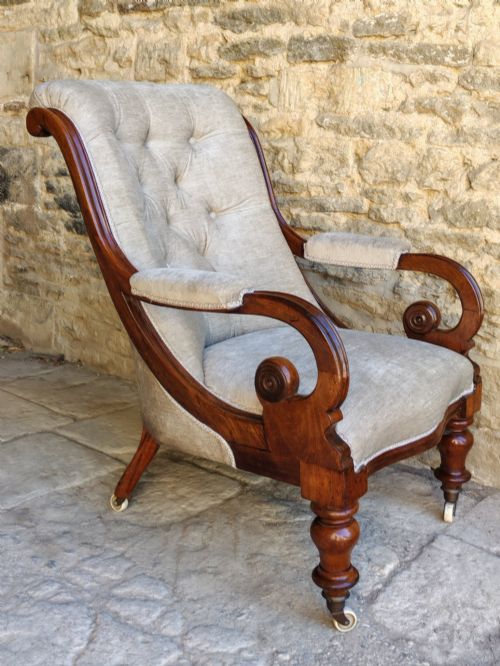
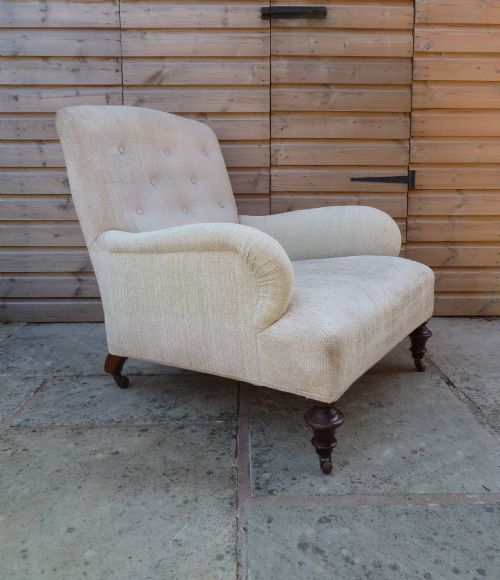
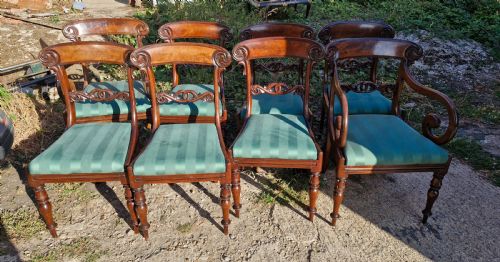
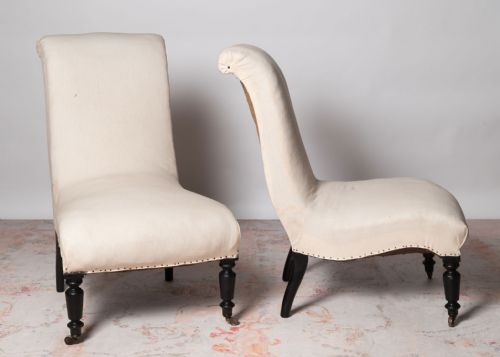
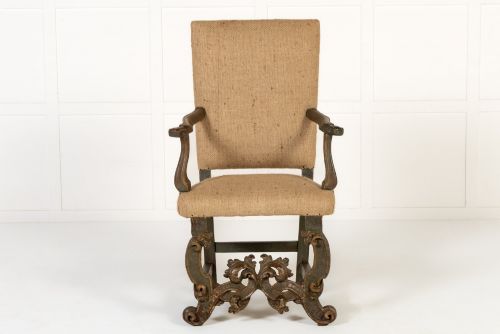
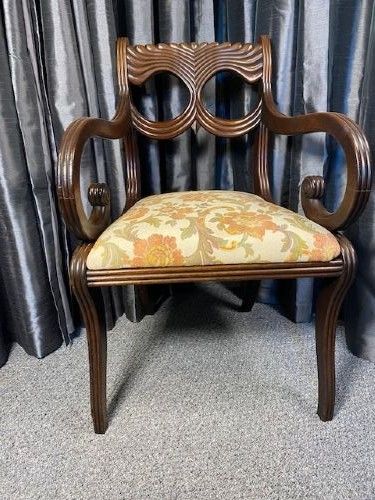
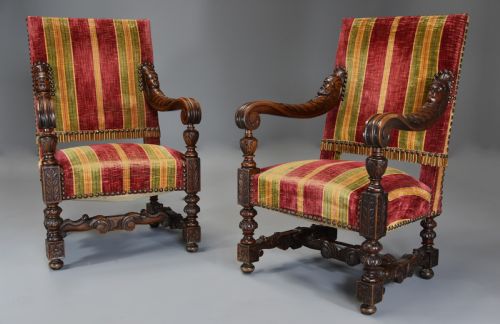
Scroll back armchairs encompass seating designed with distinct curved armrests or backrests, appearing across nineteenth-century Victorian, Regency, and Edwardian periods. Pieces range from formal mahogany library chairs and gentleman's armchairs to low slipper chairs and country house seating.
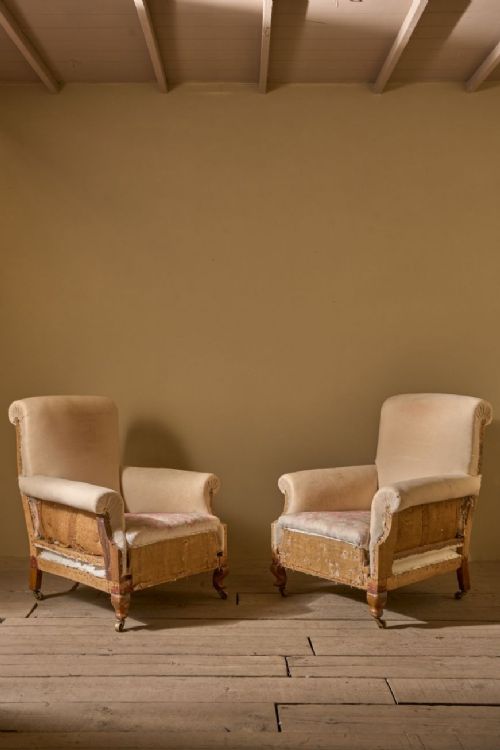
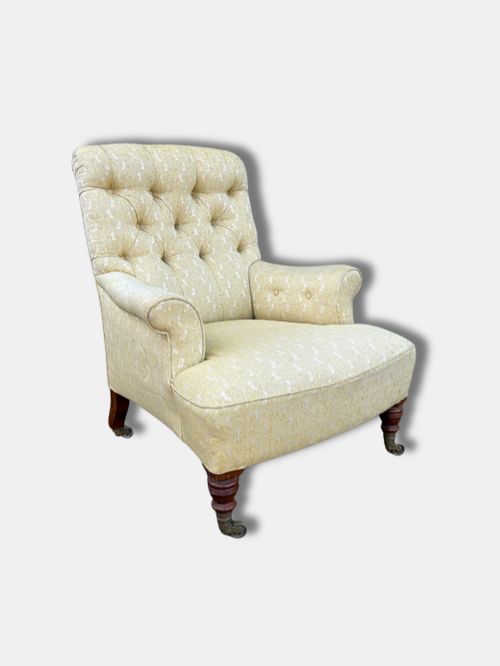
The version most commonly encountered on this page is the Victorian or Regency mahogany or walnut armchair, often upholstered in fabric, velvet, or calico. These pieces combine exposed timber frames with supportive padding, reflecting the domestic comfort prioritized in nineteenth-century design.
Materials and Construction
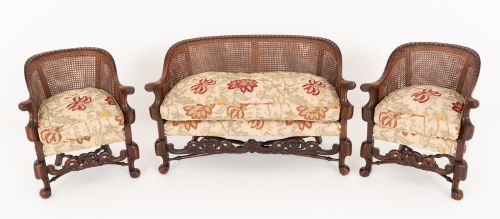
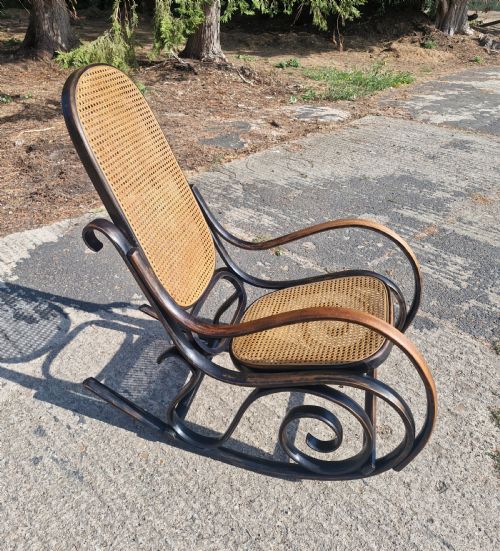
Makers constructed the primary frames of these chairs using hardwoods such as mahogany, walnut, oak, and rosewood, selected for their structural strength and capacity for carved detail. Secondary elements sometimes incorporated cane or bentwood depending on the period and regional style.
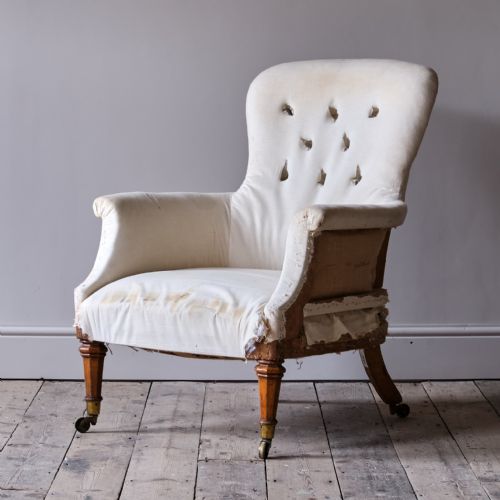
Upholstery techniques involved durable stuffing secured beneath textiles including fabric, velvet, calico, linen, and ticking, often complemented by brass castors on the feet for mobility.
Listings feature woods including mahogany, walnut, oak, and rosewood, paired with upholstery in velvet, calico, ticking, and fabric.
Distinctions in Quality
Quality rests in the crispness of the timber carving, the integrity of the frame joints, and the selection of primary hardwoods. Superior examples demonstrate balanced proportions and fluid lines in the scrolled elements without structural compromise.
The grade of the original or period-appropriate upholstery materials and the retention of maker details or specific regional characteristics further elevate individual pieces above standard production.
Howard and Sons·John Taylor and Sons
The Scroll Back Armchairs Glossary
- Bergere
- An enclosed upholstered armchair with wooden framing exposed around the sides and back. This French form often utilises cane work or tight upholstery.
- Carver
- An armchair designed to match a set of dining chairs, usually featuring open arms. These pieces traditionally stood at the head of a dining table.
- Slipper chair
- A low-seated upholstered chair designed originally for bedrooms. They lack high arms to allow easier movement for dressing.
- Library armchair
- A sturdy reading chair built for domestic studies or libraries. Examples frequently incorporate upholstered backrests and padded armrests.
- Showwood
- Exposed polished timber on an otherwise upholstered chair frame. This technique highlights the quality of the underlying walnut or mahogany.
Scroll Back Armchairs: Frequently Asked Questions
What periods do these armchairs come from?
The listings span multiple centuries, with particular concentrations in the nineteenth century during the Regency and Victorian eras. Earlier seventeenth-century and later Edwardian examples also appear.
Craftsmanship and materials shift across these periods, moving from early oak and walnut iterations to refined mahogany and rosewood designs.
How do I identify a Regency armchair?
Regency pieces often display classical influences, utilising mahogany timbers, sabre legs, and crisp linear or scroll forms. They frequently serve as library or desk chairs.
Comparing the leg configuration and timber grain helps distinguish these early nineteenth-century examples from later Victorian reproductions.
Are these chairs suitable for daily use?
Many of these sturdy hardwood chairs accommodate regular seating when the frame and internal webbing remain stable. Victorian and Edwardian examples offer substantial padding.
Evaluating the underlying frame condition ensures the piece supports daily domestic requirements safely.
What fabrics are typically found on these seats?
Upholstery materials range from velvet and button-backed textiles to simpler calico, linen, and ticking. Many pieces retain later historical fabrics or modern replacement covers.
The choice of textile often reflects the original domestic setting, whether an English country house or a formal French salon.