




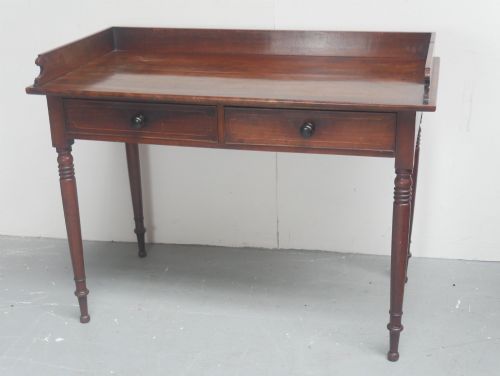
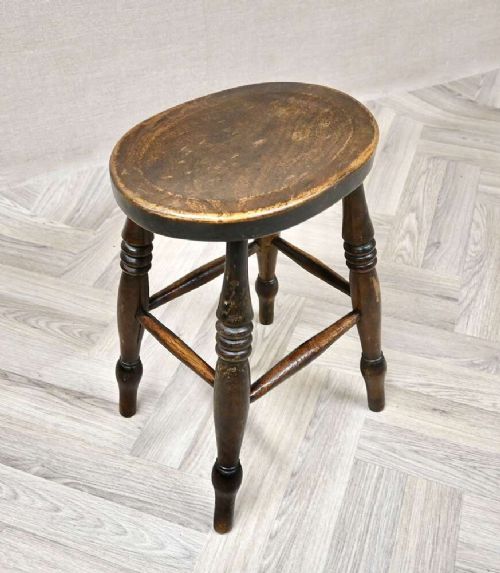
Dark Wood Turned Legs
Dark wood turned legs anchor sturdy tables, seating and storage pieces from centuries past, offering rich timber tones and solid structural character.
Dark Wood Turned Legs
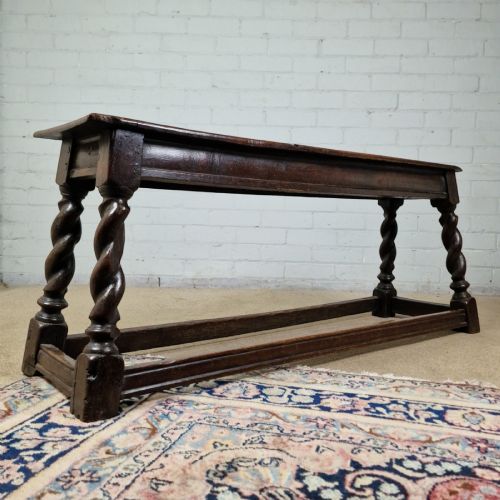
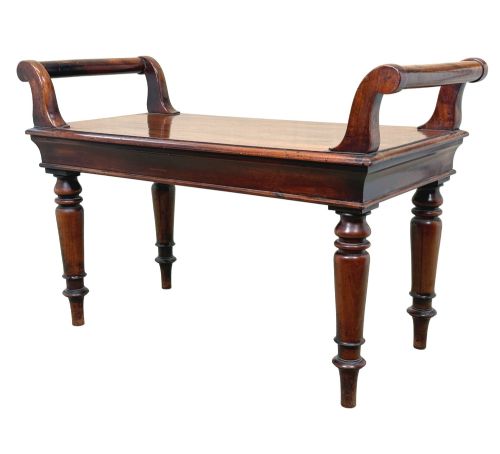
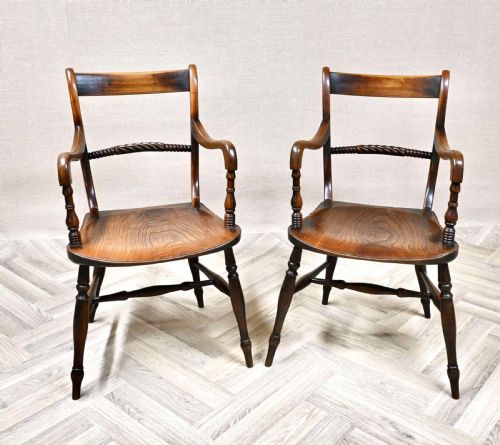
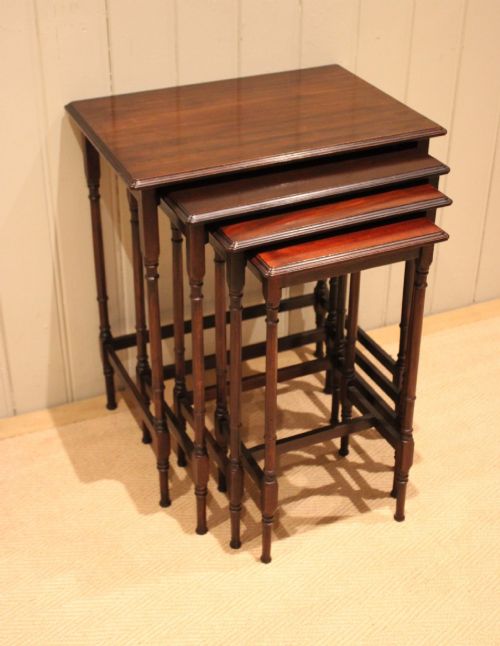
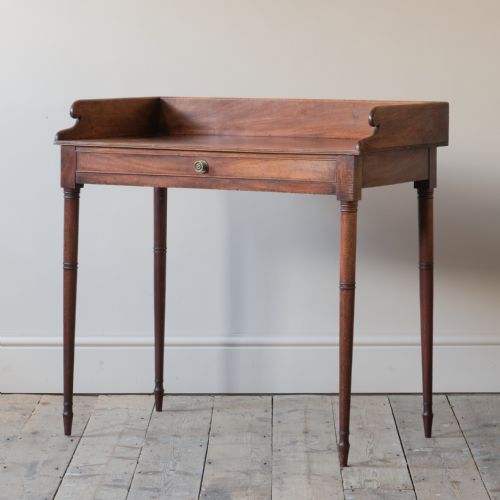
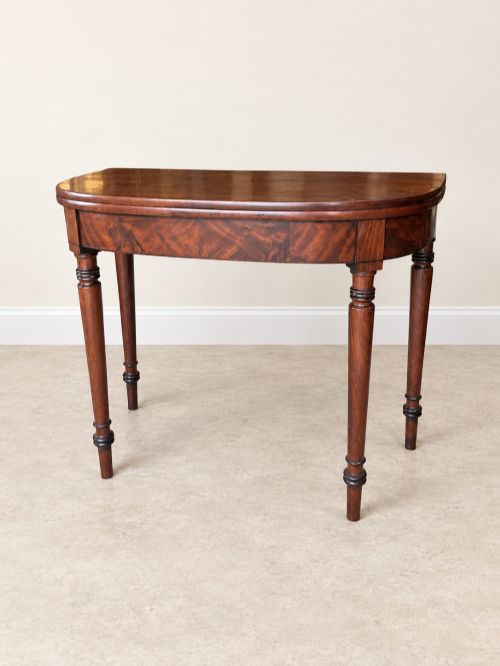
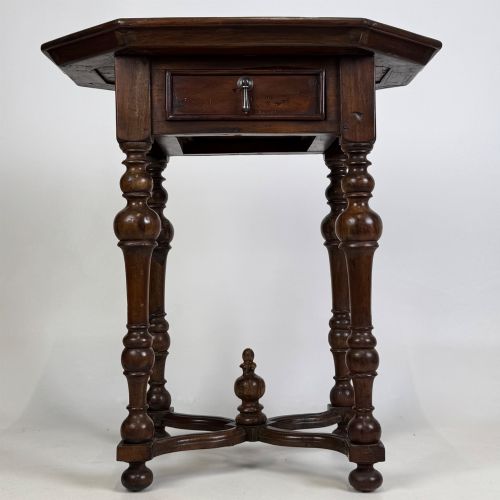
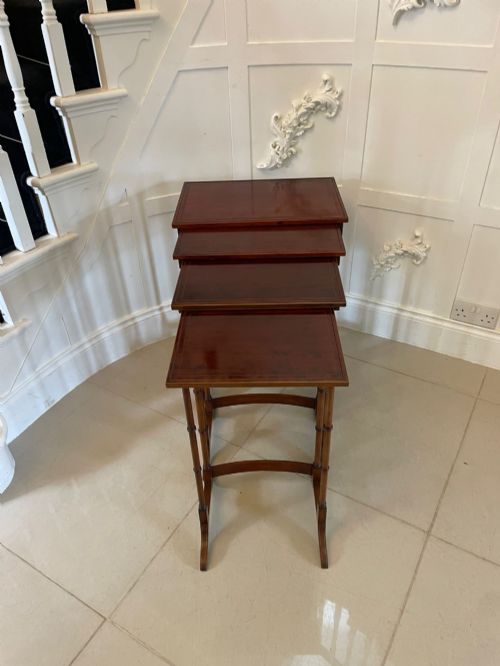
When you search for dark wood turned legs, you encounter structural supports shaped on a lathe, fitted to timber furniture spanning the eighteenth, nineteenth and early twentieth centuries. These turned supports appear predominantly on side tables, dining tables, nests of tables, occasional pieces and seating like Windsor armchairs and dining chairs.
The pieces on this page originate from diverse design movements including Georgian, Regency, Victorian, Edwardian and Jacobean Revival periods. You will frequently meet utilitarian farmhouse items alongside formal mahogany writing desks, rosewood tilt-top tables and oak chests on stands.
Makers utilised these circular, faceted or spool-shaped uprights to add visual rhythm and stability to domestic furniture. Whether supporting a heavy folding top or carrying the weight of a heavy oak sideboard, the shaped leg defines the lower profile of each piece.
How they were made
Cabinet makers and joiners worked with solid hardwoods, turning timber on a lathe to achieve consistent vertical profiles. The material palette relies heavily on mahogany, oak, elm, walnut, rosewood and yew, supplemented by secondary timbers such as beech and sycamore.
Individual components were joined using traditional woodworking methods, incorporating mortise and tenon joints for frames and sturdy underframing for tables and chairs. Surface finishes depended on the timber species, ranging from polished mahogany surfaces to waxed oak and natural elm grains.
Pubs and taverns once relied on sturdy sycamore stools with turned legs to withstand rowdy patrons.
What varies in quality
Quality rests upon the selection of timber and the precision of the lathe work. Dense hardwoods with rich, natural grain patterns command attention, while crisp, cleanly cut turnings demonstrate superior joinery skill compared to soft or indistinct shaping.
The integrity of the original construction dictates overall value. Pieces retaining their original timber supports, patination and hardware without excessive replacement parts represent the higher tier of surviving examples.
The Dark Wood Turned Legs Glossary
- Turned legs
- Structural supports shaped on a lathe to create cylindrical, swelling or faceted profiles. They provide both stability and decorative detail to tables and chairs.
- Tilt-top table
- A table featuring a mechanism that allows the wooden top to pivot vertically when not in use. This clever space-saving design became popular in dining and parlour rooms.
- Windsor chair
- A traditional wooden seat construction featuring turned legs and spindles socketed into a solid shaped wooden seat. Country versions frequently utilise elm, yew and oak.
- Quartetto nest
- A graduated set of four small tables designed to slide neatly beneath one another. Edwardian makers produced fine examples in mahogany.
- Patina
- The surface sheen and deep coloration developed by antique wood over decades of handling, light exposure and waxing. It indicates genuine age and use.
Dark Wood Turned Legs: Frequently Asked Questions
What periods do these pieces come from?
The inventory spans the eighteenth, nineteenth and early twentieth centuries, covering periods like Georgian, Regency, Victorian and Edwardian.
Craftsmen from each era applied distinct aesthetic preferences to the shaping of timber supports and overall furniture design.
Which woods are most common?
Mahogany and oak appear most frequently, accompanied by elm, rosewood, yew and walnut. Secondary woods like beech and sycamore are also present in structural elements.
Each timber brings a distinct weight, grain pattern and natural colour to the finished item.
How do I identify a turned leg?
Turned legs are cylindrical supports shaped on a woodworking lathe, resulting in symmetrical rings, curves, reeds or spirals. They elevate tables, cabinets and chairs off the floor.
This shaping method contrasts with straight square legs or cast metal supports.
How do I care for antique wood?
Keep wooden furniture away from direct heat sources and strong sunlight to prevent the timber from drying out or splitting. Dust regularly with a soft cloth and apply quality beeswax periodically.
Avoid using silicone-based polishes that can damage the historical surface finish.