




Inlaid Rosewood Armchair
An inlaid rosewood armchair brings warmth and refined detail to a room, drawing the eye with contrasting timbers and classical motifs.
Inlaid Rosewood Armchair
When you search for an inlaid rosewood armchair, you encounter seating fashioned from rich tropical timber, frequently enhanced with delicate contrasting stringing or marquetry. The pieces available span periods from the Regency era through the Victorian and Edwardian decades up to the early twentieth century.
The form varies considerably depending on the date of manufacture. You find sturdy library armchairs from the Regency and George IV periods alongside lighter Edwardian bedroom chairs, salon armchairs, and occasional seating.
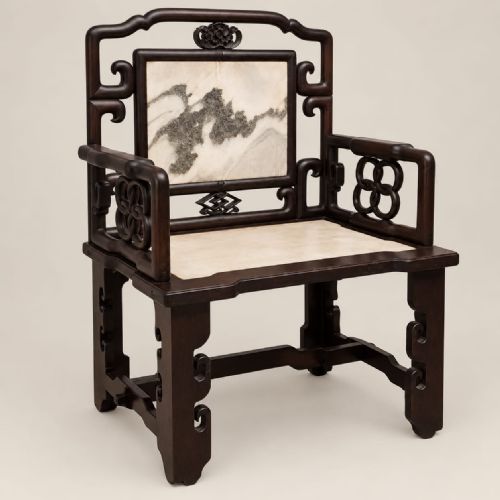
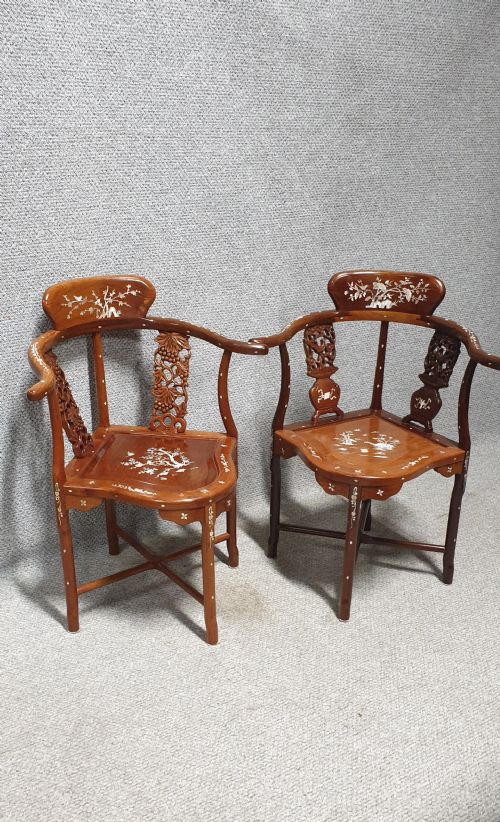
Alongside British workshop production, the listings include Chinese hardwood and export pieces incorporating marble, mother of pearl, and brass details. These diverse geographical origins reflect global trade and varied aesthetic preferences across the nineteenth and twentieth centuries.
How they were made
Cabinet makers utilised dense rosewood, sometimes simulated on alternative timbers, as the primary structural frame for these chairs. The timber provides a deep, variegated grain that takes a high polish.
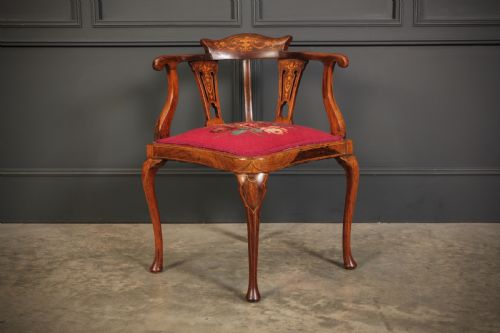
Decoration relies on precision inlay work using contrasting materials such as brass stringing, ivory, silver, and lighter woods. Artisans also incorporated marquetry panels and parcel gilt highlights to accentuate the structural lines of the chair.
Upholstered elements employ traditional stuffing secured within frames finished in velvet, leather, or decorative fabric. Open armchairs and tub chairs display exposed woodwork carved or turned by hand.
Object forms span library armchairs, tub chairs, bedroom chairs, and complete salon suites.
What varies in quality
The precision and complexity of the inlay work dictate the standard of the piece. Fine examples demonstrate tight joints in the contrasting stringing and crisp execution in floral or geometric marquetry panels.
The choice of primary timber and the depth of the rosewood grain also distinguish workshop output. Superior library chairs utilise substantial, heavy hardwood frames that remain rigid and stable over generations.
Design sophistication separates standard production from exceptional pieces. Chairs bearing attribution to prominent cabinet makers or featuring elaborate brass inlays and carved parcel gilt details represent the upper tier of the range.
James Shoolbred·Gillows
The Inlaid Rosewood Armchair Glossary
- Marquetry
- Decorative veneer applied to furniture in geometrical patterns or pictorial scenes using various woods and shell. This technique creates elaborate surface designs on the backsplats and rails of salon chairs.
- Bergere
- An enclosed upholstered armchair with wooden frame members exposed around the sides and back. These library chairs often feature cane panels or tight leather upholstery.
- Stringing
- Thin strips of contrasting wood or brass inlaid into channels cut into the surface of the furniture. It forms delicate borders around panels and framing elements.
- Parcel gilt
- The practice of gilding only specific portions of a wooden object, such as carved details or highlights. It adds contrast against the dark rosewood grain.
- Simulated rosewood
- Common native timber painted or stained to imitate the appearance of genuine rosewood. This method offered the desirable dark aesthetic at a lower cost.
Inlaid Rosewood Armchair: Frequently Asked Questions
How do I identify a Regency armchair?
Regency armchairs typically exhibit classical architectural lines, heavy rosewood frames, and precise brass inlays following geometric paths. They often originate from the early nineteenth century and possess a solid, architectural presence.
Makers from this period frequently employed simulated rosewood alongside genuine timber, pairing the dark finish with brass stringing and leather upholstery for library settings.
Where were Edwardian salon chairs placed?
Edwardian salon chairs and occasional chairs served as flexible seating within formal reception rooms and private bedrooms. Their lighter frames allowed guests to move them easily around conversational groups.
These later pieces often feature delicate marquetry inlay and upholstered pads, reflecting the refined domestic interiors of the early twentieth century.
How should I care for rosewood furniture?
Rosewood benefits from stable indoor humidity away from direct sunlight and heat sources. Regular dusting with a soft, dry cloth preserves the polished finish of the timber.
Avoid liquid polishes containing silicone, as they can build up on the antique surface and attract dust over time.