


Edwardian Carved Rosewood Chair
An edwardian carved rosewood chair brings sophisticated timber grain and delicate inlay into a room, offering both historic character and practical seating.
Edwardian Carved Rosewood Chair
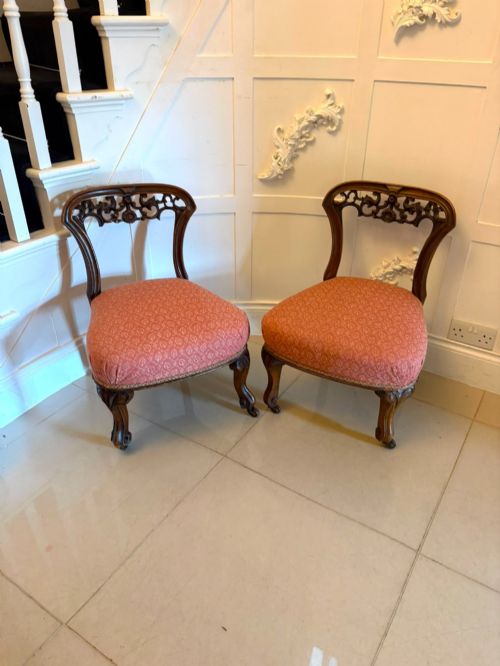
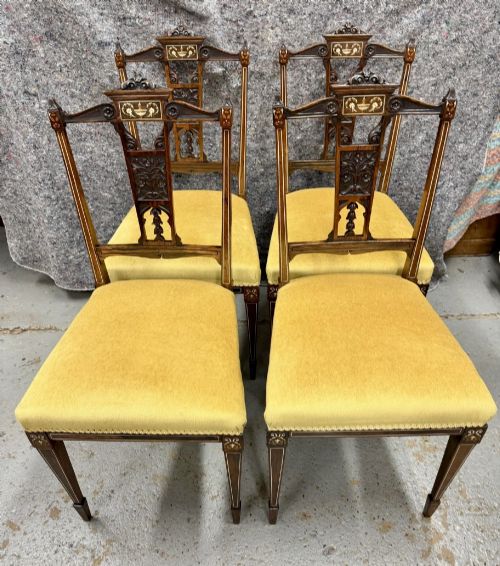
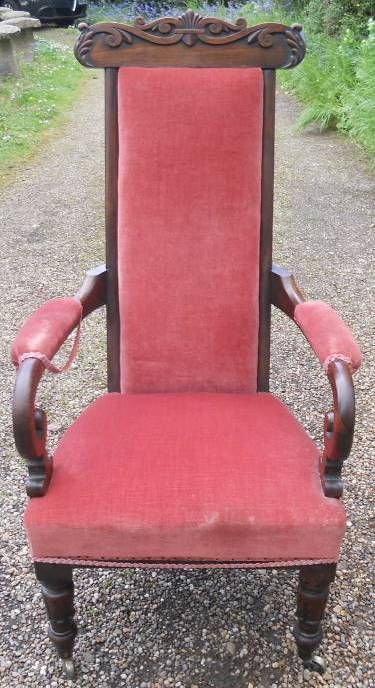
When you search for an edwardian carved rosewood chair, you are examining seating produced during the Edwardian period as well as earlier Victorian and nineteenth-century eras. The pieces appearing on this page span several decades, featuring side chairs, armchairs, dining chairs, and occasional seating.
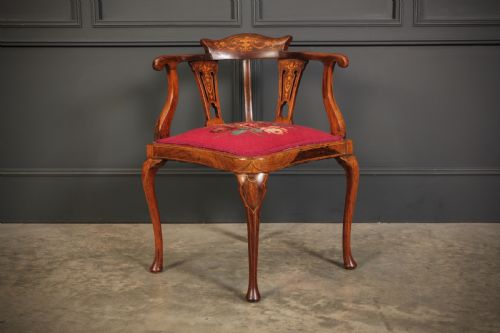
The version you are most likely to meet on this page combines a rich rosewood frame with subtle inlay work or carved detail. Alongside Edwardian examples, the selection includes Victorian balloon-back chairs, early Victorian rosewood framed dining chairs with removable backs, and occasional corner chairs.
Makers of these pieces utilised dense tropical hardwoods alongside mahogany, walnut, satinwood, and boxwood stringing. Upholstered varieties and examples with brass fittings appear frequently among the listings, showing the diverse domestic seating requirements of the nineteenth and early twentieth centuries.
Construction and materials
Makers constructed these chairs primarily using solid rosewood, often paired with secondary timbers like mahogany and walnut for structural support. Artisans shaped the dense grain using traditional joinery methods, ensuring the frames could withstand daily use in parlours, bedrooms, and dining rooms.
Decoration relied heavily on contrasting wood veneers, incorporating satinwood and boxwood for delicate marquetry and inlay patterns. Craftsmen also applied detailed carving directly to the rosewood frames, particularly along the crest rails, splats, and cabriole legs.
The available seating forms include armchairs, side chairs, dining chairs, corner chairs, bedroom chairs, and piano stools.
Judging quality and execution
The standard of an edwardian carved rosewood chair rests upon the crispness of the carving and the precision of the inlaid marquetry. Better examples demonstrate clean, sharp lines in the boxwood and satinwood details, whereas simpler pieces rely solely on plain polished timber.
Structural integrity also separates the finer items from standard production, visible in the tightness of the joints and the retention of original elements like removable backs or brass fittings. The depth of the rosewood colour and the condition of the timber finish determine the visual impact of the piece.
The Edwardian Carved Rosewood Chair Glossary
- Rosewood
- A dense, heavily grained hardwood prized for its deep reddish-brown colour and dark figuring. It takes a high polish and forms the primary structural material for these chairs.
- Marquetry
- The art of applying decorative pieces of veneer to a structure to form intricate patterns. Artisans used contrasting timbers like satinwood and boxwood to create floral or geometric motifs.
- Balloon-back
- A style of chair popular during the Victorian era featuring an oval or rounded backrest that resembles the shape of a balloon. This form provides ergonomic support while presenting a graceful silhouette.
- Sheraton Revival
- A late nineteenth and early twentieth-century design movement inspired by the neoclassical furniture of George Sheraton. It is characterised by slender proportions, straight tapered legs, and refined inlay.
- Occasional chair
- A light, movable chair designed to be used in various rooms as needed rather than assigned to a permanent dining or desk position.
Edwardian Carved Rosewood Chair: Frequently Asked Questions
How were these chairs used?
Edwardian and Victorian rosewood chairs served multiple functions depending on their specific form. Dining chairs and side chairs gathered around household tables or stood against parlour walls until needed.
Armchairs, ladies chairs, and bedroom chairs provided comfortable seating for reading, resting, or dressing. Occasional chairs and corner chairs offered flexible seating arrangements for entertaining guests in drawing rooms.
How do I distinguish Edwardian from Victorian pieces?
Edwardian seating generally displays lighter proportions, brighter wood tones, and refined neoclassical revival motifs such as delicate satinwood inlay. The construction tends toward airier frames and understated elegance.
Victorian pieces often exhibit heavier construction, darker finishes, and more robust carving styles like balloon-backs or rococo revival curves. Examining the upholstery style, framing timber, and decorative techniques helps clarify the period of production.
Are these chairs suitable for daily use?
Most of these chairs are structurally sound enough for regular domestic use provided they are treated with care. Solid rosewood frames offer considerable strength, though antique joints benefit from avoiding excessive weight or rough handling.
Upholstered components and cushions may require maintenance or reupholstery to match modern comfort preferences while preserving the historic wooden frame. Placing them away from direct sunlight and extreme humidity protects the polish and veneer.
What is satinwood inlay?
Satinwood inlay is a decorative technique where contrasting yellowish timber is embedded into recesses carved into the darker rosewood surface. This method creates striking linear borders, floral patterns, or classical motifs.
The technique highlights the skill of the cabinetmaker and adds visual brightness to the deep reddish tones of the primary rosewood structure.