


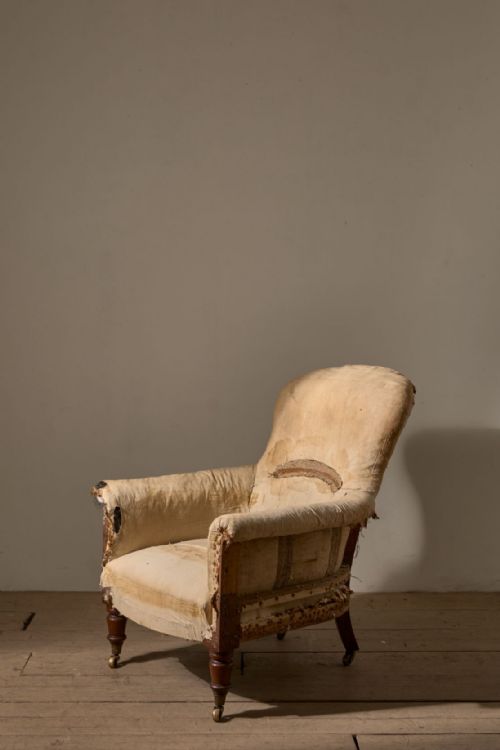
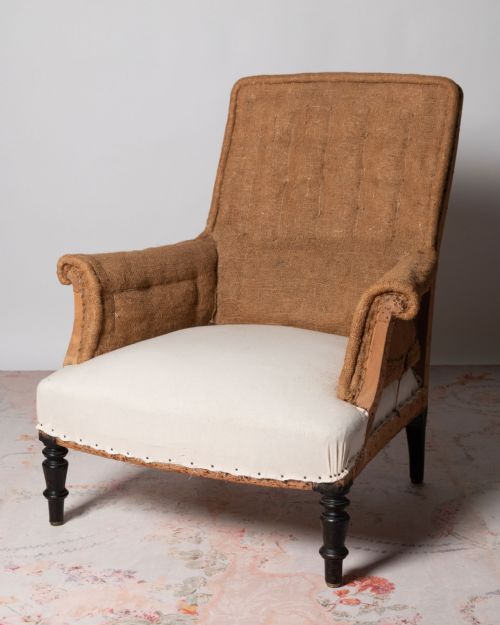
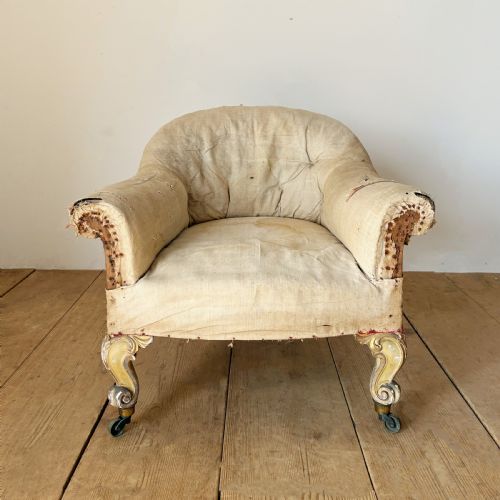
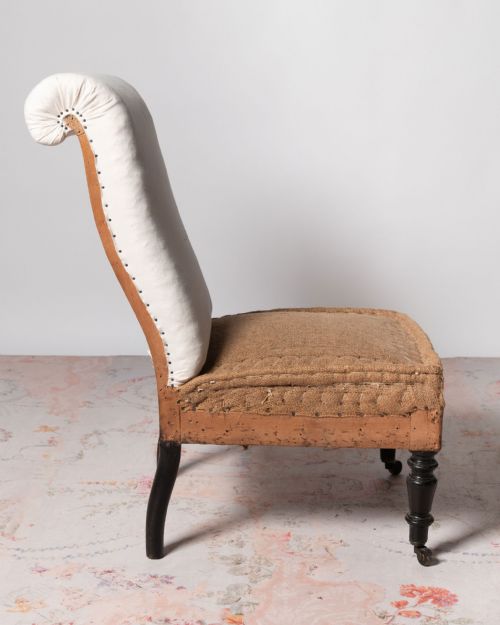
Deconstructed Victorian Chair
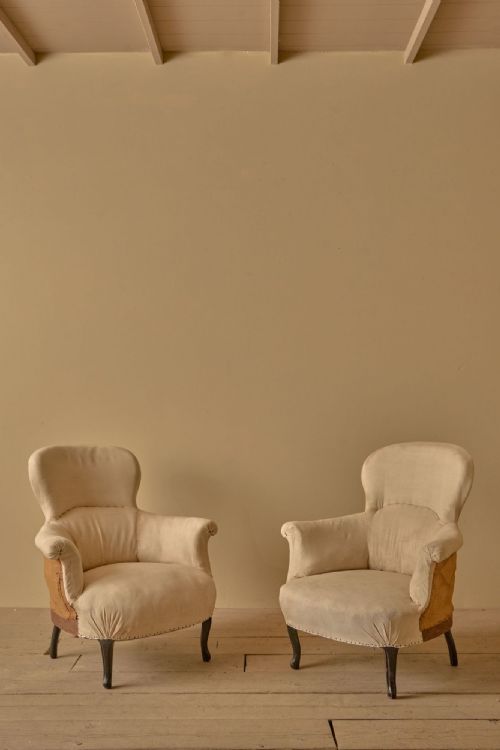
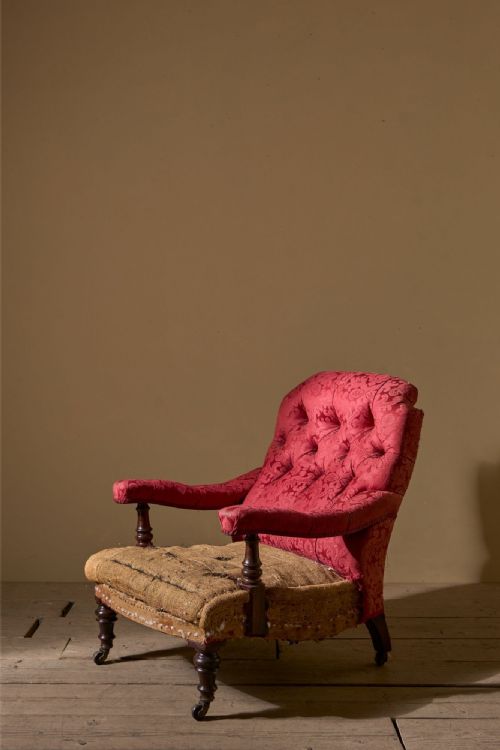
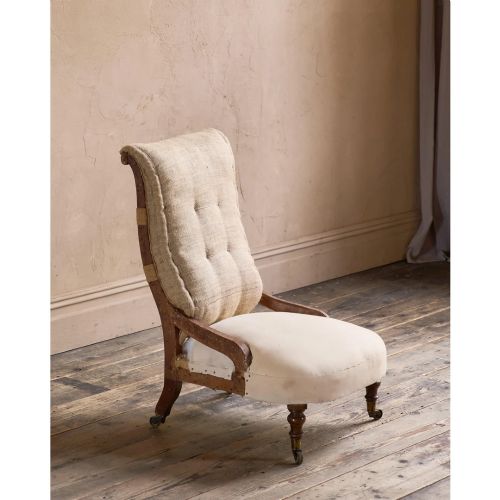
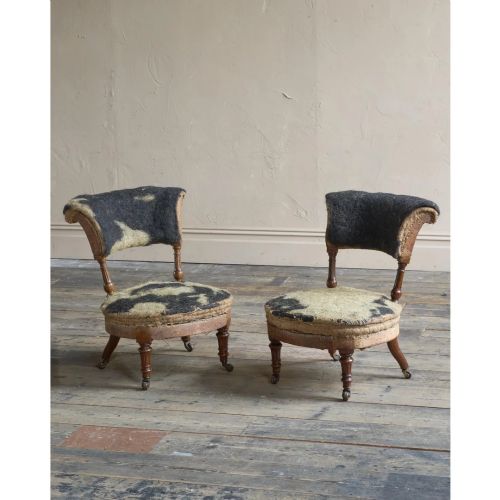
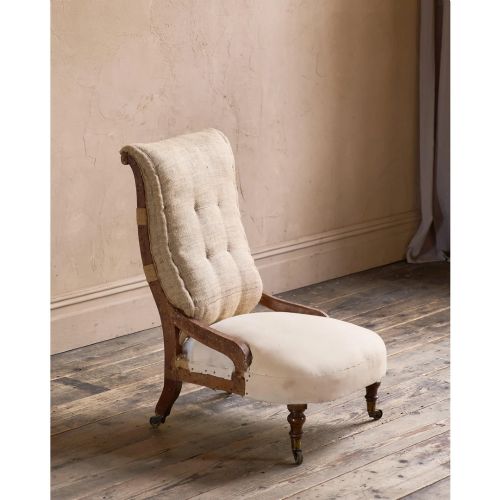
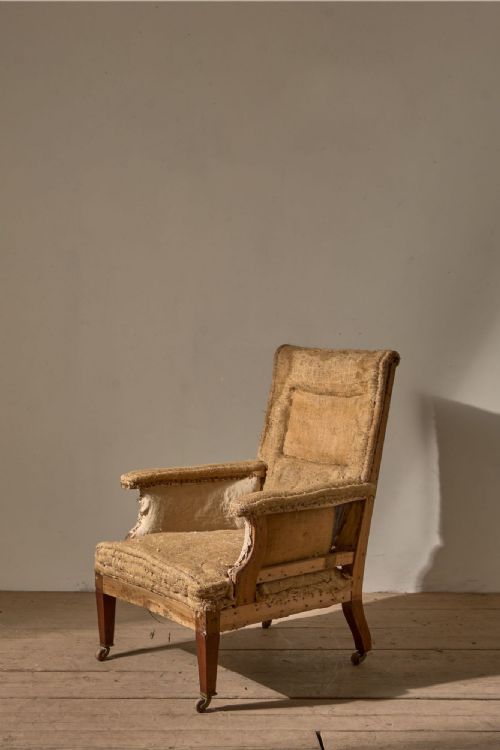
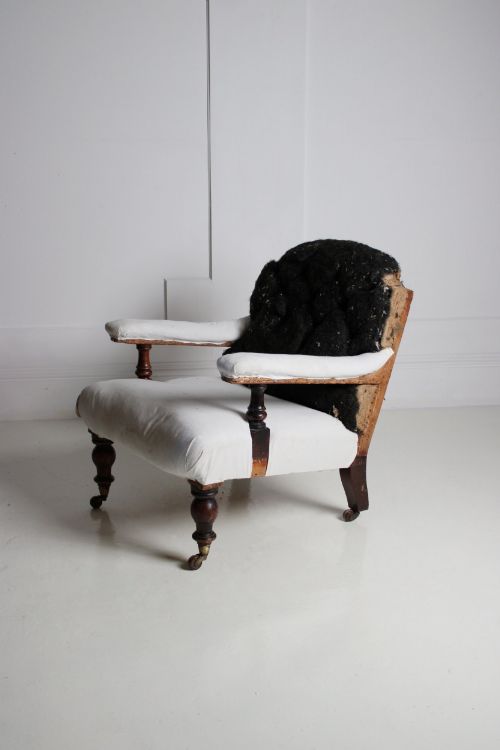
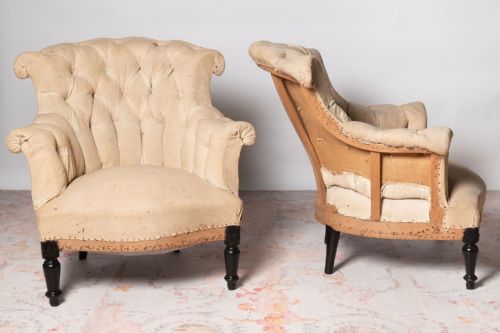
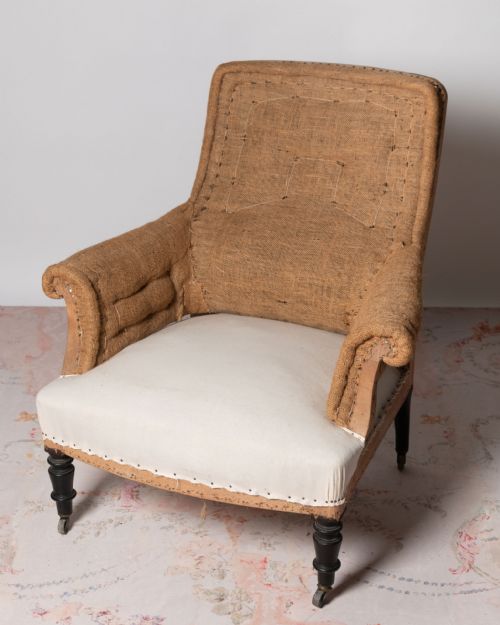
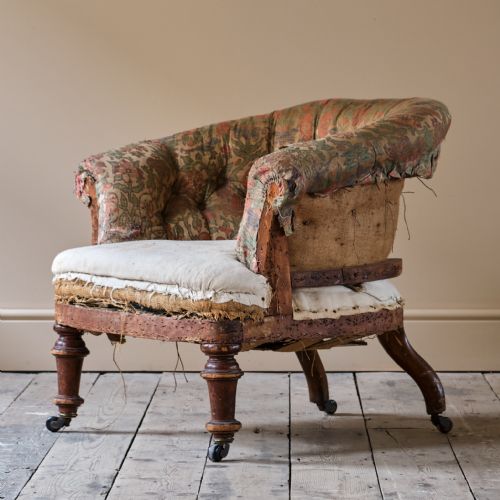
These deconstructed Victorian chairs strip away generations of heavy upholstery to expose the honest timber frames and supportive interior webbing.
Deconstructed Victorian Chair
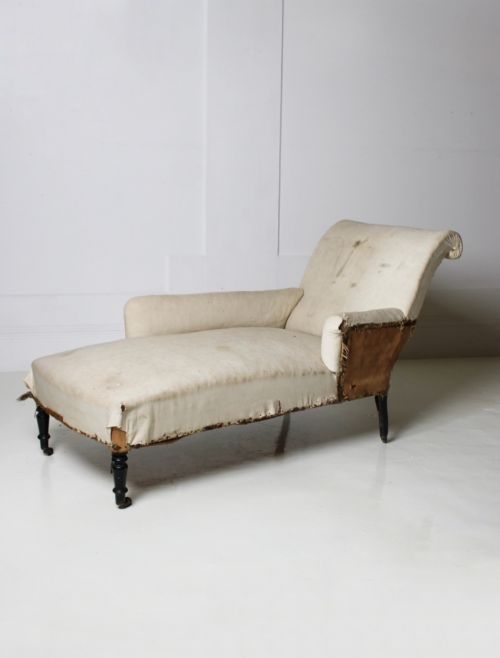
A deconstructed Victorian chair exposes the raw construction of nineteenth century seating, presenting the underlying hessian, calico, and brass tacks as a finished aesthetic.
Buyers searching for a deconstructed Victorian chair will encounter armchairs, nursing chairs, slipper chairs, and chaise longues originating from English country houses and French workshops.
The aesthetic embraces the visible signs of age on wooden frames, celebrating the structural bones rather than hiding them beneath traditional fabric layers.
How they were made
Makers built the foundational frames using hardwoods such as mahogany, walnut, beech, and timber, shaping them into tub backs, wingbacks, and spoon backs.
Traditional upholstery techniques involved securing coarse hessian and calico directly to the frame with brass tacks, creating internal support before final padding.
Deconstructed Victorian Chair Retail Price Guide 2026
Typical asking prices for deconstructed victorian chair among the pieces listed under this phrase on Sellingantiques today, from the lower quarter to the upper quarter. They describe what is for sale here now, not the wider market.
Brass tacks hold the history of the room in their grip.
What varies in quality
Quality rests in the integrity of the underlying timber frame and the precision of the joinery, whether dealing with a simple country house armchair or a sophisticated library chair.
The character of the exposed webbing and the neatness of the tack work distinguish finer examples from more utilitarian seating.
Howard and Sons·Thomas Sopwith·Maple and Co
The Deconstructed Victorian Chair Glossary
- Hessian
- A dense woven fabric typically made from jute fibres, used as a sturdy foundation layer for internal upholstery. It provides the primary support surface before top covers are applied.
- Calico
- A plain-woven cotton fabric employed in traditional upholstery to cover stuffing materials and create a smooth base layer. It sits beneath the final decorative textile.
- Spoon back
- A padded chair back shaped like the bowl of a spoon, designed to fit the contours of the human spine. This form emerged during the nineteenth century.
- Slipper chair
- A low-seated bedroom chair traditionally used by ladies while putting on shoes. The low profile made these seats particularly comfortable for dressing rooms.
Deconstructed Victorian Chair: Frequently Asked Questions
What is a deconstructed chair?
A deconstructed chair is a traditional nineteenth century seating piece stripped of its top fabric to reveal the inner hessian, webbing, and brass tacks. This approach exposes the craftsmanship of the original frame and internal build.
Buyers choose these pieces for their raw, textural appearance, which bridges historic framing and contemporary interior design without losing period character.
How were nineteenth century frames built?
Nineteenth century chair frames were constructed from solid hardwoods such as mahogany, walnut, beech, and timber. Joiners used traditional techniques to ensure the structural strength required for deep-seated armchairs and library chairs.
The exposed wood often shows reeding, scroll backs, or carved details that reflect the specific style of the period, from Regency influences to the Aesthetic Movement.
Where did these chairs originate?
The pieces originate primarily from English country houses and continental workshops, encompassing styles such as French Napoleon III designs and English traditional seating. Armchairs, nursing chairs, and daybeds were common forms in these settings.
Each region brought distinct proportions and framing choices to the furniture, creating variety across the available forms.
How do I live with exposed upholstery?
Living with exposed hessian and calico involves appreciating the tactile qualities of coarse woven jute and visible brass tacks. These materials offer a neutral, textured palette that suits both traditional and modern rooms.
Regular gentle dusting helps maintain the fabric layers without disturbing the structural tacks and webbing that hold the upholstery together.