
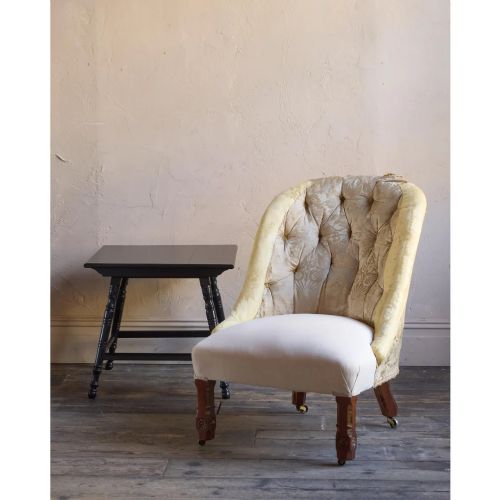
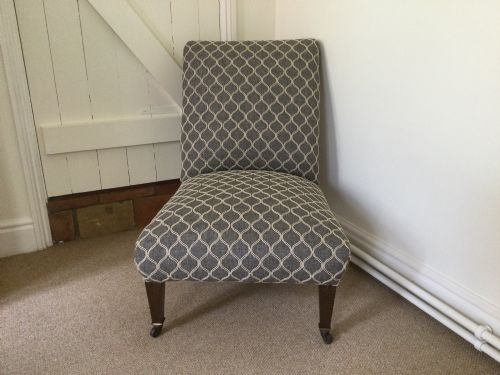


Nineteenth Century Nursing Chair
A nineteenth century nursing chair brings low, comfortable seating to a bedroom or parlour, offering generous proportions and rich upholstery.
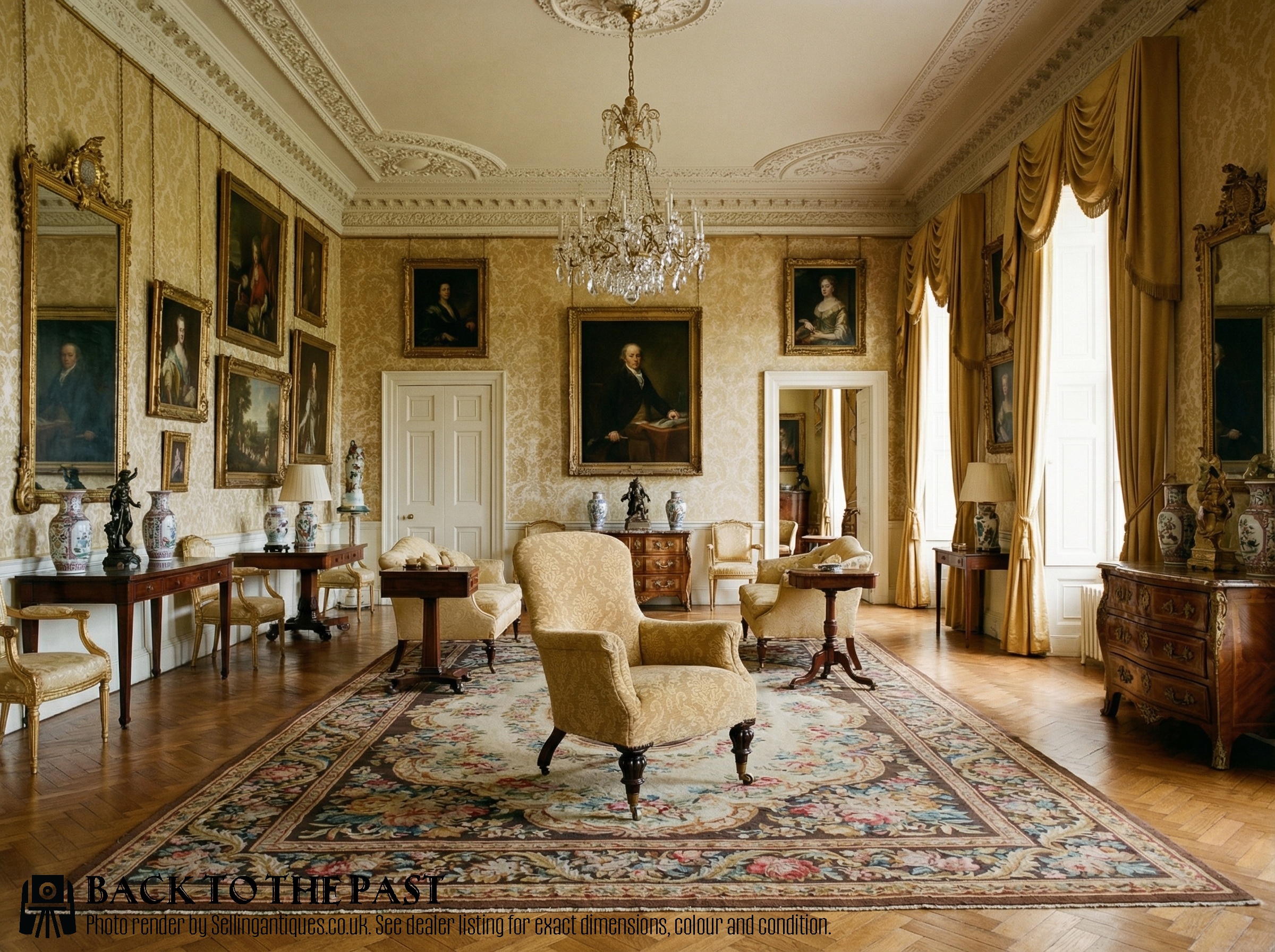
Nineteenth Century Nursing Chair
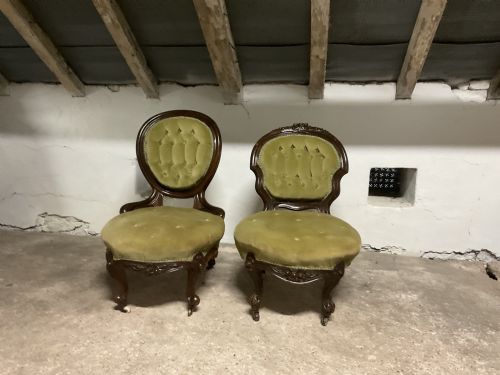
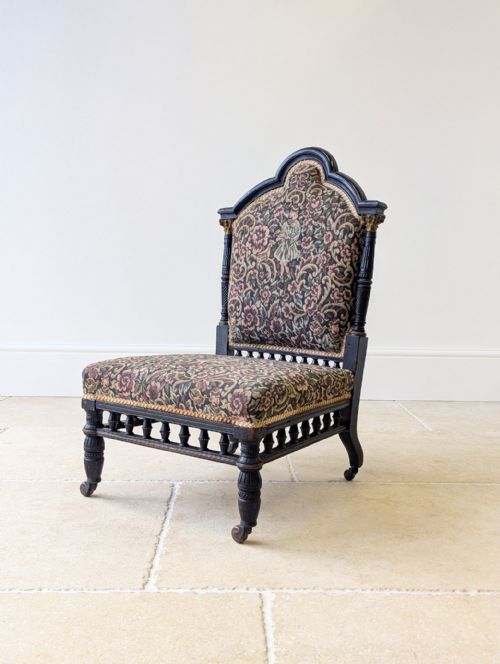
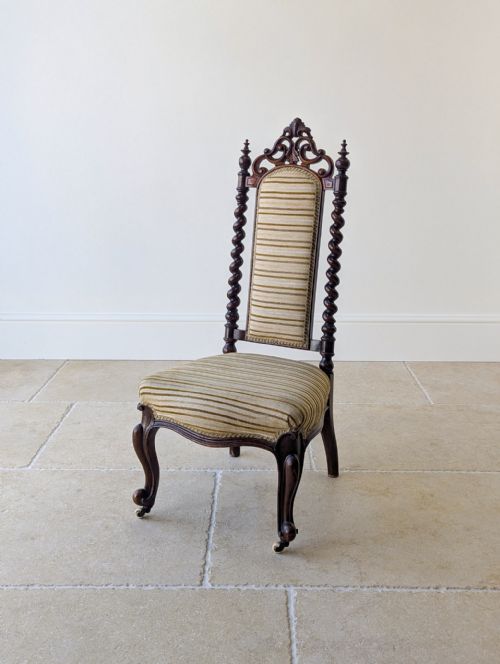
A nineteenth century nursing chair is a low-seated armchair designed primarily for comfort in bedrooms and parlours during the Victorian era. The selection includes walnut and mahogany frames, alongside ebonised wood and various upholstered finishes in fabric, velvet, and rexine.
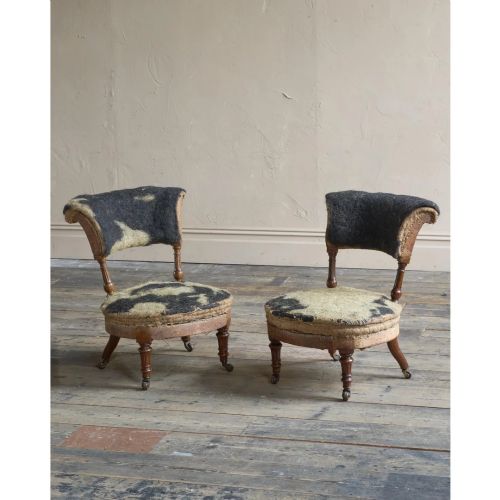
Buyers frequently encounter Victorian examples alongside pieces described as nineteenth century French or English. The forms vary from low salon chairs and slipper chairs to spoon back armchairs and high-back parlour chairs.
Most pieces date from the Victorian period around eighteen fifty up to eighteen eighty. These items often feature ceramic castors and brass details, reflecting the domestic interior styles of the nineteenth century.
How they were made
Frames are constructed from solid timbers such as walnut and mahogany, often shaped with carved showwood or ebonised surfaces. Cabinet makers utilised these durable woods to support deep seats and low profiles suitable for bedroom use.
Upholstery techniques involved button backs, fabric, velvet, and rexine coverings. Makers added brass and ceramic elements, including castors, to complete the functional design of each chair.
Some nineteenth century slipper chairs arrived with exceptionally deep seats, built entirely for lounging in private quarters.
What varies in quality
The refinement of the timber carving and the sophistication of the frame shape distinguish finer pieces from simpler domestic seating. Walnut and ebonised frames with detailed showwood carving indicate higher workshops.
The integrity of the original proportions and the quality of the surviving materials, from velvet upholstery to turned wooden legs with ceramic castors, dictate the standing of an individual chair.
Howard and Sons
The Nineteenth Century Nursing Chair Glossary
- Slipper chair
- A low-seated upholstered bedroom chair designed without arms to allow ease of movement. These pieces sit close to the floor and date frequently to the nineteenth century.
- Spoon back
- A padded chair back shaped like the bowl of a spoon to fit the human form. This design appears commonly on Victorian walnut and mahogany armchairs.
- Ebonised wood
- Timber stained or painted black to imitate ebony. This technique was popular during the Aesthetic Movement in the nineteenth century.
- Showwood
- Polished wooden framing left exposed around the upholstered sections of a chair. It highlights the grain of walnut or mahogany.
Nineteenth Century Nursing Chair: Frequently Asked Questions
What is a nineteenth century nursing chair?
A nineteenth century nursing chair is a low-seated armchair built during the Victorian period for use in bedrooms and sitting rooms. These chairs feature low profiles to make sitting comfortable.
They appear in various styles including Aesthetic Movement and French designs, utilising woods like walnut, mahogany, and ebonised timber.
How do I identify a Victorian nursing chair?
Victorian nursing chairs are identified by their low seats, turned wooden legs, and period upholstery such as button back velvet or fabric. Many incorporate brass and ceramic castors.
Evidence points to dates around eighteen fifty to eighteen eighty, with common forms including spoon backs and slipper chairs.
Where were these chairs used?
These chairs were primarily placed in bedrooms, dressing rooms, and parlours for domestic comfort. Their low height made them suitable for private quarters.
They also served as fireside chairs or salon seating, matching the interior decorative schemes of nineteenth century homes.
What woods were used for the frames?
Cabinet makers used solid hardwoods such as walnut and mahogany for the structural frames. Ebonised wood also appears on pieces from the Aesthetic Movement.
Selected frames feature carved showwood details that display the natural grain of the timber.