


Pair Victorian Slipper Chairs
Pair Victorian slipper chairs are low-slung nineteenth-century seats designed for the bedroom, offering collectors a compact footprint and distinctive period upholstery.
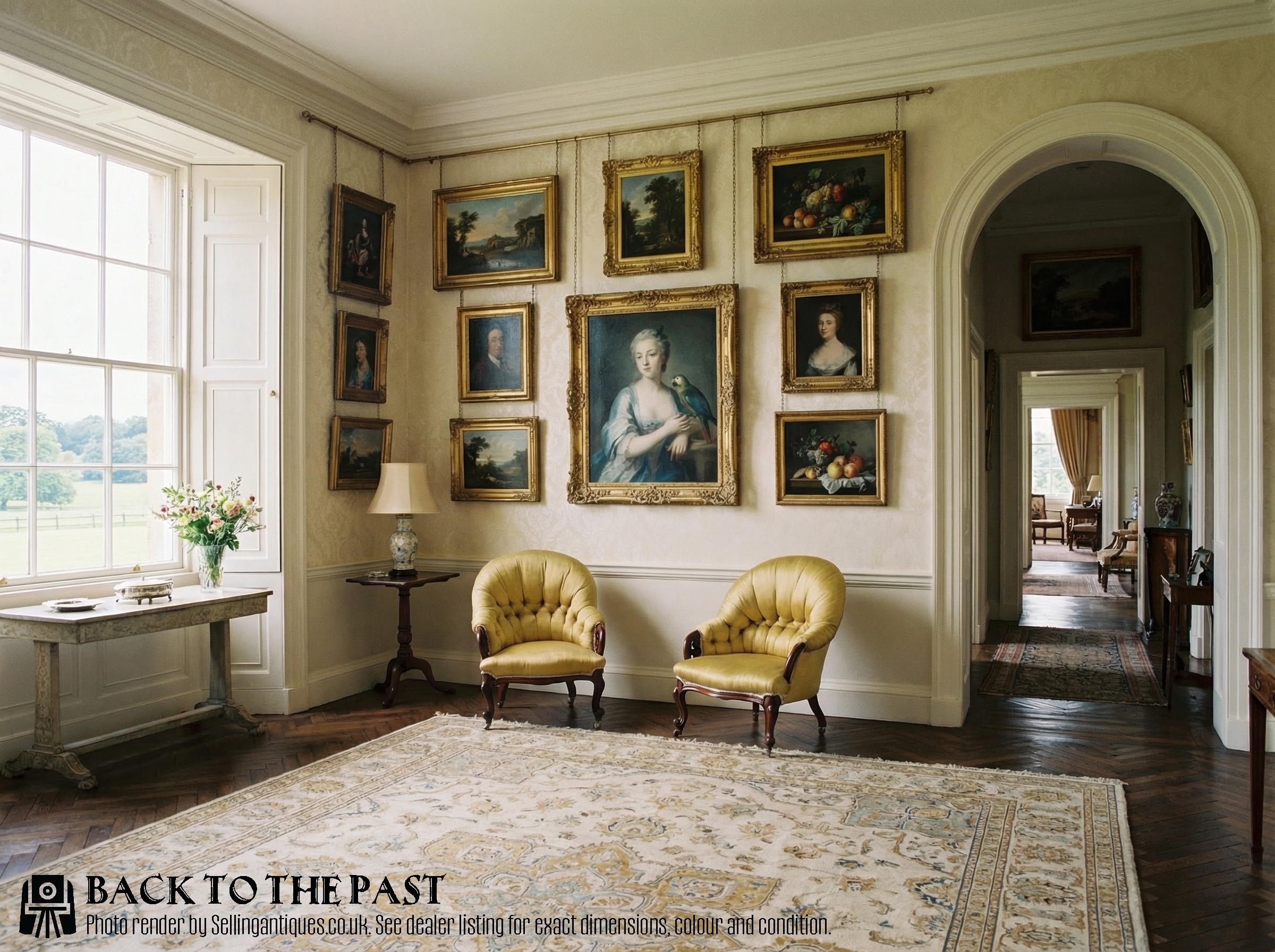
Pair Victorian Slipper Chairs
When you search for pair Victorian slipper chairs, you encounter low-seated bedroom chairs alongside nursing and salon variants from the nineteenth century. These pieces typically sit close to the floor without arms, designed originally to assist with dressing in the chamber or boudoir.
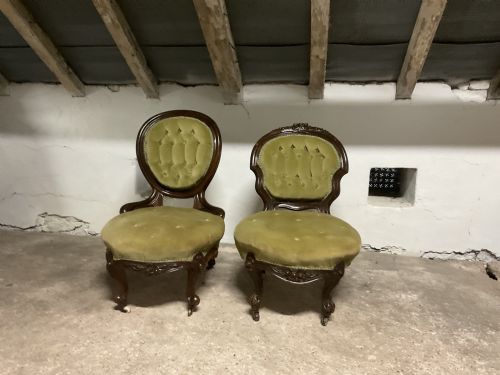
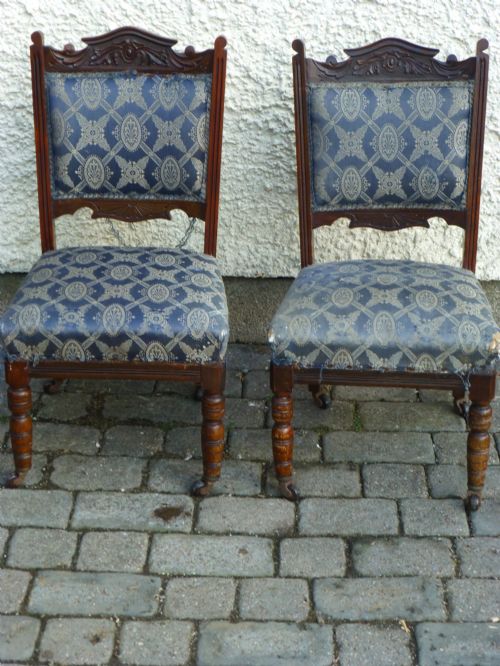
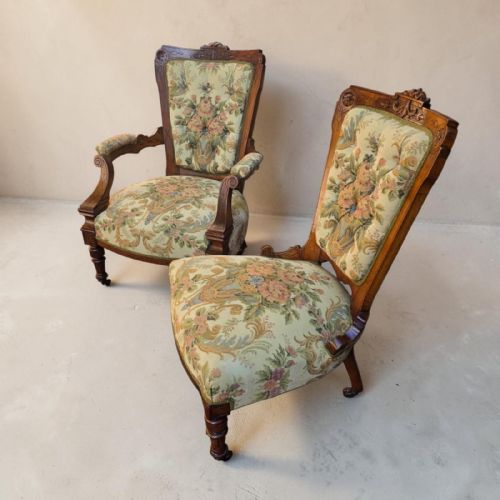
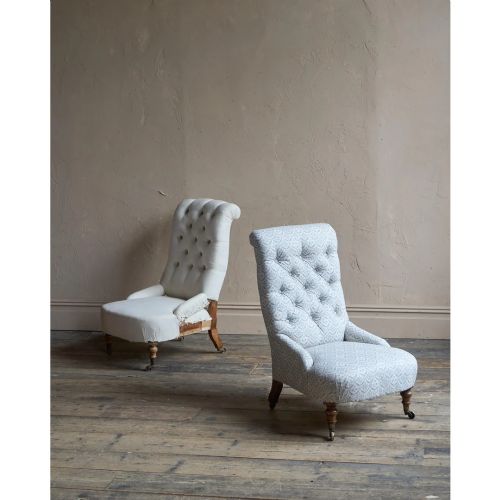
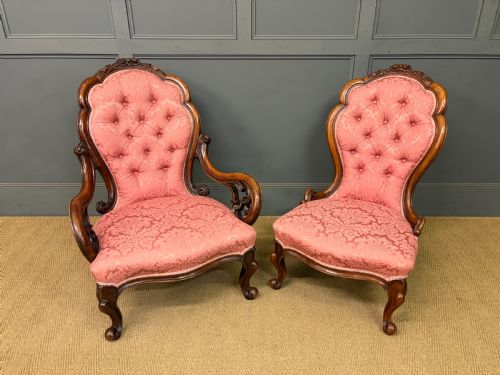
The versions most frequently met on this page include walnut and mahogany frames finished with period upholstery, button backs, or fresh fabric. Many examples feature turned wooden legs mounted on brass castors for ease of movement across carpeted chambers.
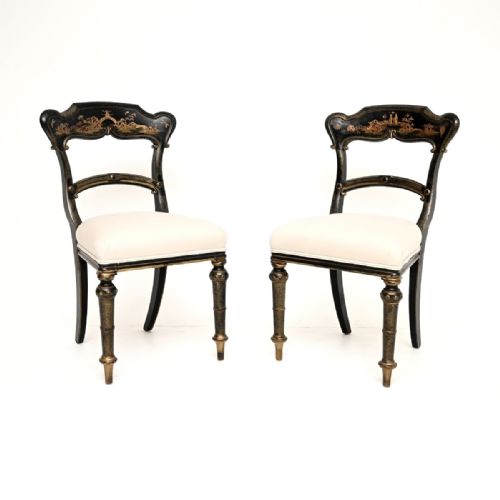
Makers and craftsmen of the period also produced these low-slung seats in ebonised finishes, papier-mâché, and carved gilt wood. While some listings specify slipper chairs directly, others appear under the broader headings of nursing chairs, bedroom chairs, and low salon seats.
How they were made
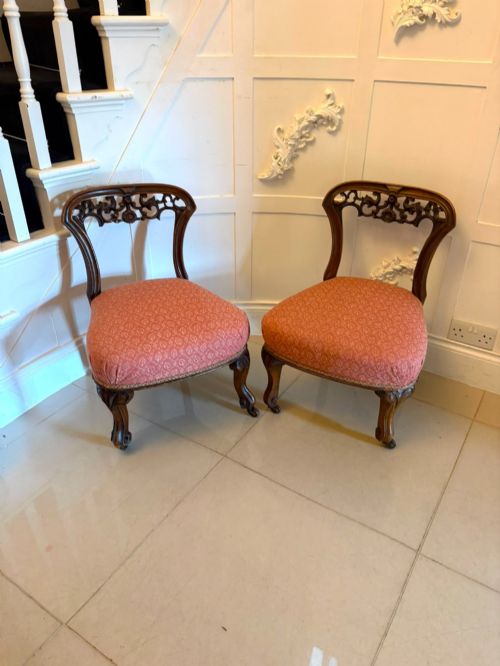
Frames rely predominantly on native and imported hardwoods like mahogany, walnut, and oak, shaped through traditional joinery and steam-bending for curved components. Wood carvers embellished the show-wood frames with foliate motifs, bobbin turnings, or Rococo revival scrolls, while papier-mâché foundations received black lacquer finishes.
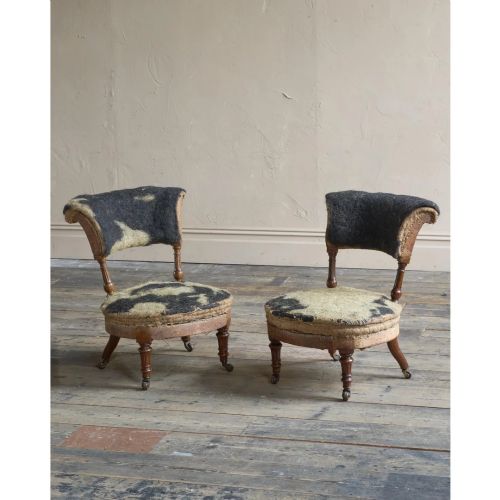
Upholstery techniques form a critical part of the construction, utilising coil springs, horsehair stuffing, and deep buttoning secured through heavy webbing. Brass castors are frequently fitted to the base of the front legs to allow smooth repositioning across nineteenth-century drawing rooms and bedrooms.
Listings feature nineteenth-century frames constructed from walnut, mahogany, oak, and rosewood, alongside fabric, velvet, brass, and ceramic elements.
What varies in quality
The integrity of the underlying hardwood frame dictates the longevity and substance of each piece, distinguishing solid carved walnut or mahogany from lesser structural timbers. Crispness in the hand-carved detail and the original retention of structural rigidity without joint wobble separate finer workshop outputs from standard commercial production.
Upholstery specification and execution determine the visual success of the pair, particularly whether the proportions respect the low, diminutive stature typical of the form. The quality of the timber grain, the retention of original castors, and the precision of the frame joinery elevate certain examples above standard domestic seating.
Howard and Sons·Jennens and Bettridge
The Pair Victorian Slipper Chairs Glossary
- Slipper chair
- A low-framed upholstered seat without arms, originally designed for ladies' bedrooms to facilitate dressing.
- Nursing chair
- A low-seated nineteenth-century chair intended for comfortable infant feeding, sharing a similar compact silhouette with slipper chairs.
- Button back
- An upholstery style where depressions are formed in the padding by pulling buttons deep into the stuffing in a diamond pattern.
- Castor
- A small wheel mounted on a swivel attached to the base of furniture legs, allowing smooth rolling across carpets and floors.
- Show-wood
- The exposed polished timber portions of a chair frame that remain visible around the upholstered sections.
Pair Victorian Slipper Chairs: Frequently Asked Questions
What is a slipper chair used for?
Slipper chairs were traditionally used in nineteenth-century bedrooms and dressing rooms for sitting down to put on shoes and stockings. Their low profile made them practical for close-up tasks near the floor.
Today, they function well as decorative accent seating in bedrooms, hallways, or smaller sitting rooms where standard-height armchairs would overwhelm the space.
How do I spot a Victorian slipper chair?
Look for a distinctively low seat height combined with an upright, often button-tufted backrest and an absence of armrests. The frames generally feature nineteenth-century timbers such as walnut or mahogany.
Many examples also incorporate turned legs mounted on brass castors, reflecting standard manufacturing methods of the period.
Are these chairs comfortable for daily sitting?
Victorian slipper chairs were built with sprung seats and padded backs designed for relaxed sitting, though their low height takes some getting used to. Their compact dimensions make them ideal for shorter periods of relaxation.
Chairs that retain their original deep-sprung interior or have been properly re-upholstered offer supportive comfort suitable for modern living spaces.
Can I mix different wood finishes together?
Mixing different wood finishes such as walnut and mahogany is historically authentic, as nineteenth-century rooms rarely matched every piece of furniture. The shared low proportions and upholstered forms create visual harmony despite varying timber tones.
Matching pairs provide symmetry, but pairing complementary nineteenth-century bedroom chairs adds layered character to an interior.