

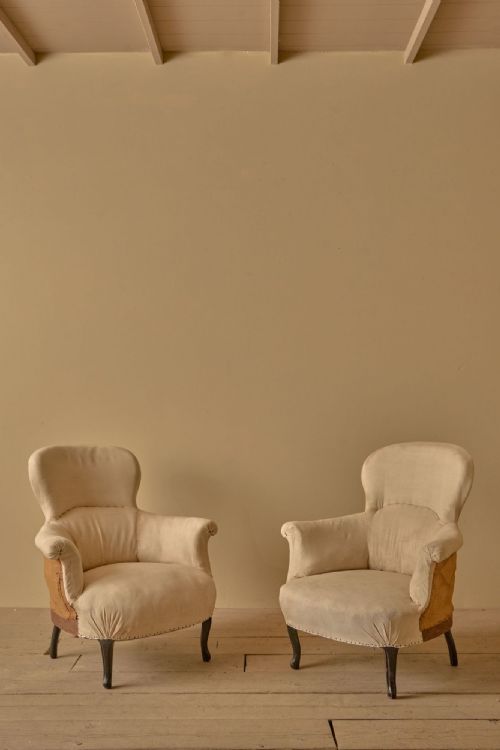
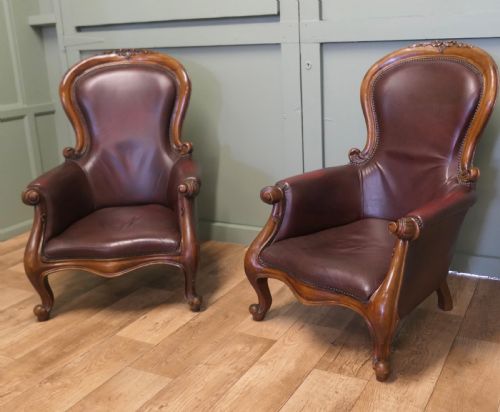
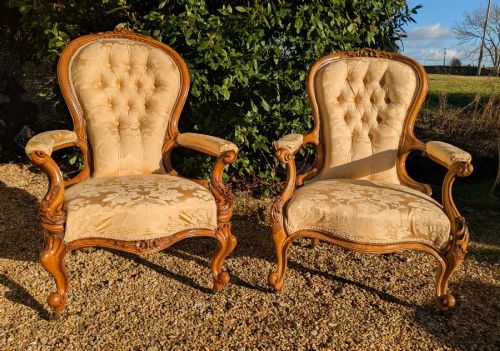


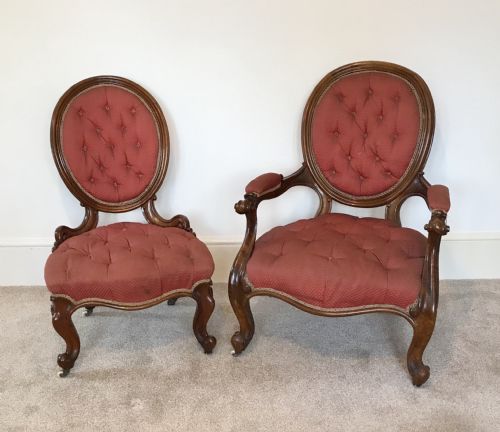
Spoon Back Armchair Pair
A spoon back armchair pair brings together nineteenth-century comfort and curved wooden frames that cradle the sitter.
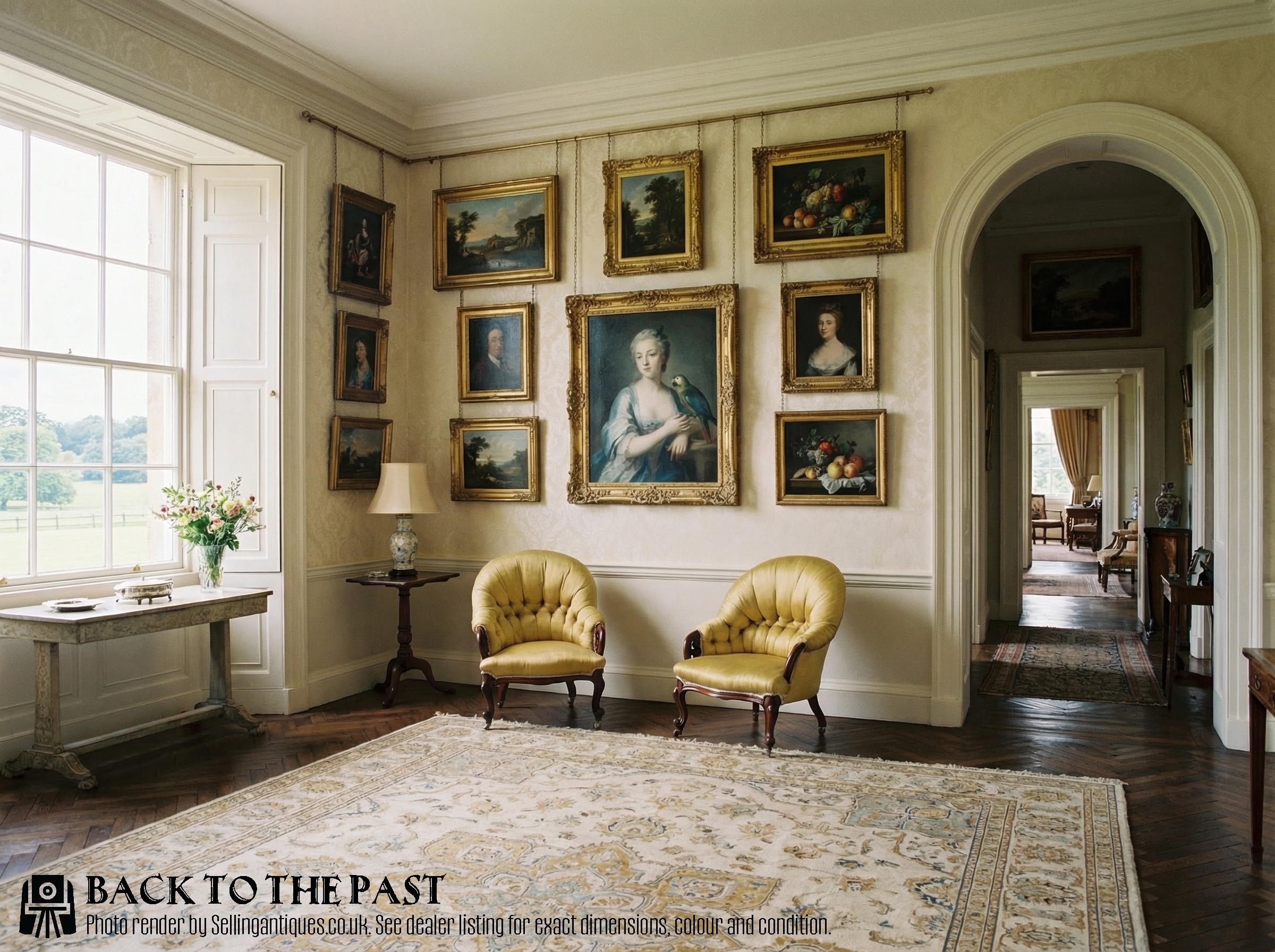
Spoon Back Armchair Pair
A spoon back armchair pair consists of seating designed with an oval, concave backrest that mimics the bowl of a spoon, supporting the spine. These pairs typically emerge from the Victorian era and the nineteenth century, alongside later revivals.
The evidence shows these armchairs appearing in forms such as salon chairs, fireside chairs, and easy chairs. Walnut, mahogany, and ebonised wood form the primary timber frames for these matched sets.
Buyers most frequently encounter Victorian examples alongside Napoleon III pieces. These items serve as functional seating or decorative accents in sitting rooms and drawing rooms.
Materials and construction methods
Frames are constructed from solid hardwoods like walnut and mahogany, carved to create the characteristic curved backrests and scroll forelegs. Brass castors frequently support the legs on Victorian and Napoleon III examples.
Upholstery techniques involve traditional stuffing finished with fabric, textile, leather, or velvet. Buttoning appears regularly across the backrests to secure the padding and shape the textile surface.
Spoon Back Armchair Pair Retail Price Guide 2026
Typical asking prices for spoon back armchair pair among the pieces listed under this phrase on Sellingantiques today, from the lower quarter to the upper quarter. They describe what is for sale here now, not the wider market.
Listings for this phrase span the Victorian era, the mid nineteenth century, and Napoleon III French designs.
Assessing quality in the range
Quality separates through the crispness and depth of the timber carving, particularly around the crest rail and the scroll work on the legs. Showwood frames with distinct grain patterns demonstrate superior material selection by the cabinetmaker.
The symmetry of a matched or near pair influences desirability, as does the execution of the button upholstery. Higher grade examples retain robust frame joints and precise alignment between both chairs.
The Spoon Back Armchair Pair Glossary
- Spoon back
- An upholstered chair back shaped with a concave oval contour resembling a spoon bowl. This design supports the human spine effectively.
- Showwood
- Timber framework left exposed around the upholstered portions of a chair. It highlights the grain and carved details of the wood.
- Button back
- An upholstery style where buttons are pulled tight through the padding at regular intervals. This creates deep indentations and secures the fabric.
- Barley twist
- A type of turning on furniture legs or stretchers that resembles a twisted rope. It was popular in nineteenth-century joinery.
- Castor
- A small wheel fitted to the base of furniture legs to aid movement. Brass fittings are common on nineteenth-century armchairs.
Spoon Back Armchair Pair: Frequently Asked Questions
What is a spoon back armchair?
A spoon back armchair is a nineteenth-century seat featuring an oval, concave backrest that curves inward to fit the human back.
These chairs often feature exposed wooden frames and upholstered panels, serving as both practical seating and decorative parlor furniture.
How do I spot a true pair?
A true pair shares identical dimensions, timber types, and carving details across both frames.
Some listings describe near pairs or matched sets where the chairs are extremely similar in style and period but differ slightly in minor decorative details or wood grain.
Where should I place these chairs?
These armchairs suit drawing rooms, studies, and fireside settings where their curved silhouettes can be viewed from multiple angles.
Because they often function as salon or easy chairs, they work well paired opposite a sofa or placed beside a fireplace.
How do I care for the upholstery?
Caring for the fabric or leather depends entirely on the specific textile used on the chair.
Regular brushing for velvet and textiles or conditioning for leather helps maintain the surface, while professional cleaning preserves the internal padding and buttoning.