


Pair Edwardian Tub Chairs
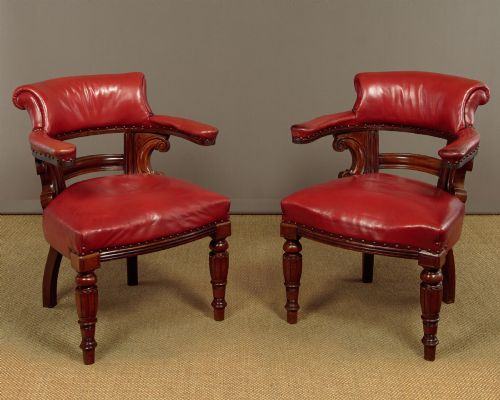
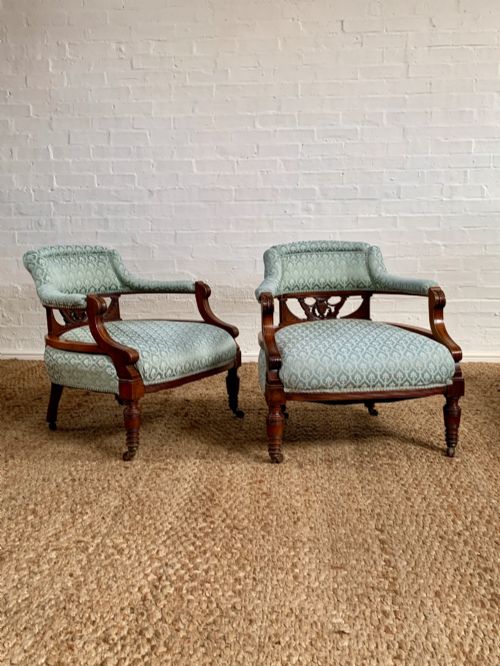
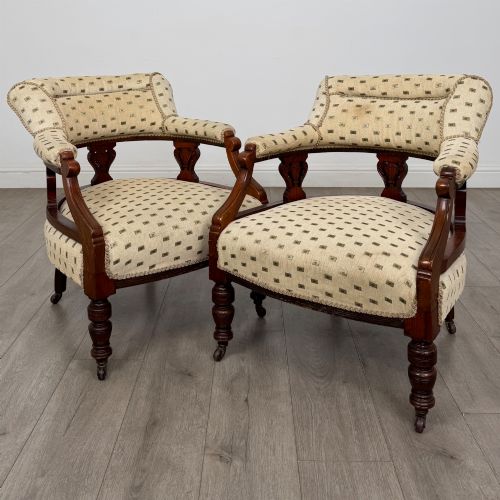
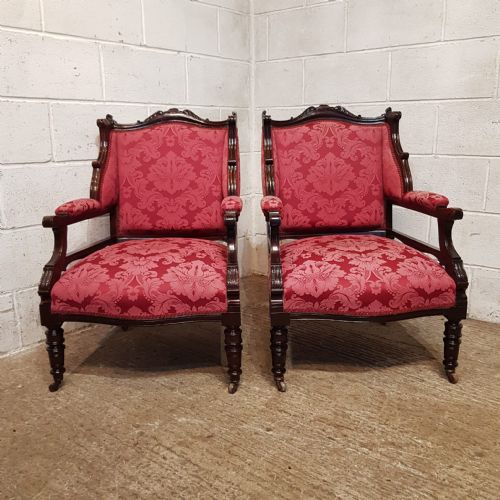
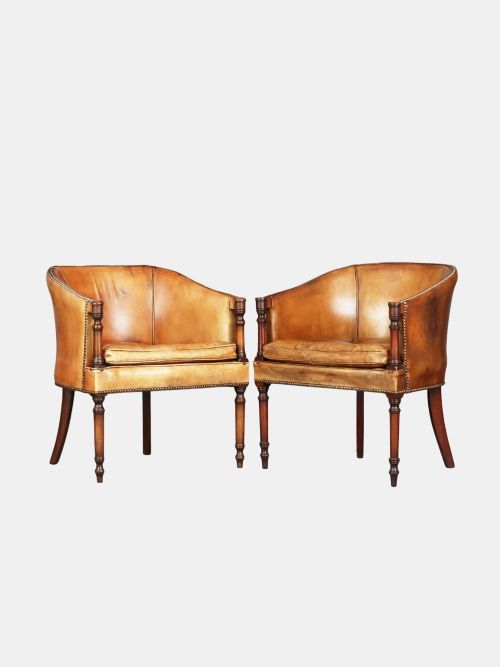
Pair Edwardian tub chairs bring curved comfort and period elegance to a room, offering matched seating with enclosed, supportive backs.
Pair Edwardian Tub Chairs
When searching for pair edwardian tub chairs, collectors encounter matched seating characterised by a continuous curved back and arms that sweep forward in a single, enveloping line. These pieces originate predominantly from the Edwardian era and the early twentieth century, though related examples span the Victorian period and the nineteenth century.
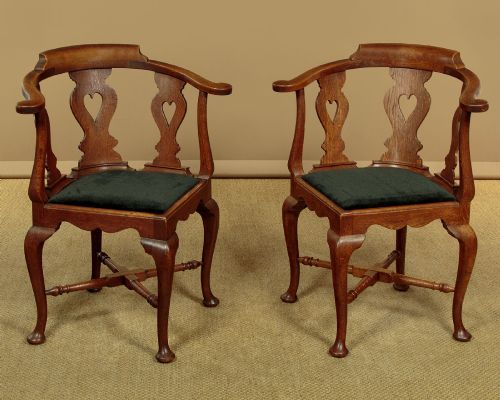
The form appears frequently in mahogany and walnut frames, often enhanced by decorative inlay or simple, clean lines suited to sitting rooms and libraries. Alongside standard tub shapes, the selection includes related armchair variants such as corner chairs, library chairs, and salon suites designed for domestic comfort.
How they were made
Frames rely principally on hardwoods like mahogany, walnut, and oak, shaped to form the signature curved backs that define the tub chair silhouette. Cabinetmakers joined these structural elements using traditional jointing methods to ensure stability under daily use.
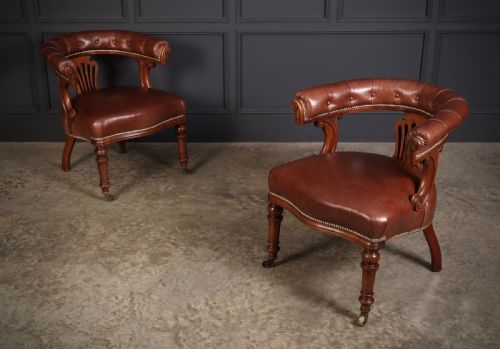
Upholstery materials range from leather and hide to various fabric coverings, frequently supported by internal springs and stuffing. Decorative details such as wood inlay, brass castors, and turned legs complete the construction.
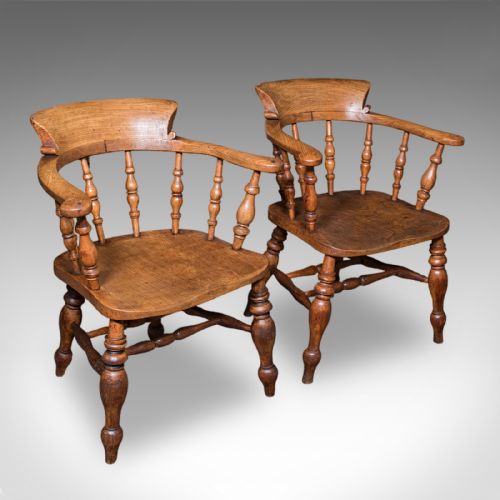
Smoker's bows and captain's chairs bring a robust tavern heritage straight into the gentleman's study.
What varies in quality
The standard of timber selection and the precision of cabinetmaking dictate the distinction between everyday seating and finer parlour examples. Richer grain patterns in the mahogany or walnut frame, coupled with crisp wood inlay, separate standard production from superior pieces.
Upholstery execution and the retention of original supportive materials influence the overall integrity of the set. Matched pairs that retain uniform fading and cohesive wood tones hold greater appeal for interior placement.
Harrods London
The Pair Edwardian Tub Chairs Glossary
- Tub chair
- An armchair featuring a low, curved back that wraps continuously into the arms to form an enclosed, barrel-like shape. This design provides enclosed seating comfort popular in nineteenth and twentieth-century domestic interiors.
- Inlay
- A decorative technique where contrasting pieces of wood or other materials are inserted into depressions flush with the surface of the primary timber. Edwardian furniture makers frequently applied satinwood or light wood stringing to mahogany frames.
- Castor
- A small wheel mounted on a swivel assembly attached to the base of furniture legs to assist movement. Many period armchairs incorporate brass or ceramic castors.
- Corner chair
- A chair designed specifically to fit into the corner of a room, featuring a diagonal seat plan and a curved back rail supported by turned pillars. These pieces frequently appear in oak or mahogany from the Victorian and Edwardian periods.
- Bergere
- An upholstered armchair with exposed wooden framing and woven cane panels forming the back and sides. This French-inspired seating style gained popularity in various forms throughout the nineteenth and early twentieth centuries.
Pair Edwardian Tub Chairs: Frequently Asked Questions
What is a tub chair?
A tub chair is an armchair characterised by a low, curved back that flows directly into the arms. The enclosed shape provides a snug, supportive seat.
This form became widespread during the Victorian and Edwardian eras, appearing in sitting rooms, libraries, and studies as both functional and decorative seating.
How do I identify Edwardian chairs?
Edwardian seating typically displays lighter proportions than heavier Victorian designs, often utilising mahogany or walnut timbers. Subtle wood inlay and neoclassical or Sheraton revivals frequently feature on these pieces.
Examining the construction methods, timber grain, and secondary woods helps confirm the period of manufacture around the turn of the twentieth century.
Were these chairs used in pairs?
Matched pairs were commonly commissioned for drawing rooms and parlours to create balanced seating arrangements around a fireplace or table. Salon suites often included a matching set of armchairs and settees.
Finding a true matching pair ensures visual symmetry in contemporary room layouts.
How should I care for leather upholstery?
Leather-upholstered chairs benefit from regular dusting with a soft, dry cloth and occasional treatment with appropriate leather conditioners to prevent drying. Avoiding direct sunlight and excessive heat protects the natural hide from cracking.
Preserving the original leather maintains the character and historical integrity of the piece.